

Every year in the United States, more than 7,000 infants experience out-of-hospital sudden cardiac arrests, and around 20,000 have in-hospital sudden cardiac arrests (AHA, 2025). Most out-of-hospital cases, about 80 percent, happen at home, where a single rescuer is often the first and only person who can act. Survival to hospital discharge varies widely, ranging from 6%-38% for out-of-hospital arrests and 38%-66% for in-hospital arrests, while favorable neurologic outcomes are higher in hospital cases, between 64%-89%.
If you are the only rescuer, acting quickly and correctly can make all the difference. The American Heart Association recommends a 30 to 2 compression-to-breath ratio for 1-rescuer infant CPR. This rhythm keeps oxygen circulating while maintaining blood flow to vital organs. Practicing this CPR technique and understanding the correct compression-to-breath ratio can significantly improve an infant’s survival chances. and reduce the risk of long-term complications.
This blog explains the correct 1-rescuer infant CPR ratio and how to perform it safely. Following AHA and ILCOR guidelines, it shows how one rescuer can maintain oxygen and blood flow until help arrives.
Why Is the Compression-to-Breath Ratio Critical for Infant Survival?
The compression-to-breath ratio is critical for infant survival because most cardiac arrests in infants result from breathing problems rather than heart issues. According to the American Heart Association (AHA) and ILCOR, chest compressions circulate oxygen-rich blood to vital organs. Rescue breaths provide oxygen that the infant cannot take in on their own. Using a balanced ratio prevents hypoxia, maintains blood circulation, and ensures you can give effective CPR, especially when acting alone.
Key points:
- Chest compressions circulate oxygenated blood to vital organs.
- Rescue breaths supply oxygen to the infant who cannot breathe on their own.
- A balanced ratio prevents hypoxia while maintaining circulation.
- Following this ratio ensures effective CPR when you are the sole rescuer.
What Is the Life-Saving Compression-to-Breath Ratio for 1-Rescuer Infant CPR?
The life-saving compression-to-ventilation ratio for a single rescuer performing infant CPR is 30 chest compressions to 2 rescue breaths, following guidance from the American Heart Association (AHA) and pediatric BLS guidelines. This ratio is designed to maintain blood flow to vital organs while delivering oxygen, giving the infant the best chance of survival. Performing the compressions and breaths correctly and without unnecessary interruptions is critical for effective CPR.
Key Highlights
- Perform 30 continuous compressions at a rate of 100-120 per minute.
- Compress the chest about 1.5 inches (4 cm) or one-third of its depth.
- Give 2 gentle rescue breaths, each about 1 second with visible chest rise.
- Repeat the cycle without unnecessary interruptions to maintain blood circulation and oxygenation.
How Do You Perform 1-Rescuer Infant CPR Step by Step?
Knowing how to administer 1-rescuer infant CPR is crucial because every second counts when an infant becomes unresponsive. Following the American Heart Association guidelines ensures you provide the right compressions and rescue ventilations to maintain blood flow and oxygen, giving the infant the best chance of survival until help arrives.
Here are the 1-rescuer infant CPR steps:
1. Ensure Scene Safety
Before approaching the infant, make sure the environment is safe for both you and the child. Look for hazards such as traffic, electrical risks, or unstable surroundings. Only proceed if it is safe to do so.
2. Check Responsiveness and Breathing
Tap the infant’s foot and call out to see if there is any response. Observe the infant’s breathing and, at the same time, check the brachial pulse by locating the brachial artery in the upper arm for no more than 10 seconds. If the infant is unresponsive and not breathing normally, prepare to start CPR immediately.
3. Call for Help / Activate Emergency Response
If someone is nearby, have them call emergency services and retrieve an AED while you begin CPR. If you are alone and have a phone, call emergency services immediately and start CPR. If you are alone without a phone, perform CPR for about two minutes (five cycles of 30 compressions and 2 breaths) before briefly leaving to call for help and get an AED.
4. Begin Chest Compressions
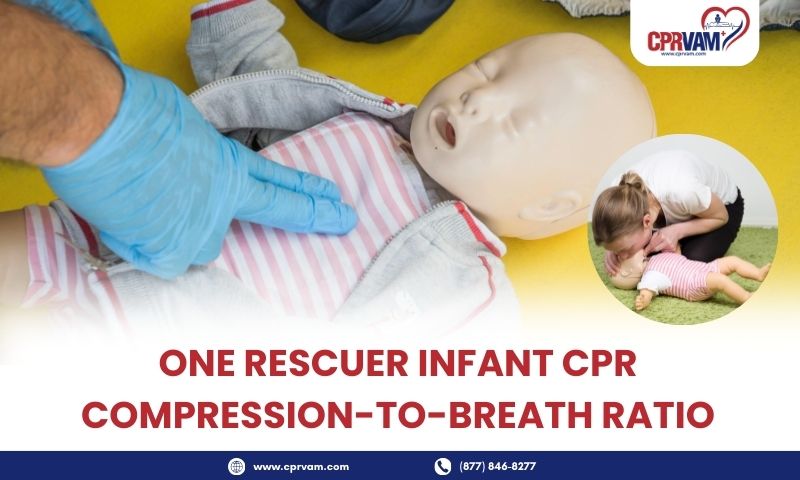
Place two fingers in the center of the chest just below the nipple line. Compress the chest about 1.5 inches (one-third the chest depth) at a rate of 100–120 compressions per minute. Allow full chest recoil after each compression and minimize interruptions to maintain blood flow to vital organs.
5. Deliver Rescue Breaths
Open the airway using the head-tilt chin-lift technique. Cover the infant’s mouth and nose with your mouth to create a seal. Deliver two gentle breaths, each lasting about one second, while watching for visible chest rise. Avoid forceful breaths that could cause air to enter the stomach.
6. Continue CPR Cycles
Repeat cycles of 30 chest compressions followed by 2 rescue breaths continuously. Maintain proper technique and rhythm to ensure oxygen delivery and circulation until additional help arrives.
7. Use an AED as Soon as Available
Operate the AED by turning it on and following the voice prompts. Apply pediatric pads if available, or adult pads with correct placement if pediatric pads are not on hand. Pause only for rhythm analysis or shock delivery, then resume CPR immediately.
8. Perform CPR Until Help Arrives
Perform CPR until the infant shows signs of life, such as normal breathing or movement, or until emergency medical services take over. Stay calm and attentive, ensuring each compression and breath is performed effectively.
How Does 1-Rescuer Infant CPR Compare to 2-Rescuer Infant CPR?
Understanding how 1-rescuer and 2-rescuer infant CPR differ helps you see why the 30:2 ratio is crucial when you are alone. With two rescuers, tasks are shared, your fatigue is lower, and breaths can be delivered more frequently, making CPR more efficient and effective.
Here is the comparison table between 1-Rescuer and 2-Rescuer Infant CPR
Criteria | 1-Rescuer Infant CPR | 2-Rescuer Infant CPR |
Compression-to-Breath Ratio | 30:2 | 15:2 |
Compression Method | Two fingers | Two-thumb encircling |
Compression Rate | 100-120 per minute | 100-120 per minute |
Compression Depth | 1.5 Inches | 1.5 Inches |
Role Division | Same rescuer | Shared roles |
Fatigue Management | Higher | Lower |
Do You Know the Most Common Infant CPR Errors to Avoid?
Even trained healthcare providers and rescuers can make errors during infant CPR, reducing overall resuscitation effectiveness. Knowing the most common errors helps you perform CPR more safely and efficiently. Following the recommended 30:2 compression-to-breath ratio ensures oxygen continues circulating and minimizes potential complications while you provide life-saving care.
Common Mistakes to Avoid During Infant CPR:
1. Compressing Too Shallow or Too Deep
If you compress too shallowly, blood flow to the infant’s vital organs is inadequate. Too deep can cause injury. You should compress about one-third of the chest depth, roughly 1.5 inches, ensuring effective circulation while keeping the infant safe.
2. Giving Breaths That Are Too Forceful or Too Rapid
Overly strong or rapid breaths can cause air to enter the stomach, leading to vomiting or airway obstruction. You should deliver 2 gentle rescue ventilations, each lasting about 1 second, while watching for a visible chest rise to confirm effectiveness.
3. Interrupting Compressions Excessively
Pausing chest compressions for too long reduces blood flow to the brain and heart. You should minimize interruptions and maintain the 30 compressions to 2 breaths rhythm, keeping circulation steady while you deliver rescue breaths efficiently.
4. Failing to Allow Full Chest Recoil
Not letting the chest fully expand after each compression prevents proper blood return to the heart. You should allow complete chest recoil between compressions, which helps maintain effective circulation and increases the infant’s chances of survival.
5. Ignoring the Recommended Ratio
Not following the 30:2 ratio can compromise oxygen delivery and circulation. You should always maintain this rhythm when performing 1-rescuer infant CPR, balancing compressions and rescue breaths while you continue until emergency help arrives.
Master Infant CPR Through Hands-On Practice
Hands-on practice is essential for mastering infant CPR, as emphasized by the American Heart Association (AHA). By practicing compressions and rescue breaths, you build the muscle memory needed to respond calmly in an emergency. You will gain confidence in maintaining the correct 30:2 compression-to-breath ratio, ensuring effective circulation and oxygenation. Regular AHA-guided training helps you act quickly, giving every infant the best chance of survival.
Join CPR VAM, an AHA-certified training center, where our expert instructors provide hands-on infant CPR training along with BLS, ACLS, and PALS classes. You will gain practical skills, confidence, and the ability to respond calmly in emergencies, ensuring every patient, especially infants, receives timely and effective care.
FAQs
1. What Is the Most Effective CPR Method For A Single Rescuer On An Infant?
For a single rescuer, the American Heart Association recommends performing 30 chest compressions followed by 2 rescue breaths. By following this rhythm, you ensure that the infant receives both oxygen and circulation efficiently.
2. How Deep Should I Compress the Infant’s Chest During CPR?
You should compress about one-third of the infant’s chest depth, roughly 1.5 inches. This depth allows you to circulate blood effectively while minimizing the risk of injury to the infant.
3. How Fast Should I Perform Chest Compressions For Infant CPR?
Chest compressions should be delivered at a rate of 100-120 per minute. Maintaining this speed helps you sustain proper blood flow to the infant’s vital organs.
4. Why is Hands-On CPR Training Important For Me?
Hands-on practice at an AHA certified training center builds muscle memory and confidence. You will be able to respond calmly in emergencies, performing compressions and rescue breaths accurately when every second counts.
5. Can I Combine Infant CPR Training With Other Life-Saving Courses?
Yes. You can combine Infant CPR training with other life-saving courses, such as BLS, First Aid, or AED certification, in a single session. This approach saves time and helps you build complete emergency response skills through a single convenient training schedule.