



CPRvam Students
25,000+ students successfully trained annually
Step-by-step treatment algorithms

Bradycardia in pediatric patients is broadly classified into two main types based on its underlying cause: primary and secondary bradycardia. This distinction is important because each type requires a different treatment approach depending on whether the cause is cardiac or non-cardiac.

Primary bradycardia results from intrinsic cardiac problems such as heart block or sick sinus syndrome, often due to congenital defects or damage to the heart’s conduction system. It is treated with medications like atropine and may require a permanent pacemaker for long-term rhythm control.

Secondary bradycardia occurs due to non-cardiac causes like hypoxemia, acidosis, or hypothermia, and is more common in infants and children. Management focuses on correcting the underlying problem by improving oxygenation, maintaining normal body temperature, and restoring proper acid–base balance to stabilize heart rate.

Pediatric bradycardia is defined based on age because normal heart rates vary significantly from infancy to adolescence. A heart rate below the expected range for a specific age group is considered bradycardia and may indicate an underlying physiological or pathological condition requiring clinical evaluation.

Pediatric Bradycardia Heart Rate Reference Table:

Pediatric Age Group

Bradycardic Heart Rate (Beats per minute)

0-3 years

< 100 bpm

3-9 years

< 60 bpm

9-16 years

< 50 bpm

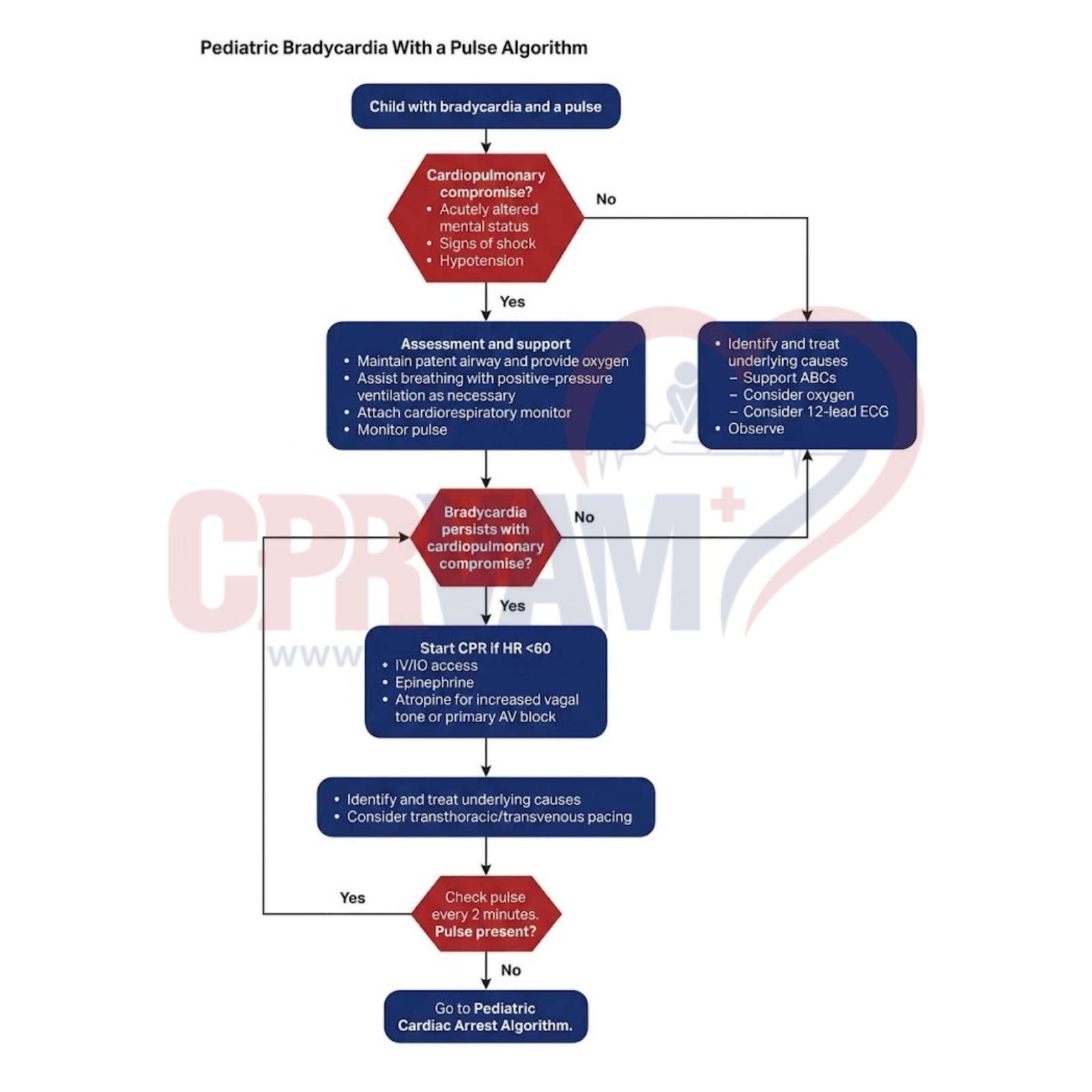
PALS pediatric bradycardia with pulse algorithm chart

It is a structured approach used in the AHA PALS algorithm to guide the assessment and management of children presenting with bradycardia and a palpable pulse. The pathway ensures rapid identification of cardiopulmonary compromise, immediate stabilization of airway, breathing, and circulation, and prompt escalation of treatment based on patient response.

This step identifies a child with a heart rate below the normal range for age who still has a palpable pulse, confirming that circulation is present and the patient is not in cardiac arrest.

It also serves as the starting point of the algorithm, ensuring a structured approach to the assessment and management of pediatric bradycardia with a pulse.

Assess the child for signs of instability, including acutely altered mental status, signs of shock, or hypotension. If any of these are present, the child is considered hemodynamically compromised and requires immediate intervention without delay.

If these signs are not present, focus on the underlying cause while maintaining airway, breathing, and circulation. Provide oxygen if needed, obtain a 12-lead ECG, and continue close monitoring for any change or deterioration.

Ensure the airway is patent and clear, and provide supplemental oxygen if required. Assist breathing with positive-pressure ventilation when necessary to maintain adequate oxygenation and effective ventilation in the child.

Attach continuous cardiorespiratory monitoring, including heart rate, rhythm, oxygen saturation, and pulse monitoring. This allows ongoing clinical assessment and supports timely stabilization and early detection of any deterioration.

Reassess whether the slow heart rate continues after initial supportive care in a child with signs of compromise. If the heart rate improves, shift to observation and ongoing monitoring.

If bradycardia remains, proceed to more advanced management. If the child is stable, continue treating the underlying cause, provide oxygen if needed, obtain a 12-lead ECG, and closely monitor for any worsening.

Begin CPR if the heart rate drops below 60 per minute and there are signs of poor perfusion. This helps maintain circulation when the child is critically unstable.

Secure IV or IO access and administer epinephrine as needed. Atropine can be given if increased vagal tone or a primary AV block is suspected to help improve heart rate and circulation.

Focus on identifying and correcting the underlying cause of bradycardia, such as hypoxia or other reversible factors. Treating the root cause is essential for improving the child’s condition and response to therapy.

If there is no improvement with initial management and supportive care, consider advanced options such as transthoracic or transvenous pacing to help maintain an adequate heart rate and circulation.

Check the pulse every two minutes to assess how the child is responding to treatment. This helps determine whether the condition is improving, stable, or deteriorating, allowing timely clinical decisions and appropriate adjustments in ongoing management.

If a pulse is present, continue reassessment and provide ongoing supportive care. If the pulse is lost, immediately transition to the Pediatric Cardiac Arrest Algorithm to initiate full resuscitation without delay.

If the patient loses a pulse, immediately transition to the Pediatric Cardiac Arrest Algorithm. This ensures full resuscitation protocols are initiated without delay and appropriate life-saving actions are taken promptly and systematically.

This step allows rapid initiation of advanced life support measures, supporting effective cardiac arrest management and improving the likelihood of restoring spontaneous circulation and patient survival.

Identify and manage the underlying cause while maintaining support for airway, breathing, and circulation. Provide oxygen if indicated, and consider obtaining a 12-lead ECG to further evaluate cardiac rhythm and identify any abnormalities.

If the patient remains stable, continue close observation with regular reassessment. This ensures any early signs of deterioration are promptly recognized and managed without delay.

Pediatric bradycardia often results from reversible conditions that must be quickly identified and corrected. Early recognition helps improve heart rate and overall circulation in the child.

Common causes include:

  • Hypothermia
  • Hypoxia
  • Toxins or medication effects
  • Increased intracranial pressure
  • Increased vagal tone
  • Heart block
  • Physiologic or appropriate bradycardia
In pediatric bradycardia, specific medications are used through IV or IO routes to support heart rate and circulation. Dosing is weight-based and must be carefully calculated to ensure safe and effective treatment.

Medication Dosages (Epinephrine and Atropine):

Medication

Dose

Key Details

Epinephrine

0.01 mg/kg

IV/IO use, concentration 0.1 mg/mL, maximum dose 1 mg

Atropine

0.02 mg/kg

Minimum 0.1 mg, maximum single dose 0.5 mg, may be repeated once if needed

Early recognition and structured management of pediatric bradycardia with a pulse are essential to prevent deterioration and improve outcomes. The Pediatric Bradycardia (With a Pulse) Algorithm in the AHA PALS 2025 guidelines provides an evidence-based framework prioritizing airway, breathing, and circulation stabilization, rapid identification of reversible causes, and timely escalation to medications or advanced interventions. Continuous monitoring and reassessment ensure response evaluation and early detection of worsening conditions.

Healthcare professionals can enhance emergency cardiovascular care skills through structured training. The CPR VAM Training Center offers instructor-led BLS, ACLS, and PALS courses focused on guideline-based emergency management, including pediatric bradycardia. These programs build clinical confidence, improve decision-making under pressure, and support safer, more effective patient outcomes in critical care settings.

A slow heart rate becomes concerning when it is below the normal range for age and accompanied by poor perfusion or altered consciousness. These signs indicate possible cardiopulmonary compromise requiring urgent assessment.

The first step is to look for reversible causes such as low oxygen levels, temperature imbalance, or metabolic issues. Early correction of these factors often improves heart rate and stability.

Advanced treatment is needed if bradycardia does not improve after initial oxygen and supportive care. It is especially required when the child shows signs of shock or worsening condition.

Continuous monitoring helps track heart rate, oxygen levels, and overall response to treatment. It allows early detection of deterioration and timely intervention.

Medication choice depends on the cause of bradycardia and the child’s response to initial care. Drugs are given in carefully calculated doses to support heart function and circulation.

Pediatric Advanced Life Support (PALS) Classes