

CPRvam Students
25,000+ students successfully trained annually
Step-by-step treatment algorithms
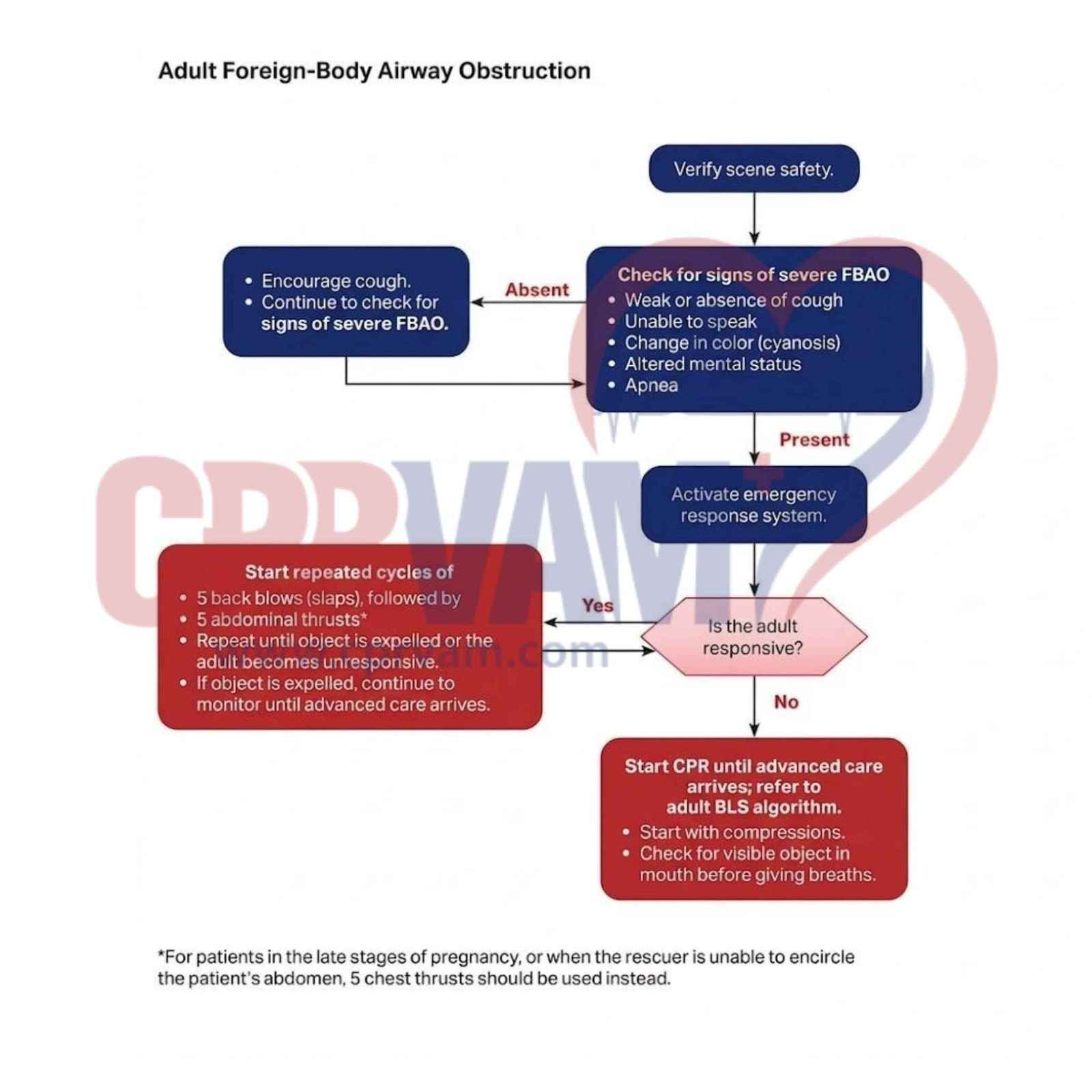
Adult Choking Algorithm (FBAO)

The BLS Adult Choking Algorithm is a step-by-step guideline based on AHA 2025 standards. It helps responders identify choking severity, provide immediate interventions like abdominal or chest thrusts, and escalate to CPR if the adult becomes unresponsive, improving survival outcomes.

Core Principles

  1. Rapid Assessment: Quickly determine if the airway obstruction is mild or severe.

  2. Lifesaving Interventions: Use abdominal thrusts, back blows, or chest thrusts as appropriate.

  3. Transition to CPR: Begin high-quality CPR if the person becomes unresponsive.

  4. Structured Protocol: Ensures a systematic and proven response in emergencies.

  5. Universal Guidance: Applicable to trained bystanders, healthcare providers, and first responders.

The American Heart Association (AHA) 2025 Guidelines outline a structured, evidence-based protocol for managing adult airway obstruction. This stepwise approach ensures rapid recognition, effective intervention, and timely escalation to CPR for unresponsive individuals, optimizing survival and patient safety.

Key Points:

  • Check the surroundings for hazards like traffic, fire, or sharp objects before approaching.
  • Protect yourself first to avoid becoming another victim in an unsafe situation.
  • Approach only when safe and confirm the person is showing signs of severe choking.
  • Position yourself properly to deliver effective back blows and abdominal thrusts.
  • Call for emergency help safely while continuing care if the environment remains secure.

Recognizing severe airway obstruction is critical to identify life-threatening choking symptoms like inability to speak, weak cough, or cyanosis, ensuring prompt action using AHA-recommended interventions.

Key Highlights:

  • Look for a weak or absent cough, indicating the airway is critically blocked.
  • Check if the person is unable to speak, which signals severe obstruction.
  • Observe skin color changes (Cyanosis), such as bluish lips or face, due to lack of oxygen.
  • Assess altered mental status, such as confusion or decreased responsiveness.
  • Watch for apnea (No breathing), which indicates a life-threatening emergency requiring immediate action.
  • Encourage the person to cough to help clear the airway naturally.
  • Stay close and monitor continuously for any changes in breathing or speech.
  • Check for signs of FBAO frequently to detect deterioration early.
  • Do not attempt back blows or abdominal thrusts unless severe obstruction develops.
  • Call for help if the condition worsens or signs of severe airway obstruction appear.
  • Call emergency services immediately (911 or local number) when severe choking is identified.
  • Provide precise location and details about the victim’s condition for a quick and effective response.
  • Follow dispatcher instructions while continuing back blows and abdominal thrusts if needed.
  • Ask bystanders for assistance with crowd control, first aid, or help to call for help.
  • Stay with the victim and be ready to start CPR if they become unresponsive or stop breathing.

Check the responsiveness of the adult by gently tapping their shoulders and asking loudly if they are okay. This helps determine if they can follow instructions, continue FABO maneuvers, or require immediate CPR and emergency intervention. 

There are two situations:

  • Give 5 back blows by delivering firm slaps between the adult’s shoulder blades using the heel of your hand.
  • Give 5 abdominal thrusts by standing behind the adult, wrapping your arms around their waist, and performing quick upward thrusts just above the navel.
  • Repeat cycles by alternating 5 back blows and 5 abdominal thrusts until the object is expelled or the adult becomes unresponsive.
  • Monitor after expulsion by observing the adult’s breathing, color, and responsiveness until advanced care arrives.

Key Consideration: For patients in late pregnancy or if the rescuer cannot encircle the abdomen, perform five chest thrusts instead of abdominal thrusts to safely relieve airway obstruction.

  • Start CPR immediately and continue until advanced care or EMS arrives.
  • Begin with chest compressions at the center of the chest, following adult BLS guidelines.
  • Check the mouth for visible obstruction before giving rescue breaths.
  • Alternate compressions and breaths as per BLS protocol until the victim shows signs of life or professional help takes over.

Emergencies can strike unexpectedly, and knowing how to respond can save lives. Reading about BLS techniques is helpful, but hands-on practice builds confidence. We at CPR VAM training center ensure you learn the adult choking algorithm effectively for adults, children, and infants.

Our AHA-certified BLS courses combine flexible online learning with a brief in-person skills session. You’ll practice life-saving techniques under expert guidance, gain confidence to act in emergencies, and leave with your certification card the same day, fully prepared to save lives when it matters most.
Signs include inability to speak or cough effectively, clutching the throat, and turning blue around the lips. Sudden distress or panic may also indicate a blockage.

Start by assessing the severity and encouraging coughing if possible. If ineffective, perform abdominal or chest thrusts and call emergency services immediately.

CPR is required if the adult becomes unresponsive despite attempts to remove the obstruction. Begin chest compressions immediately while waiting for professional help.

BLS training teaches correct techniques and quick decision-making during emergencies. This increases the chances of successfully saving a life.

Yes, with proper training, anyone can perform it safely and effectively. Hands-on practice is essential to gain confidence and accuracy.

how to renew aha bls certification
Basic Life Support