


Step-by-step treatment algorithms
ACLS Acute Coronary Syndrome (ACS) Algorithm

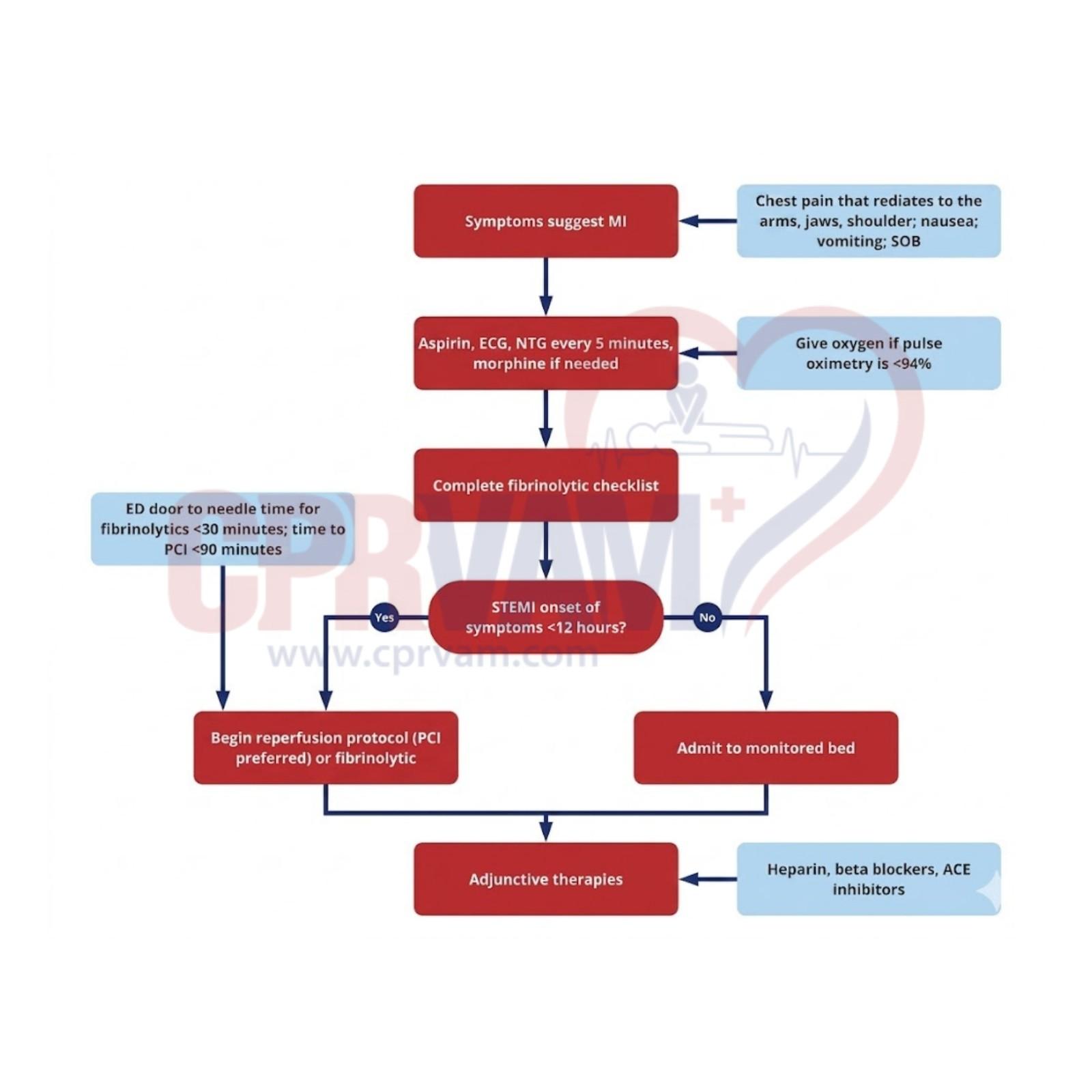
Acute Coronary Syndrome can be of different types, and the techniques of managing or treating the conditions vary accordingly. There are 3 conditions identified an ACS, which include ST-segment Elevation Myocardial Infarction (STEMI), Non-ST-segment Elevation Myocardial Infarction (NSTEMI), and unstable angina. They represent the spectrum of severity of myocardial ischemia, where STEMI being the most acute one. No matter the type, the ACS algorithm provides a comprehensive guide on the stepwise management of the syndrome.

ACLS ACS treatment algorithm includes the following steps:

The initial assessment is done with the ABC (Airway, Breathing, and Circulation) approach, and then check for symptoms of ACS such as crushing chest pain, radiating pain to the jaw/arm/back, nausea, sweating, and shortness of breath.

Treatment for Acute Coronary Syndrome depends on whether it is STEMI or NSTEMI. Doctors go through ECG findings and determine the urgency and needed medical intervention. Here is the ECG interpretation and required intervention:

1. STEMI: 12-lead ECG indicates the ST-segment Elevation Myocardial Infarction, which requires urgent reperfusion.
2. NSTEMI/Unstable Angina: ST depression, T-wave inversion, or a normal ECG with elevated cardiac markers; needs medical management and further assessment.

Soon after the identification of symptoms and severity of the ACS condition, appropriate immediate intervention and basic support are crucial. STEMI patients require rapid reperfusion immediately, whereas less severe conditions are treated with crucial medical interventions as follows:

1. Administer aspirin (chewed) unless contraindicated: It helps to inhibit platelet aggregation.

2. Administer nitroglycerin if no contraindications: Relieves chest pain and reduces myocardial oxygen demand

If the patient has STEMI, initiate the reperfusion strategy urgently for the restoration of blood flow to the vital organs.
Here is how STEMI is  managed using the reperfusion strategy:

1. Primary PCI (Preferred): Initiate door-to-balloon time ≤90 minutes.
2. Fibrinolytic Therapy: If PCI is unavailable within 120 minutes and no contraindications, aim for door-to-needle time ≤30 minutes.

After initial medications for Non-STEMI and providing the reperfusion for STEMI, doctors keep the patient under constant monitoring and continue medication depending on the patient’s response.

Antiplatelets: Aspirin + P2Y₁₂ inhibitor (e.g., clopidogrel, ticagrelor).
Anticoagulants: Heparin or enoxaparin as per protocol.
Analgesia: Morphine for persistent pain unrelieved by nitrates (use with caution).
Beta-blockers: Unless contraindicated, reduce myocardial oxygen demand.

After successful reperfusion or initial stabilization, ongoing care with essential medications is essential to prevent complications and support recovery.
Here are the key measures for post-reperfusion care:
1. Monitor for arrhythmias, heart failure, or shock.
2. Continue dual antiplatelet therapy and anticoagulation as indicated.
3. Manage risk factors (BP, cholesterol, diabetes, smoking).
4. Arrange for cardiac rehabilitation and follow-up.


The ACLS Acute Coronary Syndrome Algorithm provides a systematic approach for timely assessment, identification, and appropriate medical intervention to treat ACS or minimize further cardiac complications. Health professionals can prepare themselves for such critical cardiac emergencies and provide effective treatment and recovery for patients.

The ACS Algorithm is useful for healthcare providers. If you want to learn about the algorithm and treatment, then trust CPRVAM to enroll in the ACLS course. The ACLS course equips you with a deep understanding of algorithms and advanced life support skills to increase your professional competency.
The protocol for ACS in cardiac patients involves early identification and treatment with evaluation of ECG readings, blood tests, and underlying causes, followed by immediate administration of aspirin to reduce clotting and pain control with nitroglycerin and morphine. In severe cases, the treatment strategy includes thrombolytics, percutaneous coronary intervention (PCI), or bypass surgery, depending on ACS type (STEMI or NSTEMI).

The primary goal of the acute coronary syndrome is to quickly restore an adequate blood supply to the heart muscle to minimize myocardial damage, prevent complications, and improve survival outcomes.

The gold standard for ACS is early diagnosis using the combined evaluation of ECG/EKG readings and cardiac troponin blood tests.

The Mona Protocol for ACS is the standard for initial treatment for ACS, which is now outdated due to the rising concerns about the use of morphine, oxygen, and nitroglycerin. However, aspirin remains the key part of ACS management. New protocol for treating the syndrome includes anticoagulants, beta-blockers, and statins.