
Step-by-step treatment algorithms
Pediatric Post-Resuscitation Care or Post ROSC Algorithm

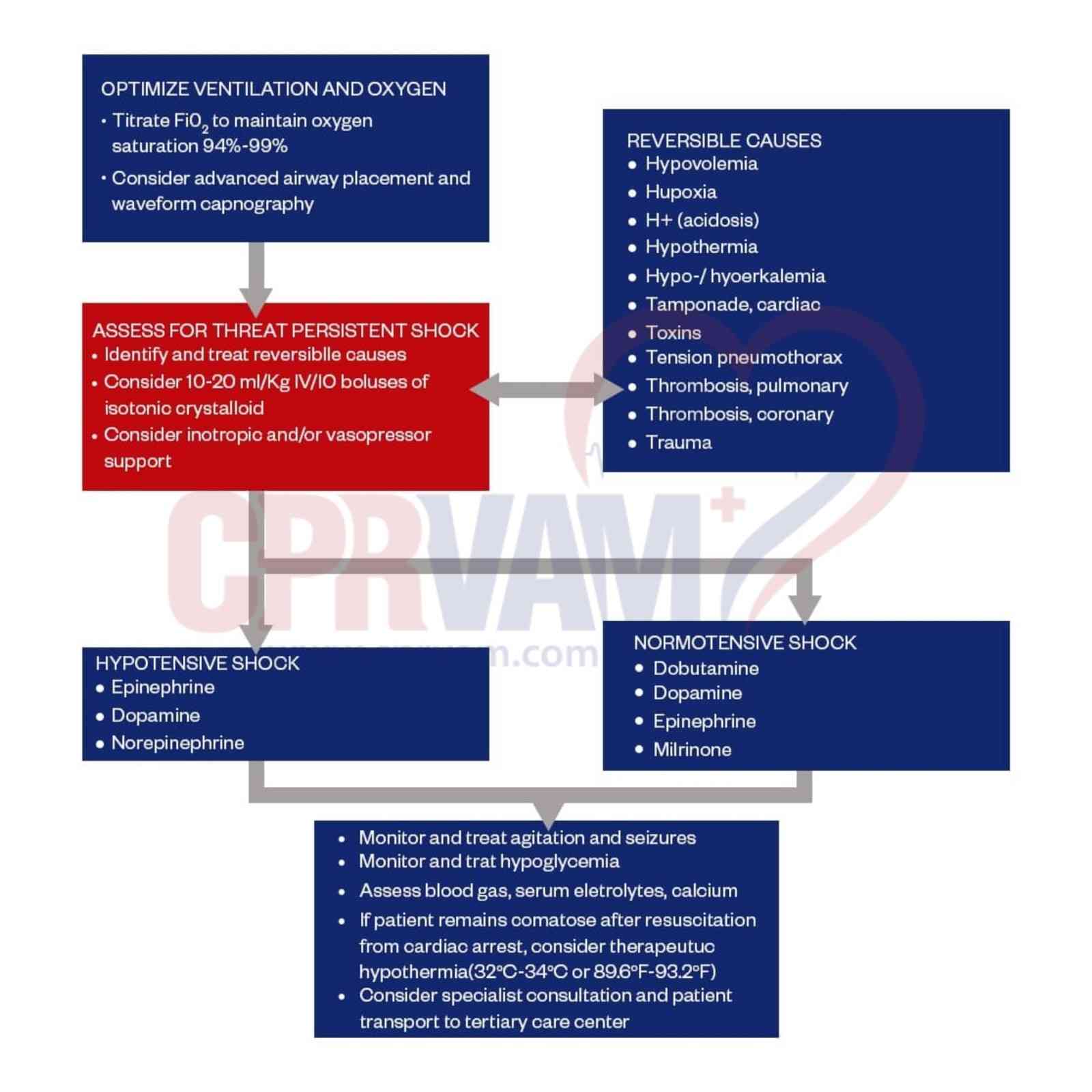
The PALS Post-ROSC Algorithm is a critical framework designed to guide healthcare providers in stabilizing pediatric patients who have achieved return of spontaneous circulation (ROSC) after cardiac arrest. It involves a multidisciplinary team of cardiologists, neurologists, respiratory therapists, and specialists. Here is the step-wise approach followed in this integrated post-resuscitation care:

Immediately after ROSC, securing the airway is a priority, which is carried out by effective oxygenation and ventilation. It includes:

1. Mechanical ventilation using endotracheal (ET) intubation, carefully controlled with a low tidal volume strategy (6–8 mL/kg ideal body weight) and appropriate positive end-expiratory pressure (PEEP) to protect the lungs and optimize gas exchange.
2. Oxygenation and titration with target oxygen saturation by pulse oximetry, SpO₂ 92-97% to avoid both hypoxia and hyperoxia.
3. Maintain carbon dioxide level within normal range (PaCO2 35–45 mmHg) to support cerebral blood flow.
4. Waveform capnography for continuous monitoring and effectiveness of ventilation.

Soon after oxygenation and ventilation, it’s essential to assess and treat persistent shock. It restores adequate perfusion if the patient remains in an unstable condition despite fluid resuscitation and medications such as vasopressors and inotropes. It includes:

  1. Use continuous or serial cardiac output measurement techniques such as echocardiography or transpulmonary thermodilution.
  2. First-line vasopressor is typically norepinephrine, used to maintain mean arterial pressure (MAP) ≥ 65 mmHg, and epinephrine and dopamine are used to reduce the norepinephrine dose.
  3. Inotropes like dobutamine and milrinone may be used if there is myocardial dysfunction with low cardiac output.
  4. Initial intravenous fluid resuscitation with isotonic crystalloid fluid boluses (10-20ml/kg) is standard to restore intravascular volume and optimize cardiac output in shock.

One of the primary goals of the post-resuscitation algorithm is to optimize the patient’s neurological outcome. Healthcare professionals use clinical signs such as Glasgow Coma Scale (GCS), pupillary reflexes, and electroencephalogram (EEG) findings to guide early prognosis and determine the appropriate medical interventions. Neurological care and support in post-resuscitation care includes:

  1. Ensure adequate perfusion and intravascular volume to prevent cerebral hypoperfusion, hypotension, and secondary brain injury.
  2. Maintain normal arterial oxygen (PaO2) and carbon dioxide (PaCO2) levels. But, prevent hypoxemia (low oxygen) and hypocapnia (low carbon dioxide).
  3. Therapeutic hypothermia, also known as Targeted Temperature Management (TTM), ie, 32-36°C (89.6-96.8°F) for at least 24 hours in comatose patients to protect neurological function after cardiac arrest.
  4. Use anticonvulsants proactively to manage seizures, which can worsen brain damage and neurological outcomes.
  5. Regular neurological exams, including GCS scoring, pupillary response, and EEG monitoring for detecting changes and guiding prognosis.
  6. Perform CT or Magnetic Resonance Imaging (MRI) of the brain to evaluate for cerebral edema, intracranial hematomas, or ischemic stroke, to facilitate required interventions.
  7. Consult with neurologists early to assist in prognosis, management strategies, and rehabilitation planning.

For the effective management of cardiac arrest, we should be able to identify the underlying or reversible causes and treat them early to prevent future occurrences. The identification and treatment of underlying causes includes:

1. Assess the underlying causes of the cardiac arrest using the mnemonics H’s and T’s using diagnostic tests like blood work, ECG (heart tracing), and chest X-ray.

  • 5Hs: Hypoxia (lack of oxygen), Hypovolemia (low blood volume), Hypo/Hyperkalemia (potassium imbalance), Hypothermia (low body temperature), and Hydrogen ion (acidosis).
  • 5Ts: Tension pneumothorax (collapsed lung with pressure), Tamponade (fluid around the heart), Toxins (drug overdose), Thrombosis (blood clots in lungs or heart), and Trauma.

2. Common causes and their treatment include:

  • Heart attack (Coronary Artery Disease): Immediately perform an ECG to look for signs of a heart attack. If found, begin emergency procedures like angioplasty to open blocked arteries and assist the survival.
  • Pulmonary embolism (Blood clot in lungs): Use imaging to confirm, and give clot-busting medicine if needed.
  • Drug overdose or poison: Identify the drug and give specific antidotes or treatments to remove it from the body.
  • Electrolyte imbalances: Correct abnormal potassium, calcium, or glucose levels through medications and supportive care.
  • Infections (Sepsis): Start antibiotics and treat the infection source.
  • Cardiac tamponade or tension pneumothorax: Requires urgent procedures like draining fluid or inserting a chest tube.

5. Comprehensive Assessment and Intervention

After you have identified and addressed the underlying or reversible causes of the cardiac arrest, a final comprehensive assessment is crucial. It involves the continuous monitoring of the ongoing medications. This determines whether there exists the potential for future complications and facilitates immediate intervention if needed. It includes:

1. Confirm the stable blood pressure, heart rate, adequate perfusion, and body fluid balance
2. Ensure airway management with correct tube placement, oxygenation, and ventilation.
3. Review ongoing neurological care like targeted temperature management (TTM).
4. Repeat 12-lead ECG to assess for new ischemic changes or arrhythmias.
5. Assess for complications like pneumonia, sepsis, or catheter-related infections.

6. Expert Consultation and Transfer

Along with the ongoing treatment, the PALS team should obtain expert consultation, like cardiologists, for the more advanced management and treatment decisions. The transfer of the patient is essential for continued monitoring and specialized care. Clear communication between the initial care team and the new facility team plays a vital role.

Pediatric post-resuscitation care requires caution and specific consideration for the improved recovery outcome of pediatric cardiac arrest patients. Here are the special considerations in this algorithm:

1. Avoid hypothermia: Strictly avoid hypothermia, as even a mild fever after ROSC is linked to worse neurologic outcomes.
2. Prevent Hyperoxia: Maintain SpO₂ 92–97% and never 100%, to avoid oxidative brain injury.
3. Seizure Monitoring: Uncontrolled seizures worsen secondary brain injury. So it is crucial to closely monitor it.
4. Individualized care: Patient-specific care and medical intervention are essential.

1. Immediate Phase (First 20 minutes)

Stabilize vital functions, including airway, breathing, and circulation, and prevent immediate recurrence of the cardiac arrest.

2. Early Phase (20 minutes to 6-12 hours)

Continue stabilization, initiate targeted therapies, and begin neurological assessment.

3. Intermediate Phase (12-72 hours)

Intensive care management, ongoing monitoring, and further diagnostic workup.

4. Recovery Phase (72 hours to day 7 and beyond)

Transition to rehabilitation and long-term follow-up.

The pediatric post-cardiac arrest care algorithm guides pediatric healthcare professionals about the systematic approach for effective treatment and recovery of children that survived cardiac arrest. Here are the roles of the pediatric post-ROSC care algorithm:

  1. Ensures systematic and effective treatment after return of spontaneous circulation.
  2. Facilitate oxygenation, ventilation, and perfusion to vital organs.
  3. Guides management of blood pressure and heart rate to prevent further injury.
  4. Glucose level control to avoid metabolic complications.
  5. Assists in the timely identification and treatment of underlying causes of arrest.
  6. Minimizes neurological damage and improves survival outcomes.
  7. Addresses the complex physiology of post-cardiac arrest syndrome in children.
  8. Facilitates alignment with the latest evidence-based pediatric resuscitation guidelines.
  9. Enhances the readiness and competence of healthcare providers in pediatric emergencies.

Return of Spontaneous Circulation (ROSC) is just the beginning; the immediate care after resuscitation is essential for sustained recovery. The Pediatric Post-Resuscitation Care Algorithm focuses on stabilizing the child’s condition and preventing further injury and complications. This algorithm helps healthcare teams deliver consistent and effective treatment to save lives and improve long-term outcomes for children who survive cardiac arrest.

When you are trained in PALS, you will get a complete understanding of various algorithms, like the pediatric post-resuscitation algorithm, that equips you with the high-quality life-saving skills to handle cardiac emergencies and provide post-resuscitation care. It ultimately improves the patient’s survival and sustained recovery outcomes.

Trust CRR VAM and enroll in our comprehensive PALS courses, in locations near you!

ROSC, known as return of Spontaneous Circulation, is the state of the body where the normal heart rhythm is sustained with adequate perfusion after a cardiac arrest. The post-cardiac arrest care begins with the ROSC.

Immediate interventions include securing the airway, providing oxygen (initially 100% then titrating to 92-97% saturation), monitoring ventilation to maintain normal CO2, and maintaining adequate blood pressure with fluids and vasoactive drugs if needed.

Targeted temperature management (TTM), 32-36°C for 24 hours in comatose patients after ROSC, reduces neurological injury.

The complications that must be monitored post-ROSC include arrhythmias, reperfusion injury, seizures, and secondary brain injury.

It is important to provide supportive care to family and maintain clear communication by keeping them informed, involving them in care decisions when appropriate, and providing emotional support.