

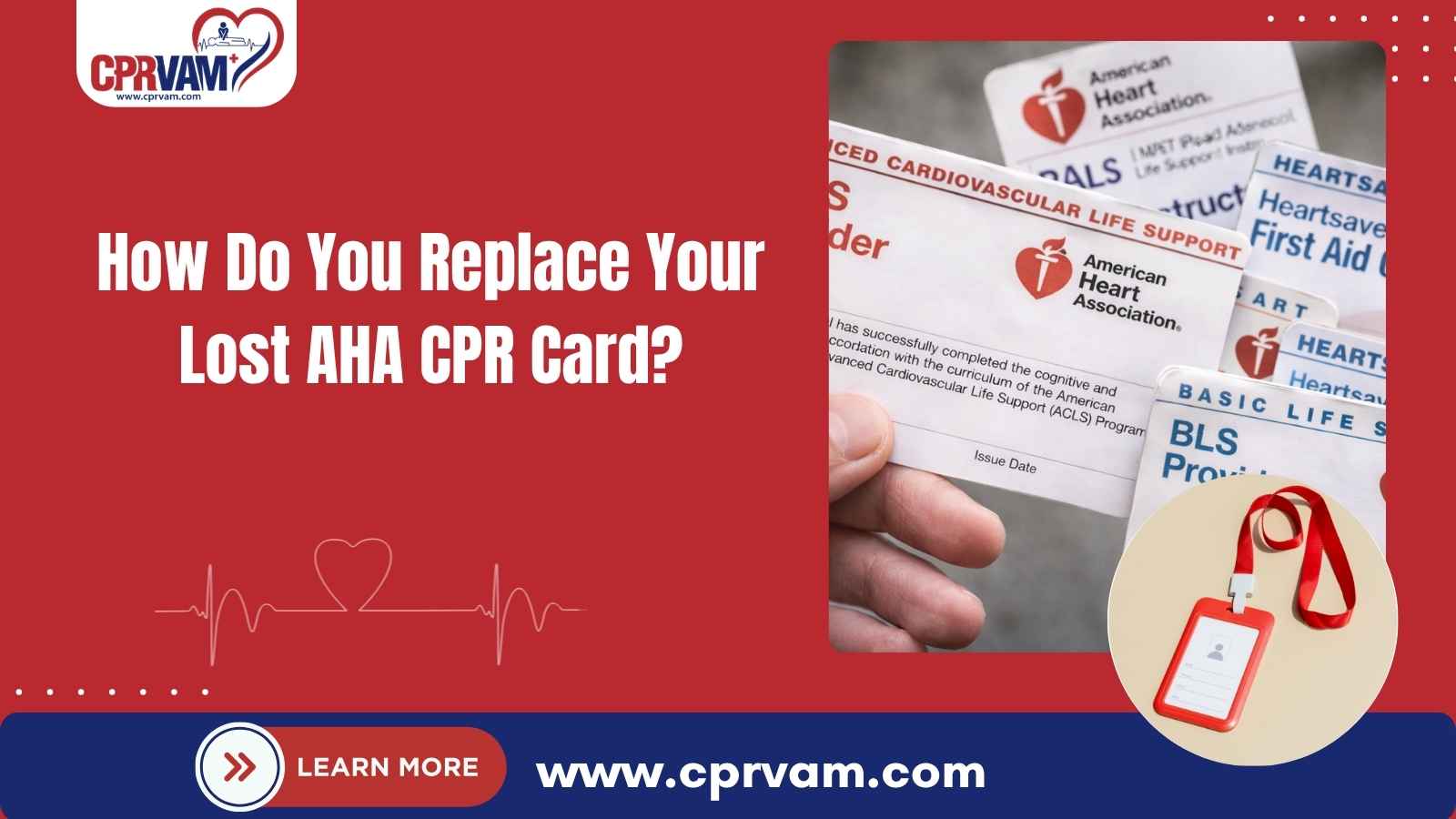
Losing your American Heart Association (AHA) CPR card can be stressful, especially if you need it for work, licensing, or course compliance. Your CPR card serves as proof that you have completed an AHA-approved course, such as BLS, ACLS, PALS, or Heartsaver, and demonstrates that you are certified to respond to emergencies confidently. Without it, employers or regulatory bodies may question your certification status.
Most AHA CPR certifications are now issued as digital eCards, making replacement simpler than ever. However, many cardholders still face challenges locating their card due to expired emails, unclaimed eCards, or printed cards that are misplaced. Understanding the proper steps for retrieving or replacing a lost card ensures you remain compliant and prepared.
This blog explains how to replace a lost AHA CPR card, common reasons cards are difficult to find, and tips to prevent future loss.
Can You Replace a Lost AHA CPR Card?
Yes. You can replace a lost AHA CPR card if your certification is still valid. The American Heart Association does not issue replacement cards directly. All replacements are handled by the AHA-authorized training center where you completed your course.
If you were issued an eCard, you can often recover it by checking your email or accessing it online. If you cannot find the eCard online or in your email, the training center can resend it or help you retrieve it. If you were issued a printed card, the training center can provide a duplicate.
If your CPR certification has expired, the card cannot be replaced, and you must take the course again. In short, lost AHA CPR cards can be replaced through the original training center as long as the certification has not expired.
What Are the Steps You Can Take to Replace Your Lost AHA CPR Card
Step 1: Understand the Type of Card You Received
Before initiating replacement, determine which form of card you were issued:
AHA eCard (Digital)
Most AHA training centers now issue eCards via email. This digital card is stored online and can be retrieved anytime through the AHA eCard portal.Printed AHA CPR Card
Some training centers still offer physical cards, either handed out in class or mailed afterward.
Your replacement process depends on the card type you initially received.
Step 2: Check Your Email for the Original AHA eCard
The first step in replacing a lost AHA CPR card is to check your email. After completing your CPR, BLS, ACLS, PALS, or Heartsaver course, the American Heart Association or your training center typically sends an eCard via email.
Search your inbox for keywords like “American Heart Association eCard”, “AHA CPR Certification”, your training center’s name, or the specific course you completed.
Check spam, junk, and archived folders, as emails from the AHA can sometimes be filtered.
If you find the email, you can download, print, or save the eCard for future use.
This step often resolves the issue without needing to contact your Training Center or the AHA.
Step 3. Access the AHA eCard Portal
If you cannot locate the original email, the next step is to access the AHA eCard portal. This online system allows you to search for and retrieve your certification directly.
Visit the official AHA eCard lookup website.
Enter your full name, email address used during course registration, and approximate course completion date.
Once your record is found, you can view, download, print, or share your eCard instantly.
Using the portal is a quick and secure way to replace your lost CPR card without retaking the course.
If you were issued an eCard and couldn’t find it on email, the next step is to access the AHA eCard portal. This online system allows you to search for and retrieve your certification directly:
Go to the official AHA eCard search page at heart.org/cpr/mycards.
Enter your first and last name, email address, or eCard code.
Follow the prompts to view or download your card.
This portal allows employers and cardholders to access and verify certificates 24/7, provided the card has been claimed.
Step 4. Contact Your Training Center
If you cannot locate your card or if it was a printed card, the next step is to contact the Training Center that issued your original certification:
Provide your full name, course date, and course type (e.g., BLS, CPR/AED).
Ask whether they can reissue an eCard or print a physical replacement.
Confirm whether there is any replacement fee; some training centers may charge for re-printing or re-issuing cards.
Ask about expected processing time (varies by training center).
According to AHA policy, training Centers are responsible for issuing duplicate cards if a card is lost, destroyed, or otherwise unusable.
Step 5. Contact the American Heart Association (If Needed)
If you cannot retrieve your CPR card through your Training Center or the eCard portal, contact the American Heart Association directly for assistance.
Provide your full name, course type (CPR, BLS, ACLS, PALS, or Heartsaver), approximate completion date, and the name of the Training Center, if known.
The AHA can verify your certification record, guide you on the next steps, and help you obtain a replacement eCard.
This step is usually a last resort, but it ensures that even if your Training Center is unavailable, you can still recover your official certification.
Contacting the AHA directly helps resolve missing records and provides a secure way to regain proof of your CPR certification.
What If Your CPR Certification Has Expired?
AHA CPR certifications are generally valid for two years. If your certification has expired, it cannot be replaced, and you will need to complete a new course to maintain compliance.
Here’s what to do if your card has expired:
Enroll in a new AHA-approved CPR or life support course (BLS, ACLS, PALS, or Heartsaver).
Complete the required training and skills assessment to demonstrate competency.
Receive a new AHA eCard upon successful completion, which serves as your official proof of certification.
Employers and regulatory agencies typically do not accept expired certifications, so timely renewal is essential to remain compliant and prepared to respond in emergencies.
What Are the Common Reasons You Can Not Find Your AHA CPR Card?
If you are unable to locate your American Heart Association (AHA) CPR card, it does not necessarily mean your certification was never issued. In most cases, the card exists but is difficult to find due to one or more of the following common reasons.
1. The eCard Email Went to Spam or Junk
Most AHA CPR cards are issued as digital eCards and sent by email. Automated emails are often filtered by email providers, causing the message to land in your spam, junk, or promotions folder instead of your main inbox.
2. You Used a Different Email Address During Registration
Many learners register using a work, school, or alternate email address. If you are checking the wrong inbox, the eCard will not appear. It is important to search all email accounts you may have used at the time of training.
3. You Did Not Claim Your eCard
If the eCard was issued but never claimed, it may not immediately appear in your records. Unclaimed cards can usually still be found by searching the official AHA eCard system using your name and course details.
4. You received a Printed Card Instead of an eCard
Some AHA Training Centers still issue physical CPR cards. If you received a printed card and misplaced it, there may not be a digital copy unless the training center also generated an eCard.
5. Name or Spelling Mismatch
A spelling error, use of a nickname, or inconsistent formatting during course registration can prevent your card from appearing in search results. Trying variations of your name often helps locate the record.
6. Your Certification Has Expired
Most AHA CPR certifications are valid for two years. Once the certification expires, the card may no longer be retrievable, and you will need to complete a renewal course to obtain a new one.
7. The Training Center Did Not Complete Card Issuance
In some situations, the training center may not have finalized the card issuance process. Contacting the training center directly is usually the fastest way to confirm whether the card was issued.
8. You Are Searching Outside the Official AHA System
AHA CPR cards can only be accessed through the official AHA eCard system or the training center that issued the certification. Third-party websites cannot retrieve or replace official AHA CPR cards.
How to Avoid Losing Your AHA CPR Card Again?
Losing your American Heart Association (AHA) CPR card can be inconvenient and stressful, especially when it is required for work or compliance. Taking a few proactive steps can help ensure you always have quick access to your certification.
You can avoid losing your AHA CPR Card by following these steps:
1. Save a Digital Copy Immediately
As soon as you receive your AHA eCard, download the PDF and save it on your phone, computer, or tablet. Keeping a digital copy ensures you can access your card anytime, even without internet access.
2. Email the Card to Yourself
Forward the eCard email to yourself or send the downloaded PDF to your primary email address. This creates an easy backup that can be found quickly through a simple email search.
3. Store the Card in Cloud Storage
Upload your CPR card to a secure cloud service such as Google Drive, iCloud, or OneDrive. Cloud storage protects your card from device loss or failure and allows access from anywhere.
4. Bookmark the AHA eCard Portal
Save the official AHA eCard portal in your browser. This makes it easy to retrieve your card again if you misplace your saved copy.
5. Use a Consistent Email Address for Training
Always use the same, frequently checked email address when registering for AHA courses. This reduces confusion and makes future card retrieval much easier.
6. Set a Certification Expiration Reminder
AHA CPR certifications typically expire after two years. Set calendar reminders several weeks before expiration so you can renew on time and avoid last-minute issues.
7. Keep Training Center Information
Save the name and contact details of the AHA Training Center where you completed your course. This information is helpful if you ever need assistance with card replacement or verification.
Get Your AHA CPR Card Back: Fast and Stress-Free
In conclusion, replacing a lost AHA CPR card is a simple process as long as your certification is still valid and you follow the correct steps. Whether you need to recover a digital eCard through your email or the AHA eCard portal, or request a duplicate from your original training center, understanding the type of card you received and knowing the proper retrieval methods ensures you can quickly regain proof of your CPR certification. Taking these steps not only helps maintain compliance with employers and regulatory requirements but also gives you peace of mind knowing your credentials are up to date and accessible when needed.
To stay fully prepared for any emergency and avoid future issues with lost or misplaced cards, consider enrolling in CPR VAM’s comprehensive CPR training programs, including BLS, PALS, and ACLS. These courses provide hands-on, expert-led instruction, official AHA certification, and practical skills that allow you to confidently respond to life-threatening situations. By completing your training with CPR VAM, you ensure your certification is properly documented, easily retrievable, and valid for professional or personal requirements, giving you long-term assurance and readiness in critical situations.