

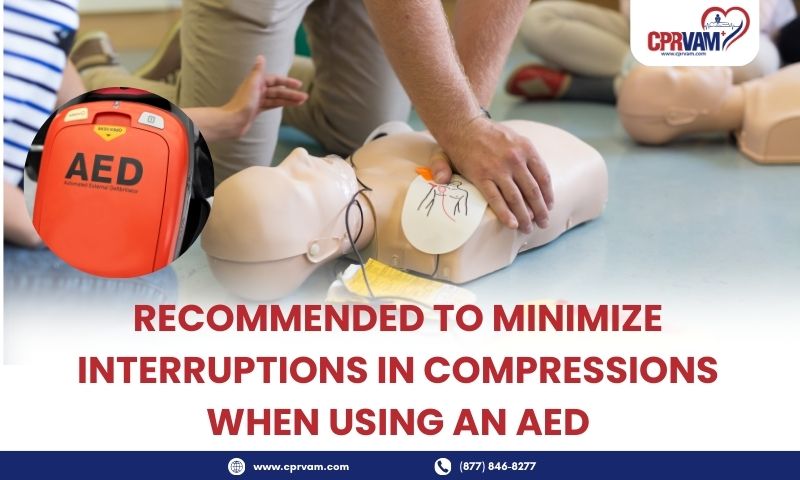
Sudden cardiac arrest is one of the most time-sensitive emergencies, where the brain and heart rely on every second of uninterrupted blood flow for survival. AEDs make defibrillation accessible to anyone, but their life-saving benefit depends on how efficiently they are used alongside CPR. The challenge many rescuers face is unintentionally stopping compressions too early or for too long, reducing perfusion and weakening the effectiveness of shock delivery. That’s why understanding how to keep compressions going, even while preparing and operating an AED, is a crucial part of modern resuscitation.
Research and resuscitation guidelines consistently emphasize that minimizing hands-off time dramatically improves survival. It’s not just about knowing where to place pads or when to shock; it’s about teamwork, timing, readiness, and technique that keep hands on the chest whenever possible.
This guide breaks down proven strategies to reduce pauses, explains why uninterrupted compressions matter, and highlights common mistakes rescuers make so you can avoid them. By mastering these principles, you’ll be prepared to deliver more effective CPR when it counts the most.
How to Minimize Interruptions in Compressions When Using an AED?
It is important to understand the strategies for minimizing interruptions in chest compressions when using an AED, as following them can dramatically improve a patient’s chance of survival. Knowing these steps helps you act confidently, maintain continuous circulation to vital organs, and perform smoother compressions in high-stress situations.
Here are the key ways to reduce interruptions in compressions when using an AED:
1. Prepare and Position AED Early While Continuing Compressions
The moment an AED arrives at the scene, chest compressions should continue without interruption. While one rescuer maintains compressions, another should immediately open the AED case, turn the device on, and position it beside the victim. All of these steps can, and should, be done while compressions are still in progress.
By preparing the AED early and in parallel with ongoing compressions, rescuers eliminate the common 15–30-second delay that often occurs when responders stop compressions to set up the device.
2. Get the Chest Ready for AED Pads
Before placing the AED pads, take a few quick steps to prepare the chest, all while compressions continue. Expose the victim’s chest by cutting or removing clothing, wipe away sweat or moisture, and remove objects such as necklaces or medication patches from the pad placement areas. If excessive chest hair prevents the pads from sticking, use the provided razor to shave only the necessary spots, working quickly to avoid delays.
These simple preparations ensure the pads adhere properly and the AED can analyze the heart rhythm accurately. Completing them during ongoing compressions prevents unnecessary pauses later, helping maintain continuous blood flow and improving the chances of a successful shock.
3. Apply AED Pads Quickly Without Pausing Compressions
AED pads should be applied as fast as possible and without stopping chest compressions. While one rescuer continues compressions, another should tear open the pad package, remove the backing, and place the pads firmly on the victim’s bare chest in the recommended locations, usually one pad on the upper right chest and the other on the lower left side.
Modern AEDs are designed so that pad placement does not interfere with compressions, allowing rescuers to prepare the device without losing valuable time. Applying pads during active compressions prevents unnecessary pauses and ensures the AED can begin its rhythm analysis immediately once instructed, keeping hands-off time to an absolute minimum.
4. Compress Until the AED Commands "Stand Clear"
Chest compressions should continue right up until the AED instructs you to stop. Many rescuers make the mistake of pausing too early while waiting for the AED to analyze, losing several seconds of crucial blood circulation. Instead, continue delivering high-quality compressions while the AED finishes pad detection, prepares to analyze, and gives verbal prompts.
Pause compressions only when the device states “Stop CPR,” “Do not touch the patient,” or “Stand Clear”. These commands indicate that the AED is ready to analyze the heart rhythm and needs the patient to be motionless to do so accurately. Pausing any earlier is unnecessary and reduces perfusion.
5. Hover Hands During Analysis
Hovering your hands over the chest during AED rhythm analysis is an advanced technique that helps minimize interruptions in compressions. While the AED analyzes the heart rhythm, the rescuer keeps their hands positioned just above the chest without touching the patient. This allows them to resume compressions instantly as soon as the device signals it is safe to do so.
By maintaining this readiness, the brief pause required for rhythm analysis does not extend unnecessarily, and blood flow to vital organs is restored immediately after the AED completes its assessment. This simple adjustment can significantly reduce hands-off time and improve the overall effectiveness of CPR, especially in high-stakes or team-based resuscitations.
6. Resume Compressions Immediately After Shock or Analysis
As soon as the AED delivers a shock or announces “No shock advised,” compressions must resume right away. Do not wait for additional prompts or lose time trying to check for a pulse until you see signs of ROSC. The first few seconds after a shock are critical, and restarting compressions immediately keeps blood flowing while the heart attempts to regain an effective rhythm.
The rescuer should hover their hands over the chest during shock delivery so they can begin compressions the moment the AED states it is safe. Even a delay of 5-10 seconds lowers coronary perfusion pressure and decreases the chances of successful resuscitation.
Quickly resuming compressions after shock or rhythm analysis is one of the most important ways to minimize hands-off time and significantly increase the chance of survival.
7. Follow Every Voice Instructions Promptly
AEDs are designed to guide rescuers step-by-step, and following the device’s voice prompts immediately is essential for minimizing interruptions in compressions. The AED’s instructions, such as “Attach pads,” “Stand clear,” “Begin CPR,” or “Shock advised,” are timed to keep pauses as short as possible and to ensure a smooth transition between CPR and AED functions.
Hesitating or delaying after a prompt can add unnecessary seconds of hands-off time, reducing blood flow and decreasing the chances of a successful shock. By responding promptly and confidently to each instruction, rescuers maintain momentum, avoid confusion, and ensure the AED can analyze and deliver treatment as efficiently as possible.
8. Use Hands-Free Defibrillation and Charge During Compressions
When available, use AEDs or defibrillators that allow hands-free charging during ongoing chest compressions. This technique enables the device to prepare for shock delivery while compressions continue, significantly reducing “hands-off” time.
While one rescuer maintains high-quality compressions, another can initiate charging without pausing. Once the AED indicates “Shock advised,” the compressor should briefly stop only to allow safe shock delivery, then immediately resume compressions.
Charging during compressions maximizes time on the chest, maintains blood flow, and increases the likelihood that the shock will be effective. This strategy is particularly useful in team-based resuscitation and in advanced CPR scenarios where every second counts.
9. Use Team Coordination and Role Assignment
Effective team coordination is essential for minimizing interruptions in chest compressions during AED use. In multi-rescuer situations, assigning clear roles ensures that each task, compressions, AED operation, airway management, and timing, is handled efficiently without confusion. Typically, one rescuer focuses solely on compressions, another operates the AED, and a third manages ventilation or airway support.
Clear communication is critical: verbal cues such as “switch,” “clear,” or “resume compressions” help synchronize actions and reduce delays. Regularly switching compressors every two minutes prevents fatigue and maintains high-quality compressions. By planning roles and maintaining clear communication throughout the resuscitation, teams can significantly reduce hands-off time, ensure seamless AED use, and maximize the patient’s chances of survival.
10. Use CPR Feedback Devices or Metronomes (If Available)
CPR feedback devices and metronomes are valuable tools for maintaining high-quality compressions and minimizing interruptions. Feedback devices can monitor compression depth, rate, and recoil, alerting rescuers if adjustments are needed in real-time.
Metronomes provide a consistent audio cue to help maintain the recommended compression rate of 100-120 compressions per minute.
Using these tools ensures that compressions remain effective and consistent, even under stressful conditions. They also help rescuers identify and correct pauses or slowdowns quickly, reducing unnecessary hands-off time. When available, integrating CPR feedback devices or metronomes into training and real-life resuscitations can significantly improve patient outcomes by supporting continuous, high-quality chest compressions.
11. Practice Regular Training and Drills
Regular training and practice drills are essential for minimizing interruptions during CPR and AED use. Frequent hands-on practice helps rescuers develop muscle memory for tasks such as pad placement, AED operation, and seamless handoffs between compressors. Teams that train together learn to coordinate roles efficiently, communicate clearly, and maintain continuous compressions even under pressure.
By simulating real-life scenarios in training, rescuers become more confident and proficient, reducing hesitation and unnecessary pauses during actual cardiac arrest events. Consistent practice not only improves technical skills but also ensures that every team member can respond quickly and effectively, ultimately increasing the likelihood of a successful resuscitation.
Why is Continuous Compressions Important without Interruptions?
Continuous chest compressions are critical for maintaining blood flow to the heart and brain during cardiac arrest. Every interruption in compressions causes blood pressure to drop, and it can take several compressions to restore adequate circulation. Even brief pauses reduce coronary perfusion pressure, lowering the chances that a defibrillation shock will successfully restart the heart.
Maintaining uninterrupted compressions ensures that oxygenated blood continues to reach vital organs, improving the likelihood of survival and favorable neurological outcomes. Studies consistently show that the fewer and shorter the pauses, the higher the patient’s chance of recovery. This is why minimizing interruptions, whether during AED use or manual CPR, is a key principle in resuscitation guidelines.
What are Common Challenges and Solutions During Compressions?
It can be challenging to perform high-quality chest compressions, especially in real-life emergencies where every second is crucial. Obstacles such as clothing, environmental hazards, or technical equipment issues can slow down response and reduce the effectiveness of CPR. Understanding these common challenges and knowing practical solutions allows rescuers to tackle these challenges smoothly.
Below are some of the common challenges while providing AEDs that can increase the pause for compressions:
1. Difficulty Managing Clothing or Accessories
Challenge: Thick clothing, jewelry, or medication patches that are difficult to remove can delay pad placement and AED use.
Solution: Quickly remove by tearing, cutting, or adjusting clothing and accessories while continuing compressions to ensure proper pad adhesion.
2. Environmental Obstacles
Challenge: Wet surfaces, cluttered spaces, or poor lighting can slow response and create safety hazards.
Solution: Clear the area, move the patient to a safe and accessible location if possible, and maintain compressions during adjustments. Remember that if the place is not safe, you should remove the victim to a safe place before starting CPR.
3. Technical Issues with AED
Challenge: Pads may not stick properly, batteries may be low, or the device may malfunction.
Solution: Prepare the AED ahead of time, check pad adhesion, and troubleshoot minor issues quickly while compressions continue.
What are the Mistakes to Avoid to Minimize Interruptions in Compressions?
Even small errors during CPR can lead to unnecessary pauses and reduce the effectiveness of chest compressions. Knowing the common mistakes to avoid helps rescuers maintain continuous, high-quality compressions and improves the chances of a successful resuscitation.
Here are some frequent mistakes that can lead to unnecessary pauses:
1. Getting Distracted by Non-Essential Tasks
One of the biggest mistakes rescuers make is losing focus on the primary goal, continuous, high-quality chest compressions. Activities such as unnecessarily removing extra clothing, searching for tools like razors or scissors, repositioning the victim when it’s not required, or engaging in conversations can cause dangerous delays.
These non-essential tasks interrupt the compression rhythm and reduce blood flow to the brain and heart. Stay focused on what matters most: keeping compressions going with minimal pauses.
2. Letting Only One Rescuer Do All the Work
Allowing a single rescuer to perform chest compressions for too long leads to rapid fatigue. Even after one minute, compression depth and consistency can decline without the rescuer realizing it. This results in weak, ineffective CPR and unnecessary pauses when the rescuer tires out.
To maintain high-quality compressions, switch rescuers every 2 minutes. Quick, well-coordinated switches ensure compressions remain strong, steady, and uninterrupted.
3. Delaying Compressions to Adjust the Victim’s Position
Stopping compressions to move or reposition the victim when it’s not necessary creates avoidable and harmful delays. In most cases, the victim can be treated exactly where they are unless the environment is unsafe. You should focus on chest compressions and avoid repositioning the victim unless there is immediate danger or a major obstruction.
4. Pausing Compressions to Check for Signs of Life Too Often
Frequently stopping CPR to look for breathing, movement, or a pulse causes harmful interruptions. These pauses disrupt blood flow and reduce the effectiveness of both CPR and potential defibrillation. Rescuers should only pause compressions when necessary, such as when the AED instructs a rhythm analysis or when switching rescuers.
5. Taking Too Long to Apply AED Pads
Many rescuers hesitate or move slowly when placing AED pads, which leads to unnecessary pauses in chest compressions. Delays often happen while searching for the pads, reading instructions, or trying to position them with extra precision.
To minimize interruptions, apply the pads quickly and confidently, and if more than one rescuer is available, let one person handle pad placement while another continues compressions. Compressions should stop only when the AED begins rhythm analysis.
Reduce Interruptions to Maximize CPR Effectiveness and Survival
Interruptions in chest compressions must be kept to a minimum during CPR and AED use, as every pause reduces blood flow to the heart and brain and lowers survival chances. Rescuers should apply AED pads quickly, follow voice prompts promptly, coordinate team roles, and resume compressions immediately after shocks. Avoiding distractions and unnecessary pauses ensures continuous, high-quality compressions, maximizing survival and improving outcomes during cardiac arrest.
If you want to build the skills and confidence needed to apply these lifesaving techniques effectively, CPR VAM can help. We are an American Heart Association (AHA) certified training center offering expert-led CPR, BLS, ACLS, and PALS courses across the U.S., designed to help you learn at your own pace, gain hands-on experience, and get certified instantly. Protect your family, advance your career, and be prepared to make a difference in an emergency.
Enroll with CPR VAM near your location today and take the first step toward becoming a true lifesaver.