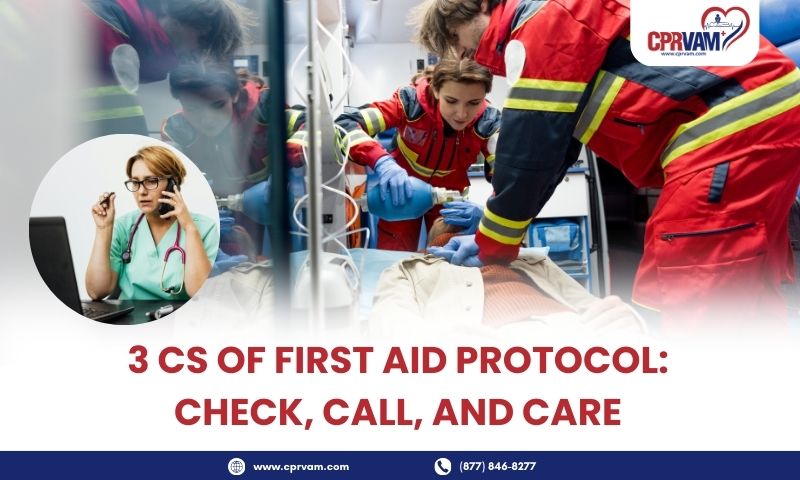
Have you ever been unsure what to do in an emergency? The Three C’s: Check, Call, Care-offer a structured, step-by-step approach that lets you act confidently and safely before professional help arrives. Most people know first aid as a set of skills, but it is actually a structured way to act confidently when someone is injured or sick. Understanding the Three C’s gives you a simple step-by-step plan to take action safely before trained help arrives, based on trusted science from the American Heart Association.
Each year across the United States, thousands of emergencies occur in homes, workplaces, and public places. Quick action can save lives, and early steps like recognizing danger, dialing 911, and starting basic care make a measurable difference. For example, high-quality CPR delivered immediately can double or triple a cardiac arrest victim’s chance of survival, as outlined by AHA guidelines.
This blog explains how the Three Cs of First Aid help bystanders act safely and effectively in emergencies using AHA-recommended life-saving steps.
What Is the Purpose of a First Aid Response Framework Like the Three C’s?
A First Aid response framework like the Three Cs helps you stay calm and act efficiently in emergencies. It guides you to assess the scene safely, involve emergency services quickly, and provide meaningful care that can preserve life, prevent further injury, and support recovery. Following these steps ensures you make the right choices when seconds matter.
3 C’s Help You in the Following Way:
- Prioritize safety for yourself and the victim before taking action.
- Ensure emergency services are contacted promptly.
- Provide meaningful care within your abilities until professional help arrives.
The AHA and Red Cross emphasize that first aid is about protecting life, reducing harm, and promoting recovery. By following these principles, you can respond effectively, stay confident, and make a real difference when it matters most.
What Are the Steps to Respond Safely and Effectively in an Emergency?
Responding effectively in an emergency requires following a structured approach that prioritizes your safety, timely action, and appropriate care for the victim. This approach is often summarized by the Three C’s: Check, Call, and Care. Each step ensures that you respond in a way that protects both you and the victim while maximizing the chances of a positive outcome.
Here are the details about the 3 C’s and how they help you respond safely and effectively in an emergency.
1. Check: Assessing the Scene and the Person Before Helping
Before you provide aid, it’s crucial to quickly assess the scene and the victim. Checking ensures your safety, identifies immediate dangers, and helps you prioritize care so you can act effectively without putting yourself or others at risk.
Key Points
- Ensuring the Scene Is Safe for You and Others
Before approaching, look for hazards like fire, traffic, electrical wires, or violent behavior. You must ensure the area is secure. You cannot help someone safely if you put yourself in danger, so wait if necessary. - Assessing the Victim’s Responsiveness and Condition
Gently tap the person and ask, “Are you okay?” Check for responsiveness and observe breathing for about 10 seconds. You should also check for severe bleeding, paralysis, or obvious trauma before deciding the next steps. - Prioritizing Care for Multiple Victims
If more than one person is injured, identify who needs urgent care first, such as those unresponsive, not breathing, or bleeding heavily. You can also delegate others to call for help while you continue evaluating. - Performing a Quick and Systematic Check
Your assessment should be efficient but thorough. If you move too slowly, you waste critical time. If you rush, you might miss hazards, unresponsiveness, or serious injuries. You should aim for a careful, quick, systematic evaluation.
2. Call: Activating Emergency Services
Once you recognize someone needs urgent help, you must call emergency services immediately. Promptly contacting 911 ensures trained professionals arrive quickly. You can provide essential information while following dispatcher guidance to support the victim effectively.
Main Highlights
- Identifying When to Call Emergency Services
You should call right away if the victim is unresponsive, not breathing normally, bleeding heavily, showing signs of a heart attack or stroke, or experiencing severe trauma. Acting quickly ensures emergency teams can intervene before conditions worsen. - Providing Clear Information During the Call
When you speak to dispatch, stay calm and communicate clearly. Give your exact location, the number of victims, and a brief description of injuries or symptoms. You help responders prepare for the situation more efficiently. - Following Dispatcher Instructions
You should carefully follow the instructions given by the dispatcher. They can guide you through CPR, first aid, or other life-saving actions. It increases the victim’s chance of survival until professionals arrive. - Delegating the Call If Others Are Present
If others are nearby, you can delegate the call to someone else while you stay with the victim. For example, tell them, “You call 911 now and explain exactly where we are,” so you can continue providing care.
3. Care: Providing First Aid Before Help Arrives
The Care step focuses on giving first aid according to the victim’s condition and your training. You provide immediate support for life-threatening or critical situations while keeping yourself safe and helping the victim survive until professional help arrives.
Major Consideration
- Addressing Life-Threatening Conditions First
You should focus on urgent threats such as no breathing, cardiac arrest, severe bleeding, or choking. Begin Hands-Only CPR if needed, apply direct pressure to wounds, and use the Heimlich maneuver if you are trained and able. - Providing Basic but Crucial Comfort Care
You can help the victim stay calm and warm. If they are breathing but unconscious, place them in the recovery position on their side, avoiding spine injuries. Continuously monitor breathing, pulse, and responsiveness until EMS arrives. - Staying Within Your Capabilities
You should only perform first aid techniques that you are trained to do. Avoid advanced interventions like injections or airway devices unless certified. Continue basic care while communicating with dispatch for guidance and support.
What Are the Most Common Emergency Scenarios Where the Three C’s Apply?
Emergencies can happen anytime, and knowing how to respond can save lives. By following Check, Call, Care, you can quickly assess the situation, alert for help, and provide the right support for choking, severe bleeding, or a heart attack until professionals arrive.
Here are some emergencies where you can apply the Three C’s.
1. Choking Victims
First, check if the person can speak or cough. If they cannot breathe properly, you should call emergency services immediately. Provide care by performing abdominal thrusts, such as the Heimlich maneuver, until the obstruction is cleared and the person can breathe safely.
2. Severe Bleeding
Begin by assessing the scene and identifying the source of bleeding. You must call EMS right away. While waiting, apply direct pressure using dressings or clean cloths, and elevate the injured area when possible to reduce blood loss and stabilize the victim.
3. Heart Attack Signs
Check for symptoms like chest pain, shortness of breath, or dizziness. You should call emergency services immediately. Keep the person calm and comfortable. If you are trained, provide care according to guidelines while monitoring their condition until help arrives.
Why Are the Three C’s of First Aid Important for Everyone to Know?
Unexpected emergencies require quick and confident action. The Three C’s provide a straightforward approach you can rely on. This method supports faster responses, personal safety, early EMS involvement, and meaningful assistance during critical situations.
Here is the importance of the Three C’s explained in the following ways:
1. Responding Quickly Can Save Lives
When you follow the Three C’s, you act with purpose instead of panic. Quickly checking the situation, calling for help, and providing care reduces response time. In emergencies like cardiac arrest or severe bleeding, those early moments can significantly improve survival outcomes.
2. Protect Yourself Before Helping Others
The Three C’s remind you to protect yourself before helping others. By checking for dangers first, you avoid becoming another victim. Staying safe allows you to continue helping and ensures the situation does not worsen for everyone involved.
3. Better Coordination With Emergency Services
Calling emergency services early gives responders time to prepare and arrive faster. When you share clear details, emergency teams can bring the right equipment and guidance. This coordination improves care continuity from the scene to professional treatment.
4. Confidence and Empowerment for Bystanders
The Three C’s empower everyday people to take action. Even without medical training, you can follow clear steps that make a real difference. Knowing what to do helps reduce fear, builds confidence, and turns hesitation into helpful action during emergencies.
Why Preparedness and Proper Training Are Essential
The Three C’s Check, Call, Care provide a simple plan when emergencies feel overwhelming. They help you stay focused, protect yourself, and take action quickly. With proper first aid training, this knowledge becomes confidence, allowing you to respond calmly and effectively when someone needs help most.
Be Ready. Get Certified at CPR VAM, an AHA Certified Training Center. Our hands-on expert-led courses teach you the Three C’s Check, Call, Care so you can act quickly, stay safe, and provide life-saving support when every second counts. Sign up today and be prepared to save a life.
FAQs
1. What Does Check, Call, Care Mean in First Aid?
Check, Call, Care is a simple framework that guides you to assess the scene, contact emergency services, and provide immediate care. It helps you act quickly and safely in emergencies.
2. Why Should You Check the Scene Before Helping?
Checking the scene keeps you safe and prevents additional accidents. By looking for hazards and evaluating the victim’s condition, you can respond effectively without putting yourself or others at risk.
3. When Is It Necessary to Call 911?
Call immediately if someone is unresponsive, not breathing normally, bleeding heavily, or showing heart attack or stroke symptoms. Acting fast ensures professional help reaches the victim without delay.
4. What Type of Care Should You Give While Waiting for Help?
Focus on urgent threats like no breathing, severe bleeding, or choking. You can provide CPR, apply pressure to wounds, or use the Heimlich maneuver if trained, while keeping the person calm and monitored.
5. How Do the Three C’s Help in Situations With More Than One Victim?
They help you prioritize care efficiently and delegate tasks to others. By evaluating responsiveness and severity, you can manage multiple victims safely and effectively.