




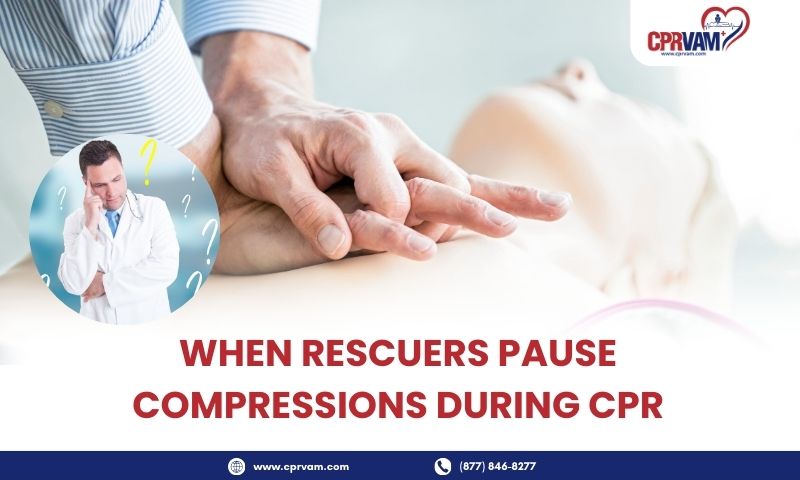
Sudden cardiac arrest (SCA) is a leading cause of death worldwide, and immediate CPR can make the difference between life and death. High-quality CPR, which focuses on strong and continuous chest compressions, plays a critical role in survival because it maintains blood flow to the brain and heart. Research shows that even brief interruptions in compressions can sharply reduce circulation, highlighting why minimizing pauses is essential for every rescuer.
Pauses in CPR, while sometimes necessary, should be brief and purposeful. For example, compressions may be paused to deliver rescue breaths, analyze the heart rhythm with an AED, deliver a defibrillation shock, or switch rescuers to prevent fatigue. By keeping these interruptions under 10 seconds whenever possible, rescuers ensure that circulation continues uninterrupted, which maximizes the effectiveness of CPR and improves the chances of a successful resuscitation.
This blog explains the key moments when rescuers should pause compressions, the impacts of unnecessary interruptions, and practical strategies to maintain high-quality CPR.
When Is Compression Paused During High-Quality CPR?
High-quality CPR saves lives by keeping blood flowing to the brain and heart during sudden cardiac arrest. While chest compressions should be continuous, there are specific moments when brief pauses are necessary to ensure safety and effectiveness.
Below are the key situations when rescuers may pause compressions during high-quality CPR, helping maintain circulation and maximize a victim’s chances of survival:
1. Giving Rescue Breaths (Conventional CPR)
During high-quality CPR, compressions are briefly paused to deliver rescue breaths after completing 30 chest compressions. Two rescue breaths are delivered, each lasting 1 second. This interruption is kept as short as possible, ideally under 10 seconds, to maintain continuous blood flow.
A pause for rescue breaths is appropriate only if the rescuer is trained and capable of giving effective ventilations. However, if the rescuer is untrained or unsure, chest compressions are not paused during high-quality CPR to provide rescue breaths. In this situation, the rescuer focuses solely on hands-only CPR, which greatly increases the victim’s chance of survival until professional help arrives.
2. When the AED Checks Heart Rhythm
During high-quality CPR, chest compressions are briefly paused when an Automated External Defibrillator (AED) analyzes the heart’s rhythm. After the AED instructs “analyzing rhythm” or “do not touch the victim,” rescuers pause compressions as any movement can interfere with the AED’s ability to determine whether a shock is needed. This pause should be kept as short as possible, ideally under 10 seconds, to maintain blood flow to the brain and heart.
Once the analysis is complete, if the AED advises a shock, it should be delivered immediately, and compressions resumed right afterward. If no shock is required, rescuers should continue compressions without delay. This brief interruption is one of the few acceptable pauses in high-quality CPR, underscoring the importance of minimizing downtime while using an AED.
3. During Shock Delivery
Chest compressions are briefly paused when delivering a defibrillation shock as part of high-quality CPR. This pause is essential for the safety of both the rescuer and the patient, as compressions must stop while the shock is administered. The AED will typically instruct the rescuer to “stand clear” or “do not touch the patient” before delivering the shock.
Pauses should be kept as short as possible, ideally under 10 seconds, to maintain blood flow to the brain and heart. Immediately after the shock is delivered, rescuers should resume chest compressions without delay to sustain circulation and maximize the effectiveness of CPR.
4. Switching Rescuers' Position
Chest compressions may need to be briefly paused when switching rescuer position during high-quality CPR. Rotating rescuers helps prevent fatigue, which can compromise the depth and rate of compressions if one person continues for too long. The handoff is performed smoothly and quickly, ideally in under 10 seconds, to ensure continuous circulation. Proper coordination during rescuer changes allows compressions to resume immediately, maintaining the effectiveness of CPR throughout the resuscitation effort.
5. Checking for Signs of Life
Pauses in chest compressions may occur when checking for signs of life, but this should be done only by trained healthcare providers and only at specific intervals during high-quality CPR. Briefly assessing responsiveness or checking for a pulse can help determine if resuscitation efforts should continue, but these interruptions should be kept as short as possible to avoid reducing blood flow to vital organs.
Frequent or prolonged checks by untrained rescuers can decrease the effectiveness of CPR, so compressions should otherwise continue without interruption. Limiting pauses to necessary evaluations by professionals ensures that the overall quality of resuscitation is maintained.
6. Handling Safety Hazards
Before starting CPR, rescuers should always check for safety risks, but sometimes hazards may not be immediately apparent. Occasionally, safety risks for the rescuer or patient may become noticeable after CPR has already begun. In such cases, chest compressions should be paused when obvious dangers occur to protect everyone involved. Examples of hazards include electrical currents, fire, traffic, or unstable surroundings, all of which require an immediate stop until the environment is safe.
These pauses are essential for safety, but compressions should be resumed as soon as it is safe. Being vigilant and responding quickly to potential dangers ensures that life-saving efforts continue without compromising the safety of rescuers or patients.
7. Performing Advanced Life Support (ALS) Procedures
In professional healthcare settings, trained medical teams may briefly pause chest compressions to perform certain Advanced Life Support (ALS) procedures that require stillness or precise placement. For example, some monitoring devices or airway equipment need the chest to be motionless for accurate use or safe adjustment. These pauses are carefully timed, kept as short as possible, and occur only when necessary. Even during ALS interventions, the priority remains to minimize interruptions and resume high-quality chest compressions immediately once the required action is complete.
Which Actions Should Not Cause Pauses During High-Quality CPR?
Rescuers should avoid stopping chest compressions for reasons that do not directly improve the patient’s outcome. Unnecessary pauses reduce blood flow and lower the chances of survival.
Actions that should not cause pauses include:
- Repeated Pulse Checks
Compressions should not be stopped multiple times to look for a pulse or reassess the victim unnecessarily. - Unnecessary Condition Checks
Pausing to repeatedly check breathing, check responsiveness, or overall condition reduces CPR effectiveness. - Looking for Injuries
Stopping compressions to search for other injuries is not appropriate during active resuscitation. - Repositioning Without Need
Adjusting the victim’s position or moving the body without a safety reason should not interrupt compressions. - Rescuer Hesitation or Confusion
Uncertainty about what to do next is not a valid reason to pause; compressions should continue while help or equipment is prepared. - Unimportant Discussions
Discussing plans, giving instructions, or coordinating roles should be done while compressions continue, not during a pause. - Breaths by Untrained Rescuers
If the rescuer is not trained to give effective rescue breaths, they should not pause compressions to attempt them.
How Do Unnecessary Pauses in CPR Impact Survival and Resuscitation Outcomes?
Unnecessary pauses during CPR have serious, measurable consequences on a victim’s chance of survival. When compressions stop without a valid medical reason, the body’s blood pressure drops instantly, making it significantly harder to achieve effective resuscitation.
Below are the major impacts of unnecessary pauses and why maintaining continuous compressions is essential:
1. Loss of Blood Flow to the Brain
When compressions stop, blood flow to the brain stops instantly. The brain cannot store oxygen, so even short interruptions increase the risk of brain damage. Continuous compressions help maintain steady oxygen delivery, while unnecessary pauses reduce the chances of a full neurological recovery.
2. Drop in Coronary Perfusion Pressure (CPP)
The pressure that supplies oxygen-rich blood to the heart muscle drops sharply the moment compressions stop. Without adequate CPP, the heart becomes less responsive to defibrillation and more difficult to restart. Once compressions resume, rescuers must deliver several compressions just to reestablish the lost pressure and restore forward blood flow. This wasted time directly reduces the effectiveness of the resuscitation attempt.
3. Reduced CPR Effectiveness After Each Pause
Every pause causes CPR to become temporarily less effective. It takes several compressions to rebuild forward blood flow after each interruption, meaning unnecessary pauses create repeated setbacks. This reduces the overall efficiency of CPR and weakens its life-saving impact.
4. Lower Chance of Successful Defibrillation
Defibrillation works best when the heart receives steady oxygen through continuous compressions. When pauses limit blood flow, the heart becomes less responsive to shocks. This may require multiple shocks and delay the return of a normal rhythm, reducing the chance of successful resuscitation
5. Overall Decrease in Survival Rates
Multiple unnecessary pauses lower the victim’s overall chance of survival. Interruptions reduce blood flow, delay vital interventions, and worsen the heart’s response to defibrillation. Victims who receive uninterrupted compressions consistently have better survival and recovery outcomes.
How to Maintain High-Quality CPR With Minimal Pause for Compression?
Maintaining high-quality CPR with as few interruptions as possible is essential for keeping blood flowing to the brain and heart. The goal is to deliver strong, steady compressions while avoiding any pause that does not directly improve the victim’s outcome. By following proven techniques and working efficiently, rescuers can ensure CPR remains effective throughout the resuscitation effort.
Here are some of the proven tips to maintain high-quality CPR with minimal pause:
1. Use a Team-Based Approach
Working as a coordinated team helps minimize unnecessary pauses. Assigning clear roles, such as compressor, AED operator, and airway assistant, allows each rescuer to focus on one task without interrupting compressions. Team members should communicate clearly, rotate efficiently, and prepare equipment without stopping CPR.
2. Switch Rescuers Regularly
Compressions are physically demanding, and fatigue leads to slower, shallower compressions. To avoid this, rescuers should switch roles about every two minutes or sooner if quality declines. A quick, well-timed switch ensures that compressions remain strong while keeping the pause as brief as possible.
3. Prepare and Position Equipment in Advance
Having equipment ready and within reach prevents unnecessary interruptions. AED pads should be applied quickly and correctly, and any needed tools, such as barrier devices or airway equipment, should be set up while compressions continue. Planning helps maintain a smooth rhythm throughout the procedure.
4. Anticipate AED Prompts
Rescuers should be familiar with how AEDs function so they know when a rhythm analysis or shock is about to occur. Anticipating these moments allows the team to prepare without confusion or delays. As soon as the AED finishes analyzing or delivers a shock, compressions should resume immediately.
5. Maintain Proper Compression Technique
Using the correct rate, depth, and hand placement keeps compressions effective even when fatigue begins to set in. Rescuers should aim for a rate of 100-120 compressions per minute and a depth of 2-2.4 inches, allowing full chest recoil. Good technique ensures that precious compressions are not wasted.
6. Train Regularly to Build Confidence and Skill
Frequent CPR training helps rescuers perform smoothly and confidently during real emergencies. Regular practice builds muscle memory, reduces hesitation, and ensures rescuers know when pauses are necessary and when they are not. Skilled training leads to faster decisions, better teamwork, and fewer interruptions overall.
Get Trained to Deliver High Quality CPR Today!
Therefore, rescuers pause chest compressions during high-quality CPR only for essential reasons, such as giving rescue breaths, using an AED to analyze rhythm, delivering a shock, switching rescuers, or addressing safety risks. Unnecessary pauses reduce blood flow to the brain and heart, lowering survival chances. To maintain effective CPR, compressions should be continuous, brief pauses kept under 10 seconds, and rescuers should work as a team, use proper technique, and train regularly. Following these guidelines ensures the highest chance of survival and recovery during a cardiac emergency.
To build these critical skills and be fully prepared in an emergency, enhance your lifesaving abilities and confidence with CPR VAM. As an AHA-certified training center, we offer expert-led CPR courses across the U.S. Learn at your own pace, gain hands-on experience, and get certified instantly. Enroll today and be ready to save lives when it matters most.
By following these guidelines and proper training, you maximize circulation, improve defibrillation effectiveness, and give victims the best possible chance of survival and full recovery