Cardiopulmonary resuscitation (CPR) is an essential life-saving technique used in emergencies where a person’s heart stops beating or they stop breathing. Quick and effective CPR can maintain blood flow and oxygen to vital organs, preventing permanent brain damage or death. From cardiac arrest to choking, drowning, or severe trauma, knowing how to respond promptly can make the difference between life and death. Understanding who should perform CPR and the proper training required is crucial for saving lives in both everyday and professional settings.
While anyone can perform hands-only CPR in an emergency, formal training greatly increases effectiveness and confidence. Healthcare professionals, first responders, teachers, caregivers, and even workplace personnel benefit from learning proper chest compression techniques, rescue breathing, and the safe use of automated external defibrillators (AEDs). Training programs like Heartsaver, Basic Life Support (BLS), Advanced Cardiovascular Life Support (ACLS), and Pediatric Advanced Life Support (PALS) ensure that responders are prepared for emergencies involving adults, children, and infants.
This blog explains who should perform CPR, what training is required, and why certification matters. It also highlights the best ways to get certified and stay prepared to save lives when it matters most.
What Is CPR?
Cardiopulmonary resuscitation (CPR) is a life-saving emergency procedure used when a person’s heart stops beating or they stop breathing. It helps maintain blood flow and oxygen to the brain and other vital organs until professional medical help arrives. CPR is most commonly needed during cardiac arrest, drowning, choking, severe trauma, drug overdose, or electrocution. Without immediate intervention, brain damage can begin within minutes, making early action critical to survival.
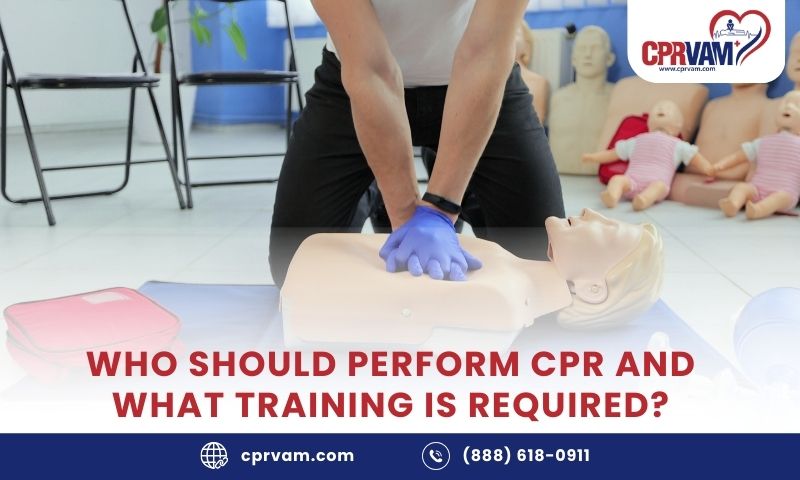
CPR typically involves chest compressions and, in some cases, rescue breaths, to manually circulate blood and provide oxygen. For adults who suddenly collapse, chest compression-only CPR (continuous chest compressions at a rate of 100-120 per minute) is often recommended for untrained bystanders. While CPR does not usually restart the heart on its own, it keeps the body functioning until an automated external defibrillator (AED) or emergency medical services can provide advanced care.
Who Should Perform CPR?
Anyone can perform CPR during an emergency, especially if someone is unresponsive and not breathing. However, healthcare professionals, first responders, teachers, caregivers, and trained employees are strongly encouraged to maintain CPR certification.
The following people can perform CPR:
1. Healthcare Professionals
Healthcare professionals are expected to perform CPR as part of their clinical responsibilities and patient care duties. These individuals receive formal training to respond quickly and effectively during cardiac or respiratory emergencies in medical settings such as hospitals, clinics, and emergency response units. Their training ensures they can perform high-quality CPR, operate medical equipment like automated external defibrillators (AEDs), and coordinate with resuscitation teams.
Healthcare professionals who typically require CPR training include doctors, nurses, paramedics, emergency medical technicians (EMTs), respiratory therapists, dentists, and other clinical staff. Most healthcare workers are required to obtain certifications such as Basic Life Support (BLS), and depending on their specialty, they may also need advanced certifications like Advanced Cardiovascular Life Support (ACLS) or Pediatric Advanced Life Support (PALS) to manage complex medical emergencies.
2. First Responders and Public Safety Personnel
First responders and public safety personnel are often among the first individuals to arrive at emergency scenes, making CPR training a critical requirement for these roles. Their responsibility is to provide immediate life-saving care, stabilize individuals experiencing cardiac or respiratory emergencies, and support patients until advanced medical teams arrive. Quick action by first responders can significantly improve survival outcomes during cardiac arrest and other life-threatening situations.
Professionals in this category include firefighters, police officers, lifeguards, search and rescue personnel, and security officers. These individuals typically receive professional-level CPR and automated external defibrillator (AED) training as part of their certification. Their training focuses on delivering high-quality chest compressions, safely using emergency equipment, and coordinating emergency response efforts in high-pressure situations.
3. Workplace Employees and Safety Personnel
Workplace employees and safety personnel often receive CPR training to support emergency preparedness and maintain a safe working environment. Many organizations designate specific staff members to respond to medical emergencies, especially in industries where physical risks or large public interactions are common. Having CPR-trained employees on-site can help provide immediate assistance before emergency medical services arrive, improving workplace safety outcomes.
Industries that commonly require or encourage CPR certification include construction, manufacturing, fitness centers, sports facilities, hospitality venues, and corporate offices. Safety officers, human resource personnel, supervisors, and designated first aid responders are frequently trained in CPR and automated external defibrillator (AED) use. This training helps employees recognize medical emergencies, respond effectively, and follow workplace safety protocols.
4. Teachers, Coaches, and Childcare Providers
Teachers, coaches, and childcare providers play a critical role in supervising children and adolescents, making CPR training especially important in these settings. Children are more vulnerable to breathing emergencies, choking incidents, and sudden medical conditions, and having trained adults nearby ensures faster and more effective emergency response. Many schools, childcare centers, and sports programs require CPR certification as part of employment or licensing standards.
This group includes teachers, school administrators, sports coaches, athletic trainers, daycare workers, babysitters, and nannies. Their CPR training often emphasizes pediatric and infant CPR techniques, as well as choking response and AED use. Being CPR-certified allows these professionals to act quickly and confidently during emergencies, helping protect the health and safety of children under their care.
5. Family Members and Caregivers
Family members and caregivers are often the first people present when a medical emergency occurs at home, making CPR training highly valuable for this group. Individuals caring for elderly family members, infants, or people with chronic health conditions may face a higher risk of encountering cardiac or breathing emergencies. Learning CPR allows caregivers to respond quickly, provide immediate assistance, and support the individual until emergency medical services arrive.
This group includes parents, guardians, relatives, home health aides, and personal caregivers. CPR training for caregivers typically covers adult, child, and infant CPR techniques, choking response, and automated external defibrillator (AED) awareness. Having CPR knowledge can improve emergency response time, increase survival chances, and provide caregivers with greater confidence when managing unexpected medical situations.
What Training Is Required to Perform CPR?
CPR training ensures that individuals respond effectively during emergencies and can perform life-saving techniques with confidence. The level of training depends on the responder’s role and the type of emergencies they may encounter.
Below are the main types of CPR training programs:
1. Heartsaver Courses
Heartsaver courses are entry-level CPR training programs designed for non-medical individuals who need certification for work, school, or personal preparedness. These courses are ideal for teachers, coaches, childcare providers, fitness trainers, office employees, and parents who want to be prepared to respond in an emergency. No prior medical experience is required.
Heartsaver training typically covers adult CPR and AED use, as well as child and infant CPR, depending on the course selected. Many programs also include first aid and choking relief techniques. The focus is on simple, hands-on instruction that builds confidence in recognizing cardiac arrest, calling emergency services, and delivering effective chest compressions. Certification is usually valid for two years and may be required by employers in education, childcare, and workplace safety settings.
2. Basic Life Support (BLS) Certification
Basic Life Support (BLS) certification is a higher-level CPR training program designed for healthcare professionals and clinical personnel. It is typically required for nurses, physicians, EMTs, paramedics, dental professionals, and hospital staff. BLS goes beyond standard CPR by focusing on delivering high-quality resuscitation in medical and emergency care settings.
BLS training includes adult, child, and infant CPR, two-rescuer CPR techniques, team-based resuscitation, bag-mask ventilation, and proper use of an automated external defibrillator (AED). Participants also learn how to quickly recognize cardiac arrest, improve chest compression quality, minimize interruptions, and coordinate effectively during emergency response situations. BLS certification is generally valid for two years and must be renewed to ensure providers maintain up-to-date life-saving skills.
3. Advanced Cardiovascular Life Support (ACLS)
Advanced Cardiovascular Life Support (ACLS) is an advanced CPR and emergency cardiac care certification designed for healthcare professionals who manage critically ill patients. This training is typically required for physicians, critical care nurses, paramedics, and other medical personnel working in hospitals or emergency settings. ACLS builds on Basic Life Support (BLS) skills and focuses on advanced interventions during cardiac emergencies.
ACLS training includes ECG rhythm recognition, advanced airway management, medication administration during resuscitation, and post-cardiac arrest care. It also emphasizes team-based emergency response and leadership during cardiac arrest situations. The goal is to improve patient outcomes by enabling trained professionals to respond quickly and effectively to life-threatening cardiovascular events. ACLS certification usually requires renewal every two years to maintain competency and up-to-date knowledge of the latest resuscitation guidelines.
4. Pediatric Advanced Life Support (PALS)
Pediatric Advanced Life Support (PALS) is specialized CPR and emergency care training for healthcare professionals who treat infants and children. Unlike adult cardiac emergencies, pediatric emergencies often involve respiratory issues and different physiological responses, making age-specific training essential. PALS is typically required for pediatricians, pediatric nurses, emergency providers, and other medical personnel working in pediatric or neonatal care.
PALS training covers infant and child CPR, advanced airway management, respiratory emergencies, shock management, pediatric cardiac rhythm recognition, and medication dosing for children. The program also emphasizes rapid assessment, decision-making, and team coordination in pediatric emergencies. Certification is generally valid for two years, and renewal ensures that healthcare providers remain prepared to deliver life-saving care to children in critical situations.
Do You Need Certification to Perform CPR?
In most cases, you do not need formal certification to perform CPR in an emergency. If someone is unresponsive, not breathing normally, or without a detectable pulse, immediate action is critical, and performing CPR can save a life. Many regions have Good Samaritan laws that protect bystanders who provide emergency assistance in good faith, even if they are not certified.
However, certification is highly recommended because it ensures you know the correct techniques, proper hand placement, compression depth and rate, rescue breathing, and AED use. Certain professions, such as healthcare providers, first responders, teachers, lifeguards, and childcare workers, may be required by law or workplace policy to hold current CPR certification. Certification also increases confidence and effectiveness during high-stress emergencies.
How Long Does CPR Training Take?
The duration of CPR training depends on the type of course and the level of certification. Basic CPR and Heartsaver courses for the general public or workplace employees typically take 2 to 4 hours, combining online or classroom instruction with hands-on practice.
Basic Life Support (BLS) courses for healthcare providers usually require 3 to 5 hours of training, including skill practice and competency testing. Advanced programs like ACLS or PALS often involve several hours of online learning followed by hands-on sessions to master advanced techniques, team-based resuscitation, and emergency decision-making. Most certifications are valid for two years, after which renewal is recommended to stay updated with current guidelines.
How Often Should CPR Certification Be Renewed?
The validity of CPR certification is 2 years, after which it must be renewed. This applies to most courses, including Heartsaver, Basic Life Support (BLS), Advanced Cardiovascular Life Support (ACLS), and Pediatric Advanced Life Support (PALS). Renewal ensures that your knowledge and skills stay current with the latest guidelines and best practices recommended by organizations such as the American Heart Association (AHA).
Even before the expiration date, it’s a good idea to practice and refresh your CPR skills regularly, because proper technique, like chest compression depth, rate, and hand placement, can decline over time. Regular recertification and practice help maintain confidence and effectiveness when responding to a real-life emergency.
Become CPR Certified and Ready for Emergencies
CPR is a vital life-saving skill that can mean the difference between life and death in emergencies such as cardiac arrest, choking, or respiratory failure. While anyone can perform hands-only CPR without formal certification, proper training through courses like Heartsaver, BLS, ACLS, or PALS ensures responders act quickly, confidently, and effectively. Certification equips healthcare professionals, first responders, teachers, caregivers, and workplace personnel with the knowledge and practical skills to handle both adult and pediatric emergencies, improving survival outcomes.
To ensure you are fully prepared for any emergency, join CPR VAM’s AHA-approved CPR courses today. CPR VAM is a trusted and reliable provider offering comprehensive CPR, ACLS, BLS, and PALS training programs designed for both healthcare professionals and the general public. With expert instructors, hands-on practice, and official certification, CPR VAM equips you with the confidence and skills to respond effectively when every second counts.
Don’t wait, enroll now and become a certified lifesaver.