

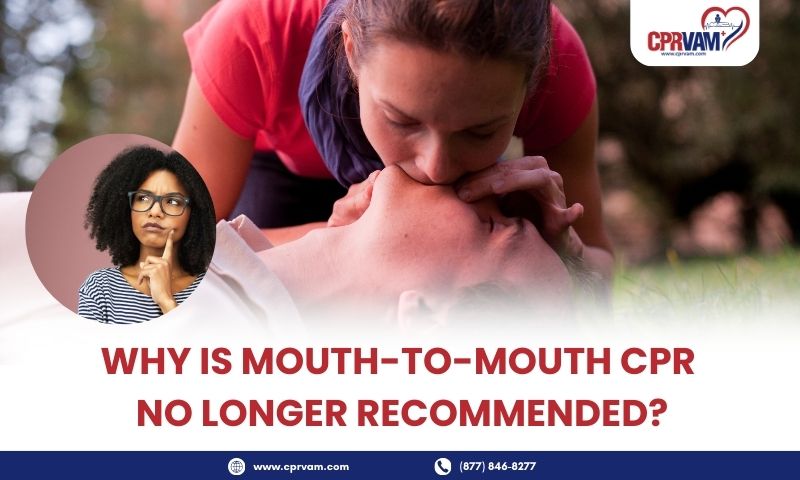
For many years, mouth-to-mouth resuscitation was considered the cornerstone of cardiopulmonary resuscitation (CPR). The idea was simple: provide oxygen directly to the lungs while performing chest compressions to keep blood circulating. However, a critical real-world flaw emerged: fear of disease transmission, anxiety over technique, and reluctance to make mouth contact with a stranger caused many bystanders to hesitate or avoid CPR entirely. Those lost seconds often cost lives.
Recognizing this human factor, the focus has shifted decisively. Mouth-to-mouth is no longer recommended for most adult cardiac arrests, as hands-only CPR boosts both bystander participation and survival rates by keeping compressions continuous and uninterrupted. The 2025 American Heart Association (AHA) guidelines reinforce a change first introduced in 2008: continuous chest compressions alone deliver strong outcomes for adult sudden cardiac arrest.
This blog breaks down why this shift occurred, when rescue breaths are still necessary, and the exact steps to act confidently when seconds count.
When Did CPR Guidelines Change Regarding Mouth-To-Mouth Resuscitation?
The move away from mandatory mouth-to-mouth is not a sudden change but the result of years of medical research. The most significant official shift happened in 2008, when the American Heart Association stated that chest compression-only CPR was a safe and effective alternative for untrained bystanders.
This change was driven by a critical real-world problem. Bystander CPR rates were often below 30 percent. Research identified rescue breath hesitation, or people’s reluctance to perform mouth-to-mouth due to fear, disgust, or lack of confidence, as a major fatal barrier. Data from cities like Phoenix and Tokyo showed that when 911 dispatchers coached callers in hands-only CPR, more people were helped and more victims survived.
The science showed that for an adult who suddenly collapses from a cardiac arrest, the oxygen already in their blood is sufficient for the first several minutes. The immediate priority isn’t to add air, but to use chest compressions to pump that existing oxygen to the brain and heart. This evolution simplified the public’s lifesaving role in the “Chain of Survival.”
What Are the Reasons for Not Performing Mouth-To-Mouth Resuscitation Anymore?
The move to hands-only CPR happened for five main reasons. Think of it like an emergency plan that was updated to work better and get more people to help.
1. Discomfort and Hesitation Among Bystanders
- It’s a Big Ask: Most people feel uncomfortable or grossed out at the idea of putting their mouth on a stranger’s mouth.
- Fear of Germs: People worry about catching a sickness, even though the risk is very small. This fear can make them freeze and do nothing.
- Too Complicated: Worrying about tilting the head, pinching the nose, and giving breaths correctly can make someone feel like they’ll mess up.
- The Bottom Line: If you take away the mouth-to-mouth part, way more people feel brave enough to jump in and help immediately.
2. Interruptions Reduce Blood Flow
- Stop-and-Start is Bad: When you stop compressions to give breaths, the pumped blood stops moving. These pauses can last over 16 seconds.
- The Brain Needs a Constant Supply: In cardiac arrest, the brain is starving for oxygen. Every second you stop pushing is a second the brain gets nothing.
- It’s Like Restarting a Pump: After you pause, you have to push several times just to get the blood pressure back up to where it was. Hands-only CPR keeps the “pump” running without stopping.
3. Post-COVID Hygiene Concerns
- A New Awareness: The COVID-19 pandemic made everyone more aware of how germs spread through the air and saliva.
- Official Advice Changed: Big health groups officially said that for the public, hands-only CPR is the safer choice to protect everyone involved.
- A Practical Update: This was a smart update to the rules that makes helping safer and less scary for people today.
4. Chest Compressions Alone Are Effective
- Oxygen is Already There: When an adult’s heart suddenly stops, their blood already has enough oxygen in it to last for the first 8-10 minutes.
- The Bigger Problem: Their heart isn’t pumping that good oxygen to their brain. So, the number one job is to be the pump by doing compressions.
- The Proof: AHA research shows that people who get hands-only CPR have just as good a chance of survival as those who get the old style with breaths in these first few minutes.
5. Situational Appropriateness
- Made for the Most Common Emergency: Hands-only CPR is the perfect plan for the most likely situation: a teen or adult who suddenly collapses (often from a heart problem).
- It’s Not for Every Emergency: The rules are smart and specific. They still say to use breaths for babies, kids, or drownings because in those cases, the person ran out of oxygen first.
- Simple is Better: For the main type of emergency, a simple plan (Just push on the chest) works best and gets done faster.
Hands-Only CPR or Traditional CPR: Which Is More Effective?
The best CPR method depends on the situation, who is performing it, and who needs help. Hands-Only CPR and Traditional CPR each have their strengths in different scenarios. The table below shows the key differences to help you know when to use each method.
Here is the comparison table between Hands-Only CPR and Traditional CPR as follows:
Factor | Hands-Only CPR | Traditional CPR (with mouth-to-mouth) |
Best For | Adult sudden cardiac arrest | Drowning, infants, children, respiratory collapse |
Bystander Participation | Higher (over 60%) | Lower |
Effectiveness in early minutes | Strong | Strong but slowed by interruptions |
Complexity | Simple | Complex (Multiple steps) |
Is Mouth-to-Mouth Still Used or Recommended? When You Need Breaths
Yes, mouth-to-mouth resuscitation is absolutely still a vital part of CPR in specific circumstances. The key is understanding the difference between a primary cardiac arrest (heart problem first) and a primary respiratory arrest (breathing problem first).
Mouth-to-mouth rescue breaths are still critically recommended for:
1. Infants and Children
Children often experience cardiac arrest due to oxygen deprivation rather than heart issues. Events like choking, drowning, or severe infections reduce oxygen quickly. Rescue breaths are essential, as outlined in Pediatric Advanced Life Support (PALS) and child CPR guidelines.
2. Drowning Victims
In drowning cases, water fills the lungs, preventing oxygen from reaching the bloodstream. Immediate rescue breaths are critical to restore oxygenation before chest compressions alone can be effective, as recommended by the American Heart Association (AHA).
3. Drug Overdoses
Opioid or other drug overdoses can slow or stop breathing, causing respiratory arrest. Providing rescue breaths along with chest compressions helps maintain oxygen supply to vital organs until emergency responders arrive.
4. Any Arrest Clearly Caused by a Breathing Problem
When a cardiac arrest stems from insufficient breathing, rescue breaths are crucial. Conditions like asthma attacks, airway obstruction, or suffocation require breaths to restore oxygen before compressions can fully support circulation.
For trained individuals comfortable giving breaths, the AHA still recommends a cycle of 30 chest compressions followed by 2 rescue breaths if the situation indicates mouth-to-mouth resuscitation. The message is not that breaths are useless, but that for the average bystander facing an unknown adult collapse, compressions alone are the most efficient and effective place to start.
How Do You Perform Hands-Only CPR the Right Way?
If you see a teen or adult collapse, you now know not to worry about mouth-to-mouth. Your mission is to be the person’s heartbeat until help arrives. The American Heart Association’s instructions are clear, simple, and designed for anyone to follow in a panic.
Here is your step-by-step action plan to perform hands-only CPR correctly:
1. Check & Call
First, check the responsiveness by tapping and shouting. If they don’t respond, call 911 (Use speakerphone) and yell for someone to get an AED.
2. Get Ready to Start CPR
Kneel next to them. Put the heel of one hand in the center of the chest, place the other hand on top, and lock your fingers.
3. Push Hard & Fast
- Push straight down at least 2 inches.
- Keep a steady beat of 100-120 pushes per minute, just like the rhythm of the song “Stayin’ Alive.”
- Don’t stop until help takes over, an AED is ready, or you are completely exhausted.
That’s the process. Each uninterrupted action helps circulate oxygen-rich blood to the brain, supporting vital functions until help arrives.
Why Enroll in CPR Training to Save a Person's Life?
Emergencies happen everywhere, and someone you love can collapse without warning. Immediate CPR triples survival odds, but only if you know how to respond. Hands-only CPR seems simple, yet proper technique takes real practice. Learning from online videos helps, but it’s just not the same as being in a room with an instructor who can correct your form, answer your questions, and help you build real confidence, so why not take the step to join a CPR, BLS, ACLS and PALS classes near you? It’s the best way to make sure you’re ready when it counts.
At an AHA-certified training center like CPR VAM, you learn exactly when rescue breaths truly matter, such as for infants, children, or drowning victims, and when strong hands-only compressions are enough to keep oxygen moving through the body.
Hands-only CPR puts lifesaving power in everyone’s hands. There is no hesitation and no confusion, only fast action when every second counts. While mouth-to-mouth still plays a role in certain respiratory emergencies, for adult sudden cardiac arrest, hands-only CPR remains the fastest and most effective way to save a life.
Act fast. Push hard. Be the reason someone lives.
FAQs
1. How Did Post-COVID Hygiene Awareness Change CPR Behavior?
Post-COVID hygiene concerns made you more hesitant to perform mouth-to-mouth, reducing bystander response rates by nearly 20-30%. As a result, guidelines shifted to emphasize hands-only CPR to keep you protected while still saving lives.
2. Can Hands-Only CPR Still Help in Opioid Overdose Emergencies?
Yes. Continuous chest compressions help you keep oxygen-rich blood flowing to the brain until naloxone or emergency services restore breathing.
3. Why Do Modern Fitness Trackers Guide You Through Hands-Only CPR?
Fitness trackers provide real-time feedback so you can maintain proper compression rate and depth. This coaching helps you act faster and perform CPR more effectively during emergencies.
4. Is Mouth-to-Mouth Breathing Necessary for Adult Cardiac Arrest?
No. In the first critical minutes, hands-only chest compressions allow you to deliver better outcomes by keeping blood circulating to vital organs.
5. Should You Attempt Rescue Breaths If You Are Not Trained?
No. If you are untrained, you should start hands-only CPR immediately and continue until professional help arrives.