


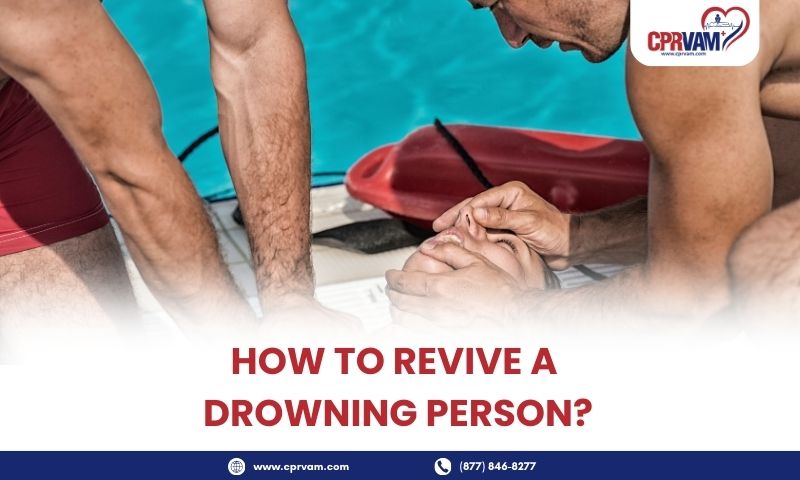
From my experience in health education and emergency response, I’ve seen how quickly a drowning situation turns deadly. A swimmer can slip under within seconds, leaving everyone around them in shock. According to the CDC, an average of 10 people die each day in the U.S. from drowning. It’s the fifth leading cause of unintentional injury death, and 20% of victims are children under 15, with many survivors facing long-term complications.
Learning the right steps to revive a drowning person can truly save a life. When I train people in CPR, I always explain that drowning CPR is different because you must give rescue breaths along with chest compressions. Water in the lungs blocks oxygen from reaching the brain, so acting fast is essential. Staying calm, following the correct steps, and responding immediately can restore breathing and circulation until help arrives.
This blog guides you through recognizing drowning, performing CPR, and keeping the victim safe until help arrives.
What Is Drowning and Why Is It So Dangerous?
Drowning happens when liquid enters the airways and blocks oxygen from reaching the lungs, heart, and brain. The World Health Organization (WHO) reports that about 236,000 people die from drowning each year worldwide. In the U.S., drowning ranks as a leading cause of unintentional injury death, especially among children ages one to four. Quick recognition and immediate action are critical to prevent fatalities.
Drowning can occur silently in as little as 20 to 60 seconds. Victims often do not splash or call for help, making it hard to notice. Survivors may face long-term effects such as brain damage, learning difficulties, or chronic respiratory problems. Understanding these risks helps families, caregivers, and bystanders respond effectively and reduce preventable drowning deaths.
How Can You Quickly Recognize a Drowning Person?
Recognizing a drowning victim quickly can save a life. You may notice that drowning often occurs silently, without splashing or a call for help. Knowing the key signs helps you act fast, provide assistance, and prevent a fatal outcome.
Here are the signs of a drowning person:
- Silent Struggle: You may see the victim unable to call for help or wave, making it hard to notice.
- Head Position: Their head tilts backward with the mouth at water level, and you can spot their struggle to breathe.
- Vertical Body Posture: You might notice they stay upright and fail to kick or use their legs effectively.
- Arm Movements: They push down or reach for invisible objects, and you can interpret this as an attempt to stay afloat.
- Facial Expressions: You may see panic, fear, or glassy eyes, signaling extreme distress and lack of control.
How Does Drowning CPR Work and Why Is It So Important?
Drowning CPR is a specific type of cardiopulmonary resuscitation used when someone has taken in water and can no longer breathe on their own. In drowning emergencies, the main problem is oxygen loss, not a sudden heart issue. According to the American Heart Association (AHA), most drowning victims suffer cardiac arrest because they stop breathing first, which makes early oxygen support critical. This form of CPR focuses on reversing that oxygen loss as quickly as possible, which can make a life-saving difference in the first few minutes.
Key Points:
1. Rescue Breaths Restore Oxygen
Rescue breaths are the first step because drowning victims often lose oxygen before their heart stops. These breaths help refill the lungs, support basic breathing, and slow oxygen loss to the brain. Early breaths give the victim a stronger chance of recovery.
2. Chest Compressions Keep Blood Flowing
Chest compressions push oxygen-rich blood to the brain and vital organs when the heart can’t pump on its own. This prevents severe damage and buys time until emergency help arrives. Together with rescue breaths, compressions greatly improve survival during drowning emergencies.
How Can You Identify the Different Stages of Drowning?
Recognizing the stages of drowning helps you act quickly and safely. Drowning happens fast and often without noise, so knowing what each stage looks like gives you a better chance to step in before the victim loses consciousness. These stages explain how the body reacts when oxygen levels drop and why immediate action matters.
Here are the stages of drowning as follows:
1. Surprise or Immersion
This stage begins the moment someone suddenly enters the water. The body reacts with shock, making it hard to breathe or stay calm. You may see the person gasp, panic, or struggle to stay oriented, which increases the risk of inhaling water.
2. Struggling for Air
Here, the victim tries to keep their mouth above water but cannot call out for help. You might notice them pushing down on the water with their arms, tilting their head back, or fighting to breathe. Oxygen levels start to fall, and panic increases.
3. Initial Submersion and Breath-Holding
Once underwater, the person instinctively holds their breath. This can only last a short time. As carbon dioxide builds up, the urge to breathe becomes overwhelming. When they can’t hold it anymore, they inhale water-something you must recognize as a serious turning point.
4. Unconsciousness
Without oxygen, the brain begins to shut down. The victim becomes limp, unresponsive, and may sink. If you see this, immediate rescue is critical because breathing slows or stops. Your quick action could prevent permanent brain injury.
5. Convulsions
Seizure-like movements may appear as oxygen levels reach dangerously low levels. These jerking motions can last a few seconds and make the rescue harder. If you witness this stage, you’ll know the brain is in severe distress, and the victim needs immediate help.
6. Clinical Death
This stage occurs when breathing and heartbeat stop. The brain can suffer irreversible damage within minutes. If you act fast and begin CPR right away, your chest compressions and rescue breaths may restore oxygen and circulation until professionals arrive.
How Should You Respond in a Drowning Emergency?
Responding to a drowning emergency starts with staying calm and acting fast. You should call for help, remove the person from the water if it’s safe, and begin CPR right away if they are not breathing. Quick action increases their chance of survival and reduces long-term harm.
Here are the common ways to respond during a drowning emergency:
1. Assessing the Scene
Before you approach a drowning victim, make sure you are safe. Check for hazards such as strong currents, deep water, debris, or electrical risks. Only if it is safe, carefully remove the person from the water. Staying aware and cautious ensures you can help effectively without putting yourself in danger.
2. Check Responsiveness
When you reach a potential drowning victim, you need to check their responsiveness by tapping them gently and asking, “Are you okay?” Watch carefully for any movement, groaning, or eye-opening. If you notice that the person is unresponsive, you must act immediately. Your quick reaction can be critical in starting life-saving measures before emergency help arrives.
3. Call for Help
When you encounter a drowning emergency, immediately alert emergency services by calling 911. If you are alone, start CPR for a couple of minutes before calling. If others are nearby, you can delegate tasks, like fetching an AED or first aid kit. Your quick action can make a life-saving difference.
How Do You Open the Airway and Check Breathing?
When you encounter a drowning victim, your first step is to open their airway carefully. Tilt the head back and lift the chin to let air in. If a spinal injury is possible, use the jaw-thrust maneuver. Check for breathing quickly, no longer than ten seconds, to determine if CPR is necessary.
If the victim isn’t breathing or only gasps, you should begin CPR immediately. Your prompt action can restore oxygen to vital organs and increase survival chances. Staying calm helps you perform the steps correctly, giving the person the best opportunity to recover while waiting for professional help.
How Do You Perform Chest Compressions and Give Rescue Breaths?
When you perform CPR on a drowning victim, follow the American Heart Association (AHA) guidelines. Place the heel of one hand in the center of the chest and the other on top. Push about 2 inches deep at 100-120 compressions per minute. Allow full chest recoil. Compression-only CPR won’t work for drowning, so you must include rescue breaths.
After 30 compressions, give 2 rescue breaths following AHA recommendations. Pinch the nose, cover the mouth, and blow for about one second, making the chest rise visibly. Recheck the airway if the chest doesn’t move and clear any obstructions. You continue this 30:2 cycle until the person breathes on their own or emergency help arrives.
Can You Use an AED for a Drowning Victim?
If you have access to an AED, you can use it on a drowning victim. Follow the device’s voice prompts carefully. Place the pads exactly as instructed, one on the upper right chest and the other on the lower left. Make sure you and the victim are safe.
After the AED advises a shock, deliver it immediately and then continue CPR following the American Heart Association guidelines. You should not stop compressions for more than 10 seconds. Using the AED alongside CPR increases the victim’s chances of survival significantly until professional medical help arrives.
How Does Drowning CPR Differ for Adults, Children, and Infants?
Drowning CPR varies by age because adults, children, and infants have different body sizes and lung capacities. Knowing these differences helps you provide effective chest compressions and rescue breaths, increasing the chance of survival in a drowning emergency.
Adults Drowning CPR
Essential Steps for Adult Drowning CPR:
- Place one hand on the center of the victim’s chest at the nipple line, with your other hand on top.
- Perform chest compressions at least 2 inches deep. Be aware that broken ribs while giving CPR are common.
- Push hard and fast at 100-120 compressions per minute, letting the chest fully recoil between compressions.
- Keep checking if the victim has started breathing, and continue CPR until help arrives or they breathe on their own.
For Drowning Children & Infants
The steps to perform Child & Infant CPR for drowning victims:
- Open the Airway:
Place the child on their back, tilt their head, and lift the chin. Be careful not to tilt the head too far, and maintain control of the airway throughout the process. - Perform Rescue Breaths:
For older children, pinch their nose shut and create a seal with your mouth over theirs. For infants, cover both the mouth and nose with your mouth. Blow air for about 1 second, making sure the chest rises, then repeat once more. - Chest Compressions:
For children (ages 1 year to puberty), compress the chest about 2 inches using one or two hands. For infants, use 2 fingers to compress about 1.5 inches. Follow the 30:2 compression-to-breath ratio as recommended by the American Heart Association (AHA).
Which Common Mistakes Should You Avoid When Performing Drowning CPR?
When performing drowning CPR, even small mistakes can reduce the victim’s chance of survival. You need to act carefully and consistently, ensuring proper technique, uninterrupted care, and clear attention to the victim’s airway and breathing.
Some common mistakes you may make during drowning CPR are as follows:
- Compressing the chest too shallowly or placing your hands incorrectly can reduce blood flow.
- Forgetting to tilt the head back or provide rescue breaths limits oxygen delivery.
- Failing to clear vomit or airway obstructions can block breathing entirely.
- Stopping CPR too soon before help arrives decreases the victim’s survival chances.
- Getting distracted by foam or water in the mouth can make you lose focus on life-saving steps.
What Should You Do After Resuscitation?
After you successfully perform drowning CPR, your actions can still impact the victim’s recovery. Keeping the person stable, monitoring vital signs, and ensuring emergency responders have accurate information are all crucial steps. Your careful attention during this period can prevent further complications and improve survival outcomes.
Key Steps You Should Follow:
- Place the Victim in a Recovery Position
Lay the person on their side so their airway stays open and prevents choking. You should gently position them while ensuring their head and neck are supported. - Monitor Breathing and Pulse
Keep checking their breathing and pulse to make sure their heart and lungs are working properly. You need to stay attentive and note any changes until help arrives. - Keep Them Warm, Calm, and Still
Cover the victim with a blanket or jacket to maintain body heat. You should also speak calmly and reassure them to reduce stress and prevent shock. - Provide Accurate Updates to Responders
Tell emergency personnel exactly what you observed and the actions you took. You should include details like timing of CPR, breaths given, and any changes in their condition.
How Can You Prepare Yourself for Drowning Emergencies?
Being prepared for a drowning emergency can make the difference between life and death. You can increase your confidence and effectiveness by learning CPR, using an AED, and practicing safety measures, ensuring you are ready to act quickly when every second counts.
Key steps to prepare yourself for drowning CPR:
- Enroll in CPR and First Aid Training
You should take certified courses from accredited training centers like, American Heart Association or the Red Cross. Then you have to learn proper techniques for resuscitation and emergency care. Practicing these skills regularly helps you stay confident and ready in real emergencies. - Learn How to Use an AED
Knowing how to operate an automated external defibrillator can save lives during cardiac arrest caused by drowning. You should become familiar with the device and follow the instructions carefully in emergencies. - Always Prioritize Your Safety During Water Rescues
You must ensure that you do not put yourself at risk while helping someone. Assess the scene first and use flotation devices or other tools to assist safely. - Encourage Swimming Skills For All Family Members
Teaching children and adults to swim reduces drowning risks and improves survival chances. You should support regular practice and swimming lessons for everyone in your household.
Respond Quickly and Save Lives by Mastering Drowning CPR
Drowning emergencies can happen in an instant, and knowing how to respond can save a life. Mastering drowning CPR, including rescue breaths and chest compressions, gives you the skills to act confidently and effectively. Stay alert, follow the steps carefully, and keep safety in mind. Your quick action could mean the difference between survival and tragedy. Get trained now to be ready when every second counts.
Enhance your life-saving skills at CPR VAM, an AHA-certified training center where expert instructors guide you through hands-on CPR, First Aid, BLS, ACLS, and PALS training. Gain real-world confidence and be ready to act fast when every second counts. Join us at the CPR VAM location nearest you and make a difference today.
FAQs
1. How Quickly Should You Act If Someone is Drowning?
You should act immediately, as drowning can cause brain damage within minutes. Fast action greatly improves the victim’s chance of survival.
2. Can You Perform CPR on a Drowning Victim Alone?
Yes, you can start CPR immediately if no one else is around. Call 911 as soon as possible while continuing CPR.
3. How Does Drowning CPR Differ From Regular CPR?
You need to give rescue breaths along with chest compressions for drowning victims. Oxygen loss, not heart issues, is usually the main problem.
4. What Signs Should You Look For to Recognize Drowning?
You may notice silent struggling, head tilted back, vertical posture, or panicked facial expressions. Early recognition allows you to respond before it’s too late.
5. Can You Help a Child or an Infant Differently From an Adult?
Yes, you should use one or two hands for children and two fingers for infants. Adjust compression depth and follow the 30:2 ratio carefully.
References
1. 2025 American Heart Association Guidelines for CPR and ECC
https://cpr.heart.org/en/resuscitation-science/cpr-and-ecc-guidelines
2. Centers for Disease Control and Prevention (CDC)
https://www.cdc.gov/drowning/risk-factors/index.html