
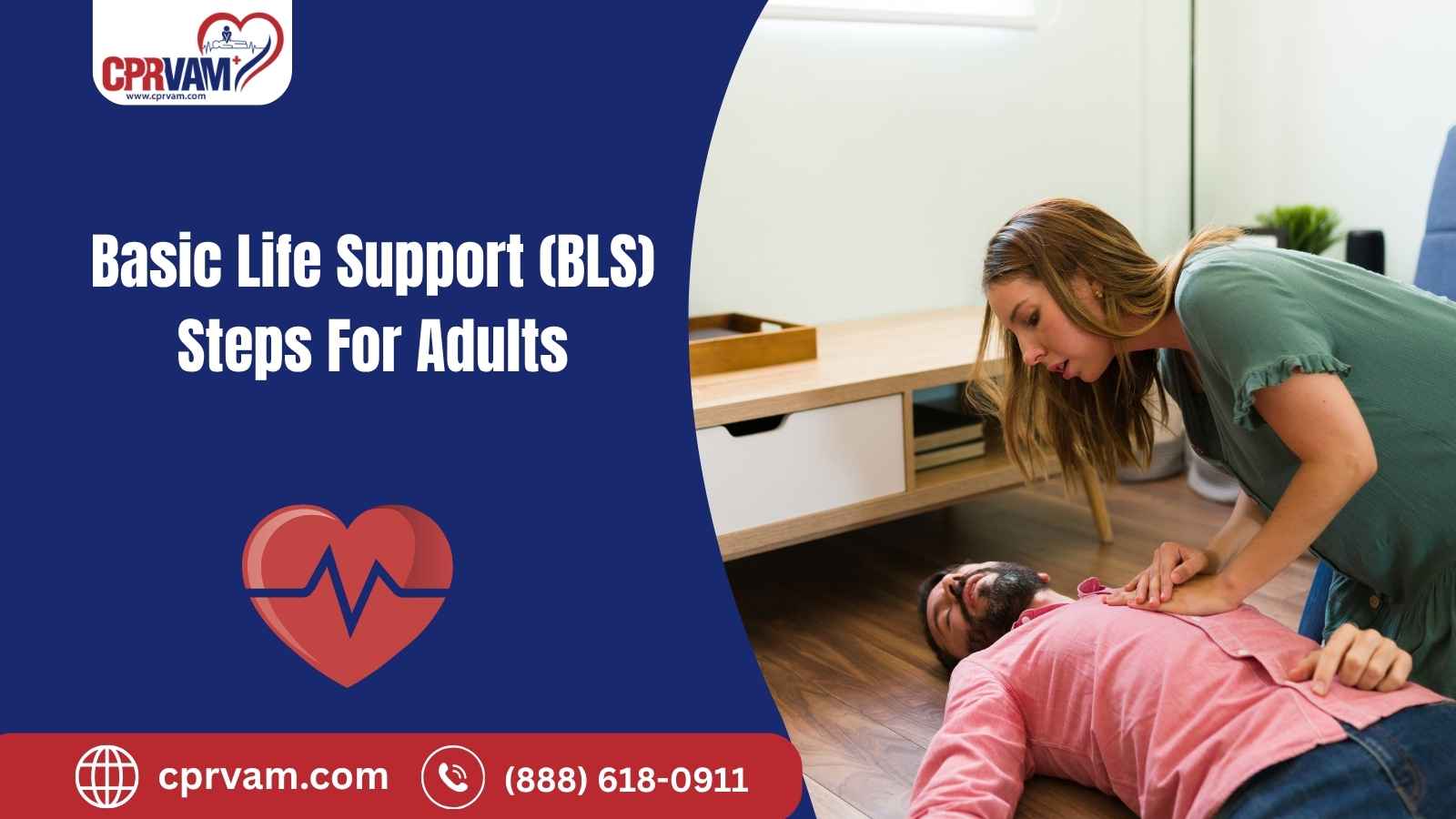
Basic Life Support (BLS) for adults is a critical emergency care skill that can mean the difference between life and death. It involves a systematic approach to recognizing cardiac arrest, activating the emergency response system, and providing high-quality Cardiopulmonary Resuscitation (CPR) with or without the use of an Automated External Defibrillator (AED). Understanding BLS is essential for ensuring immediate and effective care until advanced medical help arrives.
Knowing the correct BLS steps for adults helps rescuers act quickly, confidently, and safely during life-threatening situations. Whether the emergency occurs at home, in the workplace, or in public, following the proper adult BLS sequence improves survival rates and reduces the risk of complications. Clear knowledge of what to do and what to avoid can greatly impact patient outcomes.
This blog explains what adult BLS is, outlines the correct steps, and highlights why proper sequence and training matter.
What Is Basic Life Support for Adults?
Basic Life Support (BLS) for adults is a set of standardized, evidence-based emergency procedures used to maintain circulation, airway patency, and breathing in adults who are experiencing cardiac arrest, respiratory arrest, or life-threatening breathing emergencies. It focuses on the immediate recognition of cardiac arrest, activation of the emergency response system, and the delivery of high-quality cardiopulmonary resuscitation (CPR) with early use of an Automated External Defibrillator (AED).
In adult patients, BLS emphasizes the C-A-B sequence, which stands for Circulation, Airway, and Breathing, to ensure continuous blood flow to vital organs, particularly the brain and heart. Core components include rapid assessment of responsiveness and breathing, effective chest compressions at the correct rate and depth, proper airway opening, rescue breathing when indicated, and prompt defibrillation for shockable rhythms. BLS forms the foundation of the adult chain of survival and is essential for sustaining life until advanced medical care becomes available.
What Are the Correct BLS Steps for Adults?
The correct Basic Life Support (BLS) steps for adults follow a structured, evidence-based sequence designed to restore circulation and oxygenation during cardiac or respiratory emergencies. These steps should be performed to maximize survival and reduce the risk of complications.
Below are the BLS steps for adults:
Step 1: Ensure Scene Safety
Before approaching the adult victim, first ensure that the scene is safe for you, the patient, and bystanders. Look for any potential hazards such as moving traffic, fire, electrical wires, hazardous materials, or unstable surroundings. Do not put yourself in danger, as becoming injured yourself will prevent you from providing effective care.
If the scene is unsafe, do not approach the victim until the danger is controlled or emergency personnel arrive. Scene safety is always the first step in Basic Life Support because protecting the rescuer is essential to delivering timely and effective life-saving care.
Step 2: Check Responsiveness
After confirming the scene is safe, check the adult’s responsiveness by tapping the shoulders firmly and shouting, “Are you okay?” Look for any signs of movement, eye opening, or verbal response.
If the person responds, leave them in a comfortable position and continue to monitor their condition until help arrives. If there is no response, assume a life-threatening emergency and proceed immediately to activate the emergency response system and begin the next steps of Basic Life Support.
Step 3: Activate the Emergency Response System and Get an AED
If the adult is unresponsive, immediately activate the emergency response system. Call emergency medical services or direct a specific bystander to call for help. Clearly state the emergency and your location to ensure a rapid response.
At the same time, ask someone to bring an Automated External Defibrillator (AED) if one is available nearby. Early access to an AED is critical, as prompt defibrillation can significantly improve survival in cases of sudden cardiac arrest.
If you are alone, activate emergency services first, using a phone on speaker mode if possible, then return quickly to begin CPR and continue care until help arrives.
Step 4: Check Breathing and Pulse (Simultaneously)
Step 4: Check Breathing and Pulse (Simultaneously)
After activating the emergency response system, quickly check the adult for normal breathing and a pulse simultaneously. Look for chest rise and listen or feel for breathing, while checking the carotid pulse on the side of the neck.
Spend no more than 10 seconds on this assessment:
- No pulse and not breathing normally (or only gasping):
- Begin CPR immediately
- Pulse present but not breathing normally:
- Provide rescue breaths
- Pulse and normal breathing present: Continue to monitor the patient until help arrives
Rapid assessment at this stage is critical, as delays in starting CPR can significantly reduce the chances of survival.
Step 5: Begin High-Quality Chest Compressions (C – Circulation)
If the adult has no pulse and is not breathing normally, start chest compressions immediately. High-quality compressions are the most important factor in maintaining blood flow to the brain and heart during cardiac arrest.
Guidelines for adult chest compressions:
- Hand Placement: Place your hand in the center of the chest on the lower half of the sternum
- Compression Depth: At least 2 inches (5 cm)
- Compression Rate: 100-120 compressions per minute
- Allow Full Chest Recoil after each compression
- Minimize Interruptions to maintain continuous blood flow
- Compression-to-Ventilation Ratio: 30 compressions followed by 2 rescue breaths.
Focus on firm, consistent compressions. Proper technique and minimal pauses dramatically improve the chances of survival until an AED or advanced care becomes available.
Step 6: Open the Airway (A – Airway)
After completing the first set of chest compressions, the next step is to open the adult’s airway to allow effective rescue breaths. The most common technique is the head-tilt, chin-lift:
- Place one hand on the victim’s forehead and gently tilt the head back.
- Use the fingers of your other hand to lift the chin upward, opening the airway.
If a spinal injury is suspected, do not tilt the head. Instead, use the jaw-thrust maneuver to open the airway without moving the neck.
Proper airway opening ensures that rescue breaths reach the lungs effectively, maintaining oxygen delivery to vital organs during CPR.
Step 7: Provide Rescue Breaths (B – Breathing)
After opening the airway, give 2 rescue breaths to the adult victim. Each breath should last about 1 second and be enough to make the chest rise visibly.
Steps to provide effective rescue breaths:
- Pinch the victim’s nose closed
- Cover your mouth completely, creating a tight seal
- Deliver the first breath, watching for the chest rise
- Give a second breath in the same manner
Providing timely and effective rescue breaths, combined with high-quality compressions, helps maintain oxygenation and improves survival chances during cardiac emergencies.
Step 8: Use the AED as Soon as Available
As soon as an Automated External Defibrillator (AED) is available, turn it on and follow the device’s voice prompts. Early defibrillation is crucial for increasing the chances of survival in adult cardiac arrest, particularly in cases of ventricular fibrillation or pulseless ventricular tachycardia.
Steps to use an AED:
- Expose the chest and ensure it is dry
- Apply the AED pads according to the diagrams on the device
- Ensure no one is touching the patient while the AED analyzes the heart rhythm
- Deliver a shock if advised by the AED
- Resume CPR immediately after the shock or if no shock is advised
Always remember not to pause for more than 10 seconds while performing CPR.
Step 9: Continue BLS Until Help Arrives
After starting CPR and using the AED as needed, continue Basic Life Support (BLS) cycles without interruption until one of the following occurs:
- Advanced medical personnel take over
- The patient shows signs of life (Movement, normal breathing)
- You are physically unable to continue
- The scene becomes unsafe
Maintain the sequence of 30 chest compressions followed by 2 rescue breaths, and follow the AED prompts whenever it is analyzing or advising a shock.
Consistent, high-quality BLS until help arrives maximizes oxygen delivery to vital organs, maintains circulation, and significantly increases the chance of survival and recovery in adult cardiac emergencies.
Why Does Following the Correct Adult BLS Sequence Matter?
Following the correct Basic Life Support (BLS) sequence for adults is critical because it ensures that life-saving interventions are delivered in the most effective order. Cardiac and respiratory emergencies progress rapidly, and delays or mistakes can significantly reduce a person’s chance of survival.
Key Reasons the Correct Sequence Is Important:
Maintains Blood Flow to Vital Organs
High-quality chest compressions delivered first ensure continuous blood flow to the brain and heart, which is essential for preventing permanent damage.Optimizes Oxygen Delivery
Opening the airway and providing rescue breaths at the right time ensures oxygen reaches the lungs and bloodstream, supporting organ function during cardiac arrest.Increases the Effectiveness of Defibrillation
Early CPR combined with timely AED use improves the likelihood that a shock will successfully restore a normal heart rhythm.Reduces Risk of Complications
Performing steps out of order or pausing compressions unnecessarily can decrease perfusion, worsen hypoxia, and increase the risk of neurological damage or death.Streamlines Emergency Response
A standardized sequence (CAB: Circulation, Airway, Breathing) allows multiple rescuers to coordinate efficiently, minimizing confusion during high-stress situations.
By following the correct BLS sequence, rescuers can maximize survival chances, reduce complications, and provide effective care until advanced medical help arrives.
What Are the Common Mistakes to Avoid in Adult BLS?
Even trained rescuers can make errors during Basic Life Support (BLS), which can reduce the effectiveness of CPR and lower a patient’s chance of survival. Being aware of these common mistakes helps ensure high-quality care in emergencies.
Here are some of the common mistakes to avoid in adult BLS:
Delaying CPR
Waiting too long to start chest compressions after recognizing cardiac arrest can dramatically reduce survival chances. Begin compressions immediately after confirming unresponsiveness and no normal breathing.Performing Shallow or Slow Compressions
Compressions that are too shallow (<2 inches / 5 cm) or too slow (<100 per minute) fail to circulate enough blood.
Ensure proper depth and rate, and allow full chest recoil after each compression.Interrupting Compressions Too Frequently
Pauses during CPR should be minimal. Frequent or prolonged interruptions reduce blood flow to the heart and brain, lowering the effectiveness of resuscitation.Improper Airway Management
Failing to open the airway correctly can prevent rescue breaths from reaching the lungs.
Tilting the head too far back or not lifting the chin enough can block airflow.Giving Inadequate or Excessive Rescue Breaths
Not providing enough air or giving breaths too quickly can reduce oxygen delivery.
Over-ventilating can increase chest pressure, decreasing blood flow during CPR.Delaying AED Use
Waiting too long to retrieve or use an AED reduces the chances of restoring a normal heart rhythm. Early defibrillation is crucial for survival in cardiac arrest.Poor Hand Placement
Incorrect hand placement during chest compressions can reduce effectiveness and increase the risk of injury. Place hands on the center of the chest, lower half of the sternum.Ignoring Scene Safety
Rushing into an unsafe environment can put both the rescuer and victim at risk, potentially causing further harm.
Who Should Learn Adult BLS?
Adult Basic Life Support (BLS) is a critical skill that can save lives in emergencies, and it is valuable for a wide range of people, not just healthcare professionals. Knowing BLS enables individuals to respond quickly and effectively when someone experiences cardiac arrest or severe breathing problems.
Groups Who Should Learn Adult BLS:
Healthcare Providers
Doctors, nurses, paramedics, and other medical personnel are required to maintain BLS certification to provide safe patient care.First Responders
Firefighters, police officers, and emergency medical technicians (EMTs) often arrive first at emergency scenes and need to deliver life-saving care.Employees in High-Risk Environments
Workplaces such as factories, construction sites, gyms, and schools should have staff trained in BLS to respond to cardiac or respiratory emergencies.Family Members of High-Risk Patients
Individuals caring for people with heart disease, respiratory conditions, or other serious medical issues can greatly improve survival outcomes by knowing BLS.General Public
Anyone willing to learn life-saving skills can benefit. Quick action by trained bystanders significantly increases survival rates in out-of-hospital cardiac arrests.
Take Action: Learn Adult BLS and Save Lives
Mastering adult Basic Life Support (BLS) is more than just a skill; it’s a life-saving responsibility. By understanding the correct sequence, avoiding common mistakes, and practicing high-quality CPR and AED use, anyone can provide immediate, effective care during cardiac or respiratory emergencies. Whether you are a healthcare professional, first responder, or a concerned family member, learning BLS empowers you to act confidently and decisively, bridging the critical time until advanced medical help arrives and dramatically improving the chances of survival for adults in life-threatening situations.
To ensure you are fully prepared to respond effectively when it matters most, hands-on training is essential. CPR VAM offers expert-led, American Heart Association–approved ACLS, PALS, and BLS courses that combine guideline-based instruction with practical, real-world experience. Learn directly from certified instructors, practice essential life-saving techniques, and gain the confidence to act decisively in emergencies. Join CPR VAM today and become a trusted, capable responder ready to save lives when every second counts.
FAQs
1. Can Adult BLS Be Performed Alone, Or Is a Team Required?
Adult BLS can be performed by a single rescuer, but having multiple rescuers improves efficiency. While one person performs CPR, another can call emergency services, retrieve an AED, or monitor the patient’s breathing, ensuring continuous, high-quality care.
2. How Long Should a Rescuer Continue BLS If Help Is Delayed?
BLS should be continued without interruption until advanced medical personnel arrive, the patient shows signs of life, the rescuer is physically unable to continue, or the scene becomes unsafe. Even prolonged CPR increases the patient’s chance of survival.
3. Are There Modifications for Adult BLS in Special Situations, Such as Obesity or Pregnancy?
Yes. Modifications may be needed. For obese patients, ensure proper hand placement and adequate compression depth. For pregnant adults, chest compressions are performed normally, but manual left uterine displacement can be used to relieve pressure on major blood vessels.
4. What Should a Rescuer Do If They Are Exhausted During BLS?
If a rescuer becomes fatigued, it is important to switch with another trained rescuer if available to maintain high-quality compressions. Even brief interruptions are preferable to poor-quality CPR, as continuous, effective compressions are critical for survival.
5. Can Adult BLS Be Performed on Patients With Chest Injuries or Implanted Devices?
Yes. Adult BLS should be performed even if the patient has chest injuries, pacemakers, or defibrillators. Place hands in the standard position for compressions. AED pads should avoid direct placement over implanted devices, but defibrillation remains safe and life-saving.