

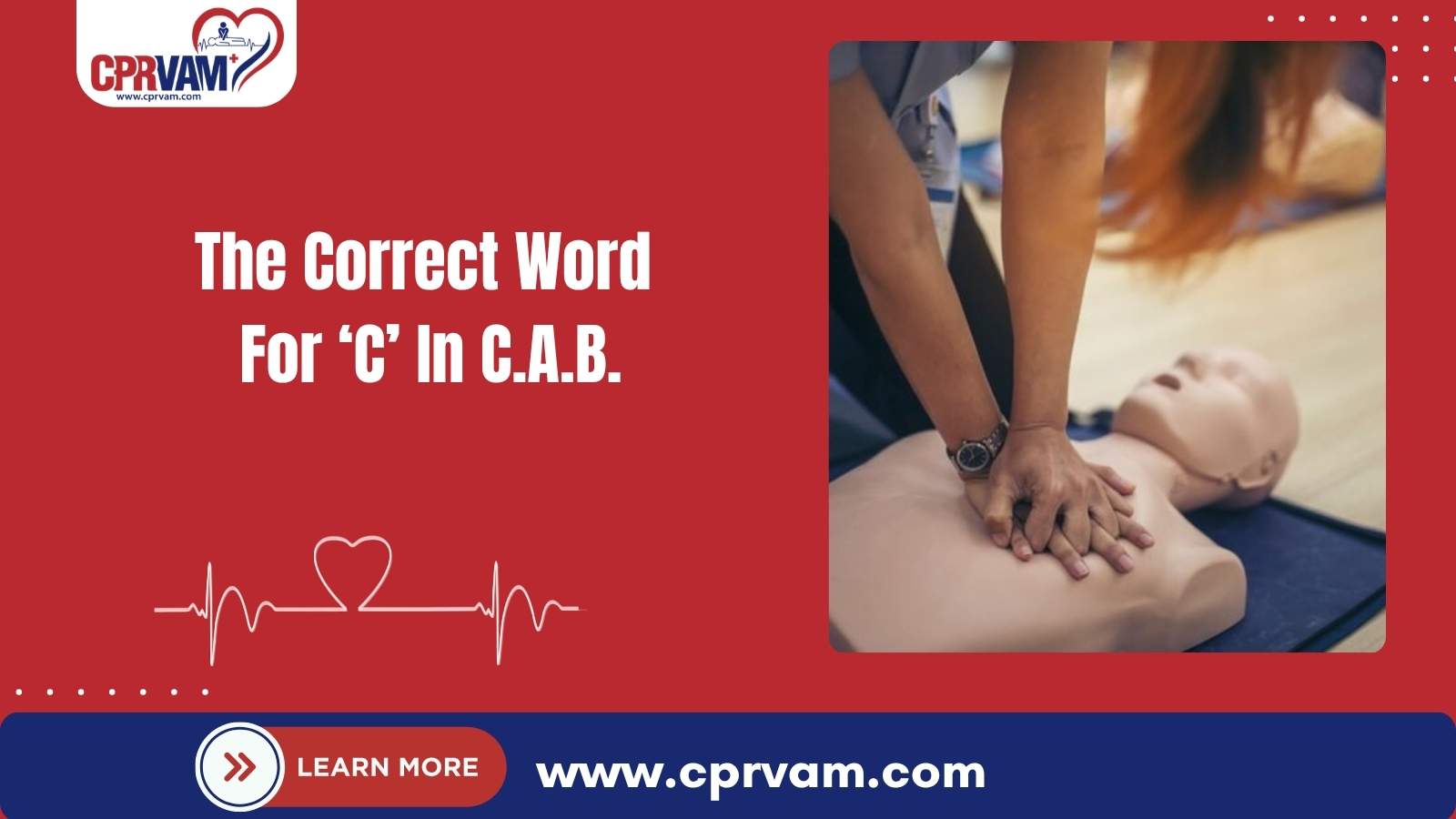
C in C.A.B. stands for compression, one of the most critical steps in CPR. The other two components, A and B, represent airway and breathing, respectively. C.A.B. is the modern CPR sequence and is widely used today. Previously, the A.B.C. method was followed, where compressions came last. However, in 2010, the American Heart Association (AHA) updated its guidelines, shifting from the A.B.C. sequence to C.A.B. to prioritize chest compressions.
Compressions are prioritized in CPR for several reasons. Most importantly, initiating compressions immediately helps maintain blood flow to vital organs. Breathing is not addressed first because the blood often still contains sufficient oxygen in the early moments of cardiac arrest; compressions help circulate that oxygen effectively. Because C.A.B. is central to modern CPR practice, understanding each component is essential.
In this article, we will explore how compressions (C) save lives, how they are applied across different age groups, and why they are prioritized.
Why Was CPR Changed from A.B.C. to C.A.B.?
CPR was changed from A.B.C. to C.A.B. to prioritize chest compressions first, ensuring immediate blood flow to the heart and brain during cardiac arrest. This update, introduced by the American Heart Association in 2010, is based on evidence that early compressions significantly improve survival rates. By starting with compressions, rescuers can quickly circulate oxygen already present in the blood and take faster action. The C.A.B. sequence also makes CPR simpler and supports effective hands-only CPR for bystanders in emergencies.
Reasons for Changing from A.B.C. to C.A.B:
1. Evidence-Based Research
Studies show that immediate chest compressions significantly increase survival in sudden cardiac arrest, especially outside hospitals. Starting compressions first, blood flow to vital organs is maintained while other interventions follow. This evidence led the AHA to update the CPR sequence in 2010.
2. Time Sensitivity
Brain cells can begin dying within 4-6 minutes without oxygenated blood. Prioritizing chest compressions ensures critical organs like the heart and brain receive blood quickly. The C.A.B. approach reduces delays and maximizes chances of survival in life-threatening emergencies.
3. Simplicity for Bystanders
The C.A.B. method is easier for lay rescuers to remember and perform in emergency situations than the old A.B.C. sequence. Hands-only CPR focuses on chest compressions first, simplifying the process and encouraging more people to act confidently during cardiac emergencies.
How Do Chest Compressions Save Lives?
Chest compressions play a critical role during cardiac arrest by temporarily taking over the heart’s function. They help sustain life by ensuring that blood continues to circulate when the heart is no longer pumping effectively.
According to the American Heart Association, how chest compressions can save lives during sudden cardiac arrest:
Maintain blood circulation: Chest compressions manually pump blood through the heart, helping to keep it moving to vital organs even when the heart has stopped functioning.
Deliver oxygen to critical organs: By circulating existing oxygen in the blood, compressions ensure that the brain and heart continue to receive the oxygen they need to function.
Prevent brain damage: Continuous blood flow helps reduce the risk of brain injury, which can begin within minutes when oxygen supply is interrupted.
Support vital organ function: Compressions help sustain essential body processes by maintaining minimal circulation to organs until emergency care is provided.
Improve survival chances: Starting compressions immediately increases the likelihood of survival, especially when combined with timely defibrillation and professional medical support.
Enhance CPR effectiveness: Performing compressions at the correct depth and rate ensures better blood flow, making CPR more effective overall.
How Should C.A.B. Be Applied in Adults, Children, and Infants?
C.A.B. is applied by starting with chest compressions, followed by airway and breathing, with techniques adjusted by age. Adults require two-hand compressions, children use one or two hands, and infants require two-finger compressions with gentler pressure. Adjusting compression depth, hand placement, and breath ratio ensures effective CPR and supports proper blood circulation and oxygen delivery across all age groups.
Below are the recommended C.A.B. techniques for performing CPR on adults, children, and infants:
Adults
During adult cardiac emergencies, start high-quality chest compressions immediately. Trained responders should follow with airway management, rescue ventilation, and call emergency services for defibrillation and advanced care.
Begin high-quality chest compressions immediately at the center of the chest
Open the airway by tilting the head and lifting the chin
Provide 2 rescue breaths for every 30 compressions
Children
For children, chest compressions should be done using one hand, applying gentle pressure appropriate for their smaller size.
Use one hand for compressions, applying appropriate force
Maintain a ratio of 30 compressions to 2 breaths
Open the airway by tilting the head and lifting the chin
Infants
In infants, use two fingers to perform chest compressions, applying gentle, controlled pressure to protect their tiny chest while maintaining effective blood flow.
Use two fingers for chest compressions
Slightly tilt the head and lift the chin for rescue breaths
When to Perform Hands-Only CPR Instead of Full C.A.B.?
When a bystander is untrained, hands-only CPR is recommended instead of the full C.A.B. sequence. Full C.A.B. should be performed only by trained responders who can safely provide rescue breaths while maintaining effective chest compressions. Hands-only CPR focuses on continuous, high-quality compressions, which are the most critical factor in maintaining blood flow to the brain and heart during cardiac arrest.
Studies show untrained rescuers often over- or under-ventilate and may pause compressions too long when attempting rescue breaths, reducing the victim’s chance of survival. Hands-only CPR avoids these risks and is also suitable for those hesitant to give breaths due to fear of saliva or disease transmission. This approach is supported by the American Heart Association for adult sudden cardiac arrest outside hospitals, emphasizing immediate action to increase survival rates.
Why Is Prioritizing 'C' in C.A.B. Important?
Prioritizing the “C” in C.A.B., which stands for chest compressions, is critical during cardiac emergencies. Starting compressions immediately maintains blood flow, supports vital organs, and increases survival chances before professional medical help arrives.
1. Immediate Blood Circulation
Starting CPR with compressions forces oxygen-rich blood to vital organs immediately. This action is critical because brain cells begin dying within minutes without oxygen, and early circulation can prevent permanent damage and improve survival chances.
2. Faster Initiation of Life-Saving Actions
The old A-B-C sequence often delayed response as rescuers focused on opening the airway or giving breaths first. Beginning with compressions ensures immediate action, minimizing delays and providing vital blood flow without hesitation.
3. Improved Survival Rates
Clinical research shows that initiating chest compressions first significantly increases survival rates. Prioritizing circulation over airway or breathing ensures critical organs receive oxygen quickly, giving patients a better chance of recovery until professional help arrives.
4. Simplicity and Action-Oriented
The C-A-B method is easier for untrained bystanders to remember and perform. Focusing on compressions first, people feel more confident to act immediately, even if they are hesitant to provide rescue breaths.
5. High Oxygen Reserves
During sudden cardiac arrest, the body’s blood already contains oxygen. Early compressions circulate this existing oxygen to the brain and heart, making immediate circulation more important than starting with breaths for the first few critical minutes.
Start With Compressions to Save a Life
When a heart stops, quick action is critical. The “C” in C.A.B. stands for Compression, and performing chest compressions immediately keeps blood flowing to vital organs. Even hands-only CPR can make a life-saving difference. Understanding the C.A.B. method and acting without hesitation increases survival chances. Stay prepared, act confidently, and remember that your prompt response can be the key to saving a life.
Take a CPR certification course to master lifesaving skills. At CPR VAM, an AHA-approved training center, our certified instructors provide expert training in CPR, BLS, ACLS, and PALS. Be ready to act confidently, as your skills could save a life.
FAQs About the “C” in C.A.B.
1. Why Is “C” Prioritized in the C.A.B. Sequence?
The “C” in C.A.B. stands for Compression, which immediately restores blood circulation to the brain and heart. Prioritizing compressions improves survival outcomes during cardiac arrest.
2. How Do Chest Compressions Support Life During Cardiac Arrest?
Chest compressions maintain oxygenated blood flow to vital organs when the heart has stopped. High-quality compressions significantly increase the patient’s chance of survival until professional care arrives.
3. Can Untrained Bystanders Effectively Perform C.A.B.?
Yes. Hands-only CPR enables untrained individuals to provide immediate chest compressions. This simple approach maintains circulation and can be life-saving in critical moments.
4. What's the Recommended Depth for Chest Compressions?
For adults, compress at least 2 inches (5 cm). Likewise, for children and infants, compress approximately 1.5 inches (4 cm). Correct depth ensures adequate blood flow to vital organs.
5. Why Is C.A.B. Considered More Effective Than the Old A.B.C. Method?
C.A.B. emphasizes immediate compressions, reducing delays in circulation to the brain and heart. This approach simplifies intervention for bystanders and increases survival rates.