

Cardiac emergencies can happen anywhere, anytime. When the heart suddenly stops, quick action can save a life. You may have heard the term C.A.B. in CPR training, but what does the “C” actually stand for? The American Heart Association updated CPR guidelines in 2010, shifting from the old A-B-C (Airway, Breathing, Compressions) sequence to C-A-B, prioritizing “Compressions” first.
This change emphasizes starting with chest compressions to maintain circulation immediately. Cardiopulmonary resuscitation (CPR) saves lives during cardiac emergencies, and understanding the C.A.B. method is critical for both healthcare providers and bystanders.
This blog breaks down the meaning of “C” in C.A.B., explores why it comes first, compares techniques for adults, children, and infants, and provides actionable guidance.
Why Was CPR Changed from A.B.C. to C.A.B.?
Traditionally, CPR followed the A.B.C. (Airway, Breathing, Compressions) sequence. In 2010, the American Heart Association (AHA) updated its guidelines to C.A.B. (Compressions, Airway, Breathing). This change prioritizes chest compressions first, improving blood circulation to the brain and heart, and increasing survival rates during cardiac arrest emergencies.
Reasons for Changing from A.B.C. to C.A.B:
1. Evidence-Based Research
Studies show that immediate chest compressions significantly increase survival in sudden cardiac arrest, especially outside hospitals. Starting compressions first, blood flow to vital organs is maintained while other interventions follow. This evidence led the AHA to update the CPR sequence in 2010.
2. Time Sensitivity
Brain cells can begin dying within 4-6 minutes without oxygenated blood. Prioritizing chest compressions ensures critical organs like the heart and brain receive blood quickly. The C.A.B. approach reduces delays and maximizes chances of survival in life-threatening emergencies.
3. Simplicity for Bystanders
The C.A.B. method is easier for untrained bystanders to remember and perform than the old A.B.C. sequence. Hands-only CPR focuses on chest compressions first, simplifying the process and encouraging more people to act confidently during cardiac emergencies.
What Does the “C” in C.A.B. Stand For?
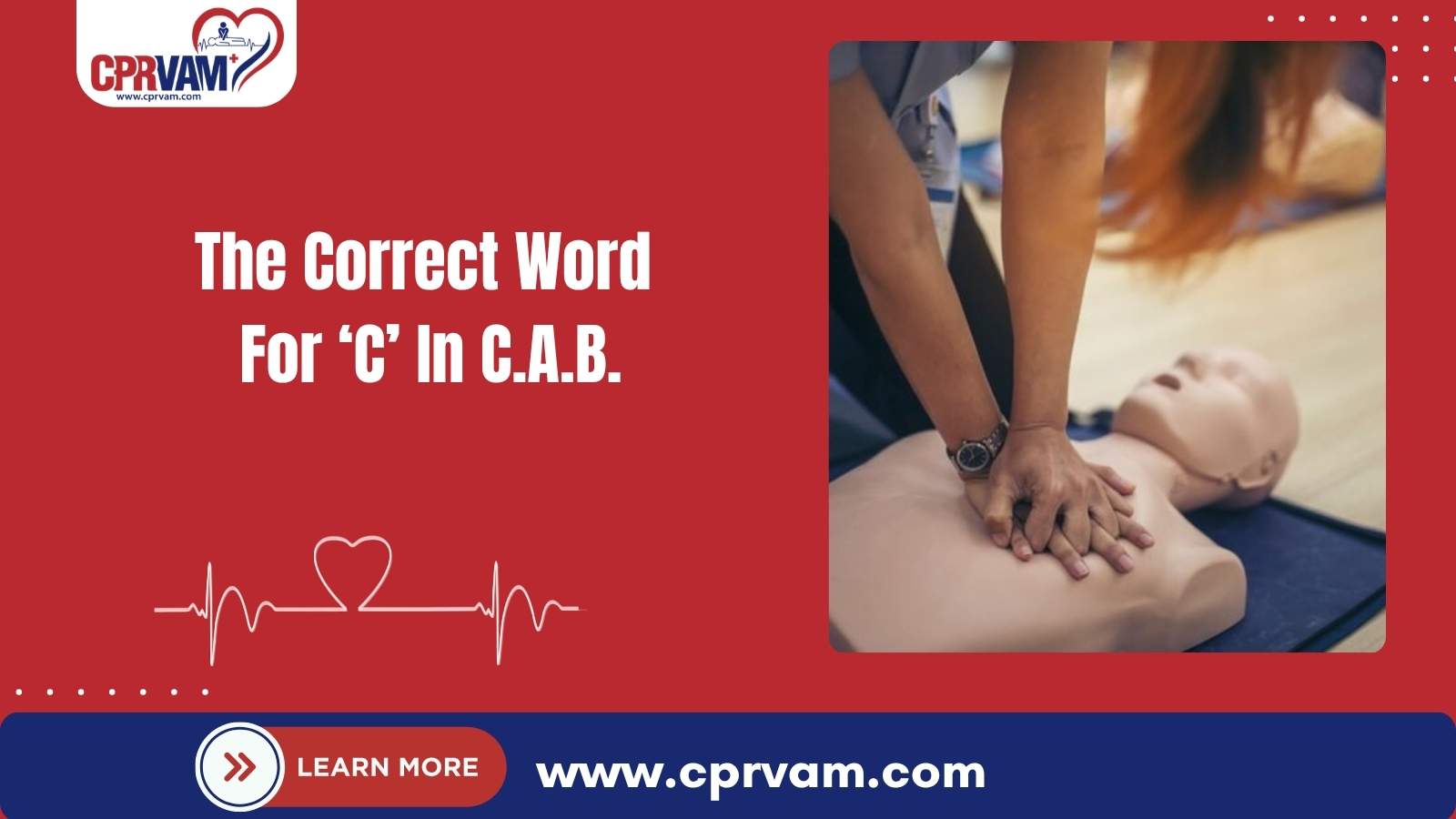
In Cardiopulmonary Resuscitation (CPR), the “C” in C.A.B. stands for “Compression”, the first and most important step during cardiac arrest. Chest compressions manually pump blood, delivering oxygen to critical organs like the brain and heart until emergency medical help arrives.
High-quality compressions are essential because they maintain circulation when the heart stops beating. Without effective compressions, other steps such as opening the airway or giving rescue breaths cannot supply oxygen efficiently, lowering survival chances and increasing the risk of brain and organ damage.
How Do Chest Compressions Save Lives?
High-quality chest compressions are critical during cardiac arrest because they manually maintain blood flow to vital organs like the brain and heart. Effective compressions keep oxygen circulating, buying crucial time until emergency medical personnel can take over.
According to the American Heart Association:
Performing chest compressions can double or triple a person’s survival rate.
Compressions should be at least 2 inches (5 cm) deep for adults.
The recommended rate is 100-120 compressions per minute.
Allow full chest recoil between compressions to maximize blood return.
Chest compressions can help clear small airway blockages, improving the effectiveness of subsequent airway management and rescue-breathing steps.
How Should C.A.B. Be Applied in Adults, Children, and Infants?
The C.A.B. approach prioritizes chest compressions first, followed by airway management and breathing. Techniques differ by age to ensure safety and effectiveness. Adjusting hand placement, compression depth, and breath ratio improves survival in adults, children, and infants.
Adults
During adult cardiac emergencies, start high-quality chest compressions immediately. Trained responders should follow with airway management, rescue breaths, and call emergency services for defibrillation and advanced care.
Begin high-quality chest compressions immediately at the center of the chest
Open the airway by tilting the head and lifting the chin
Provide 2 rescue breaths for every 30 compressions
Children
For children, chest compressions should be done using one hand, applying gentle pressure appropriate for their smaller size.
Use one hand for compressions, applying appropriate force
Maintain a ratio of 30 compressions to 2 breaths
Open the airway by tilting the head and lifting the chin
Infants
In infants, use two fingers to perform chest compressions, applying gentle, controlled pressure to protect their tiny chest while maintaining effective blood flow.
Use two fingers for chest compressions
Keep the compression-to-breath ratio at 30:2
Slightly tilt the head and lift the chin for rescue breaths
When Is Hands-Only CPR Recommended in C.A.B.?
Hands-only CPR is designed for untrained bystanders, focusing entirely on chest compressions. Continuous, high-quality compressions keep blood flowing to vital organs, increasing the victim’s chances of survival until professional medical help arrives. It is simple, effective, and easy to perform.
Trained responders should still follow the full C.A.B. sequence, including airway management and rescue breaths. This ensures oxygen reaches vital organs and adapts to the patient’s specific needs. It is especially important for children, infants, and drowning victims to maximize survival outcomes and reduce complications.
Why Is Prioritizing 'C' in C.A.B. Important?
Prioritizing the “C” in C.A.B., which stands for chest compressions, is critical during cardiac emergencies. Starting compressions immediately maintains blood flow, supports vital organs, and increases survival chances before professional medical help arrives.
1. Immediate Blood Circulation
Starting CPR with compressions forces oxygen-rich blood to vital organs immediately. This action is critical because brain cells begin dying within minutes without oxygen, and early circulation can prevent permanent damage and improve survival chances.
2. Faster Initiation of Life-Saving Actions
The old A-B-C sequence often delayed response as rescuers focused on opening the airway or giving breaths first. Beginning with compressions ensures immediate action, minimizing delays and providing vital blood flow without hesitation.
3. Improved Survival Rates
Clinical research shows that initiating chest compressions first significantly increases survival rates. Prioritizing circulation over airway or breathing ensures critical organs receive oxygen quickly, giving patients a better chance of recovery until professional help arrives.
4. Simplicity and Action-Oriented
The C-A-B method is easier for untrained bystanders to remember and perform. Focusing on compressions first, people feel more confident to act immediately, even if they are hesitant to provide rescue breaths.
5. High Oxygen Reserves
During sudden cardiac arrest, the body’s blood already contains oxygen. Early compressions circulate this existing oxygen to the brain and heart, making immediate circulation more important than starting with breaths for the first few critical minutes.
Start With Compressions to Save a Life
When a heart stops, quick action is critical. The “C” in C.A.B. stands for Compression, and performing chest compressions immediately keeps blood flowing to vital organs. Even hands-only CPR can make a life-saving difference. Understanding the C.A.B. method and acting without hesitation increases survival chances. Stay prepared, act confidently, and remember that your prompt response can be the key to saving a life.
Take a CPR certification course to master lifesaving skills. At CPR VAM, an AHA-approved training center, our certified instructors provide expert training in CPR, BLS, ACLS, and PALS. Be ready to act confidently, as your skills could save a life.
FAQs About the “C” in C.A.B.
1. Why Is “C” Prioritized in the C.A.B. Sequence?
The “C” in C.A.B. stands for Compression, which immediately restores blood circulation to the brain and heart. Prioritizing compressions improves survival outcomes during cardiac arrest.
2. How Do Chest Compressions Support Life During Cardiac Arrest?
Chest compressions maintain oxygenated blood flow to vital organs when the heart has stopped. High-quality compressions significantly increase the patient’s chance of survival until professional care arrives.
3. Can Untrained Bystanders Effectively Perform C.A.B.?
Yes. Hands-only CPR enables untrained individuals to provide immediate chest compressions. This simple approach maintains circulation and can be life-saving in critical moments.
4. What's the Recommended Depth for Chest Compressions?
For adults, compress at least 2 inches (5 cm). Likewise, for children and infants, compress approximately 1.5 inches (4 cm). Correct depth ensures adequate blood flow to vital organs.
5. Why Is C.A.B. Considered More Effective Than the Old A.B.C. Method?
C.A.B. emphasizes immediate compressions, reducing delays in circulation to the brain and heart. This approach simplifies intervention for bystanders and increases survival rates.