

Sudden cardiac arrest (SCA) is a serious medical emergency that can happen anywhere, anytime. In the United States, about 350,000 out-of-hospital cardiac arrests occur each year, and only 10% of victims survive, according to the National Heart, Lung, and Blood Institute (NHLBI). Every minute without CPR reduces a person’s chance of survival by roughly 10%, and brain cells can start dying within 5 minutes. These numbers show just how critical quick action is in a cardiac emergency.
The good news is that Hands-Only CPR offers a simple, effective way for anyone to help. This technique focuses on chest compressions only, without rescue breaths, making it easy for untrained bystanders to perform. Studies show that immediate Hands-Only CPR can double or even triple a person’s chance of survival, keeping blood flowing to the heart and brain until professional help arrives. It’s a skill that can save lives in the critical first minutes of cardiac arrest.
This guide shows you how Hands-Only CPR works and teaches simple steps that can save lives during sudden cardiac arrest.
What Is Hands-Only CPR and How Can It Save a Life?
Hands-Only CPR, also called compressions-only CPR, is a simple way you can help someone experiencing sudden cardiac arrest. Instead of giving rescue breaths, you press hard and fast on the center of the chest. The American Heart Association (AHA) recommends this method for adults and teenagers, especially if bystanders are untrained in traditional CPR. It is quick to learn and easy to perform, allowing you to act confidently in a life-threatening emergency.
Unlike traditional CPR, Hands-Only CPR allows bystanders, even children as young as, to help immediately. By keeping blood flowing to the heart and brain, it greatly increases the person’s chance of survival until emergency medical services arrive. Preventive cardiologist Dr. Holly Andersen of New York-Presbyterian explains, “People freeze. Action can save a life. With inaction, people die needlessly.” By learning this technique, you can be ready to save a life when every second counts.
How Can Hands-Only CPR Significantly Increase Survival During Cardiac Arrest?
Immediate action during cardiac arrest can double or even triple a person’s chances of survival. Yet, only about 40% of cardiac arrest victims outside a hospital receive help before emergency responders arrive. Hands-Only CPR is vital because it allows you, or anyone nearby, to act quickly and effectively. By keeping blood flowing to the heart and brain, it bridges the critical minutes until professional help arrives.
Hands-Only CPR works well because it is simple, focused, and practical under stress. The key benefits are aligned with the latest AHA Guidelines as follows:
1. Encourages Bystander Intervention
Many people hesitate to help because they fear doing CPR wrong or giving mouth-to-mouth breaths. Hands-Only CPR removes that barrier. By focusing only on chest compressions, more bystanders feel confident stepping in quickly when seconds matter most.
2. Sustains Blood Flow
Continuous chest compressions push oxygen-rich blood to the brain and heart. This helps prevent brain damage and organ failure. According to AHA guidelines, maintaining blood flow during the first few minutes of cardiac arrest is critical for survival.
3. Simplifies the Procedure
Hands-Only CPR has fewer steps than traditional CPR. You call 911 and push hard and fast in the center of the chest. This simplicity helps people remember what to do and act correctly under stress.
4. Reduces Rescuer Fatigue
Without stopping to give rescue breaths, you can maintain a steady rhythm of compressions longer. This reduces physical and mental fatigue. Consistent compressions improve circulation and keep the victim supported until EMS arrives.
5. Effective for Adult Sudden Cardiac Arrest
Most adult cardiac arrests are caused by heart rhythm problems, not breathing issues. Hands-Only CPR is highly effective in these cases. Immediate compressions help sustain life and improve the chance of successful defibrillation by professionals.
6. Reduces Hesitation From Mouth-to-Mouth Contact
Fear of disease transmission or discomfort with mouth-to-mouth contact often delays action. Hands-Only CPR removes this concern. When people feel safer helping, they are more likely to act quickly and provide lifesaving care.
7. Immediate Action Improves Survival Outcomes
Every minute without CPR lowers survival by about 10%, according to the CDC. Starting compressions right away keeps oxygen moving to the brain. Fast action reduces the risk of long-term brain injury and increases survival chances.
Dr. Holly Andersen’s personal experience underscores the importance of quick action. In 2010, her brother, Scott Andersen, suffered sudden cardiac arrest at home and passed away at age 50. Motivated by this loss, she launched the #HandsOnlyCPR campaign in 2017 to educate and empower people like you to save lives during emergencies.
When Is the Right Time to Perform Hands-Only CPR?
Knowing when to act during a cardiac emergency can save a life. Hands-Only CPR works best if you notice specific signs in an adult or teen. Acting quickly keeps blood flowing to the heart and brain until emergency help arrives.
Here are the right times when you should perform hands-only CPR during an emergency:
1. Sudden Collapse
If someone falls or collapses without warning, it may indicate sudden cardiac arrest. Immediate action is crucial. You should begin chest compressions right away, even before checking for other signs, to maintain circulation and protect vital organs.
2. Unresponsiveness
When you check responsiveness, tap the person gently and call out their name. If there is no response, it signals a medical emergency. You should start compressions immediately, because waiting or hesitating can reduce survival chances significantly.
3. Abnormal Breathing
If the person is only gasping or not breathing normally, it is a strong indicator of cardiac arrest. Begin Hands-Only CPR immediately, as every minute without compressions reduces survival chances by about 10 percent.
4. Waiting for Medical Professional or EMS
Continue performing chest compressions without interruption until trained medical personnel arrive. Even if help is on the way, your actions can sustain blood flow and oxygen to the brain, increasing the victim’s chances of survival.
Remember, children, infants, and drowning victims usually need traditional CPR with rescue breaths. Being able to spot these signs and respond can give you the confidence to save a life when seconds count.
How Should You Prepare Before Giving Hands-Only CPR?
Before you start Hands-Only CPR, taking a moment to prepare can make a big difference. Make sure the scene is safe, check if the person is unresponsive or not breathing normally, and call 911 immediately or ask someone nearby to do so.
Key Points:
- Check the Scene
Before approaching, make sure the area is safe for both you and the victim. Avoid hazards like traffic, fire, or electrical dangers so you can provide help without putting yourself at risk. - Assess the person
Gently tap the person and shout to see if they respond. Look for normal breathing. If they are unresponsive or only gasping, it signals the need to start Hands-Only CPR immediately. - Call 911 immediately
Alert emergency services as soon as possible. If you are not alone, ask someone nearby to make the call while you begin compressions. Quick action ensures professional help is on the way.
How Do You Perform Hands-Only CPR Step by Step?
Performing Hands-Only CPR is simple but crucial. Start by checking the person’s responsiveness and breathing, then call 911 for help. Position your hands on the chest and give firm, fast compressions at the right depth and rhythm until emergency responders arrive.
Here are the simple steps to perform hands-only CPR as follows:
1. Check Responsiveness and Breathing
First, make sure the person is unresponsive. Gently tap their shoulder and ask, “Are you okay?” Check if they are breathing normally. If you notice no response or abnormal breathing, you should be ready to start Hands-Only CPR immediately.
2. Call for Help
Call 911 as soon as you confirm the person is unresponsive. If others are nearby, ask someone else to make the call so you can start CPR without delay. Quick action ensures that professional help is on the way while you provide life-saving compressions.
3. Proper Victim Positioning for CPR
Lay the person flat on a firm surface, such as the floor. Kneel beside their chest to get proper leverage. Positioning correctly helps you perform effective compressions and ensures blood circulation reaches the brain and heart efficiently.
4. Place Your Hands Correctly
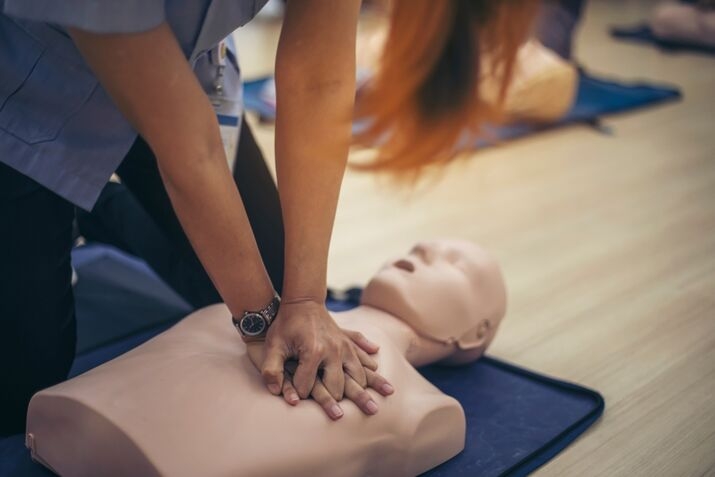
Place the heel of one hand in the center of the chest, then put the other hand on top, interlocking your fingers. Keep your arms straight and shoulders aligned over your hands. This allows you to push effectively and reduce fatigue.
5. Perform Chest Compressions
According to AHA guidelines, push hard and fast at a rate of 100-120 compressions per minute, pressing at least 2 inches deep. Allow the chest to fully rise between compressions. You can think of the rhythm of “Stayin’ Alive” to keep consistent timing while performing CPR.
6. Continue Until Medical Help Arrives
Do not stop compressions until emergency responders arrive or the person shows signs of life. Even if you feel tired or unsure, continuing is critical. Every compression you give increases survival chances and keeps blood flowing to vital organs.
Who Can Learn Hands-Only CPR and How Can You Get Started?
Anyone can learn Hands-Only CPR, including bystanders without formal training, teens, adults, and even children. You can provide immediate help if a teen or adult suddenly collapses from cardiac arrest. The American Heart Association promotes it as a simple, effective way to sustain life until professional help arrives.
If you want to improve your confidence and technique, you can follow instructional videos, attend community workshops, or engage with campaigns like #HandsOnlyCPR. The Hands-Only CPR campaign, primarily led by the American Heart Association, promotes a simplified CPR method for teens and adults: Call 911, then push hard and fast in the center of the chest at 100-120 compressions per minute.
What Are the Risks and Limitations of Hands-Only CPR?
While Hands-Only CPR is lifesaving, it has limits. It is not recommended for infants, young children, or drowning victims. You might cause minor injuries like bruised ribs, and fatigue can reduce compression quality, so rotate rescuers when possible.
Here are the risks and limitations while performing hands-only CPR as follows:
- Not Suitable for Infants and Children: You should use traditional CPR with rescue breaths for younger victims, as compressions alone may not provide enough oxygen.
- Not Ideal for Breathing-Related Collapses or Drowning Victims: If you encounter these situations, mouth-to-mouth breaths are essential to help the person get enough oxygen.
- Potential Injuries: Repeated chest compressions can bruise or break ribs, though they are rarely fatal. You should be aware of this when performing CPR.
- Fatigue and Compression Quality: Keeping the correct rate can be tiring. You may notice your technique slipping, which can reduce effectiveness.
- Need for Training: Proper CPR takes practice. You should consider taking a certified course to feel confident and perform it correctly in an emergency.
Master Hands-Only CPR to Save a Life
You don’t need medical training to save a life. Hands-Only CPR allows you to act immediately when someone experiences sudden cardiac arrest. By learning this simple, powerful technique, you can sustain life until professionals arrive. Take the time now to watch tutorials, practice compressions, or attend a class. Your actions could double or triple a person’s chance of survival. Be the person who steps up and makes a life-saving difference.
Learn Hands-Only CPR with our expert instructors at a CPR VAM near you. Gain practical skills, build confidence, and be ready to save a life in an emergency, all with hands-on guidance from experienced professionals.
FAQs
1. What is Hands-Only CPR?
Hands-Only CPR is a life-saving method where you press on the center of the chest to keep blood flowing to the heart and brain. It is designed so you can act quickly before help arrives.
2. Who Can Perform Hands-Only CPR?
Anyone can perform it. You do not need medical training, and even teens and bystanders can step in to help during a cardiac emergency.
3. How Do You Know When to Start Hands-Only CPR?
You should begin if someone suddenly collapses, does not respond, or is breathing abnormally. Acting immediately can greatly increase their chance of survival.
4. How Do You Perform Hands-Only CPR Correctly?
Place your hands in the center of your chest, keep your arms straight, and push hard and fast at about 100-120 compressions per minute. Keep going until the person regains consciousness or help arrives.
5. Should You Stop Hands-Only CPR If You Feel Tired or Unsure?
No. If you are alone, continue chest compressions as best as you can until emergency responders arrive or the person shows signs of life. Even imperfect compressions are better than stopping, as they help maintain blood flow to vital organs.