

A CPR certification exam is an essential requirement for individuals who need verified life-saving skills for professional, academic, or personal reasons. CPR certification confirms that a person can respond effectively during cardiac emergencies and provide immediate care until advanced medical help arrives. Knowing how to prepare in advance helps reduce uncertainty and builds confidence before taking the exam.
Many candidates feel unsure about what to focus on, how to study efficiently, and how to perform calmly under exam conditions. Limited hands-on practice, unfamiliar testing environments, or gaps in understanding key concepts can increase stress and affect performance. Without a clear preparation plan, even familiar CPR techniques may feel overwhelming during testing. A structured and consistent approach to preparation helps candidates stay organized, improve confidence, and approach the exam with a steady, focused mindset.
This blog focuses on practical ways to prepare for a CPR certification exam, helping you develop confidence and improve readiness for the exam with a clear plan.
What Does a CPR Certification Exam Include?
A CPR certification exam is designed to evaluate both your knowledge of life-saving principles and your ability to perform CPR correctly in real-world emergencies. Most recognized certification programs structure the exam into two core components: a written (or online) assessment and a hands-on skills evaluation.
The written portion tests your understanding of CPR fundamentals, including recognizing cardiac arrest, activating emergency response systems, compression depth and rate, rescue breathing techniques, and proper use of an Automated External Defibrillator (AED). Questions may be multiple choice or scenario-based and often cover adult, child, and infant CPR differences, as well as choking response procedures.
The skills assessment requires you to demonstrate CPR techniques on a manikin under instructor supervision. You are typically evaluated on correct hand placement, compression quality, rescue breaths, AED pad placement, and overall sequence of care. Successful completion of both components confirms that you not only understand CPR theory but can also apply it effectively in an emergency.
How Should You Prepare for A CPR Certification Exam Successfully?
Preparing for a CPR certification exam can feel overwhelming without a clear strategy. From mastering CPR techniques to understanding the exam format, there are several key steps you can take to improve your knowledge, build hands-on skills, and approach the test with confidence.
The following tips provide a structured approach to ensure you are ready for both the written and practical portions of the exam:
1. Study the Official CPR Guidelines
Start your preparation by reviewing the official CPR guidelines provided by recognized organizations such as the American Heart Association (AHA) or the American Red Cross (ARC). These guidelines cover essential topics, including:
- CPR steps for adults, children, and infants
- Proper compression depth and rate
- Rescue breathing techniques
- AED usage and safety protocols
Studying official materials ensures that you are learning the most accurate and up-to-date CPR procedures.
2. Create a Structured Study Plan
Creating a structured study plan is essential for effective preparation for the CPR certification exam. A clear plan helps you stay organized, manage your time efficiently, and ensure that all exam topics are covered without last-minute stress.
Start by identifying how much time you have before your exam date. Then break your study schedule into manageable sections, such as:
- CPR fundamentals and emergency response steps
- Adult, child, and infant CPR techniques
- AED operation and safety procedures
- Choking relief and first-aid basics
Set specific goals for each study session, such as mastering compression ratios or understanding AED prompts. Short, consistent study sessions are often more effective than long, infrequent ones.
3. Take Practice Tests and Quizzes
Taking practice tests and quizzes is also one of the most effective ways to prepare for a CPR certification exam. These practice assessments help reinforce your knowledge while familiarizing you with the format and style of questions you’ll encounter on the actual exam.
Practice tests allow you to:
- Understand common multiple-choice and scenario-based questions
- Identify weak areas that need additional study
- Improve time management and reduce test-day anxiety
Many CPR training providers offer online quizzes and sample exams that closely reflect real testing conditions. Treat these practice tests as if they were the actual exam, work in a quiet space, and time yourself to simulate exam pressure.
4. Watch Instructional Videos and Visual Aids
Watching instructional videos and visual aids is a highly effective way to reinforce your understanding of CPR techniques while preparing for the CPR certification exam. Visual learning helps bridge the gap between written instructions and real-life application.
Instructional videos allow you to:
- See proper hand placement, compression depth, and rhythm
- Understand the correct sequence of CPR steps
- Learn how to operate an Automated External Defibrillator (AED) safely and confidently
- Observe correct techniques for rescue breaths and choking relief
Visual aids such as diagrams, charts, and step-by-step illustrations can also help you memorize key details like compression ratios and AED pad placement.
5. Practice Hands‑on Skills
Practicing hands-on CPR skills is a critical part of preparing for the CPR certification exam, as CPR is a physical, performance-based skill. While studying theory is important, the skills test requires you to demonstrate proper technique confidently and correctly.
Focus your hands-on practice on the following areas:
- Chest compressions with correct hand placement, depth, and rate
- Rescue breaths using the proper compression-to-breath ratio
- AED operation, including pad placement and following voice prompts
- Choking relief techniques for adults, children, and infants
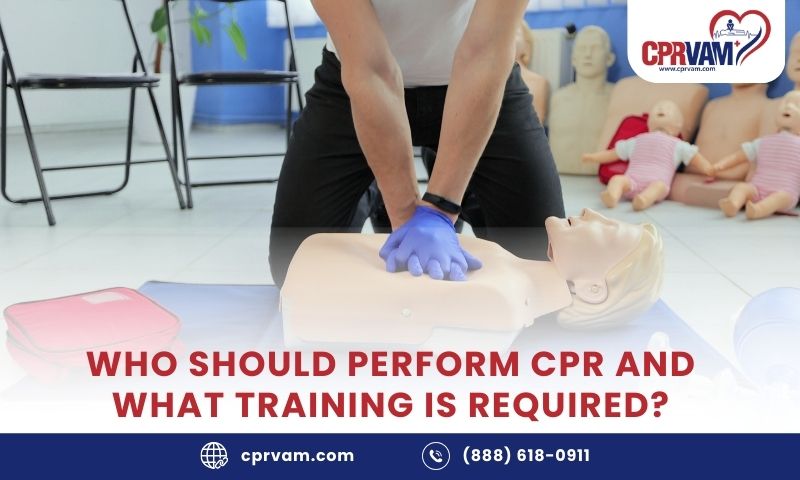
Use a CPR training manikin whenever possible to simulate real-life conditions. Repeating each skill multiple times helps build muscle memory, ensuring your movements feel natural during the exam.
6. Understand the Test Format and Requirements
Understanding the test format and requirements is an essential step in preparing for the CPR certification exam. Knowing what to expect helps reduce anxiety and allows you to focus on performing each task correctly and confidently.
Before exam day, make sure you are familiar with:
- Passing score requirements for the written exam
- Specific skills you must demonstrate, such as CPR, AED use, and choking relief
- Time limits for both the written and practical portions
- Order of testing, including whether the written test comes before or after skills evaluation
By fully understanding the exam format and requirements, you can prepare more strategically, avoid surprises on test day, and approach the CPR certification exam with confidence.
7. Manage Stress and Exam Day Preparation
Managing stress and preparing properly for exam day can significantly impact your performance on the CPR certification exam. Even if you’ve studied and practiced thoroughly, anxiety can affect your focus and execution if not addressed.
On exam day:
- Eat a light, healthy meal and stay hydrated
- Arrive early to give yourself time to relax and adjust to the environment
- Take slow, deep breaths to calm nerves before starting the test
- Read each written question carefully and follow each step deliberately during the skills test
Staying calm allows you to think clearly and perform CPR techniques accurately. Remember, the exam is designed to confirm your ability to provide effective care, not to trick you. Proper stress management and thoughtful exam-day preparation will help you perform at your best and pass your CPR certification with confidence.
8. Seek Support and Clarification
Seeking support and clarification is an important part of preparing for the CPR certification exam. Addressing doubts early can boost your confidence and ensure you fully understand the material.
Before the exam:
- Ask your CPR instructor questions during training sessions
- Request demonstrations or feedback on your hands-on skills
- Use online resources, FAQs, and study guides provided by your training organization
Seeking clarification ensures you are fully prepared and confident, making it easier to perform accurately during both the written and skills portions of the CPR certification exam.
How Long Does the CPR Certification Exam Last?
The duration of a CPR certification exam varies depending on the training provider and course type, but it generally includes both a written test and a hands-on skills assessment. The written portion typically takes 25-50 minutes, depending on the number of questions and whether it is multiple-choice or scenario-based. The hands-on skills evaluation usually lasts 20-40 minutes per participant, covering CPR techniques, AED use, and choking relief for adults, children, and infants.
Some courses combine the written and practical portions in a single session, while others schedule them separately. Knowing the expected duration in advance helps candidates manage their time, pace themselves during testing, and reduce stress on exam day.
What Happens If You Fail in CPR Test?
If you fail a CPR test, it usually is not a permanent problem. Most CPR courses require you to pass both a written exam and a hands-on skills test to receive certification. If you do not pass one or both parts, you simply do not receive your CPR card until you successfully complete the requirements. In most cases, you are allowed to retake the test. Many training programs offer immediate retesting or schedule a retest after additional practice. Instructors often provide guidance on what went wrong so you know exactly what to improve before trying again. Failing the first attempt is common, especially for people who feel nervous during the skills evaluation.
You may be asked to complete extra practice or review course materials before retesting. This can include practicing compressions on a manikin, reviewing AED steps, or rewatching instructional videos. These refresher activities are meant to help you build confidence and correct technique. If the CPR certification is required for a job or school program, you are usually given time to pass before it affects your role. Employers and schools typically focus on remediation rather than punishment. Overall, failing a CPR test is usually a temporary setback, and with a little additional practice, most people pass on their next attempt.
Get Certified and Be Ready to Save Lives
In conclusion, preparing for a CPR certification exam requires a balance of knowledge, hands-on practice, and confidence. By studying official CPR guidelines, practicing skills on a manikin, taking practice tests, and understanding the exam format, you can approach both the written and practical assessments with assurance. Even if you don’t pass on the first attempt, additional practice ensures improvement. With proper preparation, you can earn your CPR certification and be ready to respond effectively in real-life emergencies.
While understanding the steps is important, real confidence comes from practicing them in realistic scenarios. That’s why choosing a trusted training provider matters. CPR VAM, a trusted CPR training center, offers expert-led CPR, BLS, ACLS, and PALS courses that emphasize real-life situations. Their practical, hands-on approach ensures you develop the skills and confidence to respond effectively when every second is critical.
Take the next step in your lifesaving journey, enroll in a CPR VAM course today to gain the hands-on experience and certification you need to be prepared for any emergency.