

Using proper technique during CPR can significantly improve the effectiveness of rescue breathing and overall patient outcomes. One essential skill taught in CPR and first aid training is the correct use of a pocket mask, including understanding where the rescuer should be positioned. Correct positioning helps maintain a clear airway, ensures a secure mask seal, and allows for effective ventilation during life-threatening emergencies.
Many rescuers focus on delivering breaths but overlook how body position directly affects performance. Whether responding to cardiac arrest, drowning, or respiratory failure, knowing the correct rescuer position when using a pocket mask reduces errors, limits air leakage, and supports high-quality CPR in both professional and lay rescuer settings.
This blog explains where the rescuer should be positioned when using a pocket mask, why that position matters, and how proper technique improves rescue breathing efficiency.
What Is a Pocket Mask?
A pocket mask is a compact resuscitation device used during CPR to deliver rescue breaths safely and effectively. It is designed to fit over a victim’s mouth and nose and includes a one-way valve that allows air to flow into the lungs while preventing the victim’s exhaled air from reaching the rescuer. This barrier significantly reduces the risk of disease transmission compared to mouth-to-mouth breathing.
Pocket masks are commonly included in first aid kits and are used by both trained lay rescuers and healthcare professionals. They can be used on adults, children, and infants, and some models feature an oxygen inlet for supplemental oxygen. Due to their portability and ease of use, pocket masks are a standard tool taught in CPR, BLS, and first aid training programs.
What Is the Correct Position for the Rescuer When Using a Pocket Mask?
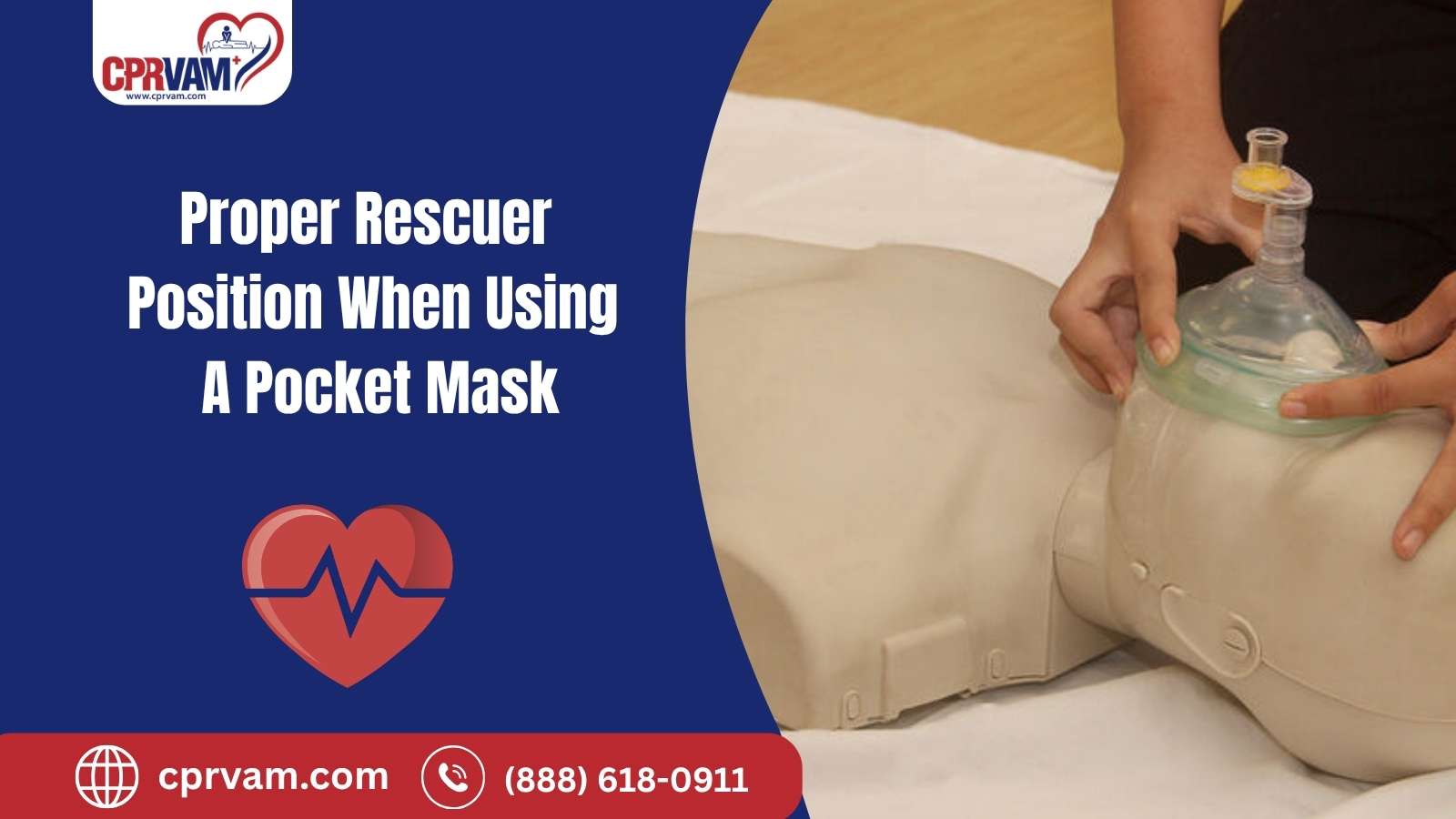
The correct position for the rescuer when using a pocket mask is **at the head of the victim**, with the victim placed flat on their back on a firm and stable surface. The rescuer should kneel directly behind the victim’s head, facing the victim, to maintain full access to the airway and mask.
From this position, the rescuer can properly align the pocket mask over the victim’s mouth and nose and maintain control while delivering rescue breaths. The head position allows the rescuer to keep the airway open and observe chest movement during ventilations. This positioning is the standard recommended approach in CPR guidelines for effective use of a pocket mask across most emergencies.
Why Should the Rescuer Be Positioned at the Head?
Positioning the rescuer at the head ensures proper airway control, a secure mask seal, and clear observation of chest rise. It improves stability, allows smooth coordination with chest compressions, and maximizes the effectiveness of rescue breaths during CPR.
Here are the reasons that the rescuer should be positioned at the head:
1. Provides Better Airway Control
Positioning at the head allows the rescuer to properly open and maintain the airway using techniques such as the head-tilt, chin-lift, or jaw-thrust. This ensures air can flow freely into the lungs during rescue breaths.
2. Ensures an Effective Mask Seal
From the head position, the rescuer can apply even pressure around the pocket mask, creating a tight seal over the mouth and nose. A proper seal prevents air leakage and improves ventilation effectiveness.
3. Allows Clear Observation of Chest Rise
Being at the head enables the rescuer to easily watch for visible chest rise and fall, which confirms that rescue breaths are entering the lungs and not escaping or causing gastric inflation.
4. Improves Stability and Control
Kneeling at the head provides better body alignment and balance. This stable position helps the rescuer maintain consistent hand placement and deliver controlled, effective breaths.
5. Supports Smooth CPR Transitions
When positioned at the head, the rescuer can efficiently coordinate rescue breaths with chest compressions during CPR, improving overall performance and response time in an emergency.
What Is the Correct Hand Placement While Positioned at the Head?
Correct hand placement at the head ensures airway support and stability. Typically, one hand gently holds the forehead while fingers lift the chin or jaw, preventing movement and keeping the airway open during CPR or care.
Here are the techniques you can use to place your hand:
1. Use the C-E Hand Technique
The correct hand placement when using a pocket mask is the C-E technique. The thumb and index finger form a “C” shape around the mask to hold it securely in place, while the remaining three fingers form an “E” shape under the jaw.
2. Lift the Jaw to Open the Airway
The fingers forming the “E” are used to lift the jaw upward toward the mask. This helps keep the airway open and prevents the tongue from blocking airflow during rescue breaths.
3. Maintain a Tight Mask Seal
Firm, even pressure should be applied around the edges of the mask to ensure a tight seal over the mouth and nose. A proper seal is essential to prevent air leakage and deliver effective ventilation.
4. Keep Hands Steady and Controlled
The rescuer’s hands should remain steady while delivering slow, controlled breaths lasting about one second each. Proper hand placement and control help ensure a visible chest rise without overinflation.
Does Rescuer Position Change for Different Victims?
The rescuer’s position generally remains at the head for all types of victims, including adults, children, and infants. The fundamental kneeling position, facing the victim’s face with shoulders aligned over the head, does not change. However, adjustments are made to accommodate the size and anatomy of the victim.
For children, the rescuer may need to use a smaller pocket mask and ensure that the mask covers both the nose and mouth completely. For infants, the mask is smaller still, and the rescuer may use two fingers to support the jaw rather than the whole hand. In confined spaces, the rescuer may need to adjust knee placement or body angle slightly while still maintaining a position at the head to manage the airway and deliver breaths effectively.
Despite these adjustments, the head remains the primary position for all victims because it allows the rescuer to place the mask correctly, monitor chest rise, and maintain control of the airway. The techniques and hand placement may vary slightly, but the overall position does not change.
What Are the Common Pocket Mask Mistakes to Avoid for Effective Rescue Breathing?
Even with proper training, rescuers can make mistakes when using a pocket mask that reduces the effectiveness of rescue breathing. Being aware of these common errors helps ensure better ventilation and improved patient outcomes.
1. Incorrect Rescuer Positioning
One of the most common mistakes is positioning beside the victim rather than at the head. This limits airway control, makes it harder to maintain a proper mask seal, and reduces the rescuer’s ability to observe chest rise.
2. Poor Mask Seal
Failing to create a tight seal around the mouth and nose can cause air leakage, preventing adequate ventilation. This often happens when the rescuer does not apply even pressure or allows gaps around the mask edges.
3. Inadequate Airway Opening
If the airway is not properly opened using a head-tilt chin-lift or jaw-thrust technique, rescue breaths may not reach the lungs. This can result in little to no chest rise and ineffective ventilation.
4. Excessive Ventilation
Delivering breaths too forcefully or too quickly can lead to gastric inflation, increasing the risk of vomiting and aspiration. Rescue breaths should be slow, controlled, and just enough to produce a visible chest rise.
5. Incorrect Hand Placement
Improper hand positioning can reduce jaw support and compromise the airway. Failing to use the C-E hand technique may result in poor mask control and ineffective breaths.
6. Not Monitoring Chest Rise
Some rescuers focus solely on delivering breaths and forget to check for chest rise. Without visible chest movement, there is no confirmation that air is entering the lungs.
Master Pocket Mask Technique: Position Yourself for Effective Rescue Breathing
Mastering proper rescuer positioning at the head is essential for effective pocket mask use during CPR. Correct placement ensures a clear airway, tight mask seal, and visible chest rise while supporting smooth coordination with chest compressions. Practicing hand placement, controlled breaths, and airway management helps deliver high-quality rescue ventilation in any pediatric or adult emergency. Train regularly, follow guidelines, and act confidently to improve outcomes and save lives.
Enroll at CPR VAM Training Center today and master rescuer positioning, hand placement, and controlled breaths. Our expert instructors provide hands-on training in BLS, ACLS, and PALS. Choose online, in-person, or blended formats, build confidence, and be ready to save lives in real emergencies.
FAQs
1. Where Should a Rescuer Be Positioned When Using a Pocket Mask?
The rescuer should kneel at the head of the victim, facing their face. This position ensures a clear airway, proper mask seal, and effective ventilation.
2. Why Is Hand Placement Important When Using a Pocket Mask?
Using the C-E technique ensures the mask stays secure and the jaw is lifted correctly. Proper hand placement prevents air leakage and helps achieve a visible chest rise.
3. Does Rescuer Position Change for Children or Infants?
The rescuer still stays at the head for all victims. Adjustments are made for mask size and hand support, but the overall position remains the same.
4. What Are Common Mistakes When Using a Pocket Mask?
Mistakes include poor positioning, loose mask seal, and not monitoring chest rise. These errors reduce ventilation effectiveness and can impact patient outcomes.
5. How Can I Practice Using a Pocket Mask Safely?
Hands-on training with an expert instructor is the best way to practice. This builds confidence, teaches proper technique, and prepares you for real emergencies.