

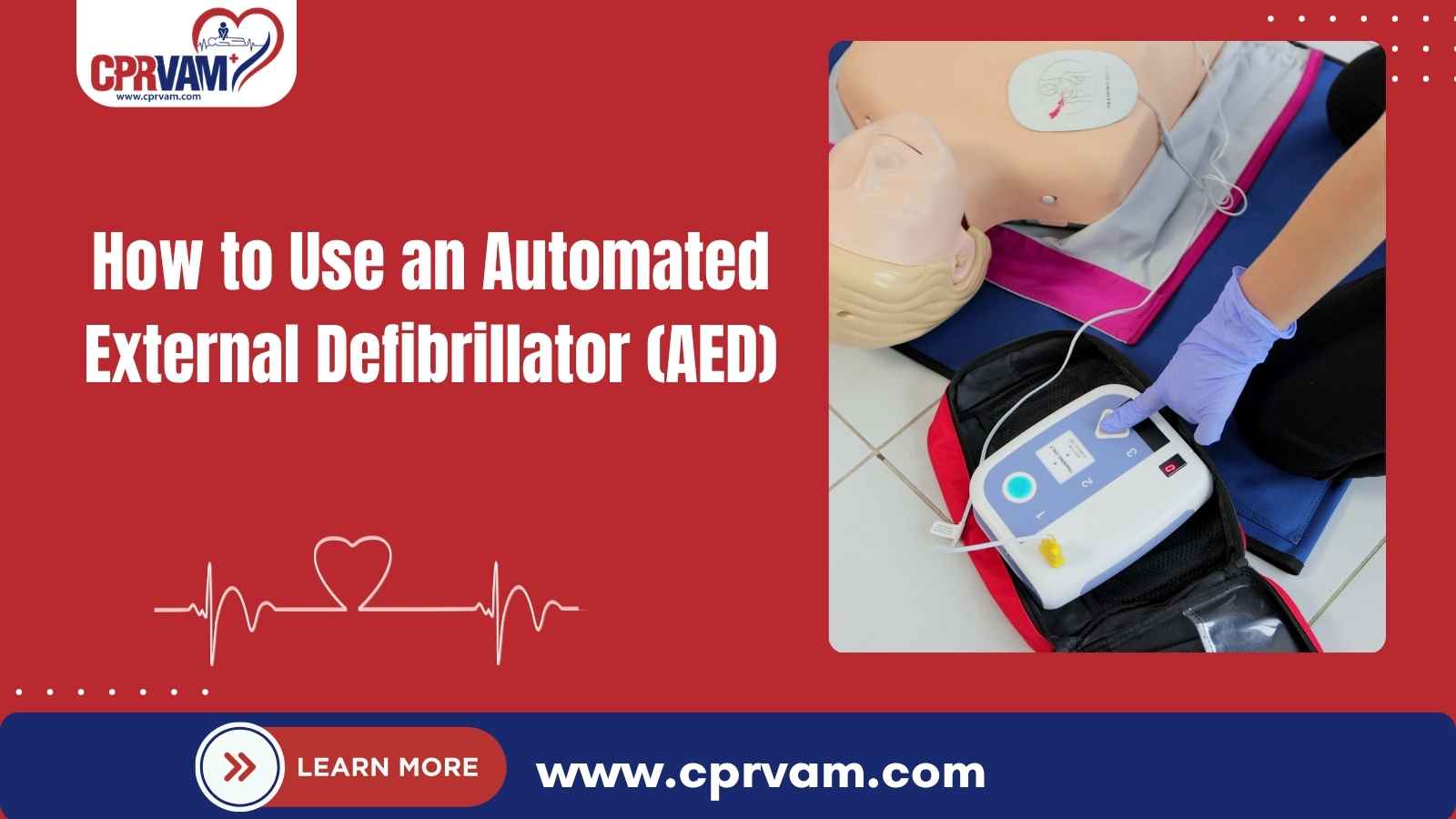
Knowing how to use an AED can help you respond quickly when someone experiences sudden cardiac arrest. The American Heart Association (AHA) recommends starting CPR and using an AED as soon as one is available. Call 911, begin CPR, turn on the AED, attach the pads to the person’s bare chest, and follow the device’s prompts.
Using an AED may seem difficult during an emergency, but the device is designed to guide you through each step. It analyzes the person’s heart rhythm and determines whether a shock is needed. Follow the AED’s instructions carefully, avoid touching the person when instructed, and resume CPR as directed until emergency responders arrive.
This blog explains when to use an AED, how to operate it step by step, and which safety precautions to follow during an emergency.
When Should You Use an AED?
Use an AED when someone is unresponsive and not breathing normally, as this can be a sign of sudden cardiac arrest. The American Heart Association (AHA) recommends starting CPR and using an AED as soon as one is available to help restore a normal heart rhythm when appropriate.
A person in cardiac arrest may:
- Suddenly collapse
- Lose consciousness
- Stop breathing normally
- Make abnormal gasping sounds
- Not respond when you speak to or tap them
If you find someone who may be in cardiac arrest, call 911 and start CPR right away. If someone else is nearby, ask them to find and bring the closest AED while you stay with the person and continue CPR.
If another person can get the AED, do not leave the person alone to search for one. Once the AED arrives, turn it on, follow the voice or visual prompts, and continue CPR as instructed until emergency responders arrive.
How to Use an AED in 7 Steps: Step-by-Step Guide
When an AED arrives, turn it on and follow its voice or visual instructions. AED models may look different, but the basic steps are similar. The device will guide you through pad placement, heart rhythm analysis, and shock delivery when appropriate. Continue CPR and follow the AED prompts throughout the response.
Step 1: Call 911 and Start CPR
First, make sure the area is safe. Check whether the person responds by speaking loudly and gently tapping their shoulders. If they are unresponsive and not breathing normally:
- Call 911 or your local emergency number.
- Ask someone nearby to get an AED.
- Start CPR immediately.
If you are alone, call 911 using your phone’s speaker function and follow the dispatcher’s instructions while starting CPR. Continue CPR until the AED is ready to use.
Step 2: Turn On the AED
When the AED arrives, turn it on right away. Depending on the model, you may need to press the power button or open the device to activate it.
Listen carefully to the AED’s instructions and follow each prompt. The device will tell you when to attach the pads, when to stop CPR, and when everyone needs to stand clear.
Step 3: Expose and Dry the Chest
Expose the person’s bare chest so the AED pads can make direct contact with the skin. Remove or cut through clothing if necessary.
If the chest is wet, quickly wipe it dry before applying the pads. Avoid unnecessary delays, because CPR and early defibrillation are time-sensitive during cardiac arrest.
Step 4: Attach the AED Pads
Remove the pads from their packaging and peel off the protective backing. Place them firmly on the person’s bare chest according to the diagram on the pads or AED.
For most adults, place:
- One pad on the upper right side of the chest, below the collarbone.
- The other pad on the left side of the chest, below the armpit.
Follow the pad diagrams and the AED’s instructions if they show a different placement. AED pads need direct contact with the skin for effective defibrillation.
Step 5: Let the AED Analyze the Heart Rhythm
Once the pads are attached, the AED will check the person’s heart rhythm and determine whether a shock is appropriate.
Do not touch the person while the AED is analyzing the rhythm. The device will tell you when to stop CPR and make sure everyone stands clear. Do not try to decide yourself whether a shock is needed; follow the AED’s instructions.
Step 6: Deliver a Shock if Advised
If the AED advises a shock, follow its instructions carefully. Before the shock is delivered:
- Stop CPR when instructed.
- Tell everyone to stand clear.
- Make sure no one is touching the person.
- Deliver the shock as directed by the AED.
Some AEDs require you to press a button to deliver the shock, while fully automated models may deliver it automatically after giving a warning.
Never touch the person while the AED is delivering a shock.
If the AED says “No shock advised,” do not attempt to deliver a shock. Follow the device’s instructions and resume CPR when directed.
Step 7: Resume CPR and Follow the AED Prompts
After a shock, or when the AED advises that no shock is needed, resume CPR immediately as directed. The AED may instruct you to continue CPR for about two minutes before it checks the heart rhythm again.
Keep the AED turned on and leave the pads attached. Continue CPR and follow the device’s prompts until:
- The person shows obvious signs of life.
- The AED instructs you to stop or reassess.
- Emergency medical professionals arrive and take over.
- The scene becomes unsafe.
- You are physically unable to continue.
The 2025 AHA guidelines emphasize continuing CPR and minimizing interruptions around defibrillation while following the AED’s prompts.
Where Should AED Pads Be Placed?
Correct AED pad placement helps the electrical current travel through the heart effectively during defibrillation. Place the pads on the person’s bare, dry chest and always follow the placement diagram on the AED pads and the device’s voice or visual instructions.
1. Adult AED Pad Placement
For most adults, place the AED pads in a front-and-side position:
First Pad (Upper Right Chest): Place it on the upper right side of the chest, just below the collarbone.
Second Pad (Lower Left Side): Place it on the left side of the chest, below the armpit, toward the middle of the side of the chest.
Make sure the pads stick firmly to the skin and do not overlap or touch each other. If the AED provides different placement instructions, follow the instructions for that device.
2. AED Pad Placement for Children and Infants
AEDs may be used for children and infants when indicated. If pediatric pads or a pediatric setting are available, use them according to the AED manufacturer’s instructions and current resuscitation guidance.
For a small child or infant, the pads may need to be placed one on the front of the chest and one on the back. This front-and-back position helps prevent the pads from touching each other when the chest is too small for standard placement.
If pediatric pads are not available, do not delay treatment while waiting for them. Use the AED according to its instructions and follow guidance from the emergency dispatcher.
3. AED Pad Placement for Pacemakers or Implanted Devices
You can use an AED on a person with a pacemaker or implanted cardiac defibrillator if they are in cardiac arrest. Do not place an AED pad directly over the implanted device. The AED can still deliver a shock when the pads are positioned correctly on the chest.
If you can see or feel a raised device under the skin, place the AED pad next to the device, rather than directly on top of it. Keep the pad as close as practical to the recommended position while avoiding the implanted device. Always follow the AED’s instructions during treatment.
What Are the Precautions for Using an AED?
Using an automated external defibrillator (AED) correctly is essential for safe and effective treatment during sudden cardiac arrest. Following basic precautions helps the device analyze the heart rhythm accurately, deliver a shock safely when needed, and support continuous CPR.
1. Keep the Chest Dry
Before applying AED pads, expose the person’s bare chest and quickly remove excess water or moisture. Dry skin helps the pads adhere properly and supports effective electrical contact. Avoid unnecessary delays when preparing the chest for AED use.
2. Keep Everyone Clear During Analysis and Shock
Do not touch the person while the AED is analyzing the heart rhythm or delivering a shock. Clearly tell everyone nearby to stand clear. Preventing contact helps the AED analyze accurately and protects rescuers from accidental electrical exposure.
3. Minimize Movement During Rhythm Analysis
Avoid moving, shaking, or handling the person while the AED analyzes their heart rhythm. Movement can interfere with the device’s ability to interpret the rhythm accurately. Wait for the AED to complete its analysis before resuming CPR or following its next instruction.
4. Avoid Flammable Substances
Do not use an AED around flammable gases, liquids, or vapors. If alcohol or another flammable substance was used on the skin, allow it to evaporate completely before applying the pads and delivering a shock.
5. Use the AED on a Suitable Surface
Follow the AED manufacturer’s instructions regarding water and the surrounding environment. Keep the person as dry as practical and avoid unnecessary contact with conductive surfaces. If the environment is unsafe, move to a safer location when possible.
6. Use Appropriate Pediatric Equipment
For infants and children, use pediatric AED pads or the device’s pediatric setting when available and indicated. Follow the manufacturer’s instructions for energy levels and pad placement. Do not delay defibrillation if appropriate pediatric equipment is unavailable.
7. Avoid Medication Patches and Implanted Devices
Do not place AED pads directly over medication patches or visible or palpable implanted devices, such as pacemakers. Remove medication patches from the pad placement area when necessary, using appropriate precautions, and position pads according to AED instructions.
8. Follow the AED Prompts
Listen carefully to the AED’s voice or visual instructions throughout the response. Leave the pads attached after a shock and resume CPR when directed. Continue following the device’s prompts until emergency medical professionals arrive and take over.
9. Follow Emergency Response Guidance
Call 911 or the appropriate emergency number, begin CPR, and use the AED as soon as it becomes available. Continue CPR and follow the AED’s instructions until the person shows signs of life or
What to Do After an AED Shock
After an AED delivers a shock, knowing what to do next is just as important. Follow these steps to continue CPR, use the AED correctly, and provide appropriate care until help arrives.
Resume CPR Immediately: Start chest compressions again as soon as the AED tells you to do so.
Keep the AED Pads Attached: Do not remove the pads. The AED may need to analyze the heart rhythm again.
Follow the AED Prompts: Listen to the device’s voice or visual instructions and follow each step carefully.
Continue CPR as Directed: The AED may instruct you to continue CPR for about two minutes before analyzing the heart rhythm again.
If the Person Becomes Responsive: Stop CPR if the person becomes responsive and begins breathing normally. Leave the AED pads attached and continue monitoring them.
Stay with the Patient: Continue providing care until emergency medical professionals arrive and take over.
Build Confidence with Hands-On CPR and AED Training
designed to guide rescuers through rhythm analysis and defibrillation while CPR continues. Understanding when to use an AED, how to position the pads, when to stand clear, and what to do afterward can help minimize delays and support effective emergency care. Regular CPR and AED training also provides hands-on practice, helping you respond with greater confidence when a real emergency occurs.
Be ready to respond when every second counts. CPR VAM provides AHA CPR AED training with hands-on practice to help you build confidence and respond effectively during cardiac emergencies. Choose the right CPR course and strengthen your life-saving skills today.
FAQs About AED Use
1. Can An Untrained Person Use An AED?
Yes. AEDs are designed for bystanders and provide clear voice, visual, or written instructions during use. You do not need to be a medical professional to use an AED in an emergency. CPR and AED training can help you understand the steps and respond with greater confidence.
2. Do You Perform CPR Before Using An AED?
Yes. If someone is unresponsive and not breathing normally, call 911, start CPR, and have someone bring the nearest AED. Use the AED as soon as it is available, following its prompts. If you are alone, call 911 and follow the dispatcher’s instructions while starting CPR.
3. Can You Use An AED On A Child?
Yes. An AED can be used on a child or infant when indicated. Use pediatric pads or a pediatric setting when available, following the manufacturer’s instructions. If pediatric equipment is not available, do not delay treatment. Use the available AED and follow its instructions and emergency dispatcher guidance.
4. Can You Use An AED On A Pregnant Person?
Yes. An AED can be used if a pregnant person experiences cardiac arrest. Pregnancy is not a reason to delay CPR or defibrillation. Call 911, begin CPR, and use the AED as soon as it is available. Follow the AED’s instructions until emergency medical professionals take over.
5. What Does “No Shock Advised” Mean?
“No shock advised” means the AED has analyzed the person’s heart rhythm and determined that a shock is not appropriate at that time. Do not attempt to deliver a shock. Follow the AED’s instructions and resume CPR when directed.
6. Should You Remove AED Pads After A Shock?
No. Leave the AED pads attached after a shock. The AED may need to analyze the person’s heart rhythm again and determine whether another shock is needed. Continue CPR and follow the device’s voice or visual instructions until emergency medical professionals arrive and take over.