
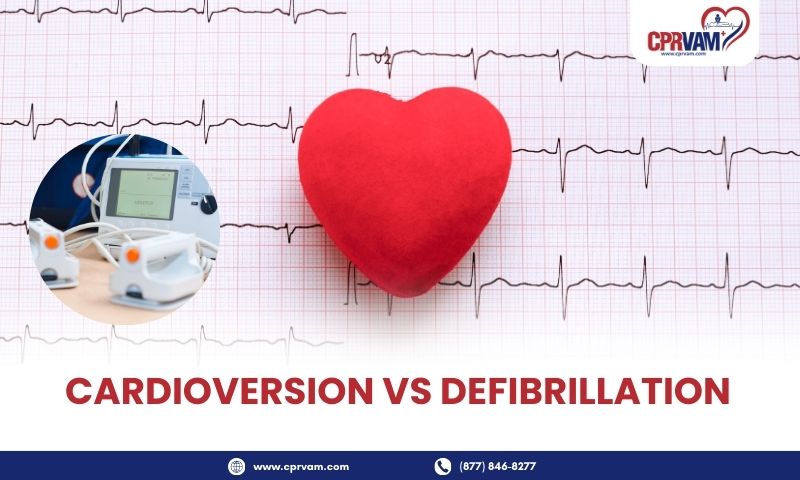
Have you ever wondered what happens when someone’s heart suddenly stops or beats irregularly? Understanding cardioversion vs defibrillation can make all the difference. Cardioversion is used in a monitored hospital setting. For example, a patient with atrial fibrillation may feel their heart racing uncontrollably. Doctors deliver a timed electrical shock or medication to restore normal rhythm safely. Relief is usually immediate.
Defibrillation occurs during sudden cardiac arrest outside the hospital. A bystander using an AED delivers an unsynchronized shock, temporarily “stunning” the heart so it can restart. This quick intervention is critical for survival.
This guide will help you understand cardioversion and defibrillation, including their differences, uses, risks, types, and preparation, so patients, caregivers, and healthcare professionals can act confidently in heart rhythm emergencies.
How Do You Recognize and Respond to Heart Rhythm Emergencies?
Heart rhythm emergencies can occur suddenly and be life-threatening. When the heart beats too fast, too slow, or irregularly, quick action is essential. Two important treatments, cardioversion and defibrillation, can restore a normal heartbeat. Both use electrical shocks, but they are used in very different situations.
Cardioversion
Cardioversion is a procedure that delivers a carefully timed, low-energy shock to restore a normal heartbeat in people with irregular rhythms like atrial fibrillation or atrial flutter. The shock is synchronized with the heart’s electrical activity to ensure safety.
The energy used in synchronized cardioversion depends on the patient’s heart condition. For atrial fibrillation with hemodynamic compromise, doctors usually start with a 120 J Biphasic shock, increasing to 200 J if needed. For Monomorphic Ventricular Tachycardia with a pulse, treatment begins at 100 J (Biphasic or Monophasic) and can gradually increase to 200 J Biphasic or 360 J Monophasic to restore a normal heartbeat.
Defibrillation
Defibrillation is a life-saving treatment used when the heart beats very fast or irregularly, like in ventricular fibrillation or pulseless ventricular tachycardia. In these situations, the heart cannot pump blood properly, which can cause a person to collapse suddenly. The procedure gives a controlled electrical shock through electrodes to restart the heart and help it beat normally.
The defibrillation energy depends on the heart rhythm and the patient’s condition. For Ventricular Fibrillation (VF) or Pulseless Ventricular Tachycardia (VT), a 120 J Biphasic shock is usually enough, while Monophasic shocks may go up to 200 J. For Polymorphic VT with a pulse, which can cause a dangerously fast heartbeat, 120-200 J Biphasic is recommended. Using the right energy quickly helps restore a normal heartbeat safely and can prevent cardiac arrest.
How Do Cardioversion and Defibrillation Differ in Heart Emergencies?
Cardioversion and defibrillation are life-saving heart procedures, but they serve different purposes. Cardioversion is a controlled treatment for irregular heartbeats like atrial fibrillation. At the same time, defibrillation is an emergency shock used during sudden cardiac arrest to restart the heart and restore a normal rhythm quickly.
Here are the key differences between cardioversion and defibrillation in the following table:
Features | Cardioversion | Defibrillation |
Purpose | Restores a fast but organized heart rhythm (Tachyarrhythmia) to a normal rhythm (Sinus Rhythm). | Stops a chaotic, life-threatening heart rhythm, allowing the heart’s natural pacemaker to restart. |
Synchronization | The shock is timed with the heart’s electrical activity (Synchronized with the QRS complex/R-wave on an ECG) to avoid shocking during the vulnerable T-wave. | The shock is given without synchronization because the heart rhythm is too irregular to time safely. |
Patient Status | Usually, the patient has a pulse and may be conscious, often sedated for comfort. | The patient is unresponsive, pulseless, and in cardiac arrest. |
Energy Level | Uses lower, gradually increasing energy (Typically 100-200 joules, depending on device and condition). | Uses higher, maximum energy (Commonly 120-200 joules on Biphasic devices) to restart the heart effectively. |
Urgency | It can be planned (Elective) for chronic arrhythmias or urgent if the patient is unstable but still has a pulse. | In an immediate emergency procedure, every second counts to save the patient’s life. |
Conditions Treated | Atrial fibrillation or Flutter, Supraventricular Tachycardia (SVT), Ventricular Tachycardia with a pulse. | Ventricular Fibrillation (VF) and Pulseless Ventricular Tachycardia (VT). |
How Do You Know When to Use Cardioversion or Defibrillation?
The decision to use cardioversion or defibrillation depends on the patient’s pulse and heart rhythm. Cardioversion is performed for patients with a pulse experiencing organized but abnormal rhythms, such as atrial fibrillation. Defibrillation is an emergency intervention for pulseless patients with chaotic, life-threatening arrhythmias like ventricular fibrillation or pulseless ventricular tachycardia.
Here are the situations when Cardioversion and Defibrillation are used by doctors:
Cardioversion: Indications and Uses
Cardioversion is performed to correct abnormal heart rhythms, such as atrial fibrillation or Supraventricular Tachycardia, following AHA guidelines, restoring normal rhythm safely and improving cardiac function and patient outcomes.
- Used when the patient has a pulse.
- Treats organized but abnormal heart rhythms such as Atrial Fibrillation, Atrial Flutter, SVT, or Ventricular Tachycardia with a pulse.
- Shock is synchronized with the heart’s electrical cycle (R-wave).
- Can be planned or urgent, usually in a hospital setting.
- Calming medication may be administered if the patient is conscious.
Defibrillation: Key Indications and Applications
Defibrillation is performed to restore a normal heart rhythm in life-threatening arrhythmias such as Ventricular Fibrillation or Pulseless Ventricular Tachycardia, following AHA guidelines, to prevent cardiac arrest and improve survival outcomes.
- Used when the patient has no pulse.
- Treats chaotic, life-threatening rhythms such as Ventricular Fibrillation (VF) or Pulseless Ventricular Tachycardia (pVT).
- The shock is delivered immediately without synchronization.
- It is always an emergency procedure, where every second counts.
- Performed as part of CPR and advanced cardiac life support.
How Does Cardioversion Work: Electrical or Chemical?
When the heart beats too fast or irregularly, restoring a normal rhythm is critical. This can be done through Chemical cardioversion (Using medications) or Electrical cardioversion (Using a controlled shock). These differences help doctors choose the safest and most effective treatment for each patient.
Chemical Cardioversion
It uses medications such as Dofetilide, Azimilide, Dronedarone, Cardizem, Metoprolol, Ibutilide fumarate, Flecainide, and Amiodarone to convert an irregular heartbeat. Its success rate ranges from 77%-81%.Electrical Cardioversion
It delivers a controlled shock to the heart and is highly effective, with a success rate of about 90%. This difference helps healthcare professionals choose the most suitable treatment based on the type of arrhythmia, patient health, and urgency.
What Are Defibrillators and How Do They Save Lives?
Defibrillators are devices that restore normal heart rhythm during life-threatening arrhythmias. By delivering controlled shocks, they prevent cardiac arrest and significantly increase survival in emergencies.
AEDs (Automated External Defibrillators)
AEDs are portable, easy-to-use devices found in public areas. They analyze heart rhythms and guide bystanders through voice prompts. If needed, they deliver a shock to help restart the heart and save lives.Implantable Cardioverter-Defibrillators (ICDs)
ICDs are surgically placed devices that continuously monitor the heart rhythm. They automatically deliver shocks or pacing when dangerous arrhythmias occur, preventing sudden cardiac arrest and protecting patients with high-risk heart conditions.- Manual Defibrillators
Manual defibrillators are used by trained healthcare providers in hospitals or emergency settings. They allow full control over shock timing and intensity, making them essential for complex arrhythmias and advanced cardiac care following AHA protocols.
Defibrillators deliver shocks in Monophasic (Single-Direction) or Biphasic (Reversing Direction) forms. Biphasic shocks are safer and more effective, and are used in most modern devices. Knowing how to use a defibrillator and performing CPR together can greatly increase survival. Learning AED use and CPR is simple but can save lives.
What Are the Risks and Complications of Cardioversion and Defibrillation?
Cardioversion and defibrillation are life-saving procedures, but they carry some risks, including irregular heart rhythms, low blood pressure, or rare complications. Understanding these helps patients and caregivers stay informed and prepared.
Here are the risks and complications of cardioversion and defibrillation as follows:
Potential Risks of Cardioversion
- Stroke or clot-related embolism
- Ventricular or atrial arrhythmias
- Temporary low blood pressure
- Electrode-site burns or irritation
- Temporary heart muscle damage
- Allergic reaction to anesthesia or medications
Defibrillation Side Effects and Risks
- Pain and discomfort from shocks
- Skin irritation or electrode-site burns
- Arrhythmias caused or worsened by shocks
- Infection, bleeding, or device-related complications (for ICDs)
- Emotional and psychological effects, including anxiety, depression, or PTSD
How Do You Prepare and Care for Yourself After Cardioversion or Defibrillation?
Preparation and aftercare play an important role in keeping you safe and supporting a smooth recovery. Before cardioversion, your healthcare team may ask you to fast for several hours, monitor your heart rhythm with an ECG, and provide medication to help you relax. If you’ve had atrial fibrillation for more than 48 hours, you may also receive blood thinners to lower the risk of stroke.
After cardioversion or defibrillation, you’ll need time to rest while your heart rhythm is monitored. Most people are advised to avoid driving for the rest of the day and follow lifestyle guidance to support heart health. If defibrillation was performed during cardiac arrest, recovery may involve additional medical care, monitoring, and support. Proper preparation and care help improve safety, comfort, and long-term outcomes.
What Should You Do Next to Protect Your Heart Health?
Protect your heart by understanding life-saving procedures like cardioversion and defibrillation. Keep up with regular checkups, manage blood pressure, and follow your doctor’s advice. Learn CPR and how to use an AED to act confidently in emergencies. With informed choices and proactive care, you can lower risks and be ready for anything.
Empower yourself to be a life-saver with CPR VAM, an AHA-certified center, and master CPR, BLS, ACLS, and PALS. Our expert-led courses give healthcare professionals, caregivers, and anyone ready to act the skills, confidence, and knowledge to respond fast when every second counts.
Enroll at CPR VAM today and be the difference that saves lives.
FAQs
1. When Should Cardioversion Be Used Instead of Defibrillation?
Cardioversion is used when the heart is beating fast but still in a somewhat organized rhythm, like in atrial fibrillation or flutter, and the patient has a pulse. Defibrillation is for emergencies, like sudden cardiac arrest, where the heart is chaotic and there’s no pulse.
2. How Does Synchronized Cardioversion Work?
Synchronized cardioversion delivers a timed shock to the heart, matching the heartbeat’s rhythm to safely restore a normal pulse.
3. Can Learning CPR and AED Use Save Lives in Emergencies?
Yes. Knowing CPR and how to use an AED can double or even triple a person’s chance of survival during sudden cardiac arrest.
4. What Heart Problems Can these Procedures Treat?
Cardioversion treats irregular but organized rhythms like atrial fibrillation or flutter, while defibrillation is used in emergencies for life-threatening rhythms like ventricular fibrillation or pulseless ventricular tachycardia.
5. How Are Cardioversion and Defibrillation Different?
Cardioversion is a planned, synchronized shock for irregular but organized heart rhythms, while defibrillation is an emergency, unsynchronized shock used to restart a heart in life-threatening arrhythmias.