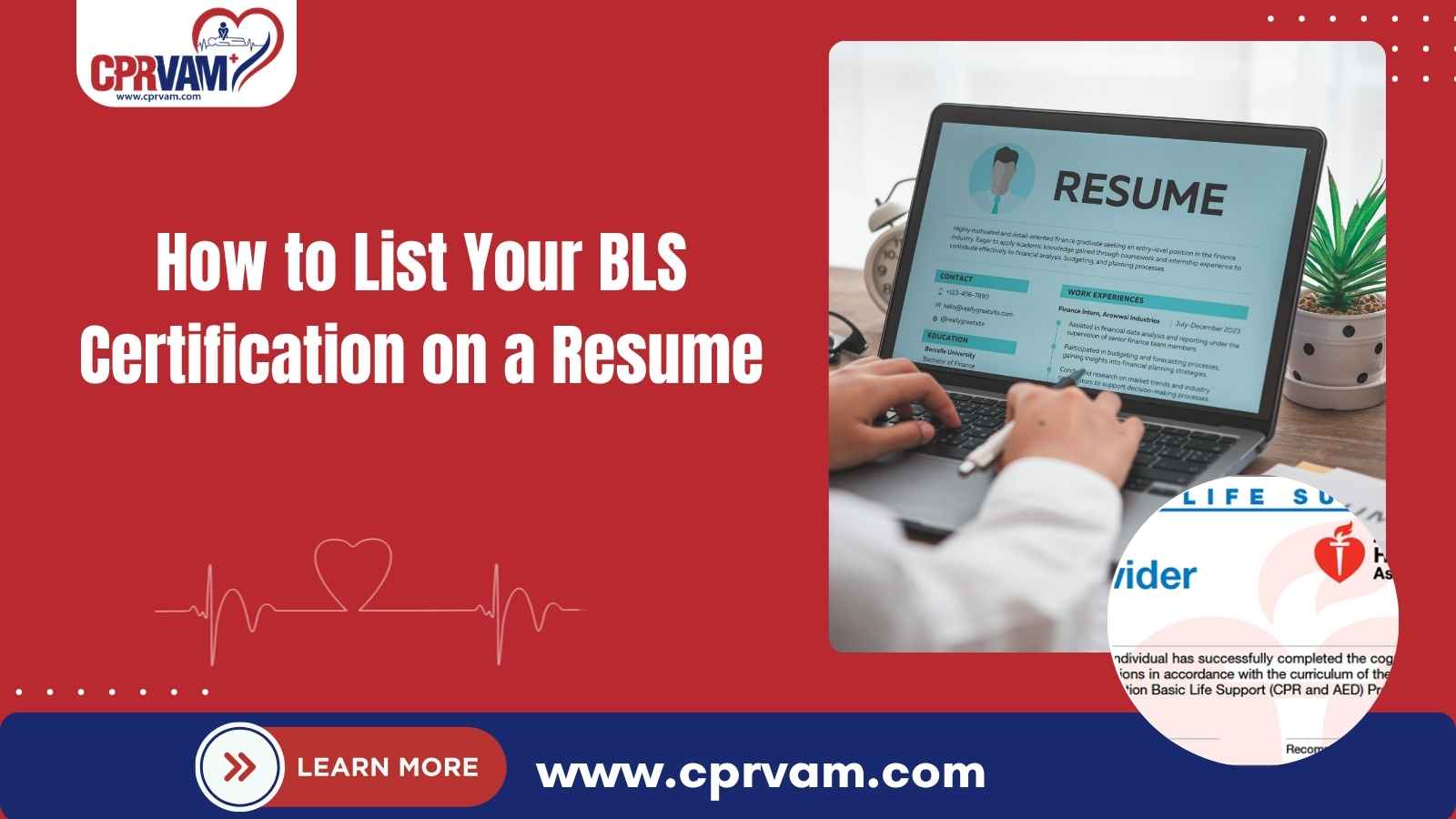
Have you ever wondered how a small credential like BLS certification can make a big impact on your resume? In today’s fast-paced job market, employers are looking for candidates who are prepared, skilled, and reliable. Listing your Basic Life Support certification properly is not just about adding a line. It is about showing you can respond in emergencies and bring life-saving skills to the workplace, making you stand out immediately.
Do you know the best way to showcase your BLS certification so employers notice it? Simply stating that you are certified is not enough. You need to present it clearly and strategically, whether in your certifications section, skills list, or professional summary. By highlighting it the right way, you show readiness, responsibility, and practical competence, giving your resume a professional edge over other candidates in healthcare and safety-focused roles.
This blog guides how to properly list your BLS certification on a resume, highlight life-saving skills, avoid common mistakes, and strategically enhance your career prospects in healthcare and safety roles.
What Is BLS Certification and Why Does It Matter to Employers and Your Career?
Basic Life Support (BLS) certification equips you with essential skills to act in critical emergencies, including cardiac arrests, airway blockages, and other life-threatening situations. According to the American Heart Association (AHA), timely and effective BLS can increase survival rates during cardiac arrest by up to 45%. By getting certified, you prepare yourself to respond confidently and save lives when every second counts.
Employers highly value BLS certification. This is especially true in healthcare, emergency response, and childcare. It shows that you are prepared to handle life-threatening situations. With BLS certification, you demonstrate your skills and readiness to act in critical moments.
Key Highlights
- Competence in Cardiopulmonary Resuscitation (CPR) and the ability to save lives
- Proficiency in using an AED (Automated External Defibrillator) confidently
- Skill in managing foreign-body airway obstructions effectively
- Expertise in rescue breathing and patient stabilization
- Calmness and efficiency under high-pressure situations
Being BLS-certified proves that you can respond quickly and confidently when seconds matter most. These skills show that you can make a real impact in emergencies, and they signal to employers that you are dependable, skilled, and ready for any critical situation.
Where Should You Place BLS Certification on Your Resume?
Placing your BLS certification strategically on your resume can make a strong impression on recruiters. Depending on your experience and the role you seek, you can feature it in multiple sections. Highlighting it correctly ensures that you show your qualifications clearly and demonstrate that you are ready to act in emergencies.
Here are the places where you can include your BLS certification on your resume:
1. Certifications Section: The Most Common Approach
Including your BLS credential in a dedicated certifications section ensures that employers notice it quickly. This placement signals that you maintain current qualifications and are serious about your professional skills, making it clear that you are prepared for critical situations.
Example:
- Certifications:
Basic Life Support (BLS), American Heart Association – Expires March 2026
2. Professional Summary: For High-Impact Roles
If the job specifically requires BLS certification, placing it in your professional summary draws immediate attention. You can highlight your credentials alongside your experience to show that you are ready to respond confidently in emergencies.
Example:
- Registered Nurse (RN) with 4+ years in emergency care, BLS and ACLS certified
3. Skills Section: Showcase Practical Competencies
Listing BLS in your skills emphasizes it as a practical ability. You can combine it with other essential skills to demonstrate that you have multiple life-saving competencies and that you are prepared to act effectively in emergencies.
Example:
- Skills:
Basic Life Support (BLS) Certified
Advanced Cardiac Life Support (ACLS)
Patient Assessment and Triage
4. Work Experience: Highlight Real-World Application
If you have applied BLS skills in your previous roles, include them in your work experience. This shows employers that you not only have certification but also real-world experience applying it under pressure when seconds count.
Example:
- Emergency Room Nurse – City Hospital, May 2019–Present
Administered CPR and used AEDs during emergencies, leveraging current BLS and ACLS certifications
How Should You List Your BLS Certification on a Resume Step by Step?
Listing your BLS certification effectively on your resume ensures that employers notice your skills. By following a structured approach, you demonstrate that you are professional, detail-oriented, and prepared to apply life-saving techniques when it matters most.
Here are the steps to list your BLS certification on your resume:
1. Confirm Your Certification Status
Before adding your BLS credential, make sure it is current. You should check the expiration date and update it if necessary. This ensures that you present verified skills that employers can trust.
2. Choose the Right Placement
Decide where your BLS certification fits best on your resume. You can include it in the certifications section, professional summary, skills, or work experience. This helps you show employers that you are strategically presenting your qualifications.
3. Include Essential Details
Make sure you list the certification name, the issuing organization, and the date earned or expiration. By providing these details, you show that you maintain current credentials and are ready to act in emergencies.
4. Mention Practical Experience
If you have applied BLS skills in real scenarios, highlight them. Including practical examples proves to employers that you don’t just hold a certificate, you know how to use your skills effectively.
5. Format Consistently
Align your BLS certification with the style of your other credentials. Consistent formatting keeps your resume polished and professional while showing that you pay attention to details and present your qualifications clearly.
What Are Common Mistakes You Make When Listing BLS Certification?
Even a strong certification like BLS can lose its impact if you list it incorrectly on your resume. Understanding common mistakes helps you present your qualifications clearly. By avoiding these errors, you show recruiters that you are detail-oriented, professional, and ready to act in emergencies.
Here are the common mistakes you make when listing your certification on a resume:
1. Failing to Include Expiration Dates
BLS certifications are usually valid for two years. If you do not include the expiration date, recruiters may question whether your skills are current. Make sure you always indicate the date so that you demonstrate your readiness and up-to-date training.
2. Omitting the Certifying Organization
Simply writing “BLS Certified” is vague. You should always specify the organization, like the American Heart Association or the Red Cross. By doing this, you show that you have training from a recognized authority, which adds credibility to your resume.
3. Listing Irrelevant Certifications
You should focus on certifications that relate directly to the job. Including unrelated credentials can clutter your resume and distract from your key qualifications. Highlighting only relevant certifications shows that you are practical, focused, and professional.
4. Overemphasizing
While BLS is important, you should not let it overshadow your primary qualifications. Present it as part of a broader skill set. This way, you demonstrate that you have life-saving skills without drawing attention away from your main experience.
5. Poor Placement
Even if you list BLS correctly, placing it in the wrong section can cause recruiters to miss it. You should ensure it appears where it is expected, such as certifications, skills, or a professional summary, to clearly show your capabilities.
What Happens If You Put Your BLS Certification Incorrectly on Your Resume?
Listing your BLS certification incorrectly can harm your professional image. You may appear unprepared, careless, or inexperienced. Even if you are fully trained, mistakes can cause employers to overlook your skills and question your reliability and attention to detail.
Common Consequences of Listing BLS Certification Incorrectly:
1. Missed Opportunities
Placing your BLS certification in an incorrect or less visible resume section may cause recruiters to overlook it, reducing your chances of being shortlisted for interviews where life-saving skills are essential.
2. Questioned Credibility
Failing to include the certifying organization or expiration date can raise concerns for employers, making them question the validity of your training and whether your certification meets current professional standards.
3. Reduced Impact
Listing only “BLS Certified” without additional context weakens the value of your credential and does not clearly demonstrate your preparedness, hands-on training, or ability to respond effectively in emergencies.
4. Appearing Unprepared
Formatting mistakes or incomplete details can suggest a lack of attention to detail, giving employers the impression that you may be careless, even if you possess strong skills and relevant experience.
5. Overlooked Skills
Poor placement or vague descriptions may prevent employers from recognizing your practical emergency response abilities, minimizing the importance of the hands-on skills and real-world readiness gained through BLS certification.
How Can You Optimize BLS Certification for Career Advancement?
Strategically integrating your BLS certification on your resume can give you a significant advantage. By showcasing your skills effectively, you demonstrate to employers that you are prepared, capable, and ready to apply life-saving techniques when it matters most.
Highlighting your BLS certification in the right way can give you a competitive advantage:
1. Stand Out as a Candidate
Having a BLS credential sets you apart from other candidates who lack emergency-response training. By including it prominently on your resume, you show that you are proactive, skilled, and ready to respond in critical situations.
2. Highlight Commitment to Safety
Your BLS certification shows that you prioritize preparedness and patient safety. Employers see that you are responsible and proactive, which reinforces that you are someone they can trust during high-pressure scenarios.
3. Demonstrate Practical Competence
Mentioning real-world applications of your BLS skills proves that you don’t just hold a certificate, and you can use it. This demonstrates to employers that you are capable of acting effectively during emergencies.
4. Enhance Opportunities Across Roles
BLS-trained professionals are valuable in many fields, including healthcare, childcare, hospitality, and public safety. By emphasizing your certification, you increase your eligibility and appeal across a variety of job opportunities.
According to the American Heart Association, performing CPR within the first few minutes of cardiac arrest can increase survival chances by two to three times. This highlights the critical value of professionals like you who hold BLS certification.
Can a Small Credential Really Make a Big Difference?
Yes, even a small credential like BLS certification can make a big difference. By listing it correctly on your resume, you show employers that you are prepared, professional, and capable of applying life-saving skills when it matters most.
When you present your BLS certification strategically, you prove technical competency while demonstrating reliability, confidence, and commitment to safety. Employers see that you are responsible and ready, which increases your chances of standing out in competitive healthcare and emergency-focused roles.
Take the next step in advancing your career and saving lives by getting certified at CPR VAM, an AHA-certified training center. We offer CPR, BLS, ACLS, and PALS classes led by expert instructors with hands-on training. You can also rely on us to help you renew your certifications, ensuring your skills stay current and ready for any emergency.
FAQs
1. Why Should You List Your BLS Certification on Your Resume?
Listing your BLS certification shows employers that you are prepared, responsible, and trained in life-saving skills. It tells them you can act confidently in emergencies when every second counts.
2. Where Is the Best Place for You to Feature Your BLS Certification?
You can feature it in your certifications section, professional summary, skills, or work experience. Choosing the right placement ensures that recruiters notice your BLS credentials quickly.
3. How Can You Make Your BLS Certification More Noticeable to Employers?
You can highlight the certifying organization, expiration date, and any practical experience using your BLS skills. Doing this shows employers that you are not only certified but capable in real-life situations.
4. How Does BLS Certification Help You Advance Your Career?
Having a BLS credential signals that you are prepared, reliable, and proactive. Employers value professionals like you who can respond effectively in emergencies, increasing your chances for interviews and career growth.
5. Can You Include Practical BLS Experience on Your Resume?
Yes. You should include examples of when you applied your BLS skills in real scenarios. This shows employers that you can translate your certification into effective, hands-on emergency response.