

Pediatric emergencies require swift, systematic care, and Pediatric Advanced Life Support (PALS) provides the framework for healthcare providers to act effectively. According to the World Health Organization (WHO), in 2020, around 5 million children under five died, mostly from preventable or treatable causes. In the U.S., the American Heart Association (AHA) reports that timely intervention during pediatric cardiac or respiratory emergencies can significantly improve survival. That’s why PALS, including its secondary assessment, is so vital.
Unlike the primary assessment, which focuses on stabilizing airway, breathing, circulation, disability, and exposure (ABCDE), the secondary assessment dives deeper. It helps clinicians uncover underlying causes, track subtle changes, and guide precise interventions. Systematically evaluating the child’s medical history, vital signs, and organ systems ensures no critical detail is overlooked.
This blog breaks down the PALS secondary assessment step by step, including physical exam, diagnostics, monitoring, and interventions to ensure effective and comprehensive pediatric emergency care.
What Is the Secondary Assessment in PALS?
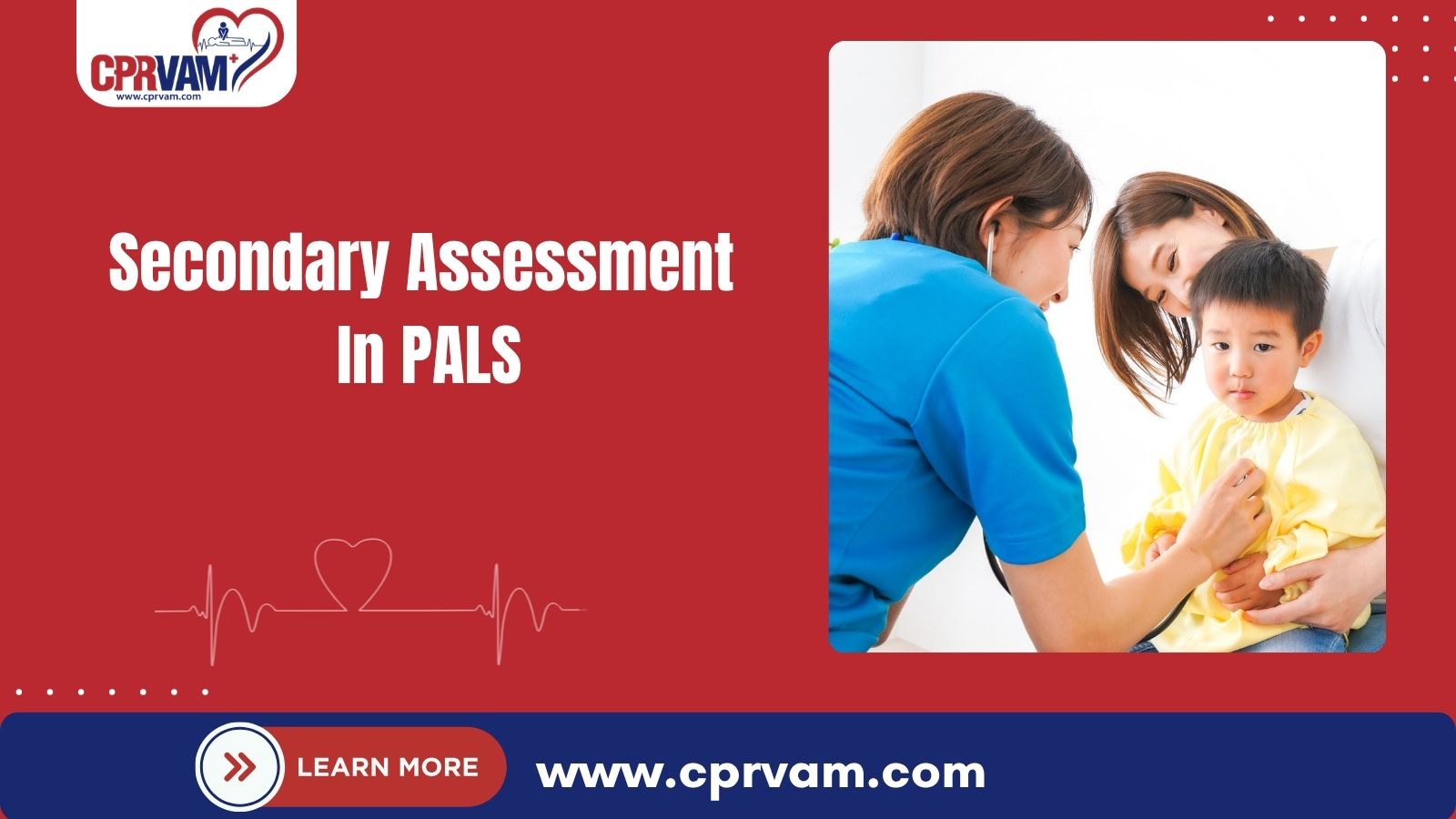
The secondary assessment in PALS is a careful, head-to-toe evaluation performed once a child’s immediate life-threatening conditions are stabilized. It focuses on identifying hidden or emerging problems that may not be immediately apparent. This assessment helps healthcare providers understand the child’s overall health, monitor ongoing changes, and plan targeted interventions to improve outcomes in pediatric emergencies.
The purposes of the secondary assessment are:
Collect a thorough medical history to understand the child’s background and current condition.
Conduct a complete physical examination to identify hidden issues and assess overall health.
Order and interpret diagnostic tests as necessary to clarify underlying problems.
Continuously monitor and reassess vital signs to track changes and guide timely care.
Implement targeted interventions based on findings to ensure effective, life-saving treatment.
This organized process helps you capture every crucial detail, allowing you to provide safe, precise, and effective care for pediatric patients during emergencies.
Why Is the Secondary Assessment Important in PALS?
The secondary assessment is a critical step in Pediatric Advanced Life Support. It helps you understand the child’s full condition after stabilizing immediate threats, uncovering hidden problems, and planning targeted interventions, ensuring safe, effective care in emergencies.
Here is the importance of the secondary assessment in PALS:
1. Comprehensive Patient Evaluation
This step allows you to evaluate the child thoroughly from head to toe. By combining a detailed physical exam with focused medical history, you gain a complete clinical picture, helping you identify potential problems early and guide appropriate care.
2. Identifying Underlying Conditions
Some issues may not appear life-threatening initially, but can escalate quickly. Through careful assessment, you can identify infections, trauma, or allergic reactions, enabling you to address the root causes before they worsen.
3. Guiding Further Management
The findings from your assessment inform the next steps in care. You can determine appropriate medications, fluid therapy, or respiratory support, ensuring your interventions are timely, targeted, and effective for the child’s specific condition.
4. Monitoring and Detecting Changes
Continuous observation is key to spotting improvement or deterioration. By monitoring vital signs and responsiveness, you can adjust treatments immediately, ensuring the child receives the safest, most effective care throughout the emergency.
5. Supporting Informed Decision-Making
A thorough secondary assessment equips you with all the information needed to make confident clinical decisions. This ensures every intervention is backed by evidence and careful observation, improving outcomes for pediatric patients.
What Are the Key Components of the PALS Secondary Assessment?
The secondary assessment in PALS includes five major components that give you a detailed understanding of the child’s condition. These steps help you identify hidden issues, monitor changes, and guide effective interventions to ensure safe, comprehensive pediatric care.
Here are the key components of the PALS secondary assessment explained in the following way:
1. Obtaining the Medical History Using SAMPLE
Gathering a focused medical history using the SAMPLE method helps you quickly understand the child’s condition and the context of the emergency. It guides your next steps in care.
S – Signs and Symptoms: Assess the child’s current complaints, such as pain, difficulty breathing, or lethargy. This allows you to identify urgent concerns and prioritize interventions.
A – Allergies: Determine any allergies to medications, foods, or environmental triggers. Knowing this helps you prevent harmful reactions while providing safe and effective treatment.
M – Medications: Document all prescriptions, over-the-counter drugs, and supplements. This ensures you can avoid drug interactions and tailor interventions appropriately.
P – Past Medical History: Include chronic illnesses, prior surgeries, or hospitalizations. This information helps you understand the child’s baseline health and potential risk factors.
L – Last Meal: Identify the child’s last oral intake. This helps you manage glucose levels and plan anesthesia or procedural considerations safely.
E – Events Leading to Illness or Injury: Understand what happened before the emergency. This context helps you detect trauma, infections, or other underlying causes that guide care.
Additionally, you should check the child’s immunization status to prevent infections and anticipate potential complications, ensuring safer, more effective care during emergencies.
2. Performing a Focused Physical Examination
A focused physical exam evaluates the child from head to toe, helping you detect hidden injuries or health issues. This step ensures you understand the patient’s condition fully for effective care.
General Appearance & Behavior: Observe the child’s alertness, comfort level, and any signs of distress or lethargy. This allows you to gauge overall well-being and identify immediate concerns.
Head and Neck: Check for trauma, swelling, or abnormal movements and ensure the airway is clear. You can detect early signs of neurological issues or airway compromise.
Chest: Assess breathing effort, listen to lung and heart sounds, and check for abnormal rhythms or murmurs. This helps you identify respiratory or cardiac problems promptly.
Abdomen: Inspect for tenderness, distension, or unusual bowel sounds. You can detect pain, organ enlargement, or signs of internal injury that require attention.
Pelvis: Evaluate for trauma, tenderness, or instability. This step allows you to identify fractures or injuries that could affect mobility or circulation.
Extremities: Check for fractures, cyanosis, swelling, or impaired blood flow. You can detect injuries or circulation issues that need urgent care.
Back: Examine for hidden injuries, swelling, or structural abnormalities. This ensures no trauma or injury is missed during your assessment.
This detailed examination helps you uncover hidden injuries and subtle conditions, ensuring nothing important is overlooked during the assessment.
3. Conducting Diagnostic Tests
Diagnostic tests help you confirm underlying conditions and guide treatment decisions. They provide objective data to complement your physical exam and ensure the child receives precise, timely care.
Laboratory Tests: Blood tests such as CBC, electrolytes, glucose, and blood gases reveal infections, imbalances, or metabolic issues. You can use these results to tailor interventions effectively.
Imaging Studies: X-rays, ultrasounds, or CT scans help detect fractures, internal injuries, or organ abnormalities. These images allow you to identify problems not visible during the physical exam.
Cardiac Evaluation: ECGs and echocardiograms assess heart rhythm, function, and structural abnormalities. You can detect arrhythmias or heart issues early, guiding appropriate cardiac management.
These tests support your physical exam by revealing hidden issues and clarifying the root causes of the child’s condition.
4. Continuous Monitoring
Continuous monitoring allows you to track the child’s condition in real time, detect early deterioration, and guide timely interventions to ensure safe and effective care throughout the emergency.
Heart Rate, Blood Pressure, Respiratory Rate, Temperature: You observe these vital signs to evaluate the child’s overall stability and detect any concerning changes immediately.
Pulse Oximetry: You use pulse oximetry to monitor oxygen saturation and ensure the child is receiving adequate oxygenation.
End-Tidal CO2: Monitoring end-tidal CO2 helps you assess ventilation effectiveness and detect respiratory compromise early.
Cardiac Monitoring: You track heart rhythm for arrhythmias or other cardiac issues, allowing prompt action if abnormalities appear.
Consistent monitoring lets you respond quickly if the child’s condition changes, ensuring prompt and effective care.
5. Implementing Interventions
After completing the secondary assessment, you use the gathered information to deliver targeted treatments that address the child’s specific needs. This step ensures timely and effective care, improving outcomes in pediatric emergencies.
Medications: You administer medications to support the child’s heart, lungs, or metabolism. These drugs help stabilize critical conditions and prevent further deterioration.
Fluid Therapy: Providing fluids helps maintain proper hydration and blood circulation. You ensure the child receives the right volume and type of fluid for their condition.
Respiratory Support: You may provide supplemental oxygen or mechanical ventilation if needed. This helps the child maintain adequate oxygenation and reduces breathing stress.
Other Interventions: Depending on the child’s condition, you may manage seizures, low blood sugar, or other specific issues. Tailoring care to the child’s needs ensures safer, more effective treatment.
Ongoing reassessment allows you to continuously evaluate the child’s condition, adapting treatments and interventions as their vital signs, symptoms, or responses evolve, ensuring timely and effective care every step of the way.
Master the Secondary Assessment in PALS for Better Pediatric Care
Mastering the secondary assessment in PALS is your key to confident, life-saving pediatric care. Systematically gather history, perform focused exams, run diagnostics, and continuously monitor to ensure no detail is overlooked. Using the PALS algorithm allows detection of subtle changes, tailoring interventions, and acting swiftly when seconds matter. These skills help you make critical decisions that save young lives and improve outcomes every time.
Enhance your pediatric emergency skills with CPR VAM! Learn how to confidently perform secondary assessments and deliver life-saving care when it matters most. Our hands-on PALS courses are designed to fit your schedule, giving you practical skills, real-world confidence, and the ability to act decisively in critical situations. Take the next step in your healthcare career and become the professional every child can rely on. Sign up with CPR VAM near your location today!