

Has your PALS certification expired, and you are unsure what to do next? For healthcare professionals working with infants and children, staying current is not optional, but it is essential. According to the American Heart Association (AHA), PALS equips healthcare providers with life-saving skills to confidently handle pediatric emergencies. This guide explains, step by step, how to recertify and stay compliant with AHA standards.
An expired PALS certificate does not mean the end of your career, but delaying recertification can impact patient safety and professional compliance. Whether you are due for recertification or your card has lapsed, this article covers everything from enrolling in courses to passing exams and updating your provider card using trusted guidelines from the AHA and expert recommendations for practical, real-world readiness.
How Long Is PALS Certification Valid For?
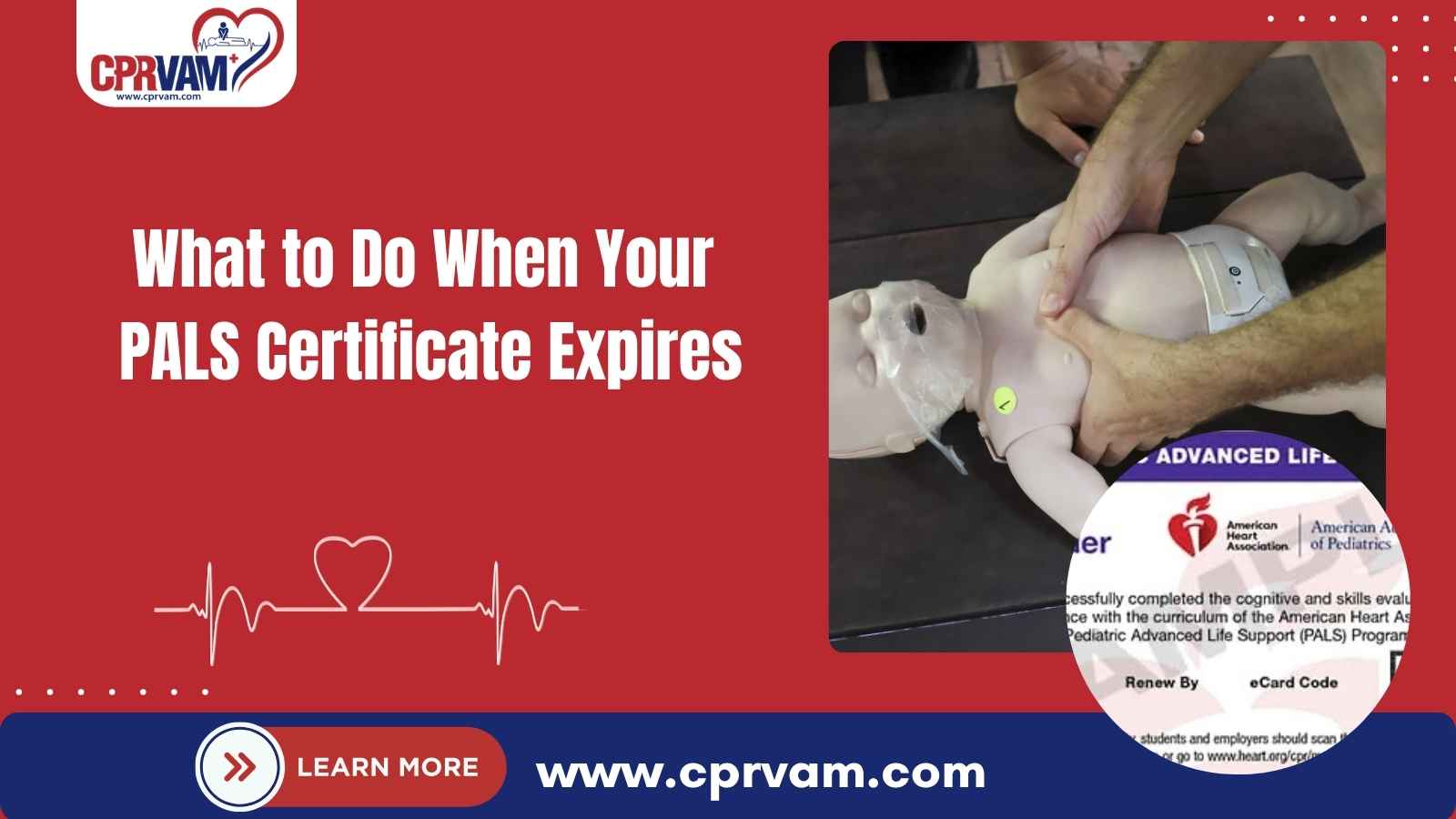
Many healthcare professionals wonder how long PALS certification lasts or when it expires. According to the American Heart Association, a standard PALS certificate is valid for 2 years from the issue date. The provider card clearly shows both the issue and expiration dates. Once the certificate expires, it is no longer valid, and you must recertify to continue practicing safely and legally in pediatric emergency care.
It is important to note that there is no official grace period after PALS certification expires. Planning is essential to avoid lapses in certification. Most healthcare providers start the recertification process about one month before the expiration date. Early preparation ensures uninterrupted compliance with American Heart Association guidelines, helps maintain lifesaving skills, and allows for scheduling recertification courses without rushing or missing critical deadlines.
What Happens When Your PALS Certification Expires?
If your PALS certification expires, there is no need to panic. Your certification becomes inactive, and you must recertify to continue practicing. Most healthcare providers do not need to repeat the full initial course. Completing a PALS recertification course is faster, more affordable, and follows updated American Heart Association guidelines.
Policies may differ by training provider or organization, so it is important to confirm requirements. Some may allow recertification after expiration, while others may require a full course. Acting promptly ensures compliance, skill retention, and readiness to respond to pediatric emergencies effectively and safely.
Main consequences after expiration:
Certification is inactive and no longer legally valid
Cannot practice certain pediatric emergency procedures
Potential non-compliance with employer or regulatory requirements
Delay in skill refresh and readiness for pediatric emergencies
May require additional steps if the full course is mandated
What Should You Do Immediately After PALS Expiration?
If your PALS certification has expired, acting quickly ensures you stay compliant and confident in pediatric emergencies. Following a clear, step-by-step plan, you can recertify efficiently, refresh essential skills, and return to practice safely, keeping up with the latest American Heart Association guidelines.
Some of the steps you should follow after PALS expiration:
1. Enroll in a PALS Recertification Course
Choose an AHA-approved provider such as CPR VAM. These courses follow current American Heart Association guidelines and are designed for healthcare professionals with expired PALS certification, helping you renew quickly while maintaining clinical confidence and compliance with workplace requirements.
Options Include:
Online Recertification Courses: Self-paced, convenient, and fully accredited.
In-person Refresher Courses: Includes hands-on skill practice for one-person and two-person CPR, AED use, and pediatric assessments.
2. Review Course Materials Thoroughly
Before starting recertification, review core PALS topics such as pediatric assessments, CPR algorithms, emergency management, and team communication. Studying these concepts helps you feel confident, improve exam performance, and stay prepared to deliver safe, effective care during pediatric emergencies.
Use PALS study guides to reinforce key concepts and ensure you understand algorithms thoroughly. Many providers also offer PALS practice tests and quizzes to identify weak areas, track your progress, and boost confidence before taking the recertification exam.
- Pediatric primary and secondary assessments in PALS
- Recognition and management of cardiac and respiratory emergencies
- Pediatric CPR algorithms and high-quality CPR techniques
- Team dynamics and multi-rescuer resuscitation
- Use of AEDs in pediatric care
Many providers also offer quizzes and skills assessments to help identify areas for improvement before the exam.
3. Take the Recertification Exam
After completing your course, you must pass the recertification exam and practical skills test to restore your PALS credential. The test usually includes multiple-choice questions and scenario-based assessments. A passing score confirms your understanding of current guidelines and readiness to respond confidently in pediatric emergencies.
- Passing Score: 84% or higher
- Format: Online or in-person, depending on your provider
- Result: Upon passing, you receive a digital PALS provider card valid for 2 years. A physical card may follow via mail.
4. Receive Your New PALS Card and Continue Practicing
Once you pass the exam, your PALS certification becomes active again. You will receive a digital provider card, which you should share with your employer. This allows you to continue working legally in pediatric care settings while staying compliant with American Heart Association guidelines and professional requirements.
Pro Tip: Keep a digital copy of your PALS card for quick access during employment verification or continuing education registration.
When Should You Take Your PALS Recertification?
You should take your PALS recertification before your current card expires to avoid gaps in certification. Planning helps you stay compliant with employer requirements, maintain patient safety standards, and ensure you remain confident and ready to respond during pediatric emergencies at all times.
In the following conditions, you have to take the PALS recertification:
1. Expired PALS Certification: Recertify Immediately
Once your PALS certification has expired, it is important to enroll in a recertification course without delay. This ensures you regain active status quickly, maintain workplace compliance, and remain confident in pediatric emergency care.
2. PALS Certification Nearing Expiration: Prepare Early
When your PALS certification is approaching its expiration, begin planning from several months. This gives you enough time to review materials, schedule your course, and complete exams without stress or workflow interruptions.
Why Is PALS Recertification Crucial?
PALS recertification is vital for healthcare professionals working with children. It ensures you stay skilled, confident, and up-to-date with the latest American Heart Association guidelines, allowing you to provide safe, effective pediatric emergency care when every second matters.
Some reasons why PALS recertification is crucial:
Maintain Pediatric Life Support Skills: Stay proficient in essential interventions for infants and children.
Recognize Early Signs of Cardiopulmonary Arrest: Identify emergencies quickly to act before conditions worsen.
Perform High-Quality CPR: Apply effective CPR techniques specifically for infants and children.
Enhance Team-Based Resuscitation and Communication: Work efficiently with other healthcare providers during pediatric emergencies.
Following the latest AHA guidelines helps you provide high-quality, evidence-based pediatric emergency care, stay confident in your skills, and act promptly during life-threatening situations with infants and children.
What Are the Best Tips for Preparing for the PALS Recertification Exam?
Preparing for the PALS recertification exam ensures healthcare providers stay confident, skilled, and updated on pediatric emergency techniques to provide effective life-saving care.
Some of the best tips for preparing PALS recertification exam:
Review Course Materials: Study PALS algorithms and notes thoroughly to identify weak areas.
Take Practice Tests: Use quizzes and mock exams to boost confidence and readiness.
Attend Additional Training: Join workshops or extra training to stay updated with guidelines.
Participate in Continuing Education: Enroll in courses to keep up with the latest PALS protocols.
Stay Informed: Follow AHA updates, read research, or attend conferences regularly.
Use Simulation Techniques: Practice real-life scenarios to strengthen practical skills.
Stay Confident: Read questions carefully, remain calm, and manage your time during the exam.
Take Action Now to Maintain Your PALS Certification
An expired PALS certification does not mean your career is over, but it signals the need to recertify without delay. Enrolling in a recertification course, reviewing key PALS concepts, passing the exam, and receiving your new card, you can continue delivering safe, high-quality pediatric care confidently. Whether you choose online or in-person training, staying up-to-date with PALS recertification ensures you are prepared and ready for every pediatric emergency.
Renew your PALS certification with CPR VAM, an AHA-certified training center. Use our comprehensive PALS study guides to review essential concepts, gain hands-on skills from expert instructors, and choose online, in-person, or blended courses to stay confident and ready for any pediatric emergency.
FAQs About Expired PALS Certification
1. Can I Take an Online PALS Recertification Course If My Certificate Has Expired?
Yes. Many AHA-approved providers offer online recertification courses that meet guidelines and are accepted by employers. Online options often include interactive modules and can be completed at your own pace.
2. Do I Need to Retake the Initial PALS Certification If My Card Is Expired?
Typically, no. If you have already completed the initial PALS course, a recertification course is sufficient. Some providers may require additional steps depending on how long your certification has lapsed.
3. How Long Is My Renewed PALS Certification Valid?
Your renewed PALS certification is valid for 2 years from the completion date of the recertification course. Keep a digital copy of your card for quick access and verification.
4. Can I Switch Providers for Recertification?
Yes. You can choose any AHA-accredited provider for recertification, regardless of where you completed your initial course. Just ensure your employer accepts the certification from that provider.
5. Should I Use PALS Study Guides or Practice Tests Before Recertification?
Absolutely. Using PALS study guides and practice tests helps refresh essential skills, identify weak areas, and increase confidence for both the written exam and practical skills test.