

- 2026
CPR VAM • All Rights Reserved.


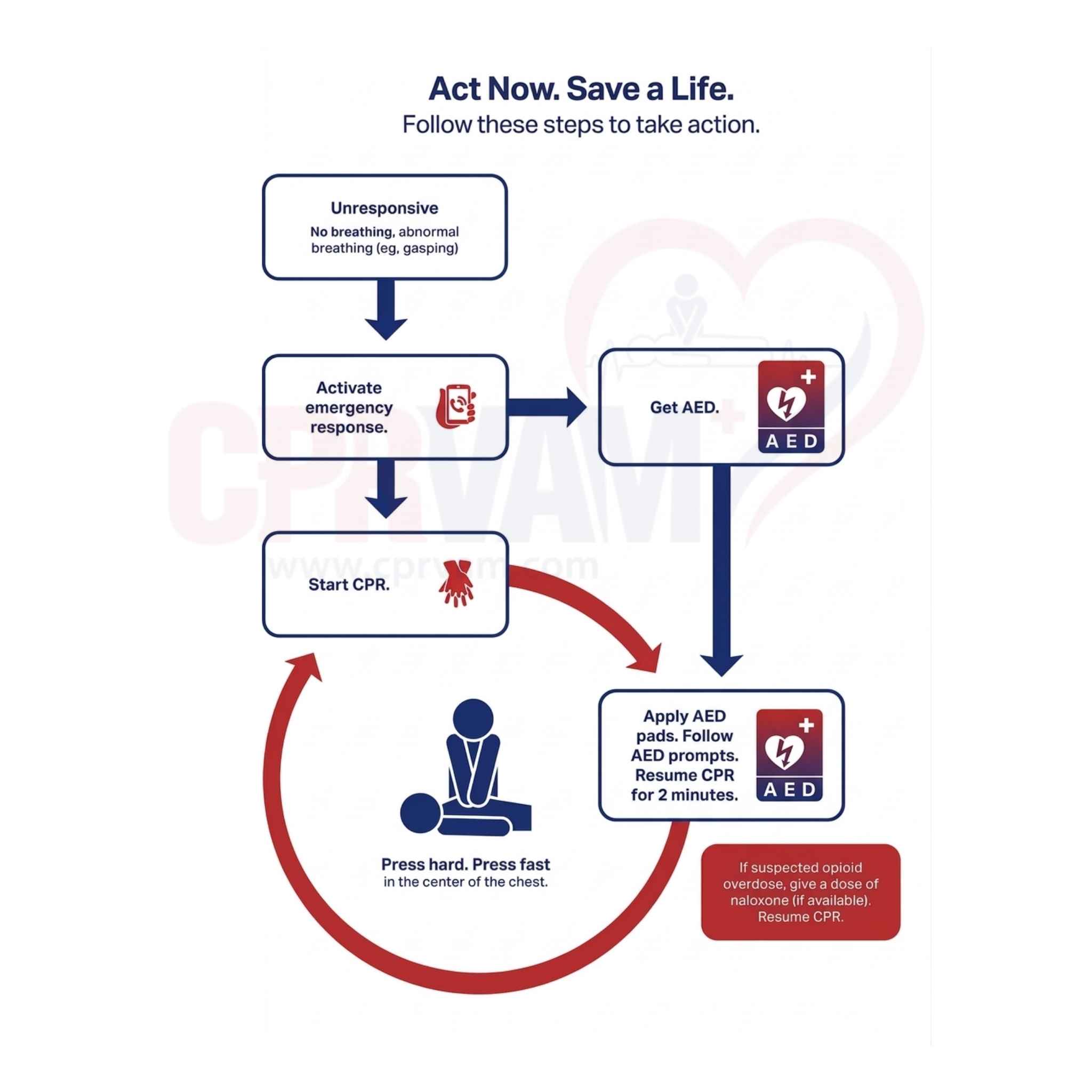
The Adult BLS algorithm provides a clear, step-by-step approach for lay rescuers to respond effectively during cardiac emergencies. It focuses on early recognition, immediate CPR, and timely AED use to improve survival outcomes. Following these structured steps helps ensure quick action and consistent, high-quality care until emergency services arrive.
Here is the step-by-step adult BLS algorithm approach for lay rescuers:
Begin by assessing if the person is responsive and breathing normally. Tap firmly on the shoulders and shout to check for any reaction. At the same time, observe breathing patterns. If the person is not breathing or only gasping, it may indicate cardiac arrest and requires immediate action.
If the person is unresponsive and not breathing normally, activate emergency medical services immediately. Early activation ensures advanced care is on the way while you begin life-saving measures.
Begin CPR immediately with a focus on high-quality chest compressions. Effective compressions are essential for maintaining blood flow to the brain and vital organs.
Apply the AED immediately once available and follow its instructions to guide treatment.
The AED will analyze the heart rhythm and advise the next step. Follow all prompts carefully to ensure effective treatment.
If a shock is advised:
If no shock is advised:
In cases where opioid overdose is suspected, additional intervention may be required alongside standard CPR.
Maintain consistent CPR cycles to support circulation and oxygen delivery. Continue providing care until there is a clear outcome or advanced help takes over.
Even with basic training, lay rescuers can make mistakes during CPR and AED use that affect the quality of care. These errors often happen due to panic, lack of practice, or uncertainty in emergencies. Understanding the most common mistakes and how to avoid them helps improve response time, maintain effective compressions, and increase the chances of survival.
Here are the common adult BLS mistakes lay rescuers make:
Delaying Chest Compressions – Waiting to start compressions while checking breathing or setting up the AED.
Incorrect Compression Depth or Rate – Compressions that are too shallow or too slow.
Pausing Too Long Between Cycles – Interruptions between compressions and breaths.
Hesitation With Rescue Breaths or AED Use – Fear of causing harm.
Failing to Call Emergency Services Quickly – Delaying activation of EMS.
Improper AED Pad Placement – Pads not placed on the correct locations on the chest.
Not Switching Rescuers to Prevent Fatigue – Performing compressions alone for too long.
Ignoring Signs of Recovery – Continuing CPR when the victim begins breathing or moving.
Overlooking Safety – Starting CPR in a hazardous environment.
Inconsistent Technique – Poor hand placement, uneven compressions, or incorrect breaths.
Essential steps a lay rescuer can take to avoid common adult BLS mistakes are as follows:
Start Compressions Immediately – Begin chest compressions as soon as unresponsiveness and abnormal breathing are confirmed.
Maintain Proper Depth and Rate – Push at least 2 inches deep at 100–120 compressions per minute.
Minimize Pauses – Resume compressions immediately after breaths or AED shocks.
Use AED and breathe confidently – Follow AED prompts and give rescue breaths if trained; hands-only CPR is acceptable if unsure.
Call Emergency Services Right Away – Activate EMS immediately, even if an AED is nearby.
Place AED Pads Correctly – Follow AED illustrations for proper pad placement on a bare chest.
Switch Rescuers When Possible – Rotate every two minutes to prevent fatigue and maintain effective compressions.
Monitor For Recovery – Stop CPR if the victim starts breathing normally or shows movement, and continue to monitor.
Ensure Scene Safety – Check the environment for hazards before performing BLS.
Practice Consistently – Regular CPR and AED training improves technique and confidence.
The Adult Basic Life Support (BLS) Algorithm for lay rescuers is a simple yet highly effective approach designed to help anyone respond confidently during a cardiac emergency. It focuses on recognizing unresponsiveness, calling for help immediately, starting high-quality chest compressions, and using an AED as soon as it becomes available. These steps are built around the chain of survival and are proven to improve outcomes by maintaining blood flow to vital organs and increasing the chances of survival.
Because emergencies can happen anywhere, lay rescuers need to stay familiar with these steps, especially hands-only CPR and proper AED use. Keeping your knowledge up to date with current American Heart Association (AHA) guidelines and practicing regularly can make a critical difference in real-life situations. Taking a certified CPR course with CPR VAM is a reliable way to build confidence and be prepared to act quickly when every second matters.
Lay rescuers follow a simplified BLS approach that focuses on essential steps like chest compressions and hands-only CPR if untrained in rescue breaths. Healthcare providers use advanced techniques, including airway management, medication administration, and monitoring vital signs, making their approach more comprehensive.
Yes, BLS can be safely performed on adults of all ages, including the elderly or frail. Rescuers should provide firm and consistent compressions while being careful to minimize injury.
Yes, CPR should be performed on pregnant individuals in the same manner as on other adults. In later stages of pregnancy, slight adjustments to hand placement may help accommodate the abdomen, but high-quality compressions remain essential.
Yes, the person’s chest must be bare to ensure AED pads adhere correctly and function properly. Quickly cut or lift clothing to expose the chest without delaying CPR or defibrillation.
No, CPR should begin immediately after confirming cardiac arrest. The AED should be used as soon as it is available, but compressions should never be delayed while waiting for the device.
Continue CPR as long as you are physically able, but try to call for help if possible. If another trained person is nearby, rotate every two minutes to maintain effective compressions and prevent fatigue.