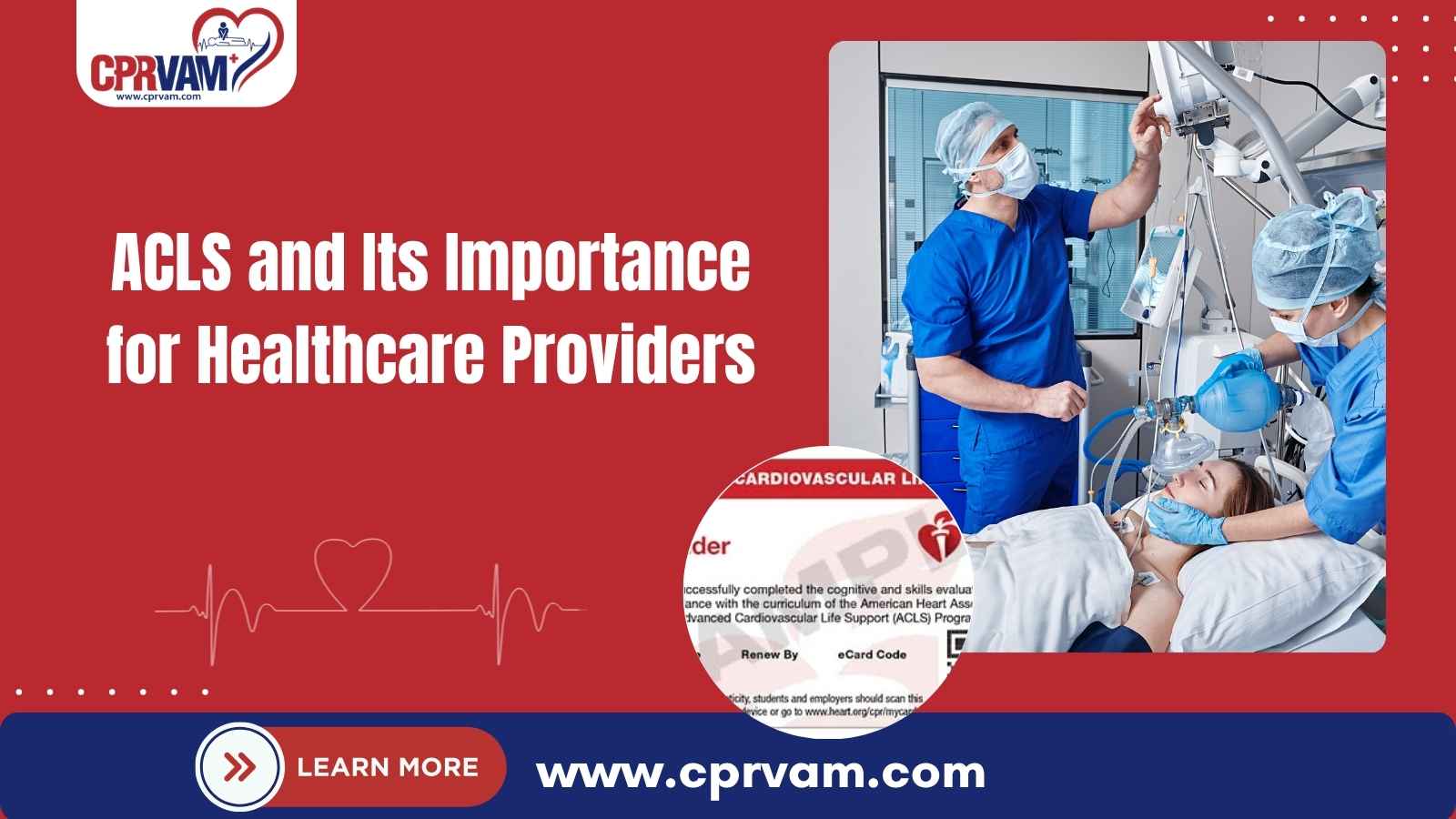
Every second matters when a heart stops beating. Advanced Cardiovascular Life Support (ACLS) equips healthcare providers with the skills to respond effectively to life-threatening emergencies such as cardiac arrest, stroke, and severe arrhythmias. Cardiovascular events are common and fast-moving, requiring quick, confident action. Mastering ACLS improves patient survival, reduces neurological damage, and prepares clinicians to act decisively in critical moments.
The American Heart Association reports over 350,000 out-of-hospital cardiac arrests annually in the U.S., with survival rates often under 10%. ACLS builds on Basic Life Support by teaching advanced airway management, ECG rhythm recognition, emergency medication use, defibrillation, and post-resuscitation care.
This blog explains what ACLS is, how it works, and why healthcare professionals in the U.S. must master it to save lives in high-pressure, time-sensitive situations.
Why Is ACLS Critical for Managing Cardiovascular Emergencies?
Advanced Cardiovascular Life Support (ACLS) is a structured, evidence-based system that equips healthcare providers to respond quickly and effectively to life-threatening emergencies like cardiac arrest, stroke, respiratory failure, and dangerous arrhythmias.
Building on Basic Life Support, ACLS includes advanced airway management, rhythm recognition, emergency medications, defibrillation, and post-arrest care to improve survival and preserve neurological function.
ACLS Emergency Scenarios
- Cardiac arrest
- Acute coronary syndromes
- Stroke
- Respiratory failure
- Dangerous arrhythmias
ACLS builds on Basic Life Support (BLS) with advanced airway management, ECG interpretation, pharmacologic therapy, defibrillation, cardioversion, pacing, and structured post-cardiac arrest care. The goal is not only resuscitation but also restoring circulation and preserving neurological function.
How Does ACLS Improve Survival During Cardiovascular Emergencies?
ACLS improves patient outcomes by guiding healthcare providers through rapid assessment, evidence-based algorithms, and advanced interventions. It ensures timely, coordinated care during critical events, helping teams act quickly and efficiently when seconds can make the difference between life and death.
Early CPR and defibrillation, combined with structured post-cardiac arrest care, can double or even triple survival rates, according to the American Heart Association. Hospitals that follow ACLS protocols closely show higher Return of Spontaneous Circulation (ROSC) and improved survival-to-discharge rates, demonstrating the effectiveness of standardized advanced care.
What Are the Core Components of ACLS?
ACLS is designed to guide healthcare providers in managing life-threatening cardiovascular emergencies effectively. It combines critical procedures such as CPR, airway and ventilation management, heart rhythm monitoring, medication administration, and post-resuscitation care to improve survival and protect neurological function.
Here are the components of ACLS as follows:
1. High-Quality CPR
Effective chest compressions performed at 100-120 per minute with full recoil and minimal interruptions are central to saving lives. High-quality CPR increases the chances of survival, while poorly executed compressions can reduce patient recovery by up to 30%, according to the American Heart Association.
2. Airway and Ventilation Management
Airway and ventilation support ensure patients receive adequate oxygen. Using advanced airway devices, oxygen therapy, and capnography helps maintain proper breathing while minimizing interruptions to chest compressions, which is critical during cardiac arrest or severe respiratory emergencies.
3. ECG Rhythm Recognition
Recognizing heart rhythms quickly allows providers to make immediate treatment decisions. Identifying conditions such as ventricular fibrillation, ventricular tachycardia, asystole, or bradycardia helps determine whether to perform defibrillation, pacing, cardioversion, or administer specific medications, improving resuscitation outcomes.
4. Medications in ACLS
Emergency medications like epinephrine, amiodarone, adenosine, magnesium, and atropine are used to restore circulation and stabilize heart rhythms. Correct timing and dosing following ACLS protocols significantly increase patient survival and support recovery after cardiac arrest.
5. Post-Cardiac Arrest Care
Once circulation is restored, care focuses on stabilizing the patient. Interventions such as controlling blood pressure, optimizing oxygen, targeted temperature management, and early coronary reperfusion enhance neurological recovery and improve the likelihood of survival to hospital discharge.
Which Conditions Require ACLS Intervention?
ACLS is applied in emergencies where the heart or circulation is critically compromised. Prompt intervention following ACLS guidelines can save lives, stabilize patients, and prevent long-term complications in severe cardiovascular, respiratory, or systemic crises.
ACLS intervention is required in the following conditions:
Cardiac arrest, including Ventricular Fibrillation (VF), Ventricular Tachycardia (VT), Pulseless Electrical Activity (PEA), and Asystole, requires immediate ACLS care.
Acute coronary syndromes, such as heart attacks, need rapid assessment and intervention to restore blood flow.
Stroke and transient ischemic attacks demand urgent management to reduce brain damage and improve outcomes.
Respiratory failure requires airway support, oxygen therapy, and ventilation strategies to maintain life.
Severe electrolyte imbalances can destabilize heart rhythms and need urgent correction using the American Heart Association ACLS algorithms.
Drug overdose and poisoning may cause cardiovascular collapse, requiring rapid ACLS-guided resuscitation.
Anaphylaxis can trigger life-threatening shock, needing airway management, medications, and circulatory support.
Shock and major trauma often lead to cardiac compromise, making ACLS interventions critical.
Life-threatening arrhythmias disrupt normal heart function and require immediate rhythm recognition and treatment.
What Is ACLS Certification and How Does It Work?
ACLS certification confirms that healthcare providers are skilled in advanced resuscitation, heart rhythm interpretation, emergency medication use, and team leadership during critical situations. It ensures clinicians can respond quickly and accurately in life-threatening events, following the latest American Heart Association guidelines to maximize patient survival and improve neurological outcomes.
Training for ACLS certification can be completed in classroom settings, through blended learning, or via simulation-based courses. These formats allow providers to practice real-life scenarios safely while staying up to date with evolving protocols. Certification is typically valid for two years, after which recertification ensures clinicians remain competent and aligned with the most current evidence-based resuscitation practices.
How Can You Get ACLS Certification? Step-by-Step Guide
Advanced Cardiovascular Life Support certification equips healthcare providers with the skills to respond effectively to life-threatening heart emergencies. It ensures timely interventions, improves patient survival, and builds confidence for handling critical situations in hospitals, clinics, and emergency settings.
Step-by-step guide to get ACLS Certification:
1. Meet the Prerequisites
Before enrolling, you must have a current Basic Life Support (BLS) certification. This ensures you understand essential skills like CPR, airway management, and basic emergency response. BLS provides the foundation needed to succeed in advanced ACLS training and patient care.
2. Choose a Training Center and Format
Select a reputable ACLS training center, either in-person, online, or blended. Training centers certified by the American Heart Association (AHA) provide expert instructors, hands-on practice, and simulation labs. Choosing the right center and format ensures effective learning and high-quality skill development.
3. Complete ACLS Training
ACLS training teaches high-quality CPR, airway management, ECG rhythm recognition, emergency medication use, and team leadership. It combines theory and practical exercises, including simulation scenarios, so providers can confidently respond to cardiac arrest, stroke, or other life-threatening emergencies.
4. Pass Exams and Skills Assessments
To earn certification, you must pass written exams and practical skills tests. These assessments evaluate your ability to perform CPR, recognize heart rhythms, give medications, and lead a resuscitation team according to the latest American Heart Association (AHA) guidelines.
5. Receive Certification and Recertify Every 2 Years
After passing the course, you receive an ACLS certification card, valid for two years. Recertification ensures your skills stay current with evolving protocols, reinforces confidence, and maintains your ability to provide life-saving care in fast-paced, high-pressure situations.
Why Is ACLS Training Essential for Healthcare Providers?
ACLS training equips healthcare professionals with the knowledge and skills to manage life-threatening cardiovascular emergencies. It enhances clinical competence, improves teamwork, standardizes care, and directly impacts patient survival, making it an essential part of modern healthcare practice.
Here are the reasons for ACLS training for healthcare providers:
1. Improving Clinical Competence
ACLS training strengthens skills such as airway management, ECG rhythm interpretation, emergency medication use, and leadership during resuscitation. Providers who complete training perform better in critical situations, improving return of spontaneous circulation (ROSC) and patient outcomes.
2. Enhancing Team Coordination
ACLS teaches healthcare teams to work efficiently under pressure. Clear roles, communication, and teamwork during emergencies reduce delays, improve intervention accuracy, and ensure every team member contributes effectively to patient care.
3. Standardizing Emergency Care
ACLS algorithms provide a structured approach to resuscitation. Following these evidence-based guidelines reduces errors, ensures consistency across hospitals and clinics, and helps all providers deliver high-quality care in high-risk scenarios.
4. Increasing Patient Survival
Timely interventions, including CPR, defibrillation, and post-cardiac arrest care, significantly improve survival chances. According to the American Heart Association, early ACLS-guided care can double or triple survival rates and improve neurological recovery by up to 40%.
5. Keeping Skills Current
ACLS certification and recertification ensure clinicians remain updated on evolving resuscitation science, medications, and treatment protocols. Regular training reinforces skills, maintains confidence, and prepares providers for the latest evidence-based emergency care practices.
Who Needs ACLS Certification?
ACLS certification is essential for healthcare professionals working in critical and acute care. It ensures providers have the skills to respond quickly and effectively during life-threatening cardiovascular and respiratory emergencies.
Physicians in emergency medicine, cardiology, anesthesia, and internal medicine
Registered nurses and licensed practical nurses
Paramedics and EMTs
Respiratory therapists
ICU, telemetry, and emergency department staff
Hospitals increasingly require ACLS certification for staff involved in high-risk patient care to ensure safety, consistency, and high-quality emergency response.
Why Is ACLS Certification Especially Important for Nurses?
Nurses are often the first to notice signs of cardiac deterioration. ACLS training equips them to respond immediately, perform high-quality CPR, manage airways, administer emergency medications, and stabilize patients before advanced care arrives.
With ACLS skills, nurses can lead resuscitation teams efficiently in the ICU, ER, and telemetry units. This training ensures timely interventions, improves patient survival rates, and strengthens confidence in high-pressure situations, making ACLS an essential requirement for critical care nursing practice.
How Often Should ACLS Certification Be Renewed?
ACLS certification is valid for two years. Recertification keeps healthcare providers updated on the latest guidelines, medications, and resuscitation practices, ensuring they maintain skills, respond confidently, and provide safe, effective care during life-threatening emergencies. You can follow ACLS renewal tips to stay updated on the latest guidelines, medications, and resuscitation practices.
The Critical Role of ACLS in Modern Healthcare
ACLS plays a vital role in saving lives during cardiovascular emergencies. It equips healthcare providers with the skills to respond quickly, manage critical situations, and improve patient survival. CPR, airway management, rhythm recognition, and emergency medication use enhance outcomes and preserve neurological function. ACLS training ensures nurses, doctors, and paramedics deliver timely, evidence-based care, making it essential for modern healthcare and high-quality patient safety.
Get ACLS certified with CPR VAM! Our online and in-person ACLS courses with practice tests equip healthcare professionals with the skills to perform high-quality CPR, manage airways, recognize rhythms, and use emergency medications. Be ready to respond confidently to life-threatening emergencies.
Enroll today with CPR VAM and start saving lives!
FAQs
1. What Exactly Is ACLS, and Who Needs It?
Advanced Cardiovascular Life Support (ACLS) is a set of lifesaving techniques used to manage serious heart and circulation emergencies. It’s essential for healthcare professionals like doctors, nurses, paramedics, and anyone who may face a critical cardiac event.
2. How Does ACLS Training Make a Difference in Emergencies?
ACLS training equips providers to act fast with evidence-based procedures, including CPR, defibrillation, and medication administration. Proper ACLS interventions can significantly increase patient survival and improve recovery outcomes.
3. What Core Skills Are Taught in an ACLS Course?
ACLS courses focus on high-quality CPR, airway management, ECG rhythm interpretation, emergency medications, and post-resuscitation care. These skills prepare healthcare providers to respond quickly and confidently in high-pressure situations.
4. Is ACLS Certification Recognized, and How Long Does It Last?
Yes. ACLS certification follows American Heart Association guidelines and is widely recognized in healthcare settings. It is valid for two years, after which recertification ensures your skills stay current and up to date.
5. Can I Complete ACLS Training Online, In-person, or Both?
Absolutely. CPR VAM offers flexible training options, including fully online courses and hands-on in-person sessions. Practice tests and interactive modules help learners master essential life-saving skills regardless of their preferred format.