
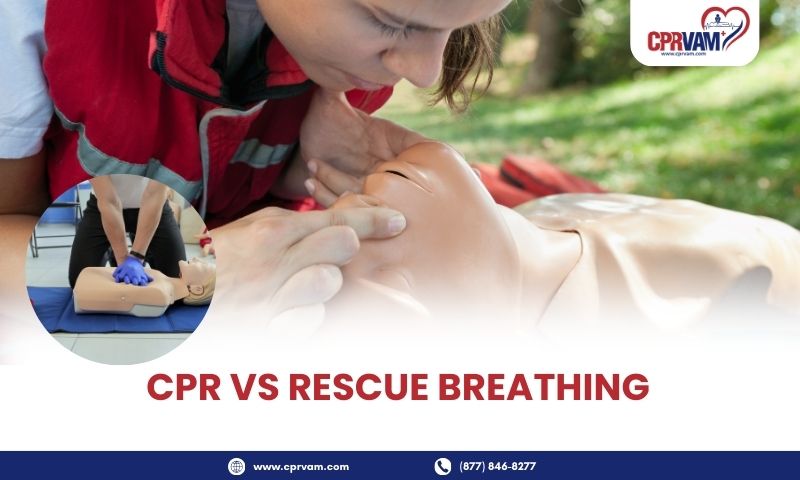
Have you ever been in a situation where someone suddenly collapses, and no one knows whether to start CPR or give rescue breaths? It can happen in the blink of an eye, and the confusion in those moments is completely normal. But understanding the difference between these two life-saving skills can help you act confidently when every second truly matters.
That’s why this guide breaks the topic down in a simple, step-by-step way. You’ll learn when to use CPR, when rescue breathing is the safer choice, and how these techniques work in real emergencies. By understanding the basics now, you can act quickly, stay calm, and give someone their best chance of surviving until help arrives.
Why Do CPR and Rescue Breathing Matter During an Emergency?
Before diving into the key differences, it’s important to understand CPR and rescue breathing. Knowing what each skill does, when to use it, and how it helps can prepare you to save a life.
Understanding CPR and Its Life-Saving Role
CPR is a lifesaving procedure used when someone is unresponsive, not breathing, or has no pulse. It helps create an artificial heartbeat and keeps oxygen-rich blood flowing to the brain and vital organs until medical help arrives.
(According to the American Heart Association (AHA), CPR should be started immediately in any person who is unresponsive and not breathing normally, with chest compressions performed at a rate of 100–120 per minute and a depth of at least 2 inches in adults.)
Types of CPR
1. Hands-Only CPR: Designed for untrained bystanders, this method uses only chest compressions without rescue breaths. It is commonly used for adults who suddenly collapse in public places, like malls, workplaces, or restaurants, to maintain circulation until help arrives.
2. Conventional CPR: Performed by trained rescuers, this method combines 30 chest compressions with 2 rescue breaths. It is used in situations like drowning, pediatric emergencies, overdose, or prolonged cardiac arrest to provide both oxygen and circulation.
Why CPR Matters
CPR keeps blood and oxygen flowing even when the heart stops. This preserves brain function and vital organs until an AED (defibrillator) or medical professionals can restart the heart. Quick action can save lives.
Rescue Breathing: When to Step In and Save a Life
Rescue breathing, also called artificial ventilation or mouth-to-mouth, is used when someone has a pulse but isn’t breathing or is breathing abnormally. It delivers oxygen directly to the lungs, keeping the person alive until normal breathing returns or EMS arrives.
(Per AHA guidelines, rescue breathing is recommended when a person has a pulse but inadequate or absent breathing. For adults, one breath is delivered every 5-6 seconds; for children/infants, every 2-3 seconds.)
When Rescue Breathing Is Used
- Drowning: Water blocks the lungs, preventing oxygen from entering. Rescue breathing provides vital oxygen until the person can breathe on their own.
- Asthma Attack: Severe airway constriction limits oxygen intake. Breathing support helps maintain oxygen levels until the attack eases or EMS arrives.
- Drug Overdose: Some drugs slow or stop breathing. Rescue breathing ensures oxygen reaches the lungs, protecting the brain and vital organs.
- Stroke: Oxygen may not circulate efficiently. Assisted breathing helps maintain oxygen supply to the brain until medical care is provided.
- Smoke Inhalation: Toxic smoke damages lungs, limiting oxygen intake. Rescue breathing helps deliver oxygen and prevents further complications.
- Electrical Shock: Shocks can temporarily stop or disrupt breathing. Rescue breathing keeps oxygen flowing until emergency responders intervene.
- Head Injury: Trauma can impair normal breathing. Providing breath supports oxygen delivery to prevent brain damage.
- Severe Respiratory Infections: Conditions like pneumonia or worsening Chronic Obstructive Pulmonary Disease (COPD) can stop effective breathing. Rescue breathing ensures oxygen continues reaching vital organs.
Types of Rescue Breathing Techniques
- Mouth-to-Mouth Resuscitation:
This is the most common method, where you blow air directly into the person’s mouth. It helps deliver oxygen to the lungs when the person cannot breathe on their own. - Mouth-to-Nose Resuscitation: Used when the mouth is injured or blocked, you breathe into the person’s nose instead. This method ensures oxygen still reaches the lungs safely.
- Mouth-to-Mouth-and-Nose (Infants): For infants, you cover both the mouth and nose while giving gentle breaths. This technique provides the right amount of oxygen without overinflating the small lungs.
- Mouth-to-Mask: A face mask acts as a barrier between you and the person. It is safer and often preferred by trained responders, reducing the risk of disease transmission.
- Bag-Valve-Mask (BVM): This is a professional tool used by paramedics or trained personnel. It allows controlled ventilation, delivering oxygen more efficiently to the patient’s lungs in emergencies.
What’s the Core Difference Between CPR and Rescue Breathing?
Emergencies can happen anytime, and knowing what to do can make all the difference. CPR is used when someone has no pulse and isn’t breathing, while rescue breathing helps when a person has a pulse but can’t breathe. Understanding this distinction prepares you to act quickly and confidently.
Before you begin, always check the person’s pulse and breathing. If there’s no pulse, start CPR immediately. If the pulse is present but breathing has stopped, perform rescue breathing. These simple steps help you respond effectively and give someone the best chance of survival until professional help arrives.
(AHA recommends that rescuers continuously reassess the patient’s pulse and breathing every 2 minutes during resuscitation.)
This table breaks down the key differences between CPR and rescue breathing, helping you quickly see when and how to use each life-saving technique.
Factors | CPR | Rescue Breathing |
Primary Goal | Pump the heart and circulate blood | Provide oxygen to the lungs |
Used When | No pulse and no breathing | Has a pulse but is not breathing |
What It Involves | Chest compressions (with or without breaths) | Mouth-to-mouth, mouth-to-nose, or mask breaths |
Typical Scenarios | Cardiac arrest, sudden collapse, electrocution | Drowning, overdose, respiratory arrest |
Who Can Perform | Anyone (bystanders or professionals) | Mostly trained rescuers, but laypeople in emergencies |
Breathing Ratio | 30 compressions: 2 breaths | 1 breath every 5–6 seconds (adult) |
Goal of Outcome | Restart the heart rhythm | Restore normal breathing |
How to Perform CPR and Rescue Breathing? Step-by-Step Guide
You can follow these steps to perform CPR and rescue breathing safely. Start by checking responsiveness and calling 911. Then you give chest compressions or rescue breaths, helping maintain blood and oxygen flow until help comes.
How to Perform CPR (If No Pulse)
- Check Responsiveness: Gently tap the person and ask, “Are you okay?” This helps you know if they need immediate help.
- Call Emergency Services: Dial 911 or ask someone nearby to call. Early professional help increases survival chances.
- Check Pulse and Breathing: Look for a pulse and normal breathing. If there is none, start CPR immediately.
- Begin Chest Compressions: Place your hands in the center of the chest, stacked, and push 2-2.4 inches deep. Perform compressions at 100-120 per minute, like the beat of “Stayin’ Alive.”
- Give Rescue Breaths (If Trained): After 30 compressions, give 2 breaths by tilting the head, lifting the chin, and sealing your mouth over theirs. Blow for one second so the chest rises visibly.
- Continue Cycle: Keep repeating compressions and breaths until EMS arrives, the AED instructs you to stop, or you are too exhausted.
How to Perform Rescue Breathing (If Pulse But No Breathing)
- Check Responsiveness: Tap the person and speak to see if they react. This helps determine if immediate help is needed.
- Call for Help: Dial 911 yourself or have someone nearby do it. Getting professional assistance quickly can significantly improve survival chances.
- Check Pulse and Breathing: Make sure the person has a pulse but is not breathing normally. If this is the case, start rescue breathing.
- Open the Airway: Tilt the head back and lift the chin to open the airway. This allows air to flow into the lungs properly.
- Deliver Breaths: Adults: 1 breath every 5-6 seconds (10-12/min). Children/infants: 1 breath every 2-3 seconds (20-30/min), making the chest rise with each breath.
- Recheck Pulse Every 2 Minutes: Check the pulse every 2 minutes to ensure the heart is still beating. If the pulse stops, immediately switch to full CPR.
Take Action with CPR and Rescue Breathing
When a life hangs in the balance, your hands and breath can make the difference. Step in with CPR if there’s no pulse, or use rescue breathing if the heart is still beating but the person isn’t breathing. Every moment counts, so act fast, stay calm, and trust yourself. Your quick response can maintain blood flow, supply oxygen, and give someone a real chance at survival until professionals arrive.
Do not wait for an emergency to act. Join CPR and rescue breathing classes at a CPR VAM AHA Certified Training Center near you. Learn from expert instructors, practice hands-on skills, and gain the confidence to save lives when it matters most. Find a class near your location and take the first step toward being a real-life hero today
FAQs
1. Can Rescue Breathing Be Harmful If Done Incorrectly?
Yes. If you breathe too forcefully, air can go into the stomach instead of the lungs, increasing the risk of vomiting or airway blockage. Using proper technique helps you keep the person safe.
2. Can You Perform Rescue Breathing On Someone Who Is Vomiting or Has Fluid in Their Airway?
Yes. If you notice vomiting or fluid, quickly turn the person’s head to the side to clear their airway before giving breaths. Make sure their mouth is clear so you can safely help them breathe.
3. Are There Any Risks Of Infection From Performing Rescue Breathing?
There is a small risk of spreading infection. You can reduce this risk by using a CPR mask, face shield, or barrier device. Hands-Only CPR lets you help someone without direct contact if you prefer.
4. How Do You Adjust Chest Compressions For Obese Or Very Muscular Adults?
You should use your body weight to push hard and fast in the center of the chest. Make sure you allow full recoil between compressions and adjust your hand placement if needed to keep your compressions effective.
5. Should You Stop CPR If the Person Starts Gasping Or Breathing Irregularly?
No. You should continue CPR until the person begins breathing normally or trained help arrives. Irregular gasping is common during cardiac arrest and does not mean you should stop.