

Knowing how to perform the Heimlich Maneuver is important because choking can happen suddenly and become life-threatening within seconds by blocking the airway and stopping normal breathing. In these moments, quick action really matters. The American Heart Association (AHA) highlights that immediate response in choking emergencies can significantly improve survival because oxygen loss begins within minutes.
The Heimlich Maneuver, commonly known as abdominal thrusts, is a first-aid technique used to help clear a blocked airway and restore breathing during choking. It works by applying quick, upward pressure to the abdomen to help force the blockage out of the airway.
This blog explains when to use it, how it works, and how to perform it safely for adults, children, infants, and pregnant individuals, in line with AHA-aligned first-aid principles.
What is the Heimlich Maneuver and When is It Used?
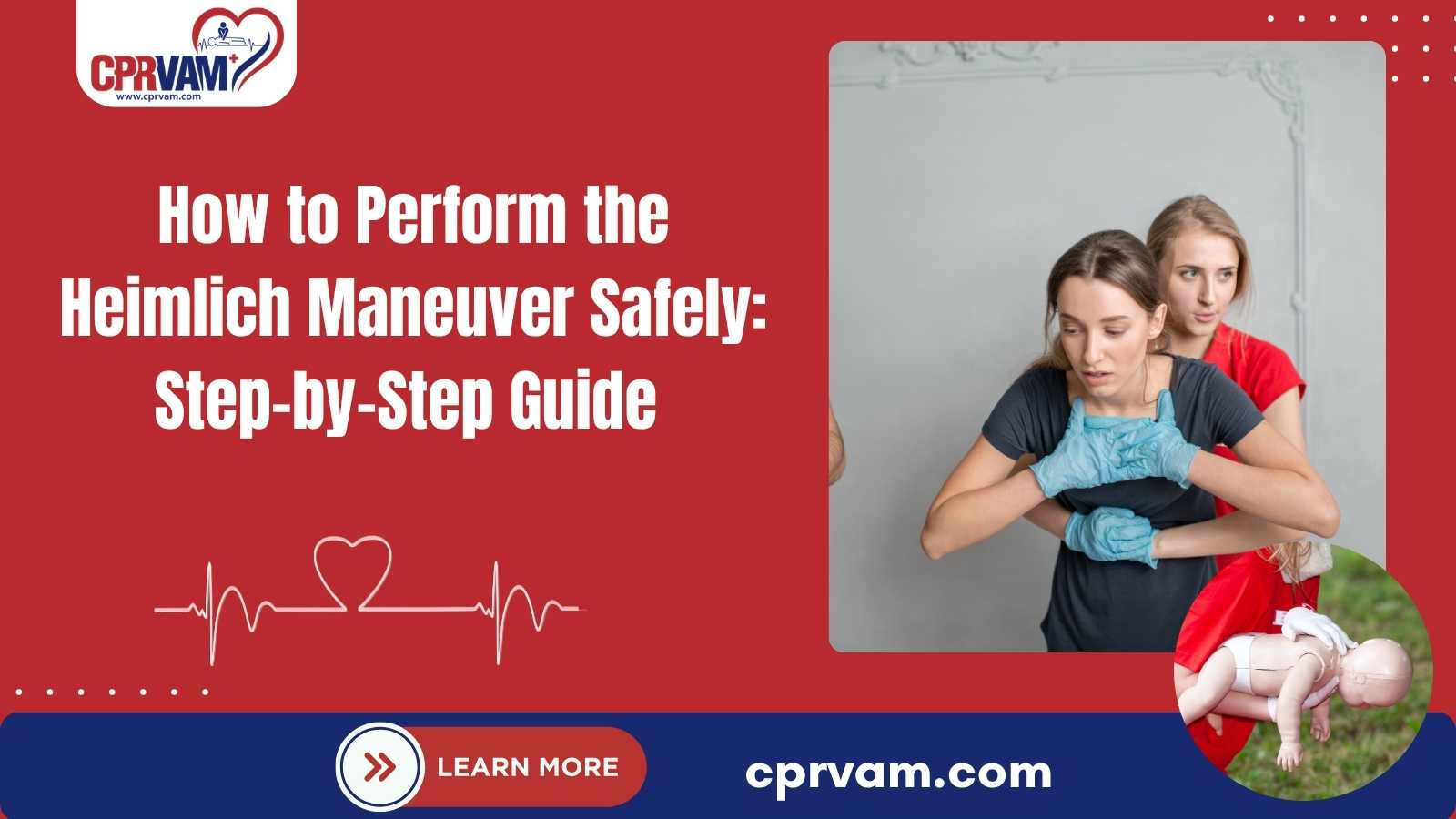
The Heimlich Maneuver (Abdominal Thrusts) is an emergency first-aid technique used when someone is experiencing a severe airway blockage. It involves quick, inward, and upward abdominal thrusts placed just above the navel. This creates a sudden increase in chest pressure, which may act like a natural cough to help dislodge the object from the airway and restore normal breathing.
This technique is used only in severe choking emergencies, when the airway is fully blocked, and the person cannot breathe, speak, or cough effectively. In these situations, every second matters, and immediate action is critical.
When to Use It
The Heimlich Maneuver is used in situations such as:
- Choking on food while eating
- Small objects or toys blocking the airway
- Severe choking in adults or children over 1 year old
- Emergency incidents at home, school, or public places
Why Learning the Heimlich Maneuver Is Important
Learning the Heimlich Maneuver is important because choking emergencies happen suddenly and require immediate action. Even a few minutes without oxygen can lead to brain injury or be life-threatening, which is why immediate action is critical. Knowing this technique helps you respond quickly and effectively in a critical situation.
Choking can occur anywhere in daily life, often without warning, including restaurants, homes, schools, offices, and public places. Being prepared allows you to act as a first responder and provide life-saving help until medical professionals arrive.
Benefits of Learning the Heimlich Maneuver:
- Helps restore breathing quickly during choking
- Reduces the risk of oxygen deprivation
- Increases chances of survival in emergencies
- Builds confidence in handling critical situations
- Requires no medical equipment
- Can be performed anywhere at any time
Recognizing the Signs of Choking: Identifying Mild and Severe Airway Obstruction
Before performing the Heimlich Maneuver, it is important to quickly determine whether the person is experiencing mild or severe choking. This helps ensure the right response and prevents unnecessary intervention.
Here are the two primary choking conditions to be aware of:
1. Mild Airway Obstruction
Mild choking means the airway is partially blocked, but the person can still move some air in and out of the lungs.
Signs of Mild Choking:
- Able to cough effectively
- Able to speak, though with some difficulty
- Airway is partially blocked, but airflow is still present
- Breathing is limited but still possible
- The person is conscious and responsive
What to Do:
- Encourage the person to keep coughing
- Stay with them and monitor closely
- Do not perform abdominal thrusts unless the condition worsens
2. Severe Airway Obstruction
Severe choking occurs when the airway is completely blocked, and no air can pass through.
Signs of Severe Choking:
- Unable to breathe
- Unable to speak or make sounds
- Weak or silent cough
- Clutching at the throat (common choking distress signal)
- Visible panic or distress
- Bluish lips or fingernails due to lack of oxygen
Severe choking is a medical emergency and requires immediate action, including the Heimlich Maneuver or emergency response.
Step-by-Step Guide to Performing the Heimlich Maneuver in a Choking Emergency
The Heimlich Maneuver is a life-saving first-aid procedure used to remove airway blockages during choking emergencies. Following a clear step-by-step approach ensures a fast response, restores breathing quickly, and reduces the risk of serious injury or death. Each step must be performed carefully and without delay for maximum effectiveness.
Here are the steps to perform the Heimlich Maneuver:
Step 1: Call Emergency Services Immediately
In a choking emergency, the priority is to call emergency services immediately or ask someone nearby to do so. Contact emergency services right away or ask someone nearby to do so while you begin assistance. Early communication ensures help is on the way, which is critical if the situation worsens or the airway remains blocked.
The essential actions are as follows:
- Call emergency services immediately without waiting
- Ask a bystander to contact help if you’re already providing care
- Share your exact location and briefly explain what’s happening
Step 2: Check If the Person Is Truly Choking
Before acting, quickly determine the severity of the blockage. If the person can cough, speak, or breathe, encourage them to cough forcefully. If the person cannot speak, cough, or breathe, it usually indicates a complete airway blockage requiring immediate action. , requiring immediate Heimlich Maneuver action without waiting.
The Assessment Steps are as follows:
- Confirm if the person can cough, speak, or breathe
- Encourage coughing if they are still able to move air through the airway
- If they cannot speak, cough, or breathe, treat it as a full blockage and respond immediately
Step 3: Give Firm Back Blows First
Back blows are the initial physical attempt to clear the airway. Position yourself behind the person, support them forward, and deliver strong, controlled strikes between the shoulder blades using the heel of your hand. This can sometimes help dislodge the object before moving to abdominal thrusts.
Kindly follow the correct technique steps:
- Stand behind the person and lean them slightly forward for proper positioning
- Use the heel of your hand to deliver firm blows between the shoulder blades
- Give up to five back blows, checking after each one if the object has come out
Step 4: Perform Abdominal Thrusts (Heimlich Maneuver) Correctly
If back blows do not work, abdominal thrusts should be applied immediately. Stand behind the person, place a fist above the navel, and pull inward and upward with force. This increases pressure in the chest, which may help force the object out of the airway.
Proper procedure steps you should follow:
- Stand behind the person and wrap your arms securely around their waist
- Place a clenched fist just above the navel and below the ribcage
- Grip your fist with the other hand for control and stability
- Deliver quick, strong inward and upward thrusts, repeating up to five times if necessary
Step 5: Repeat Until Airway Is Clear or Help Arrives
If the object is not dislodged, continue alternating between back blows and abdominal thrusts. Maintain the cycle until the airway clears or emergency responders arrive. If the person becomes unconscious, start CPR immediately if trained, as oxygen support is critical for survival.
You should follow these steps in an ongoing emergency:
- Alternate between 5 back blows and 5 abdominal thrusts in a steady cycle
- Continue until the object is expelled or normal breathing returns
- If the person becomes unconscious, begin CPR immediately (if trained)
Heimlich Maneuver Techniques for Different Situations
The technique for clearing a blocked airway varies depending on age and physical condition. Using the right method ensures the obstruction is removed effectively while keeping the person safe.
The following are Heimlich Maneuver techniques for different situations:
Adults
For adults, abdominal thrusts (Heimlich Maneuver) are the standard method for generating enough force to expel the obstruction.
Essential Steps:
- Position yourself behind and wrap your arms around the person’s midsection
- Place a fist just above the belly button and below the ribcage
- Deliver strong upward abdominal compressions in a controlled motion
- Continue until breathing is restored or medical help assumes care
Children (Over 1 Year Old)
Children often respond best to a combined approach of back blows and abdominal thrusts.
Critical Actions:
- Kneel or stand behind the child at their level for better control
- Deliver five firm strikes between the shoulder blades
- Follow with five abdominal compressions above the navel area
- Repeat the sequence and contact emergency services if the blockage remains
Infants (Under 1 Year Old)
Infants require a gentler technique and should never receive abdominal thrusts.
Required Steps:
- Hold the infant face down along your forearm with the head lower than the chest
- Give five firm back slaps between the shoulder blades using the palm of the hand
- Turn the infant face-up and deliver five chest compressions using two fingers
- Continue until the airway clears or the infant becomes unresponsive
Pregnancy
For pregnant individuals, chest thrusts are used instead of abdominal thrusts to avoid pressure on the abdomen.
Primary Actions:
- Stand behind and support the upper body securely
- Deliver five firm back blows between the shoulder blades
- Apply chest thrusts to the center of the sternum with controlled force
- Avoid abdominal pressure and call emergency services immediately
Self-Rescue (When Alone)
If choking occurs alone, self-administered techniques may help restore airflow.
Step-by-Step Actions:
- Place a clenched fist above the navel and apply inward-upward force
- Use the other hand to reinforce the movement for greater pressure
- Press against a sturdy surface like a chair back if needed for leverage
- Contact emergency services as soon as breathing becomes possible
Heimlich Maneuver Safety Tips and Critical Errors to Avoid in Choking Emergencies
Performing the Heimlich Maneuver correctly is important to ensure safety and effectiveness during a choking emergency. Following proper guidelines helps avoid injury and improves the chances of clearing the airway successfully.
Important Safety Guidelines:
- Use controlled, firm, and upward abdominal thrusts
- Avoid using excessive force that may cause injury
- Stay as calm as possible during the emergency
- Continue the maneuver until the object is dislodged or breathing returns
- Seek medical attention afterward, even if the person recovers
Common Mistakes to Avoid
- Delaying action when the situation is clearly difficult
- Using abdominal thrusts on infants (requires a different technique)
- Incorrect hand placement above or below the navel
- Stopping too early before the airway is fully cleared
- Forgetting to call emergency services for immediate help
Following these safety tips ensures the Heimlich Maneuver is performed effectively while minimizing risks.
Is the Heimlich Maneuver Still Recommended by Medical Guidelines?
Yes, the Heimlich Maneuver (also known as abdominal thrusts) is still recommended for severe choking emergencies in conscious individuals when the airway is completely blocked.
Many medical organizations now use the term “Abdominal Thrusts,” but the technique remains the same: applying quick upward pressure to help clear the airway.
It should only be used when the person:
- Unable to speak
- Has an ineffective cough
- Is not breathing normally
If the person becomes unresponsive, you should start CPR immediately and contact emergency services.
Possible Risks and Injuries from the Heimlich Maneuver
In some cases, the Heimlich Maneuver may cause minor injuries such as bruising or even rib fractures, especially in older adults or individuals with weaker bones. This may occur during emergency abdominal thrusts due to the force required to clear a life-threatening airway blockage.
This occurs because abdominal thrusts generate a strong upward force to dislodge the obstruction from the airway. However, in a severe choking emergency, the potential benefits outweigh the risk because airway obstruction is immediately life-threatening since the danger of oxygen loss is far more serious and can become life-threatening within minutes.
What to Do If the Airway Remains Blocked
If the object is not dislodged after initial attempts, continue taking immediate action without delay.
Recommended Steps:
- Continue alternating back blows and abdominal thrusts (if appropriate)
- Call emergency services immediately if not already done
- Stay with the person and monitor their condition closely
- If the person becomes unconscious, begin CPR if trained
- Persistent and immediate action is critical in choking emergencies and can improve survival chances.
Master the Heimlich Maneuver to Act Quickly in Choking Emergencies
The Heimlich Maneuver is one of the most important first aid skills for responding to choking emergencies. When a person suddenly cannot breathe due to a blocked airway, quick action using abdominal thrusts or back and chest thrusts when needed can help remove the obstruction and restore breathing. It can be safely used for infants, children, adults, and pregnant individuals when performed correctly.
Don’t wait for an emergency to wish you were prepared. Build real confidence through hands-on training and learn how to respond the right way when it matters most. Join CPR VAM Training Center, an AHA-certified provider offering expert-led courses in CPR, First Aid, BLS, ACLS, and PALS. Get trained, stay ready, and be the difference that saves a life.
FAQs About Heimlich Maneuver
1. What should You Do First when Someone Is Choking?
First, quickly check whether the person can cough, speak, or breathe normally. If they cannot, you should immediately call emergency services and begin appropriate first-aid steps without any delay.
2. Can the Heimlich Maneuver be Performed without Medical Training?
Yes. This technique is designed to be simple enough for anyone to learn and apply during emergencies. With basic guidance, you can perform it effectively even without formal medical training to help save a life.
3. How Do You Know If Choking Is Severe enough for Immediate Action?
Severe choking occurs when the person cannot speak, breathe, or cough and may show signs like clutching the throat or panic. In such cases, the airway is fully blocked, and you must act immediately without waiting.
4. Is the Heimlich Maneuver Safe for All Age Groups?
Yes. But it must be adapted based on age and condition, including infants, children, adults, and pregnant individuals. Using the correct variation ensures you can perform the technique safely and effectively in each situation.
5. What Should You Do If the First Attempt Does Not Clear the Airway?
If the blockage is not removed, you should continue alternating between back blows and abdominal thrusts while staying calm. If the person becomes unconscious, you should begin CPR if trained and wait for emergency help.