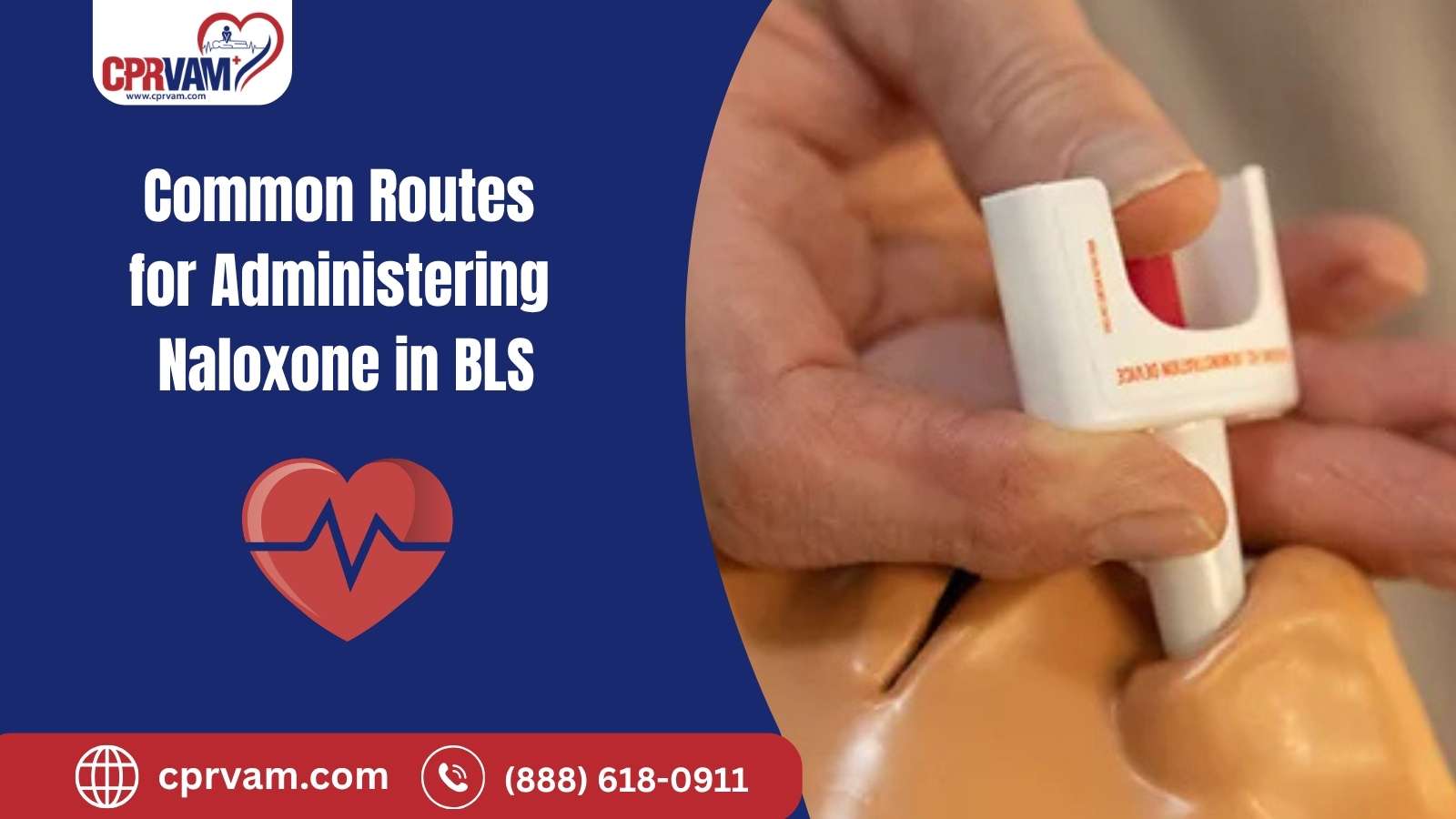
In 2024, the United States experienced an estimated 80,391 drug overdose deaths, representing a 26.9% decrease from 110,037 deaths in 2023, according to the CDC. Opioids continue to be a major concern, with over 54,000 opioid-related deaths reported. In these critical moments, every second matters, and knowing how to respond can save lives. You can make a difference. Naloxone, a powerful opioid antagonist, acts quickly to reverse life-threatening effects, providing vital time for advanced medical care to arrive.
Having naloxone available is only part of the solution. Proper knowledge of how and when to administer it is equally important. In Basic Life Support, understanding the common administration routes, their benefits, limitations, and proper techniques is essential. You can respond confidently when equipped with this knowledge.
This blog helps you to know the intranasal, intramuscular, intravenous, and subcutaneous administration in clear steps, preparing you to act effectively in emergencies.
Why Is Naloxone Important in BLS?
Opioid overdoses are life-threatening emergencies that can quickly cause respiratory depression or unconsciousness. You can make a real difference in these situations. Research shows that the timely administration of naloxone significantly reduces overdose deaths. When naloxone reached 80% of those at risk, heroin-related deaths dropped from 1.0% to 0.7%, and fentanyl-related deaths dropped from 4.1% to 3.6% (CDC, 2025; Monte Carlo simulation study, Journal of Addiction Medicine, 2024).
Naloxone works rapidly by blocking opioid receptors, giving victims a critical chance to survive until advanced medical care arrives. You can act decisively and save lives by recognizing an overdose and administering naloxone quickly. Its effectiveness in reducing opioid-related mortality makes it a key component of Basic Life Support training and emergency response (American Heart Association, 2022)
What Are the Main Administration Routes for Naloxone?
Naloxone is a life-saving medication used to reverse opioid overdoses. You need to understand the main routes in Basic Life Support to act quickly and safely. Each method has its benefits, restrictions, and usage instructions that empower you to respond effectively until advanced medical care arrives.
Here are the detailed administration routes for Naloxone as follows:
1. Intranasal Spray: Easy and Rapid Use
Intranasal spray offers fast, needle-free naloxone delivery, making it easy for you to act in an overdose emergency, with effects in minutes, though blocked nasal passages or severe cases may require repeat dosing promptly and safely.
Advantages
- Pre-measured and needle-free
- Simple for you as a bystander or first responder
- Effects are typically seen within 3-5 minutes
Drawbacks
- Effectiveness decreases if nasal passages are blocked
- Severe overdoses may need a second application
Available Options
- Narcan® Nasal Spray 4 mg
- Kloxxado® 8 mg
How to Administer
- Remove the spray from the packaging
- Tilt the person’s head back
- Insert the nozzle into one nostril
- Press the plunger firmly
- Repeat in the other nostril if no response in 2-3 minutes
- Observe breathing and responsiveness
2. Intramuscular Injection: Fast Response for Trained Users
Intramuscular injection delivers naloxone quickly for trained users, giving you a fast response in overdose emergencies, especially when nasal options fail, but it requires proper training, needle handling, and careful monitoring for safety and effectiveness.
Benefits
- Rapid onset in 2-5 minutes
- Can be administered into large muscles like the thigh or upper arm
- Suitable for you if trained in injections
Challenges
- Requires needle handling
- Proper training is essential to avoid injury
Common Devices
- Evzio® Auto-Injector
- Prefilled vials and syringes
Administration Steps
- Gather syringe, PPE, alcohol swabs, and naloxone
- Clean injection site
- Prepare medication
- Insert the needle at 90 degrees and inject slowly
- Remove the needle and dispose of it safely
- Monitor the patient’s response
3. Intravenous Route: Immediate Effect in Hospitals
The intravenous route delivers naloxone almost immediately, giving you precise control in hospital settings, but it requires venous access, advanced training, and continuous monitoring, making it suitable only for you in professional medical environments.
Strengths
- Fastest onset, 1-2 minutes
- Allows precise control of dosage
- Suitable for you in a hospital or advanced care settings
Limitations
- Requires venous access and specialized training
- Not suitable for standard BLS providers
Typical Equipment
- Naloxone vials, IV tubing, syringes, needles
Administration Instructions
- Prepare IV line and materials
- Establish venous access
- Administer naloxone slowly
- Adjust dosage as needed
- Monitor vital signs continuously
4. Subcutaneous Injection: Gradual Absorption, Less Pain
Subcutaneous injection delivers naloxone slowly under the skin, causing less pain and bruising, giving you an alternative when IM or IV routes are unavailable, though the response is slower and used less often clinically appropriate.
Key Advantages
- Injected under the skin for slower absorption
- Less painful than IM, minimizing bruising
- Useful for you when IM or IV is not an option
Constraints
- Slower onset compared to IM or IV
- Rarely used in BLS and less familiar to most responders
Available Forms
- Prefilled SC naloxone syringes
Procedure for Use
- Clean and prepare the injection site
- Insert the needle beneath the skin
- Administer medication slowly
- Remove the needle safely
- Monitor breathing and responsiveness
Quick Comparison: Naloxone Administration Routes at a Glance
Route | Onset Time | Best For | Key Limitations |
Intranasal | 3-5 Minutes | Untrained bystanders, first responders | Nasal blockage may need a second dose |
Intramuscular IM | 2-5 Minutes | Trained responders | Requires needle use and proper training |
Intravenous IV | 1-2 Minutes | Hospital or advanced medical care | Needs IV access and advanced skills |
Subcutaneous SC | 5-10 Minutes | Limited resource or backup situations | Slower effect and rarely used |
How Do You Choose the Most Appropriate Route in BLS?
Choosing the right naloxone route in basic life support (BLS) depends on the situation, available resources, and your level of training. Making the correct choice ensures you can act quickly and effectively, giving the patient the best chance of recovery while keeping you safe and prepared.
1. Responder’s Training Level
Your level of training determines which naloxone route is safe and effective for you to use. Untrained bystanders benefit most from intranasal sprays, while trained responders can handle intramuscular injections, ensuring you can administer life-saving care confidently and correctly.
2. Available Resources
The tools and devices at your disposal guide you in choosing the most practical route. If you only have nasal sprays, you can still act fast, but if injection devices are available, you can use IM or even SC, giving you more flexibility in emergencies.
3. Patient’s Condition
The patient’s health and physical condition influence which route you should use. For example, blocked nasal passages may make IN less effective, while IV access may be required in advanced cases, ensuring you provide the fastest and safest treatment possible.
Practical Recommendations
To act quickly and effectively in BLS situations, you need to select the most suitable naloxone route. Your training, available tools, and the patient’s condition help determine the best choice.
- Intranasal (IN)
Primary route for you and other responders; easy and safe for most BLS scenarios. - Intramuscular (IM)
Secondary option if you are trained and effective with proper injection skills. - Intravenous (IV) & Subcutaneous (SC)
Reserved for hospital or limited-resource settings; flexible when other routes are unavailable.
What Safety Precautions Should You Take While Administering Naloxone?
Administering naloxone can save a life, but you must follow safety precautions to protect both yourself and the patient. Understanding proper assessment, correct administration, and post-care monitoring ensures you act confidently, effectively, and responsibly in an emergency.
1. Assessment
Before giving naloxone, you need to assess the patient and the scene for safety. Check for signs of opioid overdose, such as slow or absent breathing, pinpoint pupils, or unconsciousness. You should also consider other possible causes of unresponsiveness to ensure you provide appropriate care.
2. During Administration
While administering naloxone, follow the device-specific instructions carefully. Make sure you use the correct dose and route. Be prepared to repeat doses if the patient does not respond. Taking these steps ensures you give the medication safely and effectively, giving the patient the best chance of recovery.
3. Post-Administration
After giving naloxone, maintain the patient’s airway and monitor vital signs closely. If breathing is adequate, place them in a recovery position. Call emergency services immediately and observe for withdrawal symptoms, especially if the patient is opioid-dependent. This ensures you continue protecting both the patient and yourself.
4. Legal Considerations
You should be aware of Good Samaritan laws, which protect individuals who administer naloxone in an emergency. Knowing your legal protections allows you to act confidently and responsibly, ensuring that you can provide life-saving care without fear of liability.
How Can BLS Training Help You Administer Naloxone Effectively?
Getting trained in BLS gives you the knowledge and skills to respond confidently during an opioid overdose. You learn to act quickly, safely, and effectively, making a real difference in saving lives while waiting for advanced medical help.
Key Benefits of BLS Training to administer naloxone effectively:
- Recognize Overdose Signs
BLS teaches you how to identify slow or absent breathing, pinpoint pupils, or unconsciousness, so you can act immediately and provide the right help. - Correct Naloxone Administration
You learn how to use nasal sprays and auto-injectors properly, ensuring you give the correct dose safely and efficiently. - Rescue Breathing, CPR, and Monitoring
Training equips you with skills to maintain the patient’s airway, support breathing, and monitor vital signs after naloxone administration. - Confidence to Act Quickly
With proper BLS training, you gain the confidence to intervene without hesitation, giving you the ability to save lives while waiting for professional medical support.
Be Prepared to Save a Life: Your Guide to Naloxone in BLS
Understanding the common naloxone administration routes and BLS safety measures empowers you to act quickly and confidently in an opioid overdose emergency. With proper training, keeping naloxone accessible, and following step-by-step guidelines, you can protect yourself, support the patient, and make a real, life-saving impact whenever seconds count. Your knowledge and action can truly make a difference.
Don’t wait for an emergency to be prepared. Enroll at CPR VAM, an AHA Training Center, where our expert instructors teach CPR, BLS, ACLS, and PALS, including naloxone administration, safety precautions, and life-saving skills, and gain the confidence to act effectively in emergencies.
FAQs
1. What Is the Fastest Way for You to Administer Naloxone in A BLS Situation?
Intravenous (IV) administration delivers naloxone almost immediately, giving you the fastest effect in hospital or advanced care settings. For most bystanders, intranasal sprays are easier and safer to use, allowing you to act quickly in emergencies.
2. Can You Use Naloxone Safely Without Medical Training?
Yes, intranasal naloxone sprays are designed for untrained responders, letting you reverse opioid overdoses safely and effectively. You should follow the step-by-step instructions and call emergency services immediately after administration.
3. How Do You Choose the Best Naloxone Route for A Patient in BLS?
You choose the route based on your training, the patient’s condition, and available resources. For example, intranasal sprays are ideal for you as a bystander, while trained responders can use intramuscular or subcutaneous routes if needed.
4. How Quickly Does Naloxone Work When Given Intranasally or Intramuscularly?
Intranasal naloxone typically works within 3-5 minutes, giving you enough time to provide additional support if needed. Intramuscular injections act slightly faster, usually in 2-5 minutes, allowing you to respond effectively in emergencies.
5. Can Naloxone Cause Any Side Effects That You Should Watch For?
Yes. Naloxone can trigger withdrawal symptoms in opioid-dependent patients, including agitation, nausea, or rapid heartbeat. You should monitor the patient closely and provide supportive care while waiting for advanced medical help.