
CPRvam Students
25,000+ students successfully trained annually

AED laws across the United States vary significantly by state. These regulations govern the placement, maintenance, training, and registration of Automated External Defibrillators (AEDs). Understanding these rules is essential for public safety and legal compliance. In this page, we provide state-by-state resources of AED requirements, along with national insights and practical recommendations for organizations and individuals.


What Are AED Laws and Why They Matter

AED laws are regulations established by state governments to guide the placement, management, and use of Automated External Defibrillators in public and private facilities. These laws are designed to improve response during sudden cardiac arrest (SCA), a life-threatening medical emergency that occurs when the heart suddenly stops pumping effectively.

Sudden cardiac arrest is one of the leading causes of death worldwide. Without immediate intervention, survival rates decrease rapidly with each passing minute. When cardiopulmonary resuscitation (CPR) and an AED are used quickly, the chances of survival can increase dramatically.

Because rapid access to defibrillation is so critical, many states have implemented AED laws that address several key areas:

  • Accessibility: Ensuring AEDs are available in high-traffic public spaces
  • Maintenance: Requiring devices to be properly maintained and regularly inspected
  • Training: Encouraging or requiring CPR and AED training for staff or responders
  • Registration: Notifying local emergency medical services (EMS) about AED locations
  • Legal protection: Offering Good Samaritan protections to individuals who assist in emergencies

These regulations help ensure AED devices are accessible, functional, and ready for use when emergencies occur. By establishing clear guidelines, AED laws also encourage more organizations to adopt public access defibrillation programs.

State-by-State AED Laws

Each state has unique AED requirements, including placement mandates, registration, maintenance protocols, and training recommendations. To make it easy, we’ve compiled detailed resources for every state:

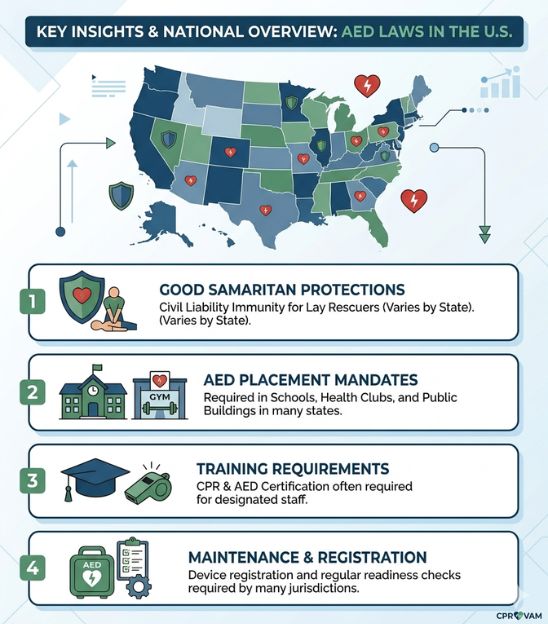
Key Insights & National Overview

While AED laws vary by state, several consistent patterns emerge across the United States:

  • Common Required Locations: Schools, airports, government buildings, and fitness centers are among the most frequently regulated environments
  • Training Recommendations: Most states encourage CPR and AED training, though not all require certification
  • Good Samaritan Protections: Nearly all states provide legal protection for individuals who use AEDs in good faith during emergencies
  • Maintenance Requirements: Routine inspections and proper upkeep are widely expected to ensure device readiness
  • Emergency Planning: Many states require organizations to have a written emergency response plan involving AED use

There is also a growing trend toward expanding AED access in schools and youth sports programs, reflecting increased awareness of cardiac risks among younger populations.

key aed law insights and national overview on aed law

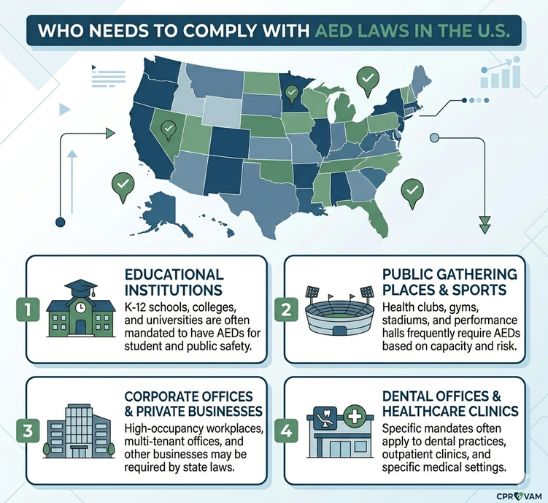
Who Needs to Comply with AED Laws

institutions and organizations that need to comply with aed laws in the united states

AED compliance requirements typically apply to organizations and facilities where large numbers of people gather or where the risk of cardiac emergencies is higher.

Common examples include: 

In some states, compliance is mandatory for certain facility types, while in others it is strongly recommended but not legally required. Regardless, implementing an AED program is widely considered a best practice for risk management and public safety.

Penalties & Legal Consequences

Failure to comply with AED regulations can lead to legal and financial consequences, depending on the state and the nature of the violation.

Potential risks include:

On the other hand, organizations that follow AED laws and maintain proper programs often benefit from liability protections, especially when acting in accordance with established guidelines.

AED Placement & Usage Guidelines

Proper placement and maintenance are essential to ensure AEDs are effective during emergencies. While specific legal requirements vary, general best practices include:

Take Action: Ensure AED Readiness and Save Lives

AED laws play a crucial role in improving survival rates from sudden cardiac arrest by ensuring that life-saving devices are accessible, functional, and properly used. Although regulations vary by state, the overall goal remains the same: to enhance public safety and emergency preparedness. Organizations should review their state-specific requirements and implement comprehensive AED programs that include proper placement, regular maintenance, and staff training.

To further strengthen your emergency response readiness, consider enrolling in AHA authorized Heartsaver CPR/AED, ACLS, PALS and BLS programs through CPR VAM and ensure your team is prepared to act when it matters most.

Owning a CPR device means more than having it. You must maintain it to ensure it’s compliant and ready for emergencies.

Most states do not mandate a specific brand, but AEDs must be FDA-approved, meet safety standards, and have proper instructions for public use.

Organizations may need to maintain records of device maintenance, battery and pad replacements, staff training certificates, and registration with local EMS to demonstrate compliance with state regulations.

Yes. AEDs are designed to be simple to operate, and most Good Samaritan laws extend legal protection to anyone who acts in good faith, including minors.

Yes. After any use, AEDs should be serviced immediately according to manufacturer guidelines and state regulations to ensure they remain operational for future emergencies.

Potentially, yes. Some states or local regulations may impose fines or reduce liability protections if staff are not adequately trained to use AEDs in emergencies.