

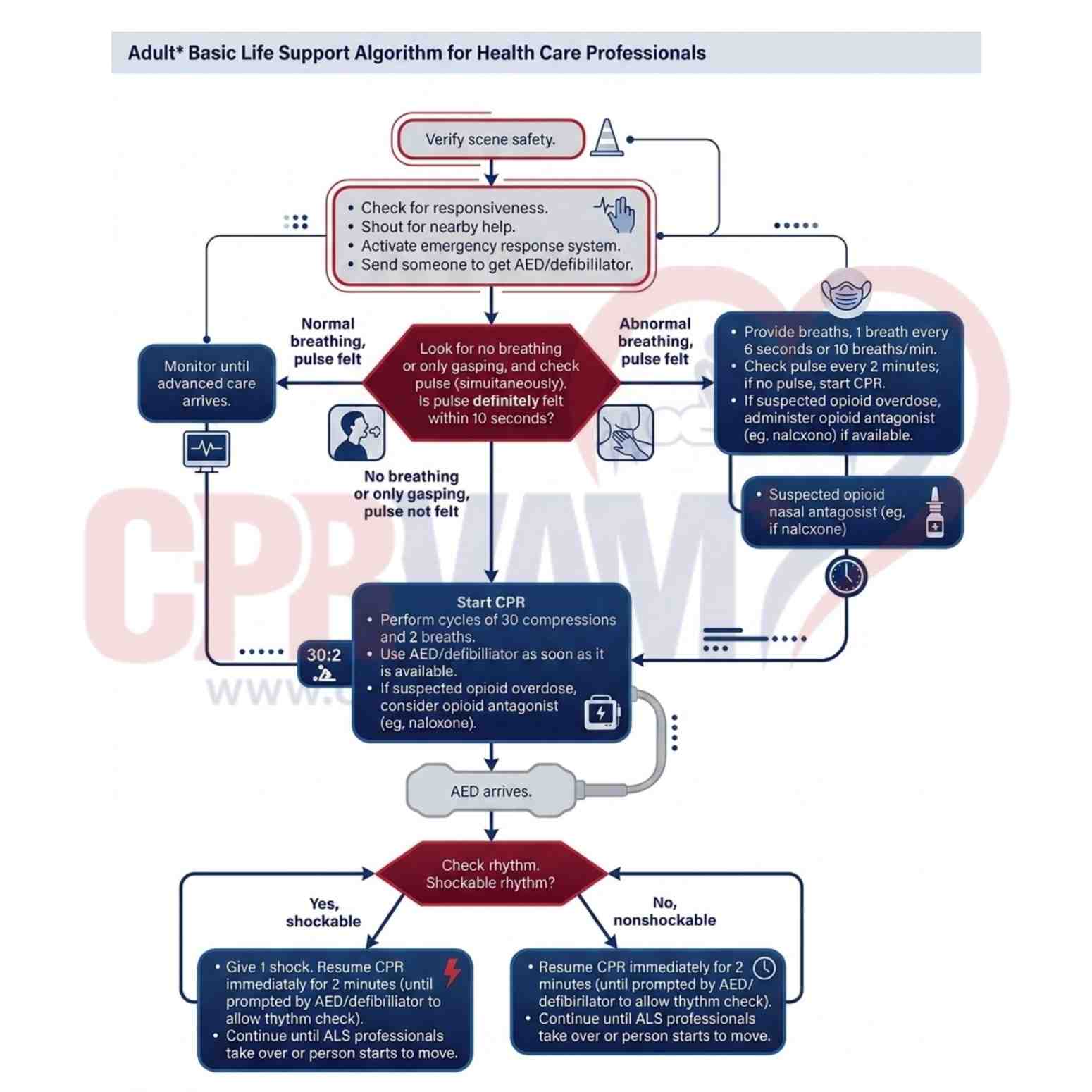
Avoiding Common Errors in Adult Basic Life Support
Avoiding mistakes during Basic Life Support is critical, as even minor errors can lower survival chances. You should focus on correct timing, proper technique, and strict adherence to guidelines to ensure effective CPR, maintain oxygen delivery, and improve patient outcomes in life-threatening emergencies.
The following errors should be avoided:
1. Delayed Emergency Activation: Call for Help Immediately
Call emergency services right away at the start of an emergency. Early activation ensures faster professional response and prompt AED availability.
2. Incorrect Hand Placement: Ensure Proper Chest Position
Place your hands at the center of the chest on the lower sternum. Correct hand positioning ensures effective compressions that maintain blood flow to the heart and brain.
3. Delayed AED Use: Apply Defibrillation Early
Use an AED as soon as it becomes available. Early defibrillation helps restore normal heart rhythm and significantly increases survival chances during cardiac emergencies.
4. Incorrect Compression Rate: Maintain Proper Rhythm
Perform chest compressions at 100-120 per minute. Maintaining the correct rate ensures effective blood flow and adequate oxygen delivery to vital organs.
5. Unnecessary CPR Pauses: Keep Compressions Continuous
Avoid interrupting CPR unless absolutely required. Continuous chest compressions help maintain blood circulation and improve survival chances during cardiac emergencies.
6. Improper Airway Positioning: Open Airway Correctly
Tilt the head back and lift the chin before giving breaths to open the airway. This position helps ensure a clear airway and effective air entry into the lungs.
7. Inadequate Patient Assessment: Check Responsiveness Quickly
Quickly assess responsiveness and normal breathing. Early, accurate evaluation supports timely decisions and prevents delays in initiating appropriate life-saving interventions.