
CPRvam Students
25,000+ students successfully trained annually
Step-by-step treatment algorithms

The Pediatric Septic Shock Algorithm is essential for guiding healthcare providers through rapid recognition and structured management of septic shock in children. It ensures timely interventions, standardized treatment across settings, and significantly improves survival while reducing complications and long-term organ damage.

Importance of the Pediatric Septic Shock Algorithm:

  • Enables early detection and immediate treatment of septic shock in pediatric patients.
  • Ensures rapid administration of antibiotics, fluids, and vasoactive support when needed.
  • Standardizes care across emergency, ICU, and transport teams for consistent outcomes.
  • Reduces mortality rates by preventing progression to multi-organ failure.
  • Minimizes long-term complications such as neurological and organ dysfunction.
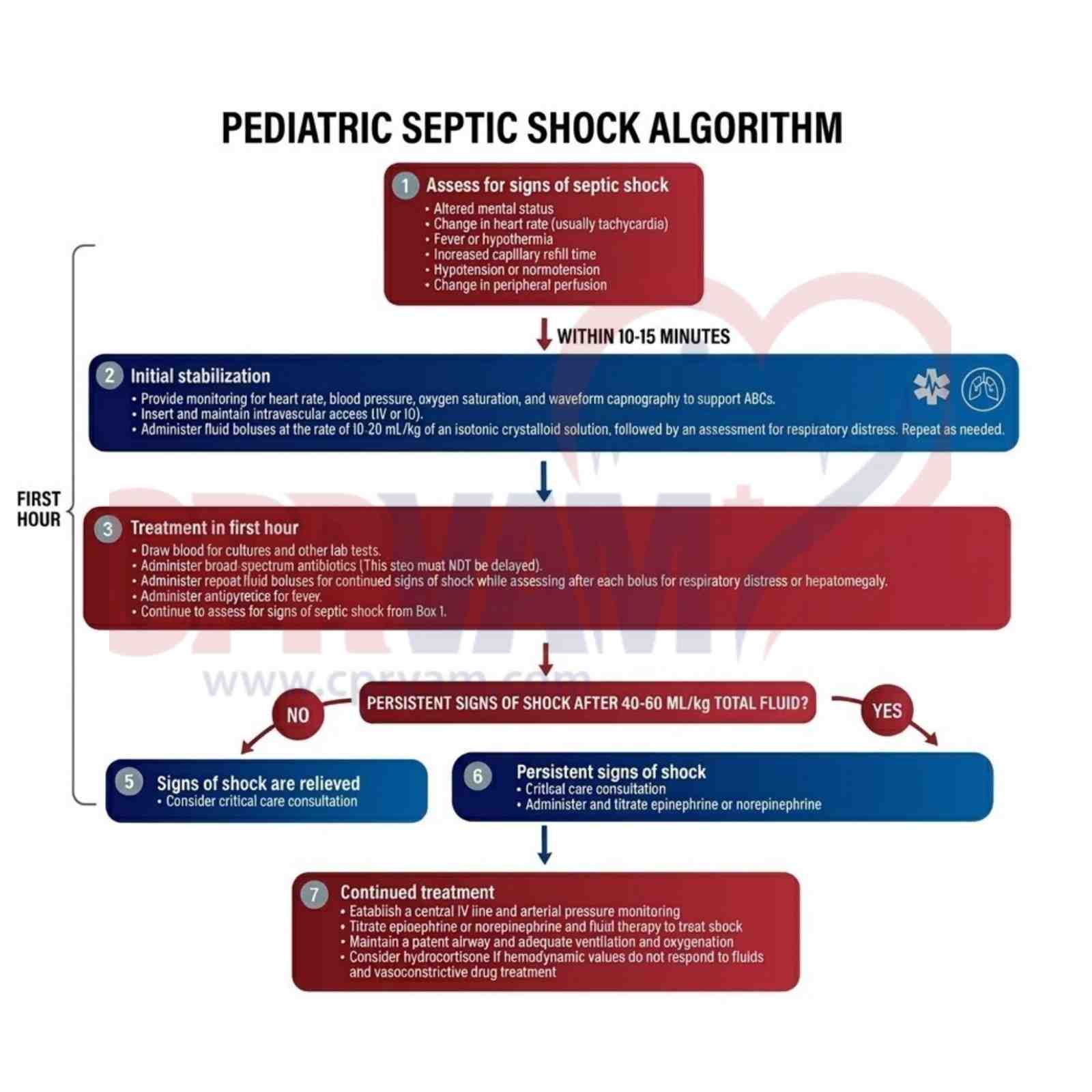
Pediatric Septic Shock Management Algorithm

The Pediatric Septic Shock Algorithm is a time-sensitive, evidence-based clinical framework designed for pediatric emergency care. It enables early recognition of septic shock, prompt hemodynamic stabilization, rapid initiation of antimicrobial therapy, and timely escalation to vasoactive agents and intensive care support, thereby reducing organ dysfunction and improving patient survival.

Here are the step-by-step Pediatric Septic Shock Treatment guidelines:

This step focuses on quickly recognizing septic shock in children to prevent treatment delays. Early clinical suspicion is based on changes in mental status, temperature, heart rate, and signs of poor circulation. Even when blood pressure is normal, poor perfusion can indicate early shock.

Clinical Indicators to Watch:

  • Changes in mental status, such as irritability, confusion, or reduced alertness, indicate poor brain perfusion
  • Fever or hypothermia suggesting systemic infection response
  • Tachycardia or bradycardia reflecting cardiovascular stress or decompensation
  • Delayed capillary refill and cold or mottled extremities showing poor tissue perfusion
  • Normal or low blood pressure, noting that hypotension is often a late sign in children

This step aims to stabilize vital organ function immediately by focusing on airway, breathing, and circulation. Early monitoring and vascular access allow rapid treatment delivery, especially fluids, which are essential for improving circulation and oxygen delivery.

Immediate Stabilization Actions:

  • First, make sure the airway is open, and breathing and circulation are stable, while continuously monitoring vital signs like heart rate, blood pressure, oxygen levels, and capnography
  • Next, quickly establish IV or IO access so fluids and medications can be given without delay
  • Then, give isotonic fluid boluses (10-20 mL/kg) and reassess each time to check improvement and watch for fluid overload or breathing issues

The first hour is critical for improving survival in septic shock. The goal is to treat infection early while continuing circulation support. Antibiotics must not be delayed, and all interventions should be guided by frequent reassessment.

Essential Early Interventions:

  • Collect blood cultures and key labs if possible, but don’t delay treatment
  • Start broad-spectrum antibiotics immediately to control infection
  • Continue fluid resuscitation based on shock and perfusion status
  • Reassess after each intervention to check for improvement or deterioration
  • Monitor closely for signs of fluid overload, such as respiratory distress or hepatomegaly

The patient’s response to fluid resuscitation guides the next steps after adequate volume has been given. If shock improves, treatment continues with supportive care. If it does not improve, the management plan is adjusted or escalated based on ongoing clinical signs.

Early involvement of pediatric critical care improves outcomes by ensuring advanced monitoring and expert guidance. Even improving patients benefit from early consultation to prevent relapse or deterioration.

Consultation Priorities:

  • Involve the pediatric ICU team early for expert guidance and ongoing management, especially when shock improves after initial fluid resuscitation
  • Coordinate multidisciplinary care involving emergency, ICU, and specialty teams to ensure continuous hemodynamic and organ function monitoring
  • Plan for potential transfer to a higher level of care when needed, supporting stabilization, recovery, and prevention of further deterioration

When shock signs persist despite initial management, escalate care to prevent deterioration, improve circulation, and ensure adequate tissue perfusion through advanced monitoring and appropriate therapeutic interventions.

Clinical Actions:

  • Initiate early critical care consultation when shock persists despite adequate fluid resuscitation
  • Start vasoactive support with epinephrine or norepinephrine for fluid-refractory shock
  • Titrate vasoactive drugs based on blood pressure, perfusion, urine output, and ongoing hemodynamic response with continuous reassessment of organ perfusion

Advanced management of severe or persistent shock focuses on close hemodynamic monitoring and organ support using invasive access, vasoactive medications, and respiratory assistance to maintain circulation, optimize oxygen delivery, and prevent organ dysfunction.

Advanced Management Measures:

  • Establish central venous and arterial access for accurate hemodynamic monitoring and guided treatment decisions
  • Continue and titrate vasoactive support (epinephrine or norepinephrine) to maintain adequate blood pressure and perfusion
  • Use monitoring data to adjust fluids and medications precisely for optimal circulation and organ perfusion
  • Consider hydrocortisone if hemodynamic parameters remain unresponsive to fluids and vasoactive medications, especially when adrenal insufficiency is suspected.

Pediatric septic shock is a life-threatening emergency requiring rapid recognition and immediate intervention. The American Heart Association PALS septic shock algorithm provides a structured, evidence-based approach for early identification, timely treatment, and continuous monitoring. It helps healthcare providers stabilize patients quickly, prevent organ dysfunction, and improve survival outcomes in infants and children.

Healthcare professionals can strengthen emergency response skills through BLS, ACLS, and PALS certification and renewal programs. Training with CPR VAM offers hands-on practice, helping maintain competency and confidence in managing real-life adult and pediatric emergencies effectively.

It provides a clear, step-by-step framework that helps clinicians recognize septic shock early and begin treatment without delay. This structured approach reduces complications, improves survival rates, and ensures consistent care across different healthcare settings.

Early intervention helps prevent the progression of infection into severe shock and multi-organ failure. Prompt treatment with fluids, antibiotics, and supportive care significantly increases the chances of recovery and reduces long-term complications.

Vasoactive medications are introduced when a child does not respond adequately to fluid resuscitation. They help restore blood pressure and improve tissue perfusion, which is essential for maintaining organ function.

Continuous monitoring allows healthcare providers to track vital signs, perfusion, and response to treatment in real time. This helps guide timely adjustments in therapy and prevents clinical deterioration.

Training in BLS, ACLS, and PALS equips healthcare professionals with essential skills to respond effectively during emergencies. Regular certification and renewal ensure providers stay updated with current guidelines and maintain confidence in managing critical situations.

Pediatric Advanced Life Support (PALS) Classes