
- 2026
CPR VAM • All Rights Reserved • Developed by Splendour Group


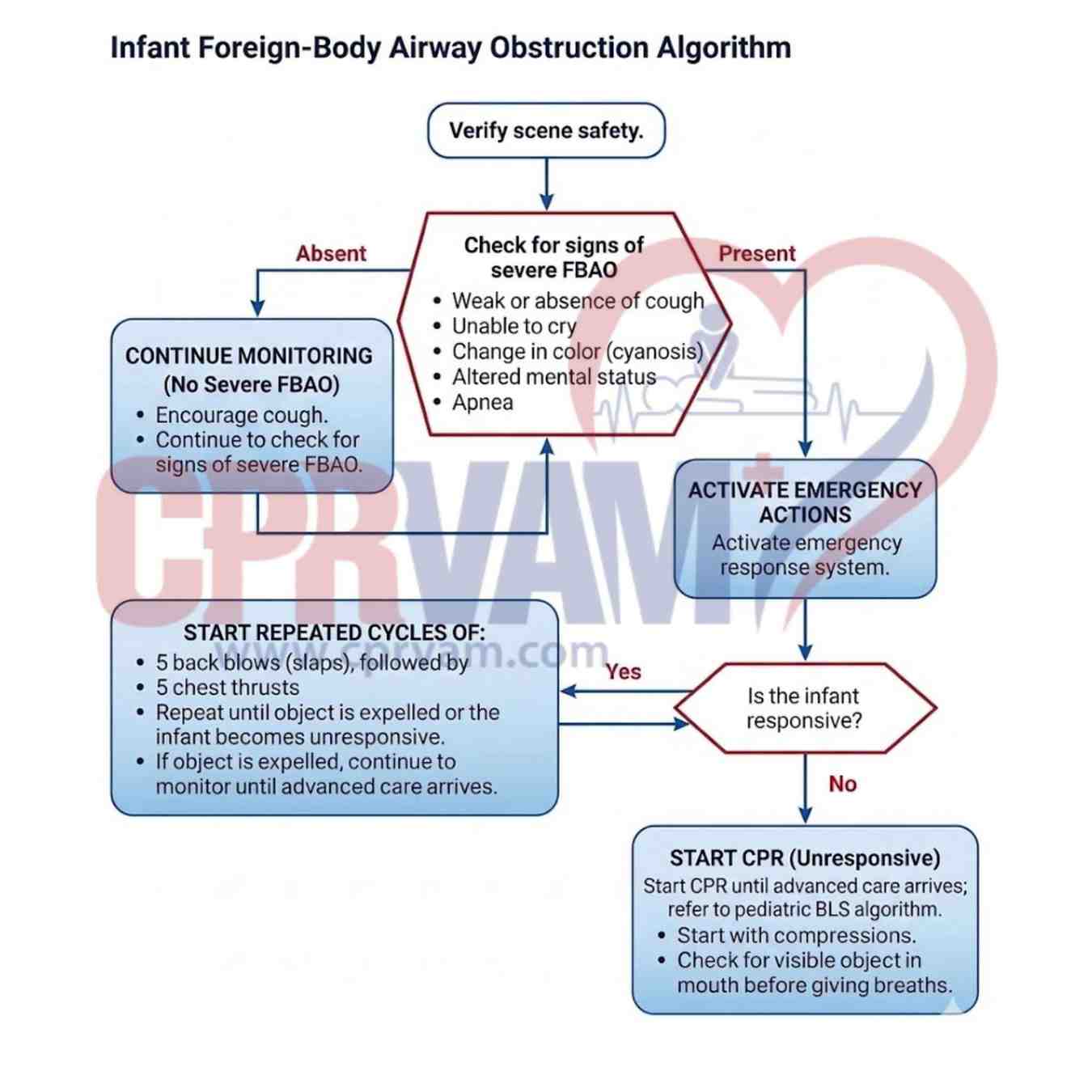
The Infant FBAO (Foreign-Body Airway Obstruction) Algorithm provides a clear, step-by-step method to manage choking in infants under 1 year. It focuses on rapid recognition, safe airway clearance, and timely CPR. Following this approach helps caregivers act confidently, reduce complications, and improve survival outcomes.
The Algorithm Highlights:
The Core Principles of the Infant FBAO Algorithm provide a structured framework for safely and effectively managing choking emergencies in infants. They emphasize rapid recognition, age-appropriate intervention, ongoing monitoring, timely escalation, and adherence to a systematic, evidence-based approach.
Core Principles of the Infant FBAO Algorithm:
This stepwise approach guides caregivers and first responders through safe, evidence-based actions for infants with airway obstruction. It emphasizes quick recognition, appropriate interventions, and continuous monitoring to prevent complications and save lives.
Following a clear and sequential protocol ensures that each step, starting with ensuring scene safety and continuing through CPR, is performed effectively and safely.
Before approaching the infant, ensure the environment is safe. Checking for hazards protects both the infant and the responder, allowing emergency actions to be carried out effectively and without additional risk.
Critical Steps:
Rapidly identifying severe airway obstruction is crucial. Recognizing key warning signs allows caregivers to act quickly, initiate life-saving interventions, and prevent further complications or loss of oxygen in the infant.
Key Indicators:
If the infant’s airway is partially open, allow natural coughing to remove the obstruction. Careful observation ensures safety, and readiness to intervene prevents deterioration or escalation to severe airway blockage.
Important Actions:
If the infant experiences severe or persistent choking, immediately alert emergency services. Quick activation ensures professional help arrives promptly, improving the infant’s chances of safe airway clearance and survival.
Primary Interventions:
Gently checking the infant’s responsiveness helps determine their condition. A responsive infant may tolerate airway clearance, while an unresponsive infant requires immediate CPR to prevent further complications.
Core Procedures:
When a responsive infant cannot clear an airway obstruction, performing alternating back blows and chest thrusts helps dislodge the object safely while maintaining support and monitoring for any change in condition.
Recommended Actions:
After Successful Removal:
Continuously monitor the infant’s airway, breathing, and responsiveness until emergency medical services arrive.
If an infant becomes unresponsive during FBAO management, begin CPR immediately. Prompt chest compressions and rescue breaths maintain circulation and oxygenation until emergency help arrives or the infant shows recovery.
Necessary Measures:
Following safety guidelines during infant airway management prevents further injury. Proper support, careful technique, and continuous reassessment ensure interventions are effective while protecting the infant’s fragile anatomy and overall well-being.
Fundamental Tasks:
Hands-on training is crucial for mastering the Infant FBAO Algorithm because it ensures correct technique, boosts confidence, minimizes complications, and prepares caregivers to respond effectively during real-life choking emergencies.
Training Benefits:
The Infant Foreign-Body Airway Obstruction (FBAO) Algorithm is a critical, life-saving protocol for infants under 1 year. Following this AHA 2025 structured stepwise approach ensures timely recognition, safe intervention, and prompt escalation to CPR, giving infants the best chance of survival during choking emergencies.
At CPR VAM, an AHA Certified Training Center, our AHA-aligned courses teach caregivers and responders how to perform back blows, chest thrusts, and CPR correctly. You’ll gain the confidence to act calmly, monitor the infant effectively, and deliver timely, life-saving care whenever it’s needed most.
Look for sudden inability to make sounds, struggling to breathe, or skin turning pale or bluish. These signs suggest the airway is blocked, and immediate action is needed.
Check that the environment is safe and assess the infant’s condition. Deliver firm back blows followed by chest compressions if the airway is obstructed.
CPR should start without delay if the infant loses consciousness. Prompt intervention is crucial to maintain oxygen flow and prevent complications.
They pose a high risk of internal damage in infants. Only back blows and chest thrusts are recommended to safely clear the airway.
With proper training, caregivers can confidently handle choking emergencies. Regular practice ensures both safety and effectiveness during real situations.