

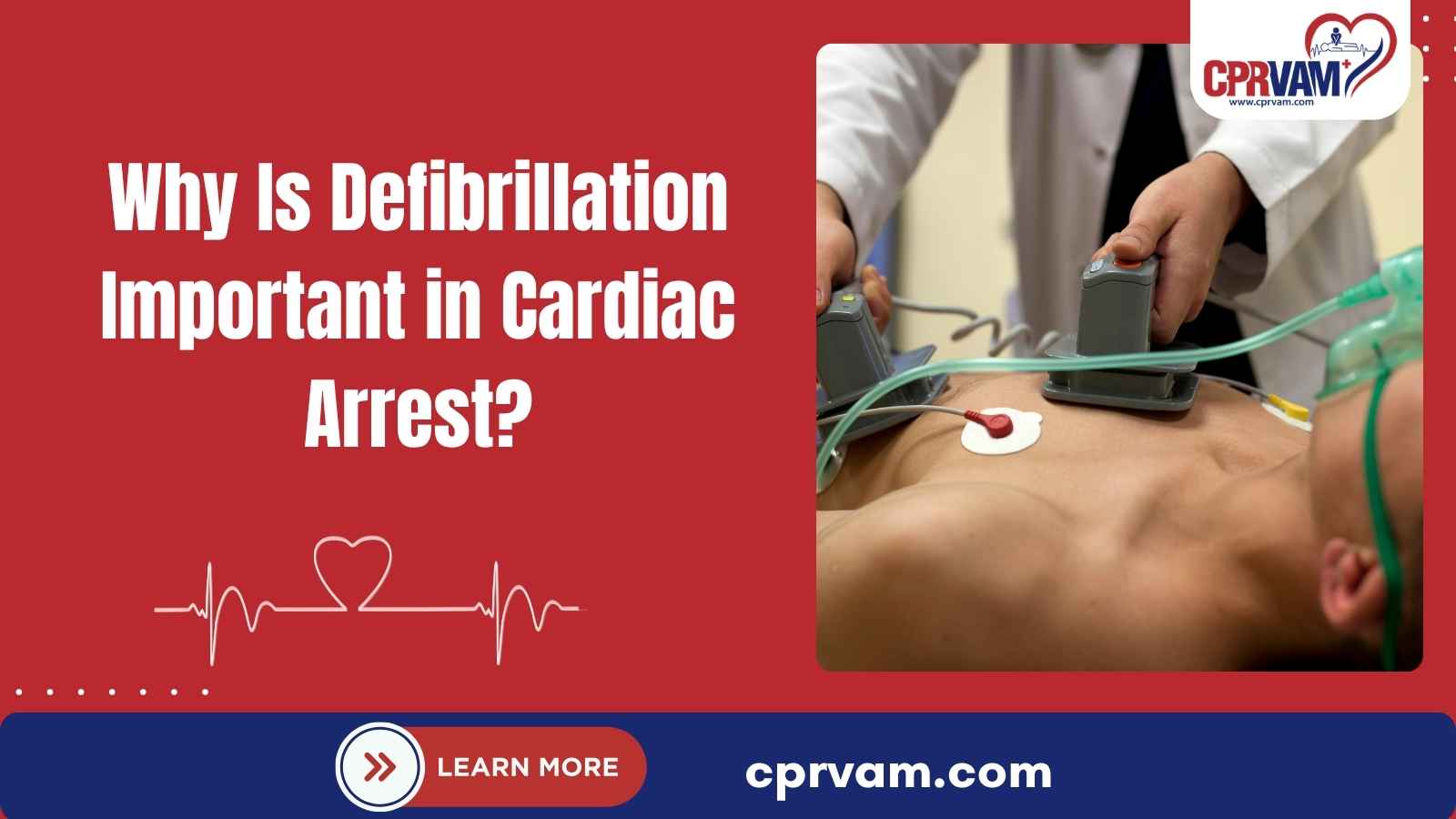
When sudden cardiac arrest occurs, the heart may stop pumping blood effectively, causing the person to collapse, become unresponsive, and stop breathing normally. Understanding why defibrillation is important can help explain its role in treating certain life-threatening heart rhythms, particularly Ventricular Fibrillation (VF) and Pulseless Ventricular Tachycardia (pVT), during cardiac arrest.
An Automated External Defibrillator (AED) can analyze the heart’s rhythm and deliver an electrical shock when a shockable rhythm is detected. Early CPR and rapid defibrillation are critical parts of the response to sudden cardiac arrest. The American Heart Association (AHA) includes rapid defibrillation as a key link in the cardiac arrest Chain of Survival, emphasizing the importance of acting quickly. At the same time, emergency medical services are on the way.
This blog helps you understand what defibrillation does, why timing matters, and how an AED works, helping people respond more confidently when a cardiac emergency occurs.
What Is Defibrillation and How Does It Work?
Defibrillation is an electrical shock used to treat certain life-threatening heart rhythms during cardiac arrest. It is mainly used for shockable rhythms, including ventricular fibrillation (VF) and pulseless ventricular tachycardia (pVT). During these rhythms, the heart’s electrical activity becomes chaotic or too fast for the heart to pump blood effectively to the brain and other vital organs.
An automated external defibrillator (AED) analyzes the heart’s rhythm and delivers a controlled electrical shock when a shockable rhythm is detected. The shock is intended to stop the abnormal electrical activity and allow the heart to return to an organized rhythm. Defibrillation does not simply restart every stopped heart and is not used for nonshockable rhythms, such as asystole or pulseless electrical activity (PEA).
If an AED does not detect a shockable rhythm, it will not recommend a shock. Instead, it provides voice and visual instructions to continue or resume CPR, helping maintain blood flow to the brain and other vital organs while emergency medical services are on the way.
What Is the Importance of Defibrillation?
Defibrillation is important during cardiac arrest because it can treat dangerous shockable rhythms, including VF and pVT. An AED analyzes the heart rhythm and delivers a shock when appropriate. The chance of successful defibrillation generally decreases as time passes, which is why rapid CPR and AED use are critical during cardiac arrest.
1. Treats Shockable Heart Rhythms
Defibrillation treats certain dangerous heart rhythms that can cause sudden cardiac arrest, especially ventricular fibrillation (VF) and pulseless ventricular tachycardia (pVT). An AED checks the heart’s rhythm and delivers a shock when appropriate. The shock is intended to terminate the abnormal rhythm and allow the heart’s normal electrical activity to resume.
2. Improves the Chance of Survival
Time is critical during sudden cardiac arrest. The longer a person remains in cardiac arrest without defibrillation, the lower the chance of successful treatment. Survival chances can decrease by about 7% to 10% for every minute without a shock. Rapid CPR and AED use can help improve the chance of survival.
3. Works Alongside CPR
CPR and defibrillation have different but complementary roles during cardiac arrest. CPR uses chest compressions to help maintain blood flow to the brain and other vital organs. Defibrillation treats certain shockable heart rhythms. Starting CPR quickly and using an AED as soon as possible provides important support while emergency help is on the way.
4. Allows Early Treatment with an AED
AEDs make early defibrillation possible in many public and community settings. The device analyzes the person’s heart rhythm and determines whether a shock is appropriate. Voice and visual instructions guide the rescuer through the process. This allows bystanders to begin potentially life-saving treatment while waiting for emergency medical services to arrive.
5. Helps Protect the Brain and Vital Organs
During cardiac arrest, the brain and other vital organs do not receive enough oxygen-rich blood. Quick CPR helps maintain circulation, while rapid defibrillation can treat a shockable rhythm when present. Restoring effective circulation sooner may help reduce the risk of serious brain injury and other complications associated with prolonged cardiac arrest.
Defibrillation vs. CPR: Why Both Are Essential During Cardiac Arrest
CPR and defibrillation play different but complementary roles during cardiac arrest. CPR helps keep blood moving to the brain and other vital organs through chest compressions when the heart is not pumping effectively. It supports circulation while emergency treatment is being provided.
Defibrillation treats certain life-threatening abnormal heart rhythms, such as ventricular fibrillation (VF) and pulseless ventricular tachycardia (pVT). An AED checks the heart rhythm and delivers a shock when a shockable rhythm is detected. CPR cannot replace defibrillation, and an AED does not replace CPR.
The American Heart Association (AHA) recommends starting CPR and continuing it until an AED or defibrillator is ready to use. Chest compressions should be interrupted as little as possible, including around the time of defibrillation. This helps keep treatment focused and minimizes unnecessary delays.
A simple way to remember the difference is:
CPR helps keep blood moving. Defibrillation can help the heart return to an organized rhythm when a shockable rhythm is present.
What Heart Rhythms Can Be Treated With Defibrillation?
Defibrillation is used to treat certain shockable heart rhythms that can cause cardiac arrest. The two primary shockable rhythms are ventricular fibrillation (VF) and pulseless ventricular tachycardia (pVT). The 2025 American Heart Association (AHA) Guidelines identify early defibrillation as a critical treatment when sudden cardiac arrest is caused by VF or pVT.
Ventricular Fibrillation (VF)
Ventricular fibrillation occurs when the heart’s lower chambers, called the ventricles, develop chaotic electrical activity. Instead of contracting normally, the ventricles quiver and cannot pump blood effectively. VF can quickly lead to cardiac arrest and requires immediate treatment.
Pulseless Ventricular Tachycardia (pVT)
Pulseless ventricular tachycardia is a very fast ventricular rhythm that does not produce an effective pulse. Like VF, pVT is a shockable rhythm that can be treated with defibrillation. The 2025 AHA guidelines emphasize prompt defibrillation for cardiac arrest caused by VF or pVT.
How Does Defibrillation Work With an AED?
An automated external defibrillator (AED) is a portable device that helps treat certain types of cardiac arrest. It analyzes the person’s heart rhythm and determines whether an electrical shock is needed. AEDs also provide voice and visual instructions to guide the rescuer through each step.
When an AED is available, turn it on and follow its prompts. Attach the pads to the person’s bare chest as shown in the diagrams on the pads or device. The AED then analyzes the heart rhythm. During this analysis, no one should touch the person.
If a Shock Is Advised
When an AED detects a shockable heart rhythm, it will announce that a shock is needed. Ensure everyone is clear of the person before delivering the shock. Follow the AED’s voice or visual prompts carefully. Once the shock is delivered, immediately resume CPR when instructed by the device.
If No Shock Is Advised
When an AED detects a rhythm that does not require defibrillation, it will advise against delivering a shock. Follow the device’s instructions and continue CPR as directed. The AED will reassess the heart rhythm at appropriate intervals and provide additional guidance based on its analysis throughout the resuscitation process.
How to Use an AED: A Step-by-Step Guide to Defibrillation
AEDs may vary slightly in design and operation, so always follow the specific device’s voice and visual prompts carefully. The general process below explains the basic steps to follow when using an AED during a cardiac arrest emergency.
Here are the step-by-step instructions to use an AED:
Step 1: Recognize the Emergency
Check for responsiveness and normal breathing, call 911, and have someone bring an AED if one is available.
Step 2: Start CPR
Begin chest compressions while another person retrieves the AED.
Step 3: Turn on the AED
Turn on the device and follow its voice or visual instructions.
Step 4: Apply the Pads
Expose the person’s chest and place the AED pads on the bare skin according to the diagrams on the pads.
Step 5: Let the AED Analyze
Stop touching the person while the AED analyzes the heart rhythm and determines whether a shock is needed.
Step 6: Deliver a Shock if Advised
If the AED recommends a shock, make sure everyone is clear of the person and follow the device’s instructions to deliver it.
Step 7: Resume CPR
After a shock or when no shock is advised, immediately resume CPR and continue following the AED’s prompts until help arrives.
Why Is Defibrillation Important in the Chain of Survival?
The Cardiac Arrest Chain of Survival is a series of coordinated actions that work together to improve the chances of survival and recovery after cardiac arrest. The 2025 American Heart Association (AHA) Guidelines describe six connected links, with rapid defibrillation serving as an important part of early cardiac arrest care.
The Six Links in the Cardiac Arrest Chain of Survival:
1. Recognize Cardiac Arrest and Activate Emergency Response
Recognize when a person may be in cardiac arrest and quickly call 911 or activate the emergency response system.
2. Start Early CPR
Begin high-quality CPR as soon as possible, focusing on chest compressions to help maintain blood flow to the brain and other vital organs until additional help arrives.
3. Provide Rapid Defibrillation
Use an AED as soon as it is available. Defibrillation can treat certain shockable heart rhythms, including ventricular fibrillation (VF) and pulseless ventricular tachycardia (pVT).
4. Provide Advanced Resuscitation
EMS and healthcare professionals provide advanced resuscitation and other treatments based on the person’s condition and the cause of cardiac arrest.
5. Provide Post-Cardiac Arrest Care
After the heart has been treated and circulation is restored, continued medical care helps stabilize the person, identify possible causes, and manage the effects of cardiac arrest.
6. Support Recovery and Survivorship
Recovery can continue after the initial emergency and may include follow-up care, rehabilitation, and physical, cognitive, emotional, or family support.
Why CPR/AED Training Matters for Defibrillator Use
Knowing how to respond quickly during cardiac arrest can help provide critical care while an AED or emergency medical services are on the way. CPR/AED training gives people the opportunity to practice these skills and become more familiar with using an AED during a stressful emergency.
CPR/AED training helps people learn how to:
- Recognize the signs of cardiac arrest
- Activate the emergency response system
- Start high-quality chest compressions
- Use an AED correctly
- Follow the AED’s voice and visual instructions
- Know when to stand clear during rhythm analysis and shock delivery
- Coordinate with other rescuers during an emergency
CPR/AED training can strengthen emergency preparedness in workplaces, schools, healthcare facilities, childcare settings, fitness centers, and community organizations. Regular training can also help participants feel more prepared to respond when rapid CPR and defibrillation may be needed.
Act Quickly to Treat Shockable Heart Rhythms
Defibrillation can treat certain life-threatening heart rhythms that cause cardiac arrest, especially ventricular fibrillation (VF) and pulseless ventricular tachycardia (pVT). When a shockable rhythm is present, an AED analyzes the heart rhythm and advises a shock when appropriate. Acting quickly matters because defibrillation is most effective when delivered promptly. Start CPR, activate 911, and use an available AED as soon as possible while emergency medical help is on the way.
Looking for AHA training to build practical CPR, AED, and emergency-response skills? CPR VAM offers BLS, ACLS, PALS, Heartsaver CPR AED, and Heartsaver First Aid CPR AED courses. Find the course that fits your needs and take the next step toward CPR certification with CPR VAM.
Frequently Asked Questions
1. Does an AED Restart a Stopped Heart?
No. CPR and defibrillation serve different purposes during cardiac arrest. CPR uses chest compressions to help maintain blood flow to the brain and other vital organs, while defibrillation uses an electrical shock to treat certain shockable heart rhythms. Both are important parts of cardiac arrest care.
2. Is Defibrillation the Same as CPR?
Continue watching the person even after the object has been removed. Look for persistent coughing, wheezing, shortness of breath, chest pain, difficulty swallowing, voice changes, fever, or worsening symptoms. These signs may indicate a problem that needs medical attention.
3. How Quickly Should an AED Be Used?
An AED should be used as soon as it is available when cardiac arrest is suspected. If the person has a shockable rhythm, rapid defibrillation can be critical. Begin CPR while the AED is being retrieved, then follow the device’s instructions when it arrives.
4. Can an Untrained Person Use an AED?
Yes. AEDs are designed to guide users through the process with voice and visual prompts, and formal training is not required to operate an AED. If an AED is available during suspected cardiac arrest, use it as soon as possible while following its instructions.
5. Can an AED Shock Someone Who Does Not Need a Shock?
An AED analyzes the person’s heart rhythm before recommending a shock. If it does not detect a shockable rhythm, it will not advise a shock. Instead, the AED will provide instructions to continue or resume CPR and follow its prompts.