



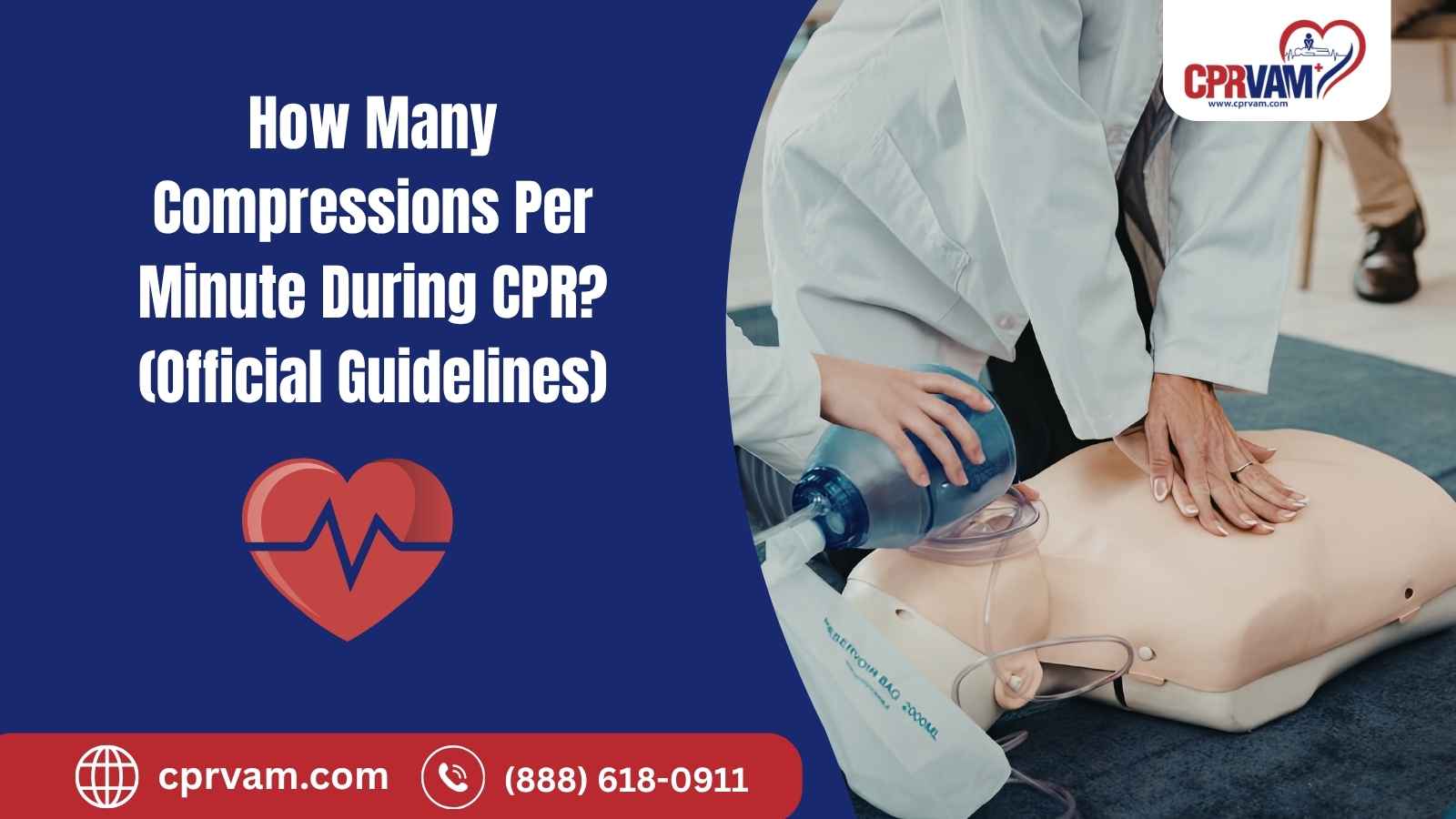
The recommended CPR compression rate is 100-120 compressions per minute. The American Heart Association (AHA) recommends this rate for adult, child, and infant CPR, with compression depth and technique adjusted based on the person’s age and size.
Effective CPR involves more than maintaining a specific pace. Rescuers should focus on allowing complete chest recoil, maintaining proper hand positioning, and limiting unnecessary interruptions. These fundamentals help support blood flow during resuscitation and contribute to consistent, high-quality CPR when every moment matters.
This blog explains the recommended CPR compression rate, why proper rhythm matters, and how depth, recoil, positioning, and minimal interruptions contribute to high-quality CPR.
Why Is the CPR Compression Rate 100–120 Per Minute?
The 100–120 compressions-per-minute rate gives rescuers a practical rhythm for delivering effective chest compressions during CPR. This range is recommended by the American Heart Association (AHA) as part of high-quality CPR and helps maintain blood flow during cardiac arrest.
During cardiac arrest, the heart cannot pump blood normally. Chest compressions temporarily help move blood to the brain and other vital organs. Maintaining the recommended rhythm supports circulation while giving rescuers a clear, consistent pace to follow.
Why does the rate matter? Compressions that are too slow may reduce blood flow, while compressing too quickly can make it difficult to achieve adequate depth and allow complete chest recoil. Staying within the recommended range helps balance these essential elements.
Key Points to Remember
- Aim for 100-120 compressions per minute.
- Maintain a steady, consistent rhythm.
- Allow the chest to fully recoil after each compression.
- Minimize unnecessary interruptions.
- Combine the correct rate with appropriate depth, recoil, positioning, and technique.
How Deep Should CPR Compressions Be?
Compression depth matters just as much as maintaining the right CPR rhythm. For adults, the AHA recommends compressing the chest at least 2 inches (5 cm) deep, while avoiding excessive depth. For children and infants, the recommended depth is about one-third of the chest’s depth.
The right depth helps chest compressions effectively move blood during CPR. Because depth varies by age and body size, rescuers should use the appropriate technique for the person receiving CPR. Aim for effective compressions while allowing the chest to fully recoil after each one.
What Is the CPR Compression-to-Breath Ratio?
give before providing rescue breaths. For conventional CPR, a single rescuer typically follows a 30:2 ratio, with 30 chest compressions followed by 2 rescue breaths. After the breaths, resume compressions promptly to limit interruptions.
For adults experiencing sudden cardiac arrest, Hands-Only CPR is an alternative for bystanders who are unwilling or unable to provide rescue breaths. Instead of giving breaths, the rescuer performs continuous chest compressions at 100 to 120 compressions per minute while waiting for emergency medical assistance.
Does the CPR Compression Rate Differ for Adults, Children, and Infants?
The recommended CPR compression rate is 100 to 120 compressions per minute for adults, children, and infants. What changes with age is the compression depth and technique. Using the right approach for the person’s age and size helps make chest compressions effective during cardiac arrest.
Compare American Heart Association CPR Compression Rate and Depth by Age Group:
Age Group | Compression Rate | Recommended Compression Depth |
Adults | 100 to 120 per minute | At least 2 inches (5 cm) |
Children | 100 to 120 per minute | At least one-third of chest depth, approximately 2 inches (5 cm) |
Infants | 100 to 120 per minute | At least one-third of chest depth, approximately 1.5 inches (4 cm) |
The compression rate stays consistent across these age groups, but hand placement and compression technique can vary. For infants and children, rescuers should use an age-appropriate technique while allowing the chest to fully recoil after each compression.
Common CPR Compression Mistakes and How to Avoid Them
Knowing the recommended 100 to 120 compressions per minute is important, but CPR quality depends on more than keeping the right pace. Rescuers can make simple mistakes that reduce the effectiveness of compressions. Recognizing these common errors can help you maintain proper rhythm, depth, recoil, hand position, and minimize interruptions.
Here are the common compression mistakes and how to solve them:
1. Compressing Too Slowly
Fatigue, uncertainty, or losing the rhythm can cause a rescuer to slow down. This may reduce the effectiveness of chest compressions.
How to Do It Better: Keep a steady rhythm and aim for 100 to 120 compressions per minute.
2. Compressing Too Quickly
Pushing faster than recommended can make it harder to achieve the right compression depth and allow complete chest recoil.
Best Practice: Stay within the 100 to 120 per minute range instead of trying to compress as fast as possible.
3. Not Allowing Full Chest Recoil
Leaning on the chest between compressions can prevent it from returning fully to its normal position. Complete recoil helps support effective CPR.
What to Do Instead: Release pressure after each compression while keeping your hands in the correct position.
4. Using Incorrect Hand Placement
Placing the hands incorrectly can affect compression effectiveness and make it harder to maintain proper technique.
Tips for Better CPR: Use the recommended hand or finger position based on the person’s age and the CPR technique being performed.
5. Taking Long Interruptions
Long pauses between compressions reduce the time spent delivering chest compressions. Unnecessary interruptions can affect overall CPR quality.
How to Maintain Proper Technique: Keep pauses as short as possible, including when changing rescuers or using an AED.
How to Maintain 100 to 120 Compressions Per Minute
Keeping a steady CPR rhythm can be challenging during an emergency, especially when you have limited hands-on experience. Regular CPR practice helps you build the rhythm and technique needed to maintain 100 to 120 compressions per minute with greater consistency.
During CPR training, learners can practice the correct compression rate with:
- CPR manikins for hands-on practice
- Instructor guidance to correct technique
- Compression feedback devices to monitor performance
- Voice-assisted feedback for real-time guidance
- Practice scenarios to build confidence in realistic situations
A consistent rhythm helps you stay within the recommended 100 to 120 compressions per minute range while maintaining proper compression technique.
Hands-on CPR training also allows learners to receive feedback on compression rate, depth, chest recoil, and hand position. This practical experience can make it easier to apply CPR skills correctly when responding to a real emergency.
Learn and Practice CPR With Hands-On Training
Knowing the correct CPR compression rate is important, but effective CPR takes practice. Hands-on training allows you to practice the right rhythm, compression depth, chest recoil, hand placement, and other essential skills with guidance from a qualified instructor. Regular practice can help you feel more confident and prepared to respond when an emergency happens.
Build practical CPR skills with AHA CPR training at CPR VAM. Get hands-on practice, instructor guidance, and feedback to strengthen your CPR technique. Explore BLS, ACLS, PALS, and Heartsaver CPR courses and choose the training that fits your needs.
FAQs
1. Is 100 Compressions Per Minute Enough for CPR?
Yes. 100 compressions per minute is the lower end of the recommended 100 to 120 compressions per minute range. Focus on maintaining a steady rhythm while also using proper depth and allowing complete chest recoil.
2. Is 120 Compressions Per Minute Too Fast?
No. 120 compressions per minute is the upper end of the recommended CPR compression rate. Stay within the recommended range while maintaining proper compression depth and allowing the chest to fully recoil.
3. How Many Compressions Are in 10 Seconds of CPR?
At a rate of 100 to 120 compressions per minute, you would perform approximately 17 to 20 compressions in 10 seconds. This can help you understand the rhythm needed to maintain the recommended compression rate.
4. Does the CPR Rate Change for Children and Infants?
The recommended compression rate generally remains 100 to 120 compressions per minute for adults, children, and infants. However, compression depth, hand placement, and technique should be adjusted based on the person’s age and size.
5. Can You Perform CPR Without Rescue Breaths?
Yes. Compression-only CPR can be performed by bystanders who are unwilling or unable to provide rescue breaths, using continuous chest compressions until emergency help arrives.