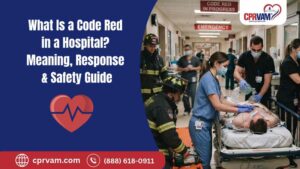


Imagine you are visiting a hospital when you suddenly hear an announcement: “Code Red, Second Floor.” You may wonder what is happening. Is someone seriously ill? Is there a fire? Should you leave the building?
A Code Red in a hospital is an emergency alert that usually indicates a fire or suspected fire inside the healthcare facility. It warns doctors, nurses, security teams, and other hospital staff to follow fire safety procedures and protect patients, visitors, and employees.
Unlike an ordinary building, a hospital has patients who may be unable to walk, breathe without medical support, or move without assistance. This makes a fire emergency more challenging and requires quick teamwork.
This blog explains what a Code Red means in a hospital, why it is activated, how hospital staff respond, what the RACE and PASS methods mean, and what patients and visitors should do during this emergency.
Let’s start with the basics.
What Is a Code Red in a Hospital?
A Code Red in a hospital is an emergency alert that usually signals a fire, smoke, or suspected fire inside the hospital. It activates the hospital’s fire response plan and alerts trained staff to take immediate action.
For example, if a nurse notices smoke coming from a patient’s room, the hospital may announce Code Red for that location. The fire response team then follows the hospital’s emergency procedures to control the situation and protect everyone nearby.
A Code Red may be activated when someone:
- Sees flames or smoke inside the hospital.
- Smells burning materials or unusual smoke.
- Notices of a possible electrical fire.
- Finds a room, door, or piece of equipment becoming unusually hot.
- Reports another possible fire hazard that needs immediate attention.
The exact activation process depends on the hospital’s fire safety policy.
In simple words: Code Red means the hospital has identified a possible fire emergency and needs an immediate, organized response.
It is important to understand that Code Red does not usually mean a heart attack, cardiac arrest, or active shooter situation. Those emergencies may have separate alerts, depending on the hospital.
Why Is Code Red Important in Hospitals?
Fire emergencies can be dangerous in any building, but they create additional risks inside hospitals.
Unlike people in offices or shopping centers, many hospital patients cannot leave a building on their own. Some may be recovering from surgery, using oxygen, connected to medical equipment, or receiving intensive care.
A fire can also affect important hospital services, including:
- Intensive care units (ICUs)
- Emergency departments
- Operating rooms
- Neonatal intensive care units (NICUs)
- Medical laboratories
- Patient wards
- Medical equipment and oxygen supply systems
This is why hospitals need clear fire emergency plans.
A Code Red helps hospital teams:
Identify the Emergency Quickly
Staff receive an alert that a fire or possible fire has been reported. They can begin the correct safety procedures without wasting time.Protect Patients and Visitors
The response team identifies people in immediate danger and helps move them to a safer location when necessary.Prevent the Fire from Spreading
Closing doors and following fire containment procedures can help limit the movement of smoke and flames.Coordinate Emergency Teams
Nurses, doctors, security officers, maintenance workers, and firefighters work together according to their assigned roles.Maintain Essential Patient Care
Hospital staff must consider patients who need oxygen, medication, monitoring, or other medical support during an emergency.
The main goal of Code Red is simple: protect human lives, limit damage, and restore a safe hospital environment.
What Happens When a Code Red Is Announced in a Hospital?
When a Code Red is announced, hospital staff follow an established emergency response plan. The exact process may differ depending on the hospital, the location of the fire, and the level of danger. However
1. The Fire or Smoke Is Reported
The process usually begins when someone notices smoke, flames, or signs of a possible fire.
This person reports the situation using the hospital’s emergency number, fire alarm system, or other approved reporting method.
The report should include the exact location, such as the building, floor, department, and room number.
2. The Emergency Alert Is Activated
The hospital activates its fire alert system according to its emergency policy. This may involve an overhead announcement, alarm, pager, mobile notification, or another communication system.
For example:
“Code Red, Medical Ward, Second Floor.”
This announcement helps the appropriate response teams identify where the emergency is happening.
3. Hospital Staff Follow Fire Safety Procedures
Trained staff begin responding based on their assigned responsibilities. Some team members may help patients in immediate danger, while others activate alarms, close doors, contact emergency services, or prepare to relocate patients.
Staff also consider patients who need special assistance, including those using ventilators, oxygen, or other life-support equipment.
4. The Fire Area Is Contained
Hospital staff may close doors and fire-rated barriers to help prevent smoke and flames from spreading.
In many hospitals, patients are moved horizontally to a safer area on the same floor rather than immediately being taken outside. This is known as horizontal evacuation or relocation.
5. The Fire Response Team Takes Action
Trained and authorized personnel assess the situation and determine the safest response. If the fire is small and conditions allow, trained staff may use an appropriate fire extinguisher.
If the fire is spreading or conditions are unsafe, they leave the area and follow evacuation procedures. Firefighters may also be called to control the situation.
6. Patients and Staff Are Moved if Necessary
If the fire threatens a particular area, hospital staff may move patients to a safer location.
The movement may involve hospital beds, wheelchairs, stretchers, or other approved equipment. The response team prioritizes patient safety and continuity of care.
7. The Hospital Declares an All-Clear
A Code Red does not end simply because the smoke disappears or the flames are no longer visible. Authorized personnel must assess the situation and confirm that the affected area is safe.
The hospital then communicates the all-clear message according to its emergency policy. Normal hospital activities can resume when it is safe to do so.
What Is the RACE Protocol in Hospital Fire Emergencies?
The RACE protocol is a simple fire safety method that helps healthcare workers remember the main actions to take when they discover a fire.
RACE stands for:
- R – Rescue
- A – Alarm
- C – Confine
- E – Extinguish or Evacuate
Let’s understand each step.
R – Rescue
The first priority is to rescue or move anyone who is in immediate danger, if it can be done safely.
For example, if a patient is in a room where a fire has started, trained staff should help move that patient away from the danger.
However, staff should never put themselves at serious risk while attempting a rescue.
A – Alarm
The next step is to activate the fire alarm and report the emergency through the hospital’s approved communication system.
This alerts other staff members and helps bring the fire response team to the location.
The person reporting the fire should provide clear information about where it is happening.
C – Confine
The third step is to contain the fire and limit the spread of smoke.
Staff may close doors and follow the hospital’s fire compartment procedures.
Closing doors can help prevent smoke and flames from moving into nearby patient care areas.
E – Extinguish or Evacuate
The final step is to extinguish a small fire if it is safe and the person is trained to use the correct fire extinguisher.
If the fire is too large, smoke is spreading, or the situation becomes dangerous, staff should evacuate or relocate people according to the emergency plan.
Remember: RACE is a general fire response guide. Hospital staff must always follow their facility’s official emergency procedures.
What Is the PASS Method for Using a Fire Extinguisher?
PASS is another important fire safety method. It explains how to operate a portable fire extinguisher.
PASS stands for:
Letter | Meaning | What to Do |
P | Pull | Pull the safety pin. |
A | Aim | Aim the nozzle at the base of the fire. |
S | Squeeze | Squeeze the handle to release the extinguishing agent. |
S | Sweep | Sweep from side to side across the base of the flames. |
For example, if a trained staff member encounters a small fire in a suitable location, they may use the PASS method to operate an appropriate fire extinguisher.
However, using a fire extinguisher is not always safe. A person should never attempt to fight a spreading fire or enter a smoke-filled area. They must have a clear escape route and the proper training.
If there is any doubt about safety, leave the area and follow the emergency evacuation plan.
How Do Hospitals Evacuate Patients During a Code Red?
Evacuating a hospital during a fire emergency is more complicated than evacuating an ordinary building. Some patients can walk independently, while others need assistance or continuous medical support.
For this reason, hospitals generally plan evacuation based on patient needs and the location of the emergency.
Here are some common ways patients may be relocated:
1. Horizontal Evacuation
Horizontal evacuation means moving patients from one area to another on the same floor.
For example, patients may be moved through a fire-rated door into a safer section of the hospital.
This method is commonly used because it allows patients to remain within a protected area while the fire response team handles the emergency.
2. Bed Evacuation
Patients who cannot walk may be moved using their hospital beds when the route and conditions allow.
This helps reduce unnecessary movement and may allow essential monitoring equipment to remain with the patient.
3. Wheelchair or Stretcher Evacuation
Patients who can sit or need additional support may be moved using wheelchairs or stretchers.
Hospital staff select the safest method based on the patient’s condition.
4. Emergency Evacuation Equipment
Some healthcare facilities use special evacuation devices to move patients who cannot walk.
These may include evacuation chairs, rescue sheets, or approved patient transport equipment.
The equipment used depends on the hospital’s design, staff training, and emergency plan.
5. Vertical Evacuation
Vertical evacuation means moving people between floors, usually by using designated stairways and approved evacuation methods.
It may be necessary when the fire or smoke makes the current floor unsafe. Elevators should not be used during a fire unless emergency responders or the facility’s approved emergency procedure specifically authorize their use.
Important: Hospitals do not always evacuate the entire building during a Code Red. In many cases, staff first move patients away from the affected area and keep them in a protected section of the building.
What Should Patients and Visitors Do During a Code Red?
Hearing Code Red can feel frightening, especially if you do not know what is happening.
However, staying calm and following instructions can help keep everyone safe. If you are a patient, visitor, or family member in a hospital during a Code Red, follow these guidelines:
Stay Calm
Try not to panic. Hospital staff are trained to respond to emergencies and will provide instructions.Follow Staff Instructions
Listen carefully to nurses, doctors, security personnel, and emergency responders. They will tell you whether to remain in a safe area or move to another location.Do Not Enter the Affected Area
Avoid going toward the fire, smoke, or emergency response team. This can put you in danger and make it harder for staff to respond.Do Not Use Elevators
Avoid elevators during a fire emergency unless emergency personnel specifically instruct you otherwise. Use only the evacuation route directed by hospital staff.Do Not Block Hallways
Keep corridors, stairways, and emergency exits clear so that hospital staff can move patients and equipment.Help Others Only When It Is Safe
If someone nearby needs assistance, alert hospital staff rather than attempting a risky rescue.Wait for the All-Clear Announcement
Do not return to the affected area until authorized hospital personnel confirm that it is safe.
Following these simple steps can help protect you and the people around you.
What Is the Difference Between Code Red and Other Hospital Emergency Codes?
Hospitals use different emergency codes to communicate different types of urgent situations. Code Red is generally associated with fire, while other codes may refer to medical emergencies, security threats, hazardous material incidents, or disasters.
Here are some commonly used hospital emergency codes:
Hospital Code | Common Meaning | Emergency Response |
Code Red | Fire or suspected fire | Activates the hospital’s fire emergency response plan. |
Code Blue | Cardiac or respiratory arrest | Alerts the medical team to provide immediate CPR, use an AED or defibrillator when indicated, and deliver advanced life support. |
Code Pink | Infant or child abduction | Activates security procedures to protect and locate the missing child. |
Code Orange | Hazardous material spill or exposure | Initiates procedures to contain hazardous substances and protect staff and patients. |
Code Yellow | Disaster or mass casualty incident | Prepares the hospital to manage a large number of casualties. |
Code Silver | Weapon-related threat or active shooter | Activates emergency security and threat response procedures. |
Code Black | Bomb threat | Initiates bomb threat assessment and security procedures. |
Code Gray | Security threat or aggressive individual | Alerts security personnel to manage a potential safety threat. |
Code Green | Evacuation in some hospitals | Signals the need to relocate or evacuate patients and staff. |
Code White | Violent or aggressive individual in some hospitals | Calls trained personnel to manage the situation safely. |
Important: These are common examples, not a universal list. The meaning of a color code can change between hospitals, states, and countries. Always follow the emergency code definitions used by your healthcare facility.
Are Hospital Emergency Codes the Same Everywhere
No. Hospital emergency codes are not exactly the same everywhere. Although many hospitals use Code Red to indicate a fire, other emergency codes may have different meanings depending on the country, region, or healthcare facility.
For example, one hospital may use Code Gray for a violent person, while another may use Code White for the same situation.
Research published in the International Journal of Emergency Medicine found significant differences in the meanings of emergency color codes across hospitals in Riyadh. Code Red was more consistent than several other colors, but differences still existed.
Some hospitals also use plain-language announcements instead of color codes.
For example, a hospital may announce “Fire Emergency, Third Floor” rather than simply saying “Code Red.”
The purpose of these systems is to make emergency communication clear and help staff respond quickly.
Whether a hospital uses color codes or plain-language alerts, its employees must understand the facility’s official emergency procedures.
Who Is Responsible for Responding to a Code Red?
A Code Red is a team-based emergency. Different hospital departments have different responsibilities. The exact duties depend on the hospital’s emergency plan.
Here is how different teams may contribute:
1. Nurses
Nurses play an important role in protecting patients during a fire emergency.
Their responsibilities may include:
- Identifying patients who need immediate assistance.
- Helping relocate patients when instructed.
- Supporting patients who need medical equipment.
- Communicating patient conditions to the response team.
- Maintaining patient safety during relocation.
2. Doctors
Doctors help assess patient needs and support medical care during an emergency.
They may also help determine which patients require urgent medical attention or special support during relocation.
3. Security Personnel
Security staff may help control access to affected areas, keep emergency routes clear, and guide people away from danger.
4. Maintenance and Facility Teams
Maintenance personnel help with building safety systems and may assist authorized responders with electrical, ventilation, or other building-related issues.
5. Hospital Administration
Hospital administrators coordinate emergency communication, staffing, resources, and other operational needs.
6. Firefighters and Emergency Responders
Firefighters assess the fire, control the flames, and determine when the affected area is safe.
Every team member has a role. Effective communication and coordination help prevent confusion during a Code Red.
How Do Hospitals Prepare Staff for Code Red Emergencies?
Hospitals cannot wait until a fire happens to decide what to do. They prepare staff through regular fire safety training, emergency drills, and practical exercises.
The main purpose is to ensure that employees understand their responsibilities and can respond quickly.
Common training activities include:
Fire Safety Training
Staff learn how to identify fire hazards, report smoke or flames, and follow emergency procedures.RACE and PASS Training
Employees learn the basic steps of the RACE protocol and how the PASS method works.Emergency Evacuation Drills
Hospitals conduct drills to help staff understand evacuation routes, patient relocation methods, and their assigned duties.Patient Handling Training
Nurses and other healthcare workers learn how to move patients safely during an emergency.Team Communication Exercises
Staff practice communicating with other departments and emergency response teams.Equipment Familiarization
Employees learn where fire alarms, fire extinguishers, emergency exits, and other safety equipment are located.
Regular training helps build confidence, reduce confusion, and improve hospital emergency preparedness.
Why Is Code Red Training Important for Nurses and Healthcare Students?
Nurses are often among the first healthcare professionals to identify an emergency in a patient care area.
They also spend significant time with patients, which makes their role important during fire safety incidents.
Understanding Code Red helps nursing students and healthcare workers learn how to protect patients and follow hospital emergency procedures.
It also builds important workplace skills, including:
- Quick decision-making.
- Emergency communication.
- Patient safety awareness.
- Teamwork and coordination.
- Safe patient handling.
- Understanding fire safety equipment.
- Following hospital emergency policies.
For nursing students, learning about hospital emergency codes is an important part of understanding clinical responsibilities.
However, knowing what Code Red means is only the first step. Healthcare workers must also complete the practical training required by their hospital and professional role.
How Can Hospitals Improve Fire Safety and Code Red Preparedness?
Preventing fires is just as important as responding to them. Hospitals can improve fire safety by maintaining their buildings, checking safety equipment, and training employees.
Some important measures include:
- Inspecting electrical systems and medical equipment regularly.
- Keeping emergency exits and hallways clear.
- Testing fire alarms and sprinkler systems.
- Providing suitable fire extinguishers.
- Maintaining fire doors and smoke barriers.
- Following safe oxygen storage and handling procedures.
- Conducting regular emergency drills.
- Training new employees on fire safety procedures.
- Reviewing emergency plans after drills or actual incidents.
Hospitals should also make sure that staff members know whom to contact when they notice a possible fire hazard. A strong fire safety program focuses on prevention, preparation, and a quick response.
Stay Prepared and Follow Safety Instructions During a Hospital Code Red
A Code Red in a hospital is an emergency alert that usually indicates a fire, smoke, or suspected fire. It helps hospital teams respond quickly, protect patients, and prevent the fire from spreading. Understanding the RACE protocol and PASS method, along with regular training and emergency drills, helps healthcare workers stay prepared.
Keeping a hospital safe is a shared responsibility. Nurses, doctors, security officers, and other staff members all play important roles during a Code Red. If you are a patient or visitor, stay calm, avoid the affected area, and follow hospital staff instructions. Remember, quick action, clear communication, and teamwork can help save lives.
To build our confidence in handling medical emergencies, we can gain practical skills through training at the CPR VAM Training Center. We offer courses such as BLS, ACLS, PALS and Heartsaver CPR AED and Heartsaver First Aid CPR AED training to help us develop essential life-saving skills and respond effectively when every second matters.
FAQs About Code Red in a Hospital
1. Is Code Red a Medical Emergency?
No. Code Red generally refers to a fire emergency, not a medical emergency. A cardiac arrest or similar life-threatening medical situation is commonly announced as Code Blue, although hospital codes can vary.
2. What Causes a Code Red in a Hospital?
A Code Red may be activated when someone discovers flames, smoke, a burning smell, or another sign of a possible fire inside the hospital. The exact activation rules depend on the hospital’s fire safety policy.
3. What Should Nurses Do During Code Red?
Nurses should follow their hospital’s fire emergency plan. Depending on their assigned role, they may help patients in immediate danger, activate the alarm, close doors, communicate patient needs, and assist with safe patient relocation.
4. Does Code Red Mean the Entire Hospital Must be Evacuated?
No. A Code Red does not always require a full hospital evacuation. Depending on the location and severity of the fire, patients may first be moved to a safer section of the same floor.
5. Can Patients Use Elevators During Code Red?
Patients and visitors should not use elevators during a fire emergency unless emergency personnel specifically direct them to do so. They should follow the hospital’s approved evacuation instructions.
6. What is the Difference Between Code Red and Code Blue?
Code Red generally indicates a fire or suspected fire, while Code Blue commonly indicates a serious medical emergency requiring immediate intervention, often cardiac or respiratory resuscitation.
7. Are Hospital Emergency Codes universal?
No. Hospital emergency codes can differ between healthcare facilities and countries. Staff members should always follow the official emergency code system used by their hospital.
8. How Does a Code Red End?
A Code Red ends when authorized personnel have assessed the situation, confirmed that the affected area is safe, and issued an official all-clear message according to hospital policy.
9. Is Code Red Training Mandatory for Hospital Employees?
Training requirements depend on local regulations, hospital policies, and job responsibilities. Hospitals generally provide fire safety and emergency preparedness training to employees, with additional practical training for designated response teams.