



When a person becomes unresponsive and is not breathing normally, CPR is often the immediate response. But can you do CPR on a DNR patient? If a valid Do Not Resuscitate (DNR) or DNACPR order applies to the emergency, CPR should not be performed. The American Heart Association (AHA) emphasizes respecting patient autonomy and documented preferences when making resuscitation decisions.
A DNR does not mean that a person wants all medical care to stop. It specifically addresses whether CPR or other resuscitation should be attempted if the heart stops or the person stops breathing. Understanding what a DNR covers helps families, bystanders, caregivers, and healthcare professionals respond appropriately while respecting the patient’s documented wishes.
This blog explains DNR orders, CPR decisions, when resuscitation should be withheld, how DNRs differ from other directives, and what bystanders and healthcare professionals should do during emergencies.
What Is a DNR?
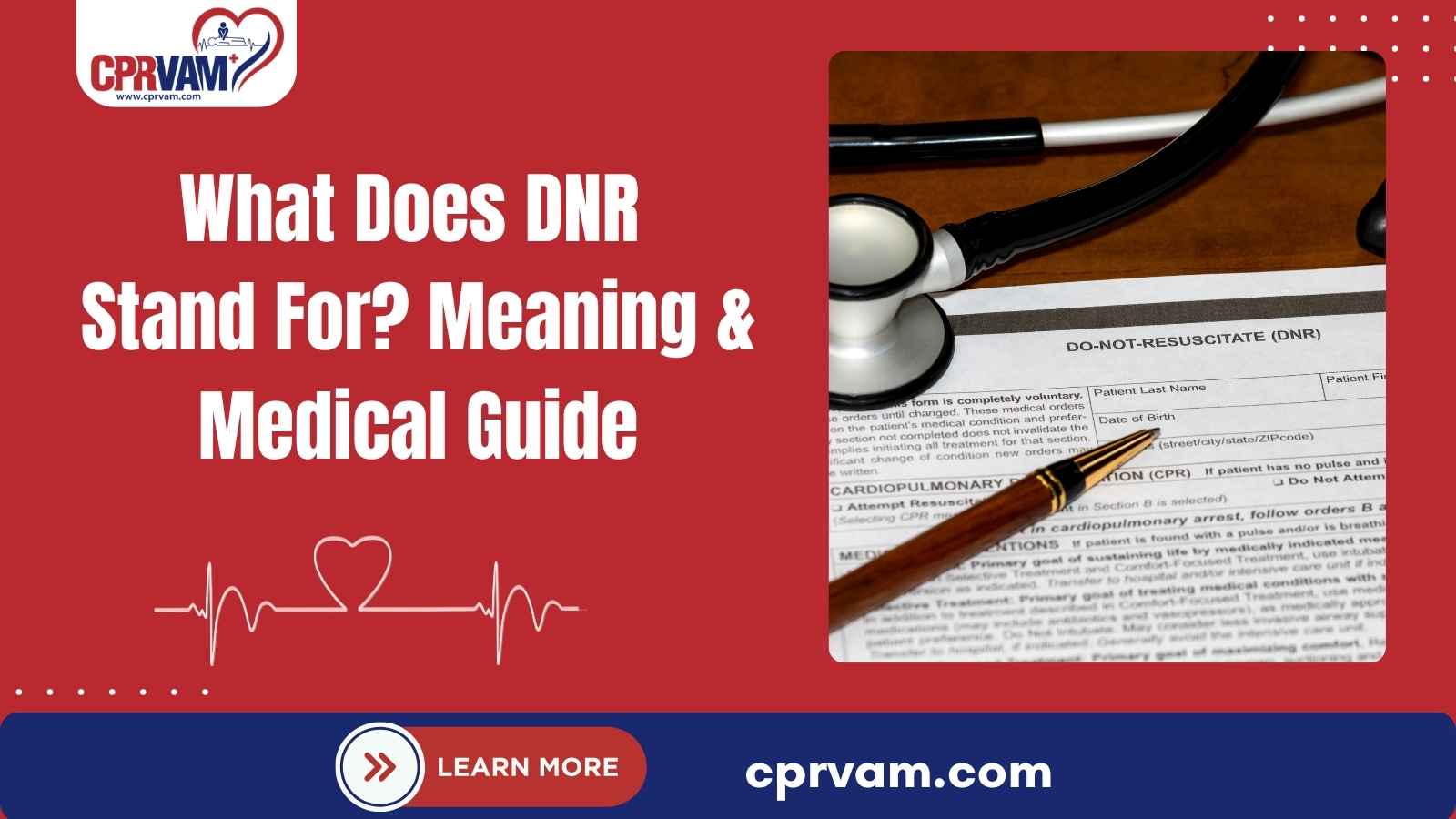
A Do Not Resuscitate (DNR) order is a medical order that tells healthcare professionals not to perform CPR if a person’s heart stops beating or they stop breathing. It reflects the patient’s wishes about resuscitation during cardiac or respiratory arrest.
You may also see related terms, such as:
- DNAR: Do Not Attempt Resuscitation
- DNACPR: Do Not Attempt Cardiopulmonary Resuscitation
- DNR: Do Not Resuscitate
The terminology can vary by healthcare system and jurisdiction, but these orders generally communicate that CPR should not be attempted during cardiopulmonary arrest. The American Heart Association (AHA) supports advance-care planning to ensure individual medical choices are honored in emergency settings.
Why Would Someone Have a DNR?
A person may choose a Do Not Resuscitate (DNR) order as part of advance-care planning if they do not want CPR when their heart stops or they stop breathing. The decision reflects their personal values, healthcare preferences, and goals of care.
A person may consider a DNR because of:
- Personal values and healthcare preferences
- Their goals for medical care
- A serious or advanced illness
- Conversations with a doctor or healthcare professional
- A preference to avoid unwanted CPR or resuscitation
A DNR reflects the patient’s preferences about CPR and resuscitation. Healthcare professionals should not assume that someone wants a DNR based only on age, illness, disability, or prognosis. AHA guidelines reinforce that resuscitation decisions must center on individual patient preferences rather than clinical assumptions.
Does a DNR Mean No Medical Treatment?
No. A DNR does not mean that all medical treatment stops. A Do Not Resuscitate (DNR) order specifically tells healthcare professionals not to perform CPR or other resuscitation efforts if a person’s heart stops or they stop breathing. It does not automatically limit other appropriate medical care.
Depending on the patient’s wishes and other medical orders, a person with a DNR may still receive:
- Pain and symptom management
- Oxygen and breathing support
- Antibiotics
- IV fluids or medications
- Treatment for injuries or other illnesses
- Comfort-focused or supportive care
The American Medical Association (AMA) explains that a DNR order addresses resuscitation and does not automatically prevent other medically appropriate treatments.
The key distinction is simple: a DNR means do not resuscitate and does not mean that all medical treatment should stop.
Can You Perform CPR on a DNR Patient?
This is the key question when someone experiences cardiac arrest and has a Do Not Resuscitate (DNR) order.
If a valid DNR or DNACPR order has been confirmed and applies to the current situation, CPR should not be performed or continued according to the applicable medical protocol. The decision should follow the patient’s documented wishes and the requirements of the local healthcare system.
However, an emergency may not leave enough time to immediately find or verify a DNR order. What happens next depends on whether healthcare professionals can confirm the order.
If the DNR Is Confirmed
If authorized healthcare professionals can verify that a valid DNR or DNACPR order applies to the patient and the current emergency, they should follow the order.
This generally means they should not start CPR or should stop resuscitation if they have already begun, following the applicable emergency and medical protocols.
If the DNR Can Not Be Confirmed
If a person experiences cardiac arrest and responders cannot immediately verify a DNR, they may begin resuscitation while they clarify the patient’s wishes and check available documentation. The American Heart Association (AHA) notes that requirements for DNR documentation and emergency decisions can vary by jurisdiction and healthcare system.
The important point is simple: Do not assume that a DNR exists, and do not assume that it does not. When possible, verify the order and follow the applicable protocol.
When Should CPR Be Withheld?
Healthcare professionals should withhold CPR when a valid DNR or DNACPR order clearly reflects the patient’s current wishes and applies to the medical situation. The decision should focus on the patient’s documented preferences rather than age, illness, disability, or assumptions about their chances of recovery.
When reviewing a DNR order, healthcare professionals may consider:
- Confirm that the order remains current
- Check if the patient has changed or revoked their wishes
- Review any other advance-care documents that may affect the decision
- Determine whether the order applies to the current clinical circumstances
- Consider applicable local laws, facility policies, and emergency protocols
If CPR has already started and healthcare professionals later confirm an applicable DNR, they should follow the appropriate process for discontinuing resuscitation. The American Medical Association (AMA) states that the attending physician should direct the stopping of resuscitative efforts when a DNR order becomes known after resuscitation has begun.
What If You Cannot Confirm the DNR?
If you cannot immediately confirm whether a person has a Do Not Resuscitate (DNR) order, do not delay emergency care while searching for documentation. Cardiac arrest is time-sensitive, and every minute can matter.
If the DNR cannot be confirmed right away:
- Call 911 or activate emergency medical services.
- Follow the emergency dispatcher’s instructions.
- Tell the dispatcher or EMS team if a family member, caregiver, or another person says the patient has a DNR.
- Let trained healthcare professionals verify the DNR according to local laws and emergency protocols.
A family member may know that a DNR exists, but whether their statement is enough to withhold CPR depends on local laws and emergency protocols. The AHA recognizes that DNR verification can vary by setting and jurisdiction. Share any information about the patient’s wishes with the emergency team and let trained professionals determine how the DNR should be handled.
What Should Healthcare Professionals Do With a DNR Order?
Healthcare professionals have additional responsibilities because they may have access to the patient’s medical records and authorized treatment orders.
Depending on the situation, they may need to:
- Review the patient’s medical record.
- Verify the DNR or DNACPR order.
- Check for POLST or similar medical orders.
- Confirm that the order applies to the current situation.
- Follow facility policies and EMS protocols.
- Communicate with the appropriate care team.
- Document the decision and actions taken.
The American Heart Association (AHA) recommends clear protocols for decisions about withholding or stopping CPR because these situations can involve important clinical and ethical considerations.
How Can a DNR Be Verified?
A Do Not Resuscitate (DNR) order can be verified through medical records, POLST forms, out-of-hospital documentation, or authorized electronic systems. The exact process depends on the healthcare setting, local laws, and jurisdiction. Healthcare professionals use available documentation to confirm the patient’s current resuscitation preferences.
Here are the ways to verify a DNR order:
1. Medical Records
In a hospital, nursing facility, or other healthcare setting, a DNR or DNAR order may be documented in the patient’s medical record. Healthcare professionals can review the record to confirm whether the order is current and applies to the patient’s present medical situation.
2. POLST or Similar Medical Orders
A POLST (Physician Orders for Life-Sustaining Treatment) or a state-specific equivalent can document medical orders for CPR and other life-sustaining treatments. These forms are designed to communicate a patient’s treatment preferences across healthcare settings. The American Heart Association (AHA) recognizes POLST as an important part of advance-care planning.
3. Out-of-Hospital DNR Documentation
Some jurisdictions use specific out-of-hospital DNR forms, cards, bracelets, or other identification methods to help emergency medical services (EMS) recognize a patient’s resuscitation preferences. These systems can help responders identify applicable orders during an emergency, but the requirements for valid documentation vary by state and jurisdiction.
4. Electronic Medical Information
Depending on the healthcare system, DNR information may also be available through electronic health records (EHRs) or authorized medical-information systems. Healthcare professionals may use these systems to review documented treatment preferences when available. Access and verification procedures can vary depending on the healthcare setting and applicable privacy and legal requirements.
The legal status of a DNR form, bracelet, POLST, electronic record, or verbal statement can vary by jurisdiction. Healthcare professionals should follow applicable laws, facility policies, and EMS protocols when verifying and applying a DNR order.
DNR vs. Living Will vs. POLST: What’s the Difference?
DNRs, living wills, advance directives, and POLST forms can sound similar, but they are not the same. Each serves a different purpose, so knowing the difference can make healthcare decisions easier to understand.
Here are the key differences between a DNR, Living Will, and POLST:
Document | Main Purpose | Is It a Medical Order? |
DNR / DNAR | Instructs medical staff not to attempt CPR if the heart or breathing stops. | Yes. Signed by a physician/authorized clinician. |
Living Will | Outlines preferences for end-of-life care and life support in future scenarios. | No. It is a legal directive, not an immediate medical order. |
Advance Directive | Broader document specifying care preferences and/or naming a healthcare proxy. | No. Legal document guiding future decisions. |
POLST / MOLST | Translates patient wishes into actionable medical orders across care settings. | Yes. Signed by a clinician for current, actionable care. |
A living will or advance directive can include a person’s wishes about CPR, but it is not always the same as a DNR medical order. The specific rules and terminology can also vary by state and healthcare system.
Can a DNR Be Changed or Revoked?
Yes. A DNR can generally be changed or revoked if a person’s healthcare wishes change. Because treatment preferences can change over time, it is important to review advance-care plans and make sure the current decision is properly documented.
If a person decides to change or revoke a DNR, they should discuss the change with their healthcare professional. The appropriate documentation should then be updated according to local requirements.
Keeping the DNR information current helps healthcare professionals and family members understand the person’s wishes and reduces confusion during a medical emergency.
Common Misconceptions About DNR Orders
DNR orders are often misunderstood, particularly regarding CPR, medical treatment, and a person’s overall care. Here are some common misconceptions about what a DNR does and does not mean.
1. “A DNR Means No Medical Treatment”
Not necessarily. A DNR primarily tells healthcare professionals not to perform CPR if a person’s heart stops or they stop breathing. Other appropriate treatments, such as medication, oxygen, pain management, or treatment for illness, may still be provided based on the patient’s wishes and medical needs.
2. “A DNR Is the Same as a Living Will”
No. A DNR is a medical order that specifically addresses CPR and resuscitation. A living will generally explains a person’s preferences about certain medical treatments if they cannot make decisions for themselves. An advance directive can also cover broader healthcare decisions.
3. “Age or Illness Automatically Means Someone Should Have a DNR”
No. A person’s age, disability, or illness alone does not create a DNR. A DNR should reflect the person’s documented wishes, goals of care, and applicable medical and legal requirements, not assumptions based solely on their health or age.
Understanding what a DNR actually covers can help families, caregivers, bystanders, and healthcare professionals respond appropriately while respecting the patient’s documented healthcare preferences.
Know What a DNR Means Before an Emergency Happens
A DNR order focuses on CPR and resuscitation, not stopping all medical care. Knowing what a DNR means, how it is verified, and what to do when it cannot be confirmed can help you respond appropriately during an emergency. If you are unsure about a patient’s DNR status, call 911, follow the dispatcher’s instructions, and share any available DNR information with EMS so trained professionals can follow the appropriate protocol and respect the patient’s documented wishes.
Understanding DNR orders is one part of being prepared for emergencies. To build practical CPR skills, CPR VAM’s AHA Training Center offers BLS, ACLS, PALS, Heartsaver CPR AED, and Heartsaver First Aid CPR AED classes with hands-on training to help you respond confidently when emergency care is needed.
Frequently Asked Questions About DNR
1. What Happens If CPR Starts Before a DNR Is Found?
If a valid DNR is found after CPR has started, healthcare professionals should verify it and follow the appropriate protocol. If it applies, they can stop resuscitation according to that protocol.
2. Can a Family Member Tell EMS Not to Perform CPR?
It depends on local laws and EMS protocols. A family member may report the patient’s wishes, but EMS professionals will determine how the request should be handled based on the situation and available documentation.
3. Is a DNR the Same as a Living Will?
No. A DNR is a medical order that specifically addresses CPR and resuscitation. A living will or advance directive generally covers broader healthcare wishes when a person cannot make decisions themselves.
4. What Should a Bystander Do If Someone Has a DNR?
If someone is unresponsive and not breathing normally, call 911 and follow the dispatcher’s instructions. If DNR documentation is readily available, share it with the dispatcher or EMS team without delaying emergency care.
5. What If a Family Member Says the Patient Has a DNR?
Tell the dispatcher or EMS team that the family member reports a DNR. Do not decide whether CPR should be withheld yourself. EMS will follow applicable laws, protocols, and available documentation.