

Hands-only CPR is a simple lifesaving technique that uses chest compressions without rescue breaths. It allows bystanders to act quickly when an adult suddenly collapses, becomes unresponsive, and does not breathe normally. These compressions help maintain blood flow to the brain and vital organs until emergency help arrives.
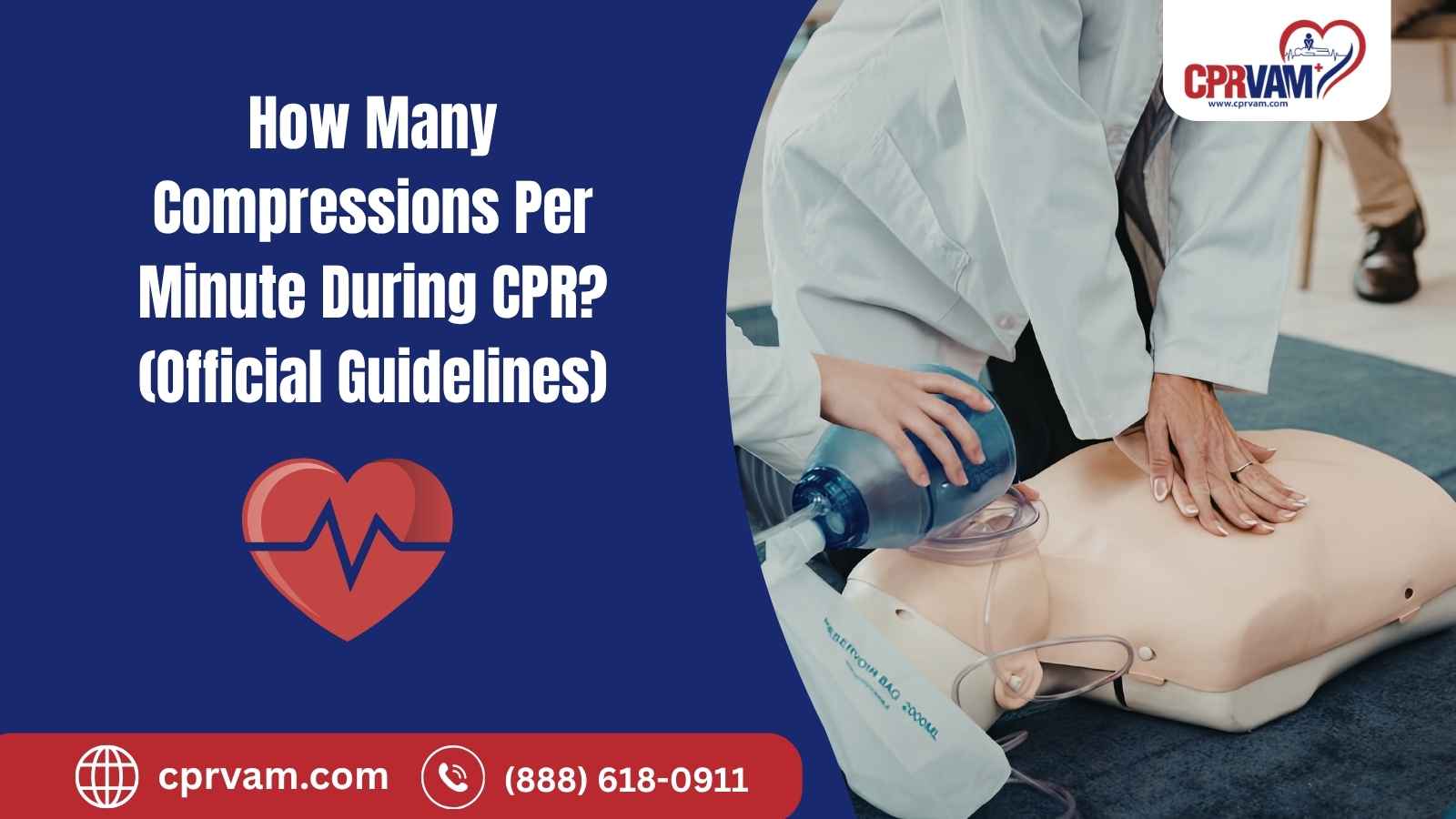
The American Heart Association (AHA) recommends starting CPR immediately when cardiac arrest is suspected. During hands-only CPR, push hard and fast in the center of the chest at 100-120 compressions per minute, allow the chest to fully recoil, minimize interruptions, and use an AED as soon as possible.
This blog explains hands-only CPR, why it matters, when to use it, how to perform effective chest compressions, and how it differs from conventional CPR for different age groups.
What Is Hands-Only CPR?
Hands-only CPR gives bystanders a straightforward way to respond when an adult suddenly collapses from suspected cardiac arrest. Because it does not require rescue breaths, a bystander can focus on starting chest compressions quickly and maintaining them with as few interruptions as possible.
When an adult suddenly collapses, becomes unresponsive, and is not breathing normally, take these two immediate actions:
- Call 911 or have someone call 911
- Push hard and fast in the center of the chest
These actions help maintain circulation until an AED is ready to use or emergency medical responders take over. The American Heart Association (AHA) recommends immediate CPR when cardiac arrest is suspected.
Hands-only CPR is mainly recommended for adults in sudden cardiac arrest and can be particularly helpful when a bystander is untrained or unable or unwilling to provide rescue breaths. Conventional CPR, which combines chest compressions and rescue breaths, may be needed in other situations, including many pediatric cardiac arrests and emergencies such as drowning.
Why Is Hands-Only CPR Important?
Cardiac arrest can happen suddenly, leaving little time to respond. When the heart stops pumping effectively, blood flow to the brain and other vital organs is disrupted. Starting CPR as soon as possible can help maintain circulation while emergency medical services are on the way.
Hands-only CPR is important because it gives bystanders a simple way to take action during a life-threatening emergency:
It Is Easy to Start: Bystanders can begin chest compressions without needing to provide rescue breaths.
It Can Reduce Hesitation: Some people may feel uncomfortable or unsure about giving mouth-to-mouth breaths.
It Encourages Immediate Action: Calling 911 and starting chest compressions can help reduce delays in providing CPR.
It Helps Maintain Blood Flow: Chest compressions help circulate blood to the brain and other vital organs during cardiac arrest.
It Provides Support Until Help Arrives: CPR does not replace emergency medical treatment, but it can help support circulation while professional responders are on the way.
The AHA emphasizes early bystander CPR as an important part of responding to out-of-hospital cardiac arrest. Knowing how to recognize cardiac arrest and start CPR can help people respond with greater confidence when every second matters.
When Should You Use Hands-Only CPR?
Use hands-only CPR when an adult suddenly collapses, does not respond, and is not breathing normally or is only gasping. These signs can point to cardiac arrest, so act quickly and get emergency medical help.
Start CPR if:
- The person does not respond when you speak to them or gently tap them.
- The person is not breathing normally.
- The person is only gasping or making unusual breathing sounds.
- You suspect cardiac arrest based on what you see.
If you are not sure whether the person needs CPR, call 911 and follow the emergency dispatcher’s instructions. If someone is nearby, ask them to get an AED while you start CPR.
Remember: Gasping is not normal breathing. Someone in cardiac arrest may make occasional gasping sounds, so do not wait for normal breathing to return before starting CPR.
How to Perform Hands-Only CPR: Step-by-Step Guide
When an adult suddenly collapses, does not respond, and is not breathing normally or is only gasping, start hands-only CPR as soon as possible. Quick, effective chest compressions can help maintain blood flow until emergency medical help arrives.
1. Check for Responsiveness and Normal Breathing
First, make sure the scene is safe. Tap the person and speak loudly to check whether they respond. Then look for normal breathing.
If the person is unresponsive and not breathing normally or is only gasping, treat it as a possible cardiac arrest and begin CPR. If you are an untrained bystander, do not delay CPR by taking time to check for a pulse.
2. Call 911 and Get an AED
Call 911 or your local emergency number. If another person is nearby, ask them to call 911 and bring an automated external defibrillator (AED).
If you are alone, put your phone on speaker mode so you can follow the emergency dispatcher’s instructions while preparing to start CPR.
3. Place Your Hands Correctly
Place the person on their back on a firm, flat surface if possible. Kneel beside their chest and place the heel of one hand in the center of the chest, over the breastbone.
Place your other hand on top and interlock your fingers. Position your shoulders directly over your hands so you can use your upper body to deliver strong, steady compressions.
4. Push Hard and Fast
Begin chest compressions at a rate of 100–120 compressions per minute. For an adult, push to the recommended compression depth and allow the chest to return fully after each compression.
Keep a steady rhythm and avoid unnecessary pauses. High-quality CPR depends on effective compression rate, depth, full chest recoil, and consistent compressions.
5. Allow the Chest to Fully Recoil
After each compression, release pressure completely and allow the chest to return to its normal position before the next compression.
Avoid leaning on the chest between compressions. Full chest recoil helps the heart refill with blood between compressions and is an important part of effective CPR.
6. Continue Until Help Arrives
Keep performing chest compressions until:
- An AED is ready to analyze the person’s heart rhythm.
- Emergency medical responders take over.
- The person shows clear signs of life.
- The scene becomes unsafe.
- You are physically unable to continue.
When an AED arrives, turn it on and follow its voice and visual instructions. Resume or continue chest compressions as directed and follow the AED prompts until emergency responders take over or the device tells you to stop.
Hands-Only CPR vs. Conventional CPR: Quick Reference
Hands-only CPR uses chest compressions without rescue breaths, while conventional CPR combines chest compressions with rescue breaths. Both approaches help maintain blood flow during cardiac arrest.
Feature | Hands-Only CPR | Conventional CPR |
Chest Compressions | Yes | Yes |
Rescue Breaths | No | Yes |
Common Use | Adults with sudden cardiac arrest when an untrained or unwilling bystander cannot provide rescue breaths | Trained rescuers and situations where rescue breaths are important |
Main Focus | Maintaining blood circulation | Supporting both circulation and breathing |
AED Use | Yes, when available | Yes, when available |
For an adult who suddenly collapses, hands-only CPR can be an effective first response when a bystander is untrained or unable or unwilling to provide rescue breaths. Starting chest compressions quickly is more important than delaying CPR.
Conventional CPR is also important, particularly when the rescuer is trained, and rescue breaths are appropriate for the situation.
The right CPR approach can also depend on the person’s age and the cause of cardiac arrest. Infants and children may require a different approach, especially when breathing problems are a likely cause of the emergency.
Can You Use Hands-Only CPR on Children and Infants?
Yes. Hands-only CPR, also called compression-only CPR, can be used for children and infants when a rescuer cannot, does not know how to, or is unwilling to provide rescue breaths. Starting CPR with chest compressions is better than doing nothing when a child or infant is unresponsive and not breathing normally.
However, conventional CPR with chest compressions and rescue breaths is preferred when the rescuer is trained, able, and willing to provide breaths. This is especially important in pediatric cardiac arrest because breathing-related emergencies, including choking and drowning, are common causes of cardiac arrest in children and infants.
Pediatric CPR Requirements:
Infants (Under 1 Year): Use the heel of one hand or the two-thumb encircling hands technique for chest compressions. The 2025 guidelines no longer recommend the traditional two-finger technique because it may not provide adequate compression depth.
Children (1 Year to Puberty): Use one or two hands, depending on the child’s size and the rescuer’s ability to achieve effective compressions.
Compression Rate: Perform chest compressions at a rate of 100–120 compressions per minute.
Chest Recoil: Allow the chest to fully return to its normal position after each compression.
Rescue Breaths: If trained, able, and willing, provide 2 rescue breaths after every 30 compressions when performing single-rescuer CPR.
Important: CPR for a newborn immediately after birth is different from CPR for an infant or child. Newborn resuscitation follows separate neonatal resuscitation guidelines and procedures.
What Should You Do If an AED Is Available?
An automated external defibrillator (AED) checks the heart’s rhythm and can deliver an electrical shock when needed. If an AED is available during cardiac arrest, use it as soon as possible while continuing CPR.
Follow these steps:
Turn on the AED: Follow the device’s voice and visual instructions.
Apply the AED Pads: Place the pads firmly on the person’s bare chest according to the placement diagram on the pads or AED.
Stand Clear: Make sure no one is touching the person while the AED analyzes the heart rhythm.
Deliver a Shock If Advised: If the AED recommends a shock, make sure everyone is clear and allow the device to deliver it.
Resume CPR Immediately: Follow the AED’s instructions and continue CPR when directed.
Do not stop or delay CPR while waiting for an AED to arrive. For infants and children, attach an AED as soon as possible and use pediatric pads or a pediatric attenuator when available. Follow the device’s instructions for proper use.
An AED does not replace CPR. CPR helps maintain blood flow, while an AED can help restore an effective heart rhythm when a shockable rhythm is present. Together, they are important parts of responding to cardiac arrest.
What Are the Limitations of Hands-Only CPR?
Hands-Only CPR focuses on chest compressions without rescue breaths. While it can be useful for sudden cardiac arrest in adults, it has limitations in emergencies involving oxygen deprivation.
Key limitations of hands-only CPR:
1. Not Ideal for Infants and Children
Pediatric cardiac arrest is often caused by breathing problems, so conventional CPR with rescue breaths is preferred when the rescuer is trained and able to provide them.
2. Limited for Drowning and Other Breathing-Related Emergencies
Drowning and suffocation can cause severe oxygen loss, which chest compressions alone cannot correct without ventilation.
3. Less Suitable During Prolonged Resuscitation
As the body’s available oxygen is gradually used during CPR, rescue breaths can help provide additional oxygen when they can be given.
4. Compression Fatigue
Continuous chest compressions at 100 to 120 compressions per minute can cause fatigue and reduce compression quality, making rescuer rotation important when possible.
5. Possible Chest Injuries
Chest compressions can cause rib fractures or bruising, but the possibility of injury should never prevent someone from starting CPR during cardiac arrest.
Learn CPR Skills and Be Ready to Respond
Knowing what to do before an emergency happens can make it easier to respond quickly when someone experiences cardiac arrest. Hands-only CPR provides a simple starting point for an adult who suddenly collapses: recognize the emergency, call 911, and begin chest compressions. For a more complete understanding of CPR, AED use, rescue breathing, and age-specific techniques, hands-on training can help build practical skills and confidence, while the American Heart Association’s 2025 CPR and ECC Guidelines provide the current evidence-based foundation for CPR education and resuscitation practice.
If you’re ready to build these skills through hands-on training, CPR VAM provides AHA courses in BLS, ACLS, PALS, Heartsaver First Aid CPR AED, and Heartsaver CPR AED to help you prepare to respond with confidence in an emergency.
FAQs About Hands-Only CPR
1. Is Hands-Only CPR the Same as CPR?
Not exactly. Hands-only CPR is a type of CPR that uses chest compressions without rescue breaths. Conventional CPR combines chest compressions with rescue breaths. For adults with sudden cardiac arrest, hands-only CPR can be an effective option when a bystander is untrained or unable or unwilling to provide breaths.
2. How Fast Should I Perform Hands-Only CPR?
For adults, perform chest compressions at a rate of 100 to 120 compressions per minute. Keep a steady rhythm, allow the chest to fully recoil after each compression, and minimize interruptions to help maintain effective blood flow.
3. How Deep Should Adult Chest Compressions Be?
For an adult, compress the chest at least 2 inches (5 cm) while avoiding excessive depth. Proper CPR also depends on maintaining the correct rate, hand position, chest recoil, and minimizing pauses. Hands-on training can help you learn and practice these skills correctly.
4. Should I Stop Hands-Only CPR to Check for a Pulse?
If you are an untrained bystander, do not repeatedly stop CPR to check for a pulse. Follow the instructions from the 911 dispatcher and continue chest compressions until an AED is ready, emergency responders take over, the person shows signs of life, the scene becomes unsafe, or you can no longer continue.
5. Should I Use an AED with Hands-Only CPR?
Yes. If an AED is available, use it as soon as possible and follow its voice and visual instructions. Continue CPR while preparing the AED, pause only when instructed for rhythm analysis or shock delivery, and resume CPR immediately afterward when directed.
References
1. American Heart Association: Hands-Only CPR
https://cpr.heart.org/en/cpr-courses-and-kits/hands-only-cpr
2. National Heart, Lung, and Blood Institute (NHLBI)
https://www.nhlbi.nih.gov/news/2023/out-hospital-cardiac-arrest-nhlbi-studies-tackle-deadly-public-health-problem
3. Centers for Disease Control and Prevention (CDC)
https://www.cdc.gov/heart-disease/about/cardiac-arrest.html