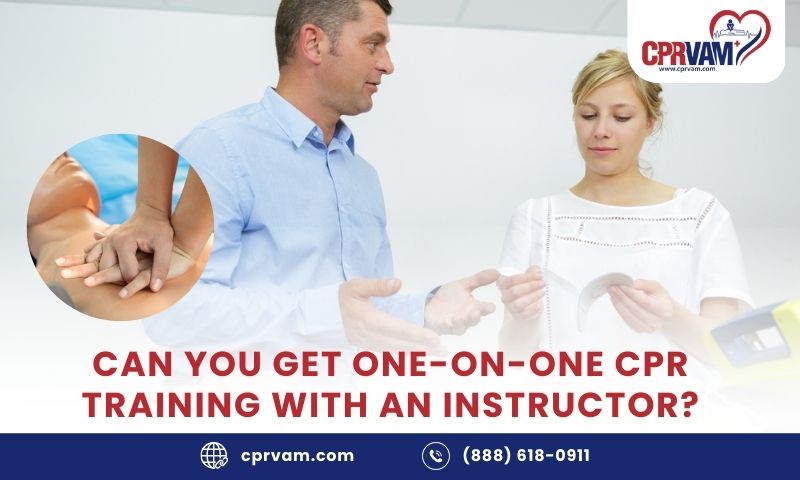
Yes. You can request personalized, one-on-one CPR training with a qualified instructor. Private instruction gives you more opportunities to practice essential skills, receive individual feedback, and focus on areas where you need additional support. Depending on the training provider, you may also be able to arrange a schedule and location that suit your needs.
Whether you are learning CPR for the first time, renewing your credentials, or completing work training, individual instruction can make the learning experience more focused. However, not every provider offers private sessions, and one-on-one training does not automatically guarantee certification. You must complete the requirements of the specific course through an authorized training provider.
This blog explains the benefits of one-on-one CPR training, who can benefit from private instruction, how sessions work, and what to consider when choosing a qualified instructor.
What Is One-on-One CPR Training?
One-on-one CPR training is an instructional format in which one learner works directly with an instructor instead of participating in a larger class. The instructor can adjust the pace, explain difficult concepts, observe your technique, and provide feedback based on your performance.
Depending on the course, training may cover:
- Adult, child, and infant CPR
- Chest compressions and rescue breaths
- Automated external defibrillator (AED) use
- Choking response
- Basic emergency response procedures
- Hands-on skills practice and assessment
Private CPR instruction may be available as a standalone learning session or as part of an approved certification course. If you need a course completion card for employment or professional requirements, confirm that the session meets the requirements of the organization issuing the credential.
One-on-One CPR Training vs. Group Classes
Both private and group CPR classes can help you develop essential lifesaving skills. The main difference is the amount of individual attention and flexibility available during instruction.
Feature | One-on-One CPR Training | Group CPR Classes |
Instructor Attention | Focused on one learner | Shared among participants |
Learning Pace | Can be adjusted to your progress | Generally follows a group schedule |
Skills Practice | Individual practice and feedback | Practice within a group setting |
Scheduling | May offer flexible arrangements | Usually follows scheduled class times |
Learning Environment | More individualized | Collaborative group environment |
Cost | May be higher per learner | Often more economical per participant |
Certification | Depends on completing an approved course | Depends on completing an approved course |
Neither format is automatically better for everyone. Private instruction may suit learners who prefer individual feedback, while group classes provide opportunities to learn alongside others. Both can lead to the appropriate course completion card when offered through an authorized provider, and all course requirements are met.
5 Benefits of Personalized One-on-One CPR Training
Choosing individual CPR instruction can make it easier to focus on your learning needs. Here are five potential benefits.
Here are the key benefits of one-on-one CPR training:
1. More Individual Instructor Attention
In a private session, the instructor can focus on your questions, technique, and progress. You have more opportunities to ask for clarification and revisit topics that you find challenging.
This individual attention can be especially helpful when learning chest compressions, rescue breaths, and AED operation.
2. More Focused Hands-On Practice
CPR is a practical skill that requires more than understanding the steps. You need to practice the techniques and demonstrate that you can perform them correctly.
One-on-one instruction allows the session to focus on your practice needs. Your instructor can observe your performance and help you improve your hand placement, compression technique, and overall approach.
3. Flexible Scheduling Options
Some training providers may offer private sessions by appointment. This can be helpful if you have work commitments, a busy schedule, or difficulty attending standard class times.
Availability, location options, and scheduling flexibility vary by provider, so ask about these details before booking.
4. Instruction Based on Your Learning Needs
Not every learner starts with the same level of knowledge or experience. Some people may need a complete introduction to CPR, while others may want to review specific skills before an assessment.
An individual session can give the instructor more opportunity to address your questions and adjust explanations and practice accordingly. However, any required course content and assessments must still be completed.
5. A More Comfortable Learning Environment
Some learners feel more comfortable asking questions and practicing unfamiliar skills without a larger group present.
A private setting may help reduce distractions and allow you to concentrate on the techniques being taught. It can also give you more time to discuss areas where you would like additional guidance.
Who Should Consider One-on-One CPR Training?
Personalized CPR instruction can be useful for people with different experience levels, professional responsibilities, and learning preferences.
You may consider individual training if you are:
Healthcare Professionals: Nurses, medical assistants, and other healthcare workers who need BLS or other required resuscitation training.
Parents and Caregivers: People who want to learn how to respond to cardiac and breathing emergencies involving adults, children, or infants.
Childcare Providers: Daycare workers, babysitters, and early childhood professionals who may need CPR and pediatric emergency response training.
Workplace Safety Personnel: Employees responsible for emergency preparedness and workplace safety.
Fitness professionals: Personal trainers, coaches, and gym staff who want to develop emergency response skills.
First-Time Learners: People who prefer individual guidance while learning CPR fundamentals.
Returning Learners: Individuals who want additional practice or support before completing a required skills assessment.
The right course depends on your responsibilities and certification requirements. For example, healthcare professionals may need BLS rather than a general community CPR course. Check with your employer or licensing organization before enrolling.
What Happens During a One-on-One CPR Training Session?
The exact format depends on the course, training provider, and whether you are completing a full certification course or a separate skills session. A typical private training experience may include the following steps.
Step 1: Discuss Your Training Needs
The instructor or training provider will ask about your experience, learning goals, and the type of course you need. This helps determine whether you require CPR, BLS, or another training program.
Step 2: Review Essential CPR Concepts
You will learn or review the key steps involved in recognizing an emergency and responding appropriately. Depending on the course, this may include CPR techniques, AED use, rescue breathing, and choking response.
Step 3: Practice Skills on Training Equipment
You will practice the required techniques using appropriate training equipment, such as CPR manikins and AED trainers. The instructor can observe your performance and provide feedback to help you improve.
Step 4: Complete the Required Skills Assessment
If your course includes a formal skills assessment, you must demonstrate the required competencies according to the course standards. Additional practice may be needed if you have not yet met the requirements.
Step 5: Receive Your Course Completion Card, If Eligible
After completing all required course components, you may receive the appropriate course completion card through the authorized training provider.
For American Heart Association courses, course completion cards are issued by authorized Training Centers. The AHA states that Training Centers must issue cards within 20 business days of successful course completion. Delivery arrangements may vary, so ask your provider when to expect your card.
How to Find a Qualified One-on-One CPR Instructor
Finding a suitable instructor involves more than choosing someone who offers private lessons. You should also confirm that the training meets your certification or workplace requirements.
Consider these steps before booking:
1. Check the Training Provider's Authorization
If you need an American Heart Association course completion card, confirm that the course is conducted through an authorized AHA Training Center. You can use the AHA Training Center and course resources to learn more about available training options.
2. Confirm the Instructor's Qualifications
Ask whether the instructor is currently qualified to teach the specific course you need. An instructor’s qualifications and authorization may differ depending on the training organization and course level.
3. Ask Whether Private Sessions Are Available
Not every training provider offers individual instruction. Confirm whether the provider can arrange a one-on-one session, whether the session is instructor-led, and where the training can take place.
4. Verify Certification Requirements
Ask whether the private session includes all required course components and assessments. If you need a credential for work, confirm that your employer accepts the specific course and issuing organization.
5. Understand the Total Cost
Private instruction may cost more than group training because the session is arranged for an individual learner. Ask about course fees, training materials, equipment, rescheduling policies, and any separate skills assessment charges before making a booking.
Is One-on-One CPR Training Worth It?
One-on-one CPR training can be worthwhile if you prefer individual instruction, need additional practice, or want a learning experience that can be adjusted to your progress.
It may be particularly helpful for first-time learners who want more time to understand the techniques or experienced learners who need to review specific skills before an assessment.
However, private instruction is not necessary for everyone. A group course can provide the same applicable course completion credential when it follows the same approved course requirements and the learner successfully completes all required components.
Before choosing, consider your learning preferences, schedule, budget, and the certification your employer or organization requires.
Choose the Right One-on-One CPR Training for Your Needs
Choosing one-on-one CPR training starts with understanding your learning goals, experience, and certification requirements. Whether you are a first-time learner, a healthcare professional, or someone who needs additional skills practice, choose a course that matches your needs. Before booking, confirm that the provider offers private instruction and that the training meets your certification requirements.
Explore CPR VAM’s CPR, BLS, ACLS, and PALS courses to develop essential lifesaving skills. Contact our team to ask about one-on-one training, flexible scheduling, hands-on practice, and certification options that match your needs.
FAQs About One-on-One CPR Training
1. Can I Get CPR Certified Through Private One-on-One Training?
Yes. Private instruction may be part of an approved CPR certification course. However, the session must meet the requirements of the issuing organization, and you must complete all required coursework and skills assessments. Ask the training provider whether the private session qualifies for the specific course completion card you need.
2. How Long Does a One-on-One CPR Training Session Take?
The duration depends on the course, training format, and your previous experience. A basic CPR course may take a different amount of time than BLS, ACLS, or PALS training. Private instruction does not automatically shorten the required training. Contact the provider for the expected schedule.
3. Is Private CPR Training More Expensive than Group Training?
Private CPR training may cost more because the instructor’s time and training arrangements are dedicated to one learner. The final price depends on the provider, course type, location, and whether additional materials or assessments are required. Ask for a complete cost breakdown before booking.
4. Do I Need Previous CPR Experience to Take Private Training?
No. Many introductory CPR courses are designed for people with no previous training. If you need BLS, ACLS, or PALS, check the specific course prerequisites and eligibility requirements before enrolling.
5. Can I Take Private BLS, ACLS, or PALS Training?
Availability depends on the training provider and course requirements. These courses are designed for healthcare professionals and may include specific learning activities, skills assessments, and course completion requirements. Contact an authorized provider to confirm whether individual instruction is available for the course you need.