

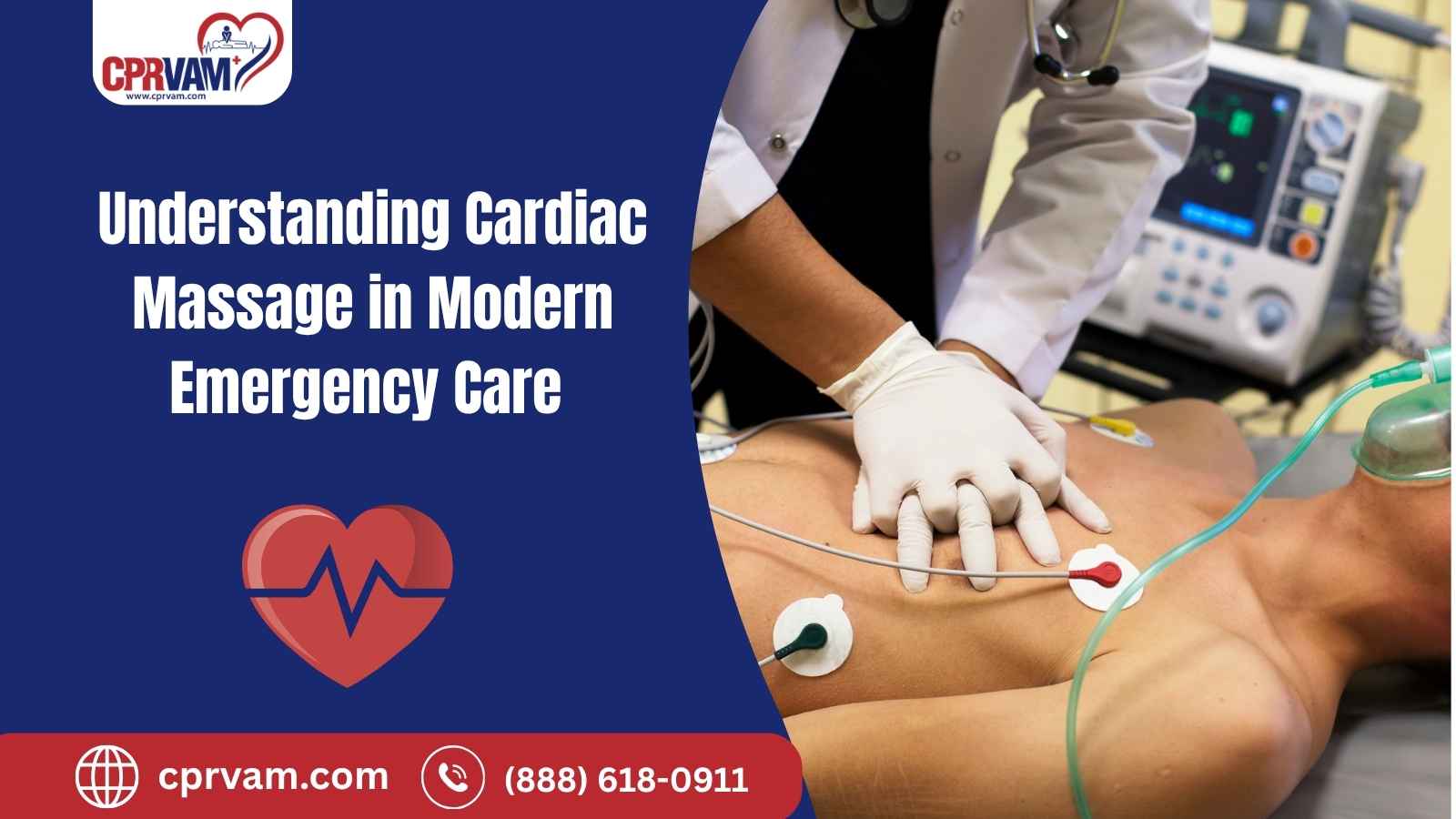
Every second matters when the heart suddenly stops. In a cardiac arrest emergency, immediate action can help maintain blood flow to the brain and other vital organs until professional medical care arrives. Cardiac massage is an older term that today generally refers to chest compressions performed during CPR. Modern emergency care focuses on high-quality chest compressions to maintain blood circulation during cardiac arrest.
According to evidence-based resuscitation recommendations from the American Heart Association (AHA) and the International Liaison Committee on Resuscitation (ILCOR), effective chest compressions are a key element of modern cardiac arrest response. This lifesaving technique helps move oxygen-rich blood through the body while emergency responders provide CPR, use an Automated External Defibrillator (AED) when appropriate, and deliver advanced medical treatment.
In this guide, we’ll explore what cardiac massage is, how it works, when it is used, and how it connects with current CPR practices. We’ll also discuss its benefits, limitations, and why CPR training can help people respond quickly and confidently during a life-threatening emergency.
How Does Cardiac Massage Work?
When the heart cannot circulate blood effectively during cardiac arrest, cardiac massage helps keep blood moving throughout the body by manually creating circulation through chest compressions. Each compression creates pressure changes inside the chest that help circulate blood to the brain and other vital organs until the heart can regain normal function or advanced medical care takes over.
During external cardiac massage, also known as chest compressions, chest compressions create pressure changes inside the chest that help circulate blood to vital organs during cardiac arrest. Pressing down pushes blood forward through the body, while allowing the chest to fully rise between compressions helps the heart refill with blood before the next compression. This repeated process helps maintain vital circulation during cardiac arrest.
While cardiac massage is essential for keeping blood flowing, it does not usually restart the heart by itself. According to resuscitation guidance from the American Heart Association (AHA), the best chance of survival comes from combining high-quality CPR with early defibrillation, a rapid Emergency Medical Services (EMS) response, and advanced treatments such as Advanced Cardiac Life Support (ACLS) when required.
When Is Cardiac Massage Used?
Cardiac massage is used when the heart is unable to pump enough blood to support the body’s vital organs, especially during a sudden cardiac arrest. In most emergencies, it is performed through chest compressions as part of CPR to help maintain circulation until normal heart function can be restored or advanced medical care is provided.
Acting quickly is critical because the brain and other organs can be seriously affected when oxygen-rich blood flow stops. According to recommendations from the AHA and the ILCOR, starting high-quality CPR as soon as possible can improve the chances of survival while emergency responders provide additional care, such as using an Automated External Defibrillator (AED), administering medications, or delivering Advanced Cardiac Life Support (ACLS).
Cardiac massage may be used in several situations, including:
- Sudden cardiac arrest when the heart stops pumping effectively
- Emergency medical situations requiring immediate circulation support
- Certain heart surgeries where medical teams have direct access to the heart
- Severe chest trauma in rare cases requiring specialized intervention
- Advanced emergency and operating room procedures performed by trained healthcare professionals
If a person becomes unresponsive and is not breathing normally, call Emergency Medical Services (EMS) immediately and begin CPR if you can do so. External chest compressions can be performed by trained individuals and bystanders following emergency guidance, while internal cardiac massage is a specialized procedure performed only by qualified medical professionals in controlled healthcare settings.
What Are the Types of Cardiac Massage?
Cardiac massage can be performed using different techniques depending on the patient’s condition, the type of emergency, and the medical environment. Although all methods share the same goal of supporting blood circulation, each technique is used in specific situations and requires a different level of training and medical expertise.
The three primary types of cardiac massage are described below, with each technique explained based on its purpose, application, and medical setting.
1. External (Closed-Chest) Cardiac Massage
External cardiac massage, also called chest compression CPR, is the most common form of cardiac massage used during a cardiac arrest. It works by applying pressure to the chest to help keep blood flowing to the brain, heart, and other vital organs until emergency medical care is available.
How It Is Performed:
- Place the person on a firm, flat surface.
- Place your hands in the center of the chest.
- Deliver firm, steady compressions at a consistent rhythm.
- Allow the chest to fully rise after each compression.
- Continue compressions until EMS arrives, an AED is available, or trained responders take over.
External cardiac massage can be performed by healthcare professionals, trained rescuers, and bystanders providing hands-only CPR during an emergency. Starting compressions quickly can help maintain circulation and improve the chances of survival.
2. Internal (Open-Chest) Cardiac Massage
Internal cardiac massage is a specialized medical procedure that involves directly compressing the heart after the chest has been surgically opened. Unlike external chest compressions used during CPR, this technique is only performed by trained healthcare professionals in specific situations, such as certain cardiac surgeries, severe chest trauma, or complex emergency procedures.
How the Procedure Works:
- The chest is surgically opened to provide direct access to the heart.
- A qualified medical professional manually compresses the heart to help maintain circulation.
- The patient’s vital signs and response are closely monitored throughout the procedure.
- The technique is performed along with other advanced medical treatments when needed.
- The procedure takes place in a controlled hospital or surgical environment.
Internal cardiac massage is a rare and highly specialized technique used only when direct access to the heart is necessary. In most cardiac emergencies, external chest compressions as part of CPR remain the standard approach used to support circulation.
3. Mechanical Cardiac Massage
Mechanical cardiac massage uses a specialized automated device to provide consistent chest compressions during a cardiac arrest emergency. These devices are designed to maintain steady, high-quality compressions when manual CPR becomes challenging, such as during long resuscitation efforts, patient transport, or advanced medical procedures.
How the procedure is performed:
- The mechanical compression device is carefully positioned on the patient’s chest.
- The device is adjusted to match the patient’s body size and needs.
- Automated compressions are started according to established resuscitation guidelines.
- Healthcare providers continuously monitor the device and the patient’s condition.
- Other emergency treatments, such as defibrillation, medications, and advanced life support, continue alongside compressions when needed.
- The device is removed only when directed by the medical team or when manual care is resumed.
Mechanical cardiac massage is typically used by trained healthcare professionals in controlled emergency settings. According to evidence-based resuscitation guidance from the American Heart Association (AHA) and the International Liaison Committee on Resuscitation (ILCOR), these devices can help support consistent compressions in specific situations while remaining part of a broader cardiac arrest response.
Who Should Perform Cardiac Massage?
The person performing cardiac massage depends on the type of technique needed and the situation involved. External cardiac massage, which refers to chest compressions performed during CPR, can be started by trained bystanders, first responders, healthcare professionals, or even untrained individuals providing hands-only CPR while waiting for Emergency Medical Services (EMS). Acting quickly helps maintain blood circulation to the brain and other vital organs until advanced medical support arrives.
Internal cardiac massage is a highly specialized procedure that should only be performed by qualified healthcare professionals, such as surgeons or emergency physicians, in specific hospital or trauma settings where direct access to the heart is required. According to American Heart Association (AHA) guidelines, early recognition of cardiac arrest, immediate emergency response, and high-quality CPR are key factors in improving survival outcomes.
How Is Cardiac Massage Different From CPR?
Cardiac massage and CPR are closely related but describe different parts of emergency care. Cardiac massage focuses specifically on chest compressions that help maintain blood circulation, while CPR is a complete lifesaving procedure that includes chest compressions along with additional emergency techniques when needed.
The key differences between cardiac massage and CPR are outlined below:
Feature | Cardiac Massage | Cardiopulmonary Resuscitation (CPR) |
What It Is | A technique that uses chest compressions to help keep blood circulating when the heart stops pumping effectively. | A complete emergency response method used during cardiac arrest that combines chest compressions with additional life-saving steps when needed. |
Main Purpose | Maintains blood flow to the brain and other vital organs. | Helps support both blood circulation and oxygen delivery until advanced medical care arrives. |
What It Includes | Chest compressions only, performed manually or with a mechanical device. | Chest compressions, rescue breaths (when appropriate), and AED use if one is available. |
Who Can Perform It | Trained bystanders, first responders, or healthcare professionals depending on the situation. | Anyone trained in CPR or guided by an emergency dispatcher can begin CPR immediately. |
When It’s Used | During cardiac arrest as one part of emergency resuscitation. | During cardiac arrest to provide complete emergency care until EMS takes over. |
Types | External (closed-chest), Internal (open-chest), and Mechanical cardiac massage. | Standard CPR techniques based on the patient’s age and rescuer training, following current AHA guidelines. |
Relationship | Cardiac massage is one component of CPR. | CPR includes cardiac massage as its primary circulation technique. |
Cardiac massage is a specific technique focused on chest compressions to maintain blood flow, while CPR is a complete emergency procedure that includes cardiac massage along with other lifesaving steps. Understanding the difference helps people recognize how each method supports survival during a cardiac arrest.
What Are the Benefits of Cardiac Massage?
Cardiac massage helps maintain blood circulation during cardiac arrest by delivering oxygen-rich blood to the brain and other vital organs until advanced medical care is available. According to AHA and ILCOR guidelines, early and high-quality chest compressions are a critical part of CPR and can improve survival outcomes.
The key benefits of cardiac massage include:
1. Maintains Blood Circulation
Cardiac massage helps keep blood flowing during cardiac arrest by delivering oxygen-rich blood to the brain, heart, and other vital organs. This temporary support helps protect vital functions while emergency responders provide further treatment, such as defibrillation and medications.
2. Supports Oxygen Delivery
Each chest compression helps circulate oxygen-rich blood to the brain, heart, and other vital organs during cardiac arrest. Although cardiac massage cannot replace the heart’s normal pumping function, it provides temporary support and allows medical teams more time to deliver lifesaving treatment.
3. Improves Survival Outcomes
Starting cardiac massage quickly during cardiac arrest helps maintain blood flow to the brain and vital organs until emergency care arrives. Early, high-quality chest compressions combined with CPR, AED use, and rapid medical response can improve the chances of survival and recovery.
4. Protects Brain Function
The brain depends on a constant supply of oxygen-rich blood, and cardiac arrest can quickly reduce oxygen delivery. Cardiac massage helps maintain blood flow to the brain during this critical time, supporting brain function while emergency care is provided. Early and effective chest compressions can help reduce the risk of long-term neurological damage and improve recovery chances.
5. Supports Advanced Emergency Care
Cardiac massage helps maintain blood circulation while healthcare teams provide advanced treatments during cardiac arrest. According to AHA guidelines, effective chest compressions work alongside lifesaving measures such as AED use, medications, oxygen support, and ACLS. This combined approach gives medical teams more time to deliver critical care and improve patient outcomes.
What Are the Risks and Limitations of Cardiac Massage?
Cardiac massage is a vital lifesaving technique used during cardiac arrest, but like any emergency procedure, it has certain risks and limitations. While complications such as chest injuries may occur, the benefits of immediate chest compressions are far greater because maintaining blood circulation is essential for survival.
The potential risks and limitations of cardiac massage include:
1. Physical Injuries
Chest compressions require firm pressure to maintain blood flow during cardiac arrest. This may sometimes cause injuries such as rib fractures, bruising, or chest discomfort. However, the benefits of performing CPR far outweigh the risk of injury during a life-threatening emergency.
2. Risks During Internal Cardiac Massage
Internal cardiac massage is a specialized procedure that involves direct access to the heart and is performed only by trained medical professionals. Because it requires opening the chest, it carries risks such as bleeding, infection, and tissue injury in controlled surgical settings.
3. Does Not Restart the Heart on Its Own
Cardiac massage helps maintain circulation but does not usually restart the heart by itself. Additional treatments, such as defibrillation, medications, and advanced medical care, are often needed to restore normal heart function.
4. Importance of Proper Technique
Effective chest compressions require correct hand placement, depth, and rate. Proper CPR training helps rescuers perform compressions safely and provide better support until emergency medical help arrives.
5. Part of a Complete Emergency Response
Cardiac massage is an important part of CPR but is not a replacement for professional medical treatment. Quick action, EMS activation, AED use, and advanced care work together to improve survival chances during cardiac arrest.
Turn Cardiac Massage Knowledge Into Lifesaving Skills
Understanding how cardiac massage works is an important first step, but knowing what to do in a real emergency requires proper training and hands-on practice. A structured CPR course helps you recognize cardiac arrest, perform effective chest compressions, use an AED safely, and follow current emergency response guidelines with greater confidence.
Ready to develop practical lifesaving skills? CPR VAM provides hands-on Heartsaver CPR AED, Heartsaver First Aid CPR AED, BLS, and ACLS training with experienced instructors. You’ll learn essential techniques, including high-quality chest compressions, AED operation, and emergency response skills while working toward official AHA certification.
Frequently Asked Questions
1. Is Cardiac Massage the Same as CPR?
No. Cardiac massage and CPR are related but refer to different parts of emergency care. Cardiac massage specifically refers to chest compressions used to help maintain blood circulation during cardiac arrest. CPR is a complete lifesaving procedure that includes chest compressions along with other steps, such as rescue breathing and AED use when needed. In modern emergency care, cardiac massage is considered one important part of CPR rather than a separate treatment.
2. Can Cardiac Massage Restore a Stopped Heart?
Cardiac massage is not typically enough to restart a stopped heart on its own, but it helps maintain oxygen delivery to the brain and other vital organs. The technique provides temporary circulation support while emergency treatment is administered. Restoring a normal heart rhythm often requires interventions such as defibrillation, medications, or advanced medical care.
3. Is Cardiac Massage Still Used in Modern Emergency Care?
Yes. External chest compressions remain one of the most important elements of modern CPR protocols worldwide. Emergency responders and trained individuals use this technique to support blood flow during cardiac arrest situations. More specialized forms, such as internal cardiac massage, are only used in specific medical or surgical circumstances.
4. Why is Cardiac Massage Called Chest Compressions Today?
The term “cardiac massage” was traditionally used to describe manually helping the heart pump blood. Today, modern emergency care usually refers to this technique as chest compressions because rescuers apply pressure to the chest to support blood circulation during CPR rather than directly massaging the heart. The updated terminology better reflects how the technique is performed in most cardiac emergencies.
5. Can an Untrained Person Perform Cardiac Massage?
Yes. In an emergency, an untrained person can perform hands-only CPR by starting chest compressions while waiting for emergency medical help. Acting quickly can help maintain blood flow to the brain and other vital organs until professional responders arrive. CPR training is recommended because it helps people perform compressions more effectively and respond with greater confidence.