

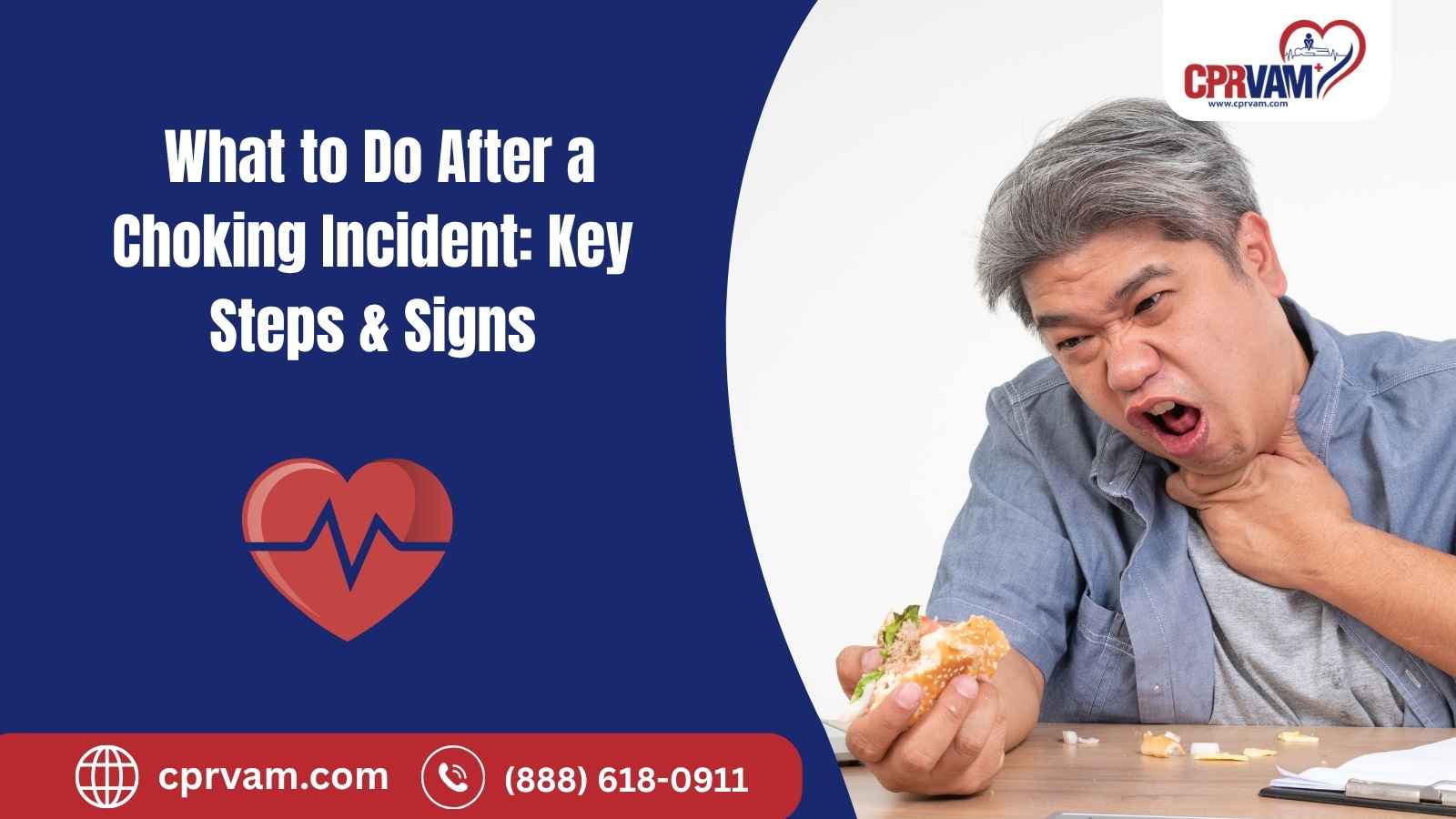
Knowing what to do after a choking incident is important, even after the person starts breathing normally again. Take a moment to check how they feel, make sure their breathing is comfortable, and stay with them while they recover.
Someone may seem completely fine after choking, but some symptoms can appear later. Watch for ongoing coughing, trouble breathing, chest pain, or difficulty swallowing. If the choking was severe or first aid was needed, getting medical advice can help make sure there are no hidden complications.
This blog covers what to do after a choking incident, including common symptoms to watch for, when to seek medical care, how to monitor the person’s recovery, and what to tell a healthcare professional.
Emergency Note: If the person cannot breathe, speak, or cough effectively, the emergency is ongoing. Call emergency services and follow current choking first-aid guidance. The 2025 American Heart Association guidelines outline age- and severity-specific interventions.
What Should You Do Immediately After Choking?
Once the airway is clear and the person can breathe normally, take a moment to assess their condition. These simple steps can help support a safe recovery:
- Check their breathing and level of responsiveness
- Ask whether they can speak and swallow normally
- Watch for persistent coughing, wheezing, chest pain, or difficulty breathing
- Keep the person calm and continue monitoring their condition
- Seek medical evaluation if the choking was severe or symptoms persist
You do not need to determine whether there is an internal injury yourself. Simply pay attention to how the person is breathing, speaking, and feeling. If anything seems unusual or concerning, seek professional medical care for further evaluation.
Step 1: Check Their Breathing and Condition
Once the object is removed, check that the person is breathing normally and can speak clearly. Ask whether they can breathe, swallow, and communicate comfortably. Continue watching for coughing, wheezing, shortness of breath, or unusual breathing sounds afterward.
Watch for persistent coughing, wheezing, shortness of breath, difficulty speaking, or unusual breathing sounds. If the person cannot breathe effectively or symptoms are getting worse, treat it as an emergency and activate emergency medical services. The 2025 AHA guidelines emphasize continued monitoring after the object is expelled.
Step 2: Keep the Person Calm and Comfortable
A choking episode can be frightening, even after the airway is clear. Stay with the person, reassure them, and encourage them to rest while monitoring their condition. Watch for ongoing discomfort, breathing changes, coughing, or other concerning symptoms.
If the person has difficulty swallowing or continues coughing while drinking, do not force food or fluids. Keep them comfortable and continue observing their condition. If symptoms persist, worsen, or cause concern, seek appropriate medical advice for further evaluation.
Step 3: Watch for Signs the Airway May Not Be Clear
The person may continue to have symptoms if an object remains in the airway or if the throat or airway has been irritated or injured.
Symptoms to watch for:
- Persistent or worsening cough
- Wheezing or noisy breathing
- Shortness of breath
- Difficulty swallowing or speaking
- Hoarse or changed voice
- A feeling that something is still stuck
These symptoms should not be ignored. MedlinePlus notes that ongoing cough, wheezing, breathing difficulty, or problems speaking or swallowing after choking can require medical evaluation.
If any of these symptoms continue, become worse, or affect the person’s breathing or swallowing, it is important to know when medical attention is needed.
Step 4: Seek Urgent Medical Help After Choking
Get medical help right away if someone has trouble breathing, ongoing wheezing, difficulty swallowing, chest discomfort, or other signs of breathing distress after choking. These symptoms can sometimes point to an airway problem or injury. Prompt care is especially important if the symptoms continue, get worse, or appear later.
If you are unsure whether the person needs medical attention, explain what happened to a healthcare professional and describe any First aid provided. Mention any symptoms that are still present or have changed. Avoid trying to determine the cause yourself, as some injuries or complications may not be obvious at first.
Step 5: Consider Medical Evaluation After Severe Choking
A severe choking episode may require medical follow-up, even after the object has been removed. MedlinePlus recommends medical evaluation after a choking event because complications can result from both the obstruction and the first-aid measures used.
Medical evaluation is especially important if the person:
- Lost consciousness
- Experienced prolonged choking
- Needed CPR or forceful choking interventions
- Continues to have breathing problems
- Has persistent pain
- Has difficulty swallowing or speaking
- Develops worsening symptoms
Step 6: Watch for Possible Injuries from First Aid
Choking first aid may involve considerable force. After a severe episode, monitor for ongoing chest or abdominal pain, swelling, bruising, vomiting, blood in vomit, or coughing up blood. If symptoms develop, seek prompt medical care and explain which first-aid measures were provided.
First aid for choking can place significant stress on the body. After a serious episode, watch for persistent pain, swelling, bruising, vomiting, blood in vomit, or coughing blood. Seek medical evaluation promptly if these symptoms appear, and describe the first-aid treatment performed.
Step 7: Continue Watching for Delayed Symptoms
Recovery does not necessarily end when the object comes out. Some complications may become noticeable later, so continue monitoring the person for changes.
Warning signs to watch for:
- Persistent or worsening cough
- Shortness of breath or wheezing
- Fever
- Chest pain
- Difficulty swallowing or speaking
- Increasing hoarseness or voice changes
- Unusual drowsiness or confusion
- Bluish lips or skin
Special Warning Signs in Infants and Young Children
Infants and toddlers cannot always tell you how they feel, so delayed complications can manifest differently in younger age groups. Seek prompt medical care if you observe any of the following:
- Unusual or excessive drooling (often indicates throat pain or trouble swallowing)
- Refusal to eat, nurse, or drink fluids
- Sudden lethargy, listlessness, or unresponsiveness
- Persistent irritability, high-pitched crying, or difficulty settling
- Nasal flaring or ribs pulling inward when breathing (retractions)
MedlinePlus specifically advises contacting a healthcare provider if symptoms such as persistent cough, fever, difficulty swallowing or speaking, shortness of breath, or wheezing develop in the days after choking.
Why Do Choking Symptoms Sometimes Appear Later?
Choking symptoms can sometimes appear later because the episode may cause irritation or injury beyond the initial blockage. The throat or airway may remain irritated, while food or other material can enter the lungs. Some problems may not be noticeable immediately and can develop gradually afterward.
Even when someone feels fine after choking, continue watching for ongoing coughing, breathing problems, wheezing, chest pain, fever, or difficulty swallowing. These symptoms may signal a problem that needs attention. If symptoms develop, persist, or become worse, seek medical advice for appropriate evaluation and care.
What Should You Tell a Doctor After a Choking Incident?
If medical care is needed after choking, tell the healthcare professional clearly what happened. You do not need to diagnose the problem yourself. Just share what you remember and explain how the person is feeling now.
Be ready to explain:
- What the person was eating or holding
- What appeared to cause the choking
- How long the choking lasted, if known
- Whether they could cough, speak, or breathe
- Whether they became unresponsive
- What first-aid measures were performed
- Whether CPR was needed
- Whether the object was completely removed
- What symptoms they have now
For example, you could say: “The person choked on food, received back blows and abdominal thrusts, and now has persistent wheezing.” Providing these details can help the healthcare professional understand the situation and decide what care may be needed.
What Not to Do After a Choking Incident
Knowing what not to do after a choking incident is just as important as knowing what to do. Even when the object has been removed, the person may still have irritation or other problems. Keep an eye on how they feel, avoid common mistakes, and get medical help if concerning symptoms appear.
Things to avoid after a choking incident:
1. Do Not Assume They Are Completely Fine
Even if the person seems better after the object comes out, continue watching them. Pay attention to their breathing, coughing, swallowing, and how they are feeling. If anything seems unusual, seek medical advice.
2. Refrain From Forcing Food or Drinks
If the person is still coughing or having trouble swallowing, do not pressure them to eat or drink. Let them recover and seek medical advice if swallowing problems continue.
3. Never Put Your Fingers Into the Mouth Blindly
Do not reach into the mouth to look for an object you cannot see. A blind finger sweep can push the blockage farther into the airway. Only remove an object if you can clearly see it.
4. Get Emergency Help When Needed
If the person has severe trouble breathing, becomes unresponsive, or develops other serious symptoms, get emergency medical help right away. Do not wait to see if the problem resolves on its own.
5. Let a Healthcare Professional Check for Possible Injuries
You do not need to figure out whether the person has an internal injury yourself. Simply explain what happened, describe any symptoms you notice, and let a healthcare professional determine whether further evaluation is needed.
What If the Person Becomes Unresponsive Again?
Use this table as a quick reference for comparing common EKG rhythms based on heart rate, rhythm regularity, P-wave characteristics, PR interval, QRS duration, and other key features that can help distinguish one rhythm from another.
If a person becomes unresponsive after choking, treat it as an emergency. The 2025 American Heart Association (AHA) Guidelines recommend activating emergency medical services and starting CPR for an adult with severe airway obstruction. Begin CPR with chest compressions and continue according to your training and emergency dispatcher instructions until help arrives.
When opening the airway during CPR, check the mouth for a visible object and remove it if you can clearly see it. The AHA recommends against blind finger sweeps because they may push an object deeper into the airway. Infants and children require age-specific choking and CPR procedures, so follow appropriate AHA guidance for their age.
What Is the Difference Between Choking First Aid and Choking Aftercare?
Choking first aid and choking aftercare happen at different stages. Choking first aid focuses on clearing an active airway blockage. Under the 2025 AHA Guidelines, severe choking in a responsive adult or child is treated with repeated cycles of five back blows followed by five abdominal thrusts. Infants require five back blows followed by five chest thrusts.
Choking aftercare begins after the airway has been cleared. The focus then shifts to the person’s breathing, swallowing, and other symptoms. Continue watching for problems that may develop after the incident, and seek medical evaluation when needed. After a severe choking episode, appropriate medical follow-up may help identify concerns that are not immediately obvious.
A Simple After-Choking Decision Guide
What You Notice | What It May Mean | What To Do |
Person is breathing normally and has no concerning symptoms | Immediate obstruction appears resolved | Continue observing and provide reassurance |
Persistent cough or wheezing | Possible airway irritation or remaining problem | Seek medical advice, especially if symptoms continue |
Difficulty breathing | Possible airway or respiratory complication | Seek urgent medical help |
Difficulty swallowing or speaking | Possible throat or airway problem | Seek medical evaluation |
Severe chest or abdominal pain | Possible injury | Get prompt medical assessment |
Fever or worsening cough later | Possible delayed complication | Contact a healthcare professional promptly |
Person becomes unresponsive | Life-threatening emergency | Activate emergency services and begin CPR according to training |
How Can You Help Prevent Another Choking Incident?
Once the person has recovered, take a moment to think about what may have caused the choking incident. A few simple habits can make eating safer and may help lower the chance of it happening again.
Here are some simple ways to help prevent choking:
- Eat slowly and chew food thoroughly before swallowing
- Cut food into smaller, manageable pieces when needed
- Avoid talking or laughing while food is in your mouth
- Stay close to young children while they are eating
- Keep small objects away from young children
- Talk with a healthcare professional about ongoing swallowing problems
- Make sure dentures fit comfortably and properly when applicable
- Keep your choking first-aid skills up to date
For workplaces, schools, childcare facilities, and care settings, it also helps to review emergency procedures regularly. Staff should know who will call emergency services, who is trained to provide first aid, and how to report and document a choking incident.
Supporting Recovery After a Choking Incident
Knowing what to do after a choking incident can make the recovery period safer and less stressful. Once the airway is clear, check that the person can breathe, speak, and swallow comfortably. Keep watching for symptoms such as persistent coughing, wheezing, chest pain, breathing difficulty, or fever. If symptoms appear, worsen, or the choking was severe, seek medical care promptly.
For practical training on how to respond during emergencies, CPR VAM Training Center offers Heartsaver First Aid CPR AED classes. These classes cover essential CPR, AED, first aid, and choking response skills, helping you feel more prepared to act when someone needs immediate help.
FAQs
1. Should Someone See a Doctor After Choking?
Medical evaluation may be needed after severe choking, especially if the person needed first aid or became unresponsive. Seek medical care if they develop persistent coughing, wheezing, breathing difficulty, fever, chest pain, or trouble swallowing or speaking. New or worsening symptoms should not be ignored.
2. What Should I Watch for After the Object Comes Out?
Continue watching the person even after the object has been removed. Look for persistent coughing, wheezing, shortness of breath, chest pain, difficulty swallowing, voice changes, fever, or worsening symptoms. These signs may indicate a problem that needs medical attention.
3. Can Someone Feel Fine After Choking and Still Have a Problem?
Yes. A person can feel better after the airway is cleared while symptoms or complications develop later. This is why it is important to keep observing them, especially after severe choking. If new or worsening symptoms appear, contact a healthcare professional.
4. Should I Give the Person Water After Choking?
Do not force water or other fluids if the person is still coughing or having trouble swallowing. Once they can swallow comfortably and have no concerning symptoms, they can usually return to normal eating and drinking. If swallowing problems continue, seek medical advice.
5. What If the Person Starts Coughing After the Choking Episode?
Some coughing may occur after choking, but a persistent or worsening cough should be taken seriously. Watch for wheezing, breathing difficulty, fever, chest pain, or other changes. If these symptoms develop or the cough does not improve, contact a healthcare professional for guidance.