
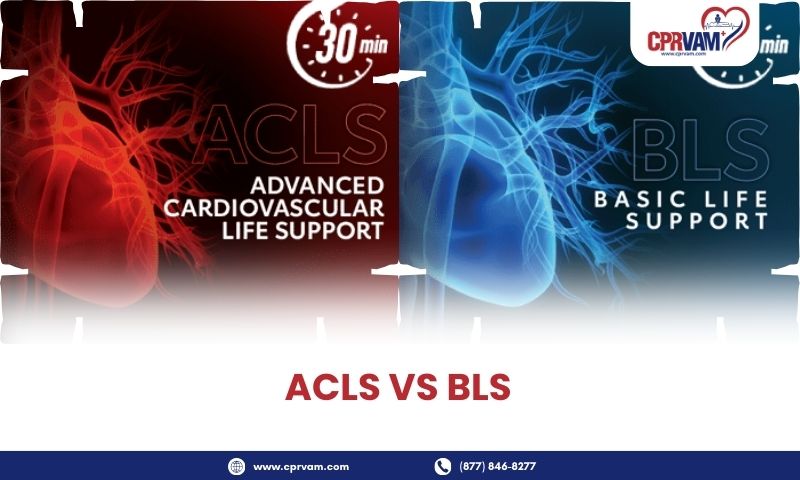
Quick and effective intervention during a cardiac emergency can mean the difference between life and death. Understanding the roles of Basic Life Support (BLS) and Advanced Cardiovascular Life Support (ACLS) is essential for both healthcare providers and informed bystanders. These structured levels of response differ in training, scope, and the medical interventions they provide in critical situations.
BLS focuses on maintaining circulation and breathing through high-quality CPR, rescue breathing, and automated external defibrillator (AED) use until advanced care arrives. ACLS expands on these skills with advanced airway management, intravenous medications, and ECG interpretation to treat complex cardiac conditions. Guided by the American Heart Association and ILCOR, ACLS provides evidence-based strategies, creating a coordinated emergency response that strengthens survival outcomes.
What is BLS?
BLS (Basic Life Support) is a level of emergency medical care used to sustain life during cardiac or respiratory arrest. It includes chest compressions, rescue breathing (CPR), and use of an AED (automated external defibrillator). BLS is designed for both healthcare providers and trained laypersons. Having this certification ensures that critical care begins immediately, long before advanced medical help arrives.
What is ACLS?
ACLS (Advanced Cardiovascular Life Support) is a higher level of emergency care performed by healthcare professionals. It builds on BLS by adding advanced interventions such as IV medications, cardiac monitoring, airway management (intubation), and treatment of arrhythmias. ACLS is used in hospitals and by advanced emergency responders. It equips clinical teams with the protocols and decision-making skills needed to manage life-threatening cardiovascular events with speed and precision.
What Are the Key Differences Between ACLS and BLS in Life-Saving Care?
ACLS and BLS are both essential life-saving certifications, but they differ in scope and purpose. BLS covers basic CPR and first response skills for anyone, while ACLS adds advanced techniques for healthcare professionals. Knowing these differences helps you choose the right certification for your role.
Here are the key differences between ACLS and BLS, and learn when each is used in life-saving emergencies.
Difference | Basic Life Support (BLS) | Advanced Cardiovascular Life Support (ACLS) |
Application Area | It can be performed anywhere, including homes, workplaces, and public places. | Mainly used in hospitals or clinical settings with advanced medical support. |
Who Can Perform | Anyone with simple training can perform BLS. | Only healthcare professionals with specialized training can perform ACLS. |
Complexity | Easy to learn and remember. | More complex because it involves advanced procedures, medications, and monitoring. |
Purpose | Keeps the person alive until help arrives by maintaining airway, breathing, and circulation. | Stabilizes the patient and treats serious heart problems using advanced techniques and medications. |
Techniques | CPR, rescue breaths, and using an AED. | Advanced CPR, defibrillation, airway management, IV medications, and ECG interpretation. |
Skills Covered | CPR, AED use, and choking relief for adults, children, and infants. | Cardiac arrest algorithms, advanced airway management, IV medications, ECG interpretation, and team leadership. |
Certification Validity | Valid for 2 years, requires a refresher for renewal. | Valid for 2 years, requires refresher for renewal, often more intensive. |
Difficulty Level | Beginner-friendly, no medical degree required. | Advanced, assumes strong medical knowledge and clinical decision-making skills. |
Career Advancement | Opens doors for entry-level healthcare and non-clinical roles. | Often required for higher-paying, specialized roles, demonstrates advanced competency. |
Regulatory or Licensing Importance | Usually a baseline requirement across many industries. | It may be mandatory for licensure or credentialing in hospital-based positions. |
ACLS and BLS Certifications: Who Are They Designed For?
Both BLS and ACLS certifications are designed to save lives, but they serve very different purposes depending on your role, setting, and level of medical responsibility. Both programs teach vital life-saving skills, but BLS is intended for anyone who may be the first to respond in an emergency, while ACLS is designed for healthcare professionals handling cardiopulmonary arrest or other cardiovascular emergencies.
BLS Certification: For Everyone Ready to Help
Basic Life Support (BLS) is ideal for anyone who may be the first to respond in an emergency. This includes:
- Emergency first responders, teachers, and parents
- Healthcare students just starting their careers
- Workplace safety staff in schools, offices, or gyms
BLS training gives everyday people the confidence and skills to perform CPR, use an AED, and respond to choking emergencies, keeping a patient alive until professional help arrives.
ACLS Certification: For Medical Professionals
Advanced Cardiovascular Life Support (ACLS) is designed for healthcare providers who handle serious cardiac and respiratory emergencies. ACLS is required for:
- Doctors, nurses, and paramedics
- Emergency department and ICU staff
- Medical trainees in advanced clinical programs
Unlike BLS, ACLS builds on basic life support skills and focuses on complex interventions such as ECG interpretation, emergency medications, and advanced airway management, with BLS certification required for ACLS.
How Do BLS and ACLS Work in Real-Life Emergencies?
In real-life cardiac emergencies, BLS is the first and most immediate response that helps maintain blood circulation and oxygen flow until advanced help arrives. It focuses on early CPR, chest compressions, and AED use to keep vital organs functioning during cardiac arrest. According to the American Heart Association, performing CPR immediately can double or even triple survival rates, making this quick, decisive action critical in the moments before professional medical care is available.
When healthcare professionals arrive, Advanced Cardiovascular Life Support (ACLS) works alongside BLS to provide higher-level care. Following American Heart Association guidelines, ACLS includes heart rhythm assessment, defibrillation, emergency medications, and airway support. These advanced steps aim to restore a stable heartbeat and breathing. The seamless transition from fast BLS to timely ACLS offers the strongest chance for survival and long-term recovery.
What Skills and Emergency Response Techniques Are Taught in ACLS vs BLS Training?
When it comes to saving lives, the right skills and techniques can make all the difference. BLS and ACLS both teach essential life-saving methods, but each program covers a different level of emergency care, from immediate first response to advanced clinical intervention.
BLS: Acting Fast in Critical Moments
In BLS training, you’ll learn how to act quickly and safely when someone experiences a cardiac arrest. Key skills include:
- Ensuring scene safety and performing a rapid patient assessment
- Learn high-quality, age-specific CPR techniques for all ages
- Using an Automated External Defibrillator (AED) effectively
- Giving rescue breaths and responding to choking emergencies
These skills are designed to keep blood flowing to the heart and brain until advanced help arrives, giving patients the best chance of survival.
ACLS: Advanced Interventions for Healthcare Providers
ACLS training builds on BLS and teaches more advanced techniques for managing life-threatening emergencies. Skills include:
- Reading ECG rhythms and identifying dangerous arrhythmias
- Administering emergency medications through IV
- Performing advanced airway management, including intubation and ventilation
- Leading resuscitation teams confidently during critical situations
ACLS focuses on stabilizing the patient and guiding them through advanced emergency procedures, giving healthcare providers the tools to manage emergencies effectively.
How Long Do ACLS and BLS Certifications Last and How Do You Renew Them?
Both ACLS and BLS certifications from the American Heart Association (AHA) are valid for two years. Staying current ensures that your skills and knowledge reflect the latest science and best practices in resuscitation care. Regular renewal helps you respond confidently in real emergencies, when every second truly matters.
Tips for Successful Renewal:
To make renewal easier and more effective:
- Review updated AHA guidelines before retesting to stay informed on new recommendations
- Enroll in a blended refresher course that combines online learning with hands-on practice
- Practice CPR and AED use regularly to maintain muscle memory and confidence
- Stay familiar with medications and treatment algorithms used in ACLS
Keeping your certification active not only meets AHA requirements but also ensures your life-saving skills are ready whenever they’re needed most.
Which Certification Should You Choose ACLS or BLS?
Choosing the right life-saving course matters. BLS and ACLS teach essential skills but serve different roles. Understanding the difference helps you pick the best training for your career, studies, or personal preparedness.
You Should Consider Taking BLS If:
- Non-healthcare individuals wish to gain essential skills to respond to emergencies confidently.
- New medical or nursing students need foundational knowledge before entering clinical training.
- Workplace safety enthusiasts want training to handle sudden emergencies effectively.
ACLS is Recommended If:
- Healthcare professionals already working in hospitals, clinics, or similar settings require advanced skills.
- Cardiac or trauma team members need specialized protocols to manage critical cases.
- BLS-certified individuals aim to enhance their emergency response and advanced life support capabilities.
Empower Yourself to Save Lives Through Proper Training
Understanding the difference between BLS and ACLS can save lives during an emergency. BLS teaches anyone how to give immediate help outside a hospital, while ACLS trains healthcare professionals to manage serious heart and medical emergencies with advanced skills. Whether you are a first responder, healthcare worker, or just want to be prepared, learning these life-saving techniques builds confidence and ensures you are ready to act quickly when every second matters.
Be the Hero Who Saves a Life! We are CPR VAM, an AHA-approved training center, and we teach life-saving skills that can make all the difference in an emergency. Our experienced instructors guide you through BLS, PALS, and ACLS classes using real-life scenarios, videos, and hands-on practice. Join our ACLS and BLS class today and be ready to act confidently when every second counts.
FAQs About the Differences Between ACLS and BLS
1. Does ACLS include BLS?
ACLS builds upon BLS but does not replace it. In fact, a valid BLS certification is typically required before enrolling in an ACLS course. While ACLS incorporates basic life support principles, both certifications serve distinct purposes and are often required separately depending on your professional role.
2. How Much Harder is ACLS Than BLS?
ACLS is tougher because it includes advanced skills that require more medical knowledge. It covers complex procedures like reading ECGs, managing heart rhythms, using advanced airway tools, and administering emergency drugs, which are more difficult than the simple CPR and rescue breathing taught in BLS.
3. Can I Do ACLS Before BLS?
No. You should do BLS first because it is the foundational skill. ACLS builds on the basics learned in BLS, so having a solid understanding of BLS techniques is necessary before moving to the more advanced ACLS training.
4. Do Nurses Need Both BLS and ACLS?
Yes. Nurses need both because BLS equips them with essential life-saving skills used in any emergency, while ACLS prepares them for advanced care, especially when working in specialized areas like emergency rooms or ICUs where cardiac emergencies happen.
5. Is ACLS Only for Hospital Settings?
ACLS is mainly used in hospitals and advanced emergency medical settings, but it can also be applied in pre-hospital critical care by trained paramedics.
References
1. AHA Basic Life Support (BLS)
https://cpr.heart.org/en/cpr-courses-and-kits/healthcare-professional/basic-life-support-bls-training
2. AHA Advanced Cardiovascular Life Support (ACLS)
https://cpr.heart.org/en/cpr-courses-and-kits/healthcare-professional/acls