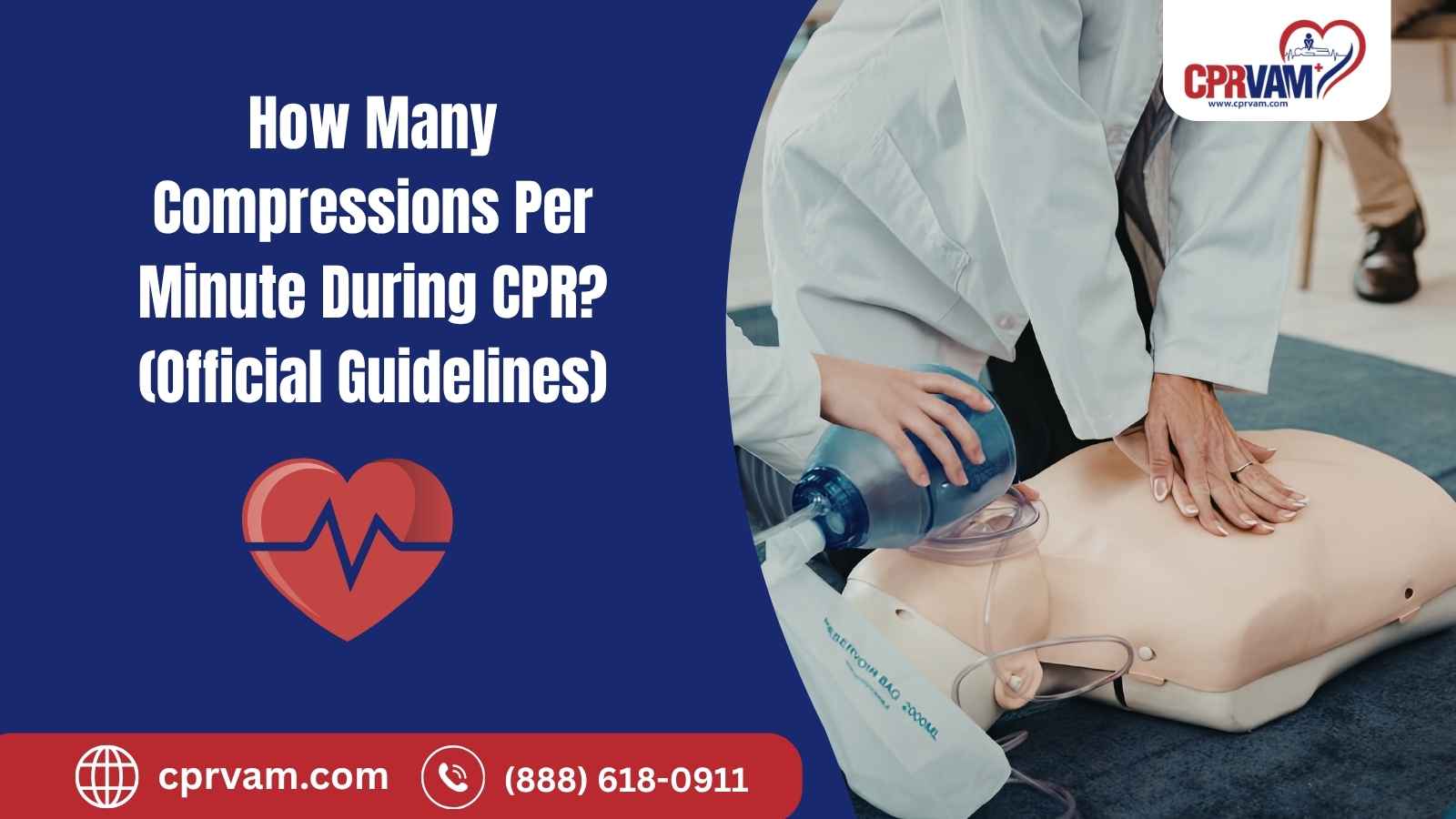





During cardiac arrest, high-quality CPR depends on delivering effective chest compressions with as few unnecessary interruptions as possible. One important measure used to evaluate CPR performance is chest compression fraction (CCF), which represents the percentage of resuscitation time during which chest compressions are being performed. Understanding CCF helps rescuers recognize the importance of maintaining consistent chest compressions while coordinating other essential CPR interventions.
A higher chest compression fraction indicates that chest compressions are being performed for a greater proportion of the resuscitation period. However, CCF is only one part of effective CPR and should be considered alongside compression rate, compression depth, complete chest recoil, ventilation, defibrillation, and other CPR quality measures. Factors such as rhythm checks, AED use, ventilation, rescuer fatigue, and team coordination can all affect how much time is spent performing chest compressions.
In this guide, you will learn what chest compression fraction means, how it is calculated, why it matters, recommended CCF targets, factors that affect it, and techniques for maintaining a high CCF during CPR.
How Is Chest Compression Fraction Calculated?
Chest compression fraction is calculated by dividing the total time spent performing chest compressions by the total duration of the resuscitation, then multiplying the result by 100.
Chest Compression Fraction = (Time Performing Chest Compressions ÷ Total Resuscitation Time) × 100
For example, suppose a cardiac arrest resuscitation lasts 10 minutes, and chest compressions are performed for 8 minutes.
CCF = (8 ÷ 10) × 100 = 80%
The chest compression fraction is therefore 80%.
The calculation focuses on the proportion of time the patient is actually receiving chest compressions. Periods when compressions are stopped for necessary interventions, rhythm analysis, defibrillation, ventilation, or other tasks reduce the overall fraction.
Why Is Chest Compression Fraction Important?
Chest compression fraction (CCF) is important because it shows how consistently chest compressions are being performed during CPR. During cardiac arrest, chest compressions help generate blood flow to the heart and brain. Unnecessary pauses interrupt this blood flow and can reduce the effectiveness of CPR.
A higher CCF generally means that fewer interruptions occur during resuscitation, allowing compressions to be delivered for a greater proportion of the CPR period.
CCF is particularly important because:
- Chest compressions generate blood flow: Compressions help circulate oxygenated blood to vital organs when the heart is not pumping effectively.
- Interruptions can reduce perfusion: Stopping compressions can cause coronary perfusion pressure to fall, potentially reducing the effectiveness of CPR.
- It helps assess CPR performance: CCF provides a measurable way to evaluate how continuously a resuscitation team performs chest compressions.
- It supports successful resuscitation: High-quality CPR, including minimizing unnecessary interruptions in chest compressions, supports circulation during cardiac arrest and is intended to help achieve return of spontaneous circulation (ROSC).
- It helps identify avoidable pauses: Reviewing CCF can help CPR teams identify interruptions caused by delayed equipment preparation, prolonged rhythm checks, or poor team coordination.
- It supports high-quality CPR: Maintaining a high CCF is one component of effective CPR, alongside appropriate compression rate, depth, complete chest recoil, ventilation, and timely defibrillation.
However, maximizing CCF is not the only goal of CPR. Some interruptions are necessary, such as those required for rhythm analysis or defibrillation. Rescuers should minimize unnecessary interruptions while continuing to perform other essential components of resuscitation correctly.
What Is the Recommended Chest Compression Fraction?
For adult cardiac arrest, the 2025 American Heart Association (AHA) Adult Basic Life Support guidelines recommend a chest compression fraction (CCF) of at least 60%. This means chest compressions should be performed for at least 60% of the total resuscitation time while keeping necessary interruptions as short as possible.
The 60% CCF is a minimum target, not an upper limit. High-performance resuscitation teams can achieve a CCF of more than 80%, and the AHA identifies CCF above 80% as a performance metric for high-quality CPR.
A high CCF should not come at the expense of other essential CPR components. Rescuers should maintain an appropriate compression rate, compression depth, complete chest recoil, effective ventilation, and timely defibrillation when indicated while minimizing unnecessary interruptions.
Factors Affecting Chest Compression Fraction
Several factors affect chest compression fraction (CCF) during cardiac arrest. CCF increases when rescuers maintain continuous chest compressions and minimize unnecessary pauses. It decreases when compressions are interrupted for longer than necessary during assessment, defibrillation, ventilation, or other interventions.
Key factors affecting chest compression fraction include:
- AED or defibrillator use: Rhythm analysis and shock delivery require temporary pauses in compressions. Efficient preparation can reduce these interruptions.
- Rhythm and pulse checks: Prolonged rhythm or pulse checks reduce the time spent performing chest compressions. AHA guidance recommends limiting pulse checks to no more than 10 seconds during rhythm assessment.
- Ventilation: Rescue breaths can interrupt chest compressions when CPR is performed without an advanced airway. Efficient coordination helps limit these pauses.
- Airway management: Airway procedures can interrupt compressions, particularly when they are not coordinated with ongoing CPR.
- Rescuer fatigue: Fatigue can reduce compression quality and require a compressor change. Organized team rotation helps maintain effective compressions while limiting interruptions.
- Team coordination: Poor communication, unclear roles, and delays in preparing equipment can create avoidable pauses.
- Equipment preparation: Delays in attaching or preparing an AED, defibrillator, or other equipment can lower CCF.
- Patient movement: Moving, repositioning, or transferring a patient can temporarily stop chest compressions.
- CPR training and experience: Well-trained teams can coordinate interventions more efficiently and reduce unnecessary interruptions.
The 2025 AHA Adult Basic Life Support guidelines emphasize minimizing interruptions in chest compressions, including keeping pre-shock and post-shock pauses as short as possible. Maintaining a high CCF should occur alongside appropriate compression rate, depth, complete chest recoil, ventilation, and other components of high-quality CPR.
Is CPR Compression Ratio the Same as Chest Compression Fraction?
No, CPR compression ratio and chest compression fraction (CCF) are different measurements.
The compression-to-ventilation ratio describes the number of chest compressions delivered in relation to rescue breaths. For example, 30:2 means 30 chest compressions followed by 2 breaths during conventional adult CPR without an advanced airway. In contrast, CCF measures the percentage of total resuscitation time during which chest compressions are actually being performed
For example, a CPR attempt can use a 30:2 compression-to-ventilation ratio while having a CCF of 80%. The 30:2 ratio does not determine the CCF because CCF depends on the actual time spent performing compressions and the duration of interruptions.
Does Chest Compression Fraction Mean CPR Quality?
No. Chest compression fraction does not, by itself, determine overall CPR quality.
CCF measures how continuously chest compressions are delivered, but high-quality CPR includes several other components. For adult cardiac arrest, the 2025 AHA guidelines recommend a compression rate of 100 to 120 compressions per minute, a compression depth of at least 2 inches (5 cm) while avoiding excessive depth, and complete chest recoil between compressions.
A rescuer could achieve a high CCF while performing compressions that are too shallow, too deep, too fast, or too slow. Conversely, necessary interventions can temporarily reduce CCF while still being appropriate for the patient’s resuscitation. Therefore, CCF should be viewed as one measure of CPR performance rather than a complete measure of CPR quality.
Chest Compression Fraction vs. Compression Rate
Chest compression fraction (CCF) and compression rate are two different measures of CPR performance. CCF refers to the percentage of total resuscitation time during which chest compressions are being performed, while compression rate refers to the number of chest compressions delivered per minute while compressions are being performed. For adult cardiac arrest, the 2025 American Heart Association Adult Basic Life Support Guidelines recommend a chest compression rate of 100–120 compressions per minute and identify minimizing interruptions as an important component of high-quality CPR.
The two measures are related, but one does not determine the other. For example, a rescuer can perform compressions at 110 per minute but frequently stop for prolonged pauses, resulting in a lower CCF. Conversely, compressions can be maintained at the recommended rate with fewer interruptions, resulting in a higher CCF. The AHA’s high-quality CPR guidance lists CCF greater than 80% and a compression rate of 100–120 per minute as separate CPR performance metrics.
Manual vs. Mechanical CPR: How Do They Affect Chest Compression Fraction?
Manual CPR depends on the rescuer to continuously provide chest compressions while managing ventilation, rhythm checks, defibrillation, and other interventions. For a single rescuer, prolonged manual CPR is physically demanding, and compression quality can decline as fatigue develops. The 2025 American Heart Association Guidelines report that compression depth begins to decrease after approximately 90–120 seconds of CPR. When two or more rescuers are available, switching the compressor about every 2 minutes or sooner when fatigued helps maintain compression quality.
Mechanical CPR devices, on the other hand, deliver chest compressions automatically at a consistent rate and depth. In selected situations, they can help maintain chest compressions when manual CPR is difficult or unsafe, such as during patient transport, prolonged resuscitation, or situations with limited personnel. However, device placement and removal can themselves interrupt chest compressions, so these interruptions must be kept as short as possible.
The 2025 AHA Guidelines do not recommend routine use of mechanical CPR for adults in cardiac arrest; they allow consideration in specific settings where high-quality manual compressions are challenging or dangerous.
Can Devices Help Increase Chest Compression Fraction?
Certain CPR technologies can help monitor or improve aspects of CPR performance, but a device does not automatically increase chest compression fraction. The most important factor is not simply having technology available. Rescuers need to use equipment efficiently while maintaining high-quality compressions and minimizing unnecessary interruptions.
Which CPR Techniques Help Maintain a High Chest Compression Fraction?
Hands-Only CPR and an effective team-based CPR approach help maintain a high chest compression fraction (CCF) by reducing interruptions in chest compressions. The key principle is to keep chest compressions continuous whenever possible and coordinate necessary interventions efficiently.
Hands-Only CPR
Hands-Only CPR can help maintain a high CCF because it eliminates pauses for rescue breaths. The rescuer performs continuous chest compressions without stopping to provide mouth-to-mouth ventilation. This is particularly relevant for adult sudden cardiac arrest when a trained rescuer is unwilling or unable to provide breaths.
Because there are no ventilation pauses, Hands-Only CPR allows compressions to continue with fewer interruptions during the initial response. The American Heart Association recommends Hands-Only CPR for untrained bystanders or those unwilling or unable to give breaths to an adult who suddenly collapses.
However, Hands-Only CPR is not the appropriate technique for every cardiac arrest situation. Trained rescuers should follow the appropriate CPR protocol, including rescue breathing when indicated.
Effective Team Dynamics in CPR
Effective team dynamics help maintain a high chest compression fraction by allowing rescuers to perform different responsibilities simultaneously while coordinating necessary interventions. Instead of having one rescuer manage every task, team members take clearly defined roles, communicate effectively, and coordinate actions to minimize unnecessary interruptions in chest compressions.
In a high-performance CPR team, responsibilities may include:
- Compressor: Performs high-quality chest compressions and maintains consistent compression rate, depth, and recoil.
- Airway/ventilation provider: Manages the airway and provides ventilations while coordinating with the compressor.
- Monitor/defibrillator operator: Prepares and operates the AED or defibrillator and communicates when rhythm analysis or defibrillation is required.
- Team leader or CPR coach: Coordinates team activities, assigns responsibilities, monitors CPR performance, and communicates upcoming interventions.
Effective team dynamics involve clear role assignment, concise communication, coordinated compressor changes, and preparation for upcoming interventions. These practices allow team members to prepare equipment, manage ventilation, and organize defibrillation while compressions continue, helping reduce unnecessary pauses and maintain a high CCF.
How Can Rescuers Increase Chest Compression Fraction?
Rescuers can increase chest compression fraction by minimizing the frequency and duration of interruptions in chest compressions. The goal is to keep compressions continuous whenever possible while still allowing necessary interventions such as ventilation, rhythm analysis, and defibrillation. The 2025 American Heart Association guidelines identify a CCF of at least 60% as a minimum target for adult cardiac arrest, while high-performance teams can achieve higher levels.
Minimize Unnecessary Pauses
Avoid stopping chest compressions for tasks that do not require an interruption. Team members should prepare equipment, medications, and the AED or defibrillator while compressions continue whenever possible.
Keep Pre-Shock and Post-Shock Pauses Short
Coordinate the team so the AED or defibrillator is ready before compressions need to stop for rhythm analysis and shock delivery. After a shock, resume chest compressions immediately rather than adding an unnecessary post-shock pause.
Coordinate Compressor Changes
Chest compressors become fatigued during CPR, which can affect compression quality. When two or more rescuers are available, plan compressor changes approximately every 2 minutes and coordinate the switch with an appropriate pause, such as the rhythm-analysis interval. This allows the team to maintain compression quality without creating an additional interruption.
Prepare the AED or Defibrillator Early
The AED or defibrillator operator should prepare the device while another rescuer continues chest compressions. Early preparation helps reduce the time needed for rhythm analysis and defibrillation and keeps necessary interruptions as short as possible.
Coordinate Ventilations With Compressions
When conventional CPR is required, coordinate ventilation with the compressor so that pauses for breaths are brief. For adult CPR without an advanced airway, the 2025 AHA guidelines recommend pausing compressions to provide 2 breaths, with each breath delivered over 1 second.
Use an Effective High-Performance CPR Team Model
A high-performance CPR team assigns specific roles such as compressor, airway and ventilation provider, monitor/defibrillator operator, and CPR coach or team leader. Each rescuer performs a defined task while communicating with the rest of the team. This coordination allows ventilation, AED preparation, rhythm analysis, and other necessary actions to occur efficiently without creating unnecessary pauses.
Maintain High-Quality Compressions
Increasing CCF should never come at the expense of compression quality. Rescuers should continue to maintain the recommended compression rate of 100 to 120 compressions per minute, adequate depth, complete chest recoil, and proper hand placement.
Monitor CPR Performance
Real-time CPR feedback devices help rescuers monitor key components of CPR performance, including compression rate, depth, and chest recoil. These devices support high-quality CPR by providing immediate feedback and allowing rescuers to correct their technique during resuscitation. However, they do not directly increase chest compression fraction (CCF), which is primarily improved by minimizing unnecessary interruptions in chest compressions.
Learn How to Deliver High-Quality CPR
Chest compression fraction is an important measure of how consistently chest compressions are performed during cardiac arrest, but it is only one component of high-quality CPR. Rescuers should aim to minimize unnecessary interruptions while maintaining the correct compression rate, depth, complete chest recoil, effective ventilation, and timely defibrillation. Understanding how CCF is calculated and how factors such as team coordination, ventilation, rhythm checks, defibrillation, and rescuer fatigue affect it helps rescuers deliver more consistent and effective CPR during cardiac emergencies.
To put these CPR principles into practice, you can join a BLS certification class with CPR VAM to learn how to perform proper chest compressions, provide CPR correctly, use an AED, and respond to other emergencies. The American Heart Association (AHA) courses are designed for both healthcare and non-healthcare providers. You can complete the online portion at your own pace and then attend a short in-person skills session to demonstrate your skills and complete your certification quickly, including same-day certification. At CPR VAM, additional courses, including AHA ACLS and PALS, are also available for advanced healthcare providers.