

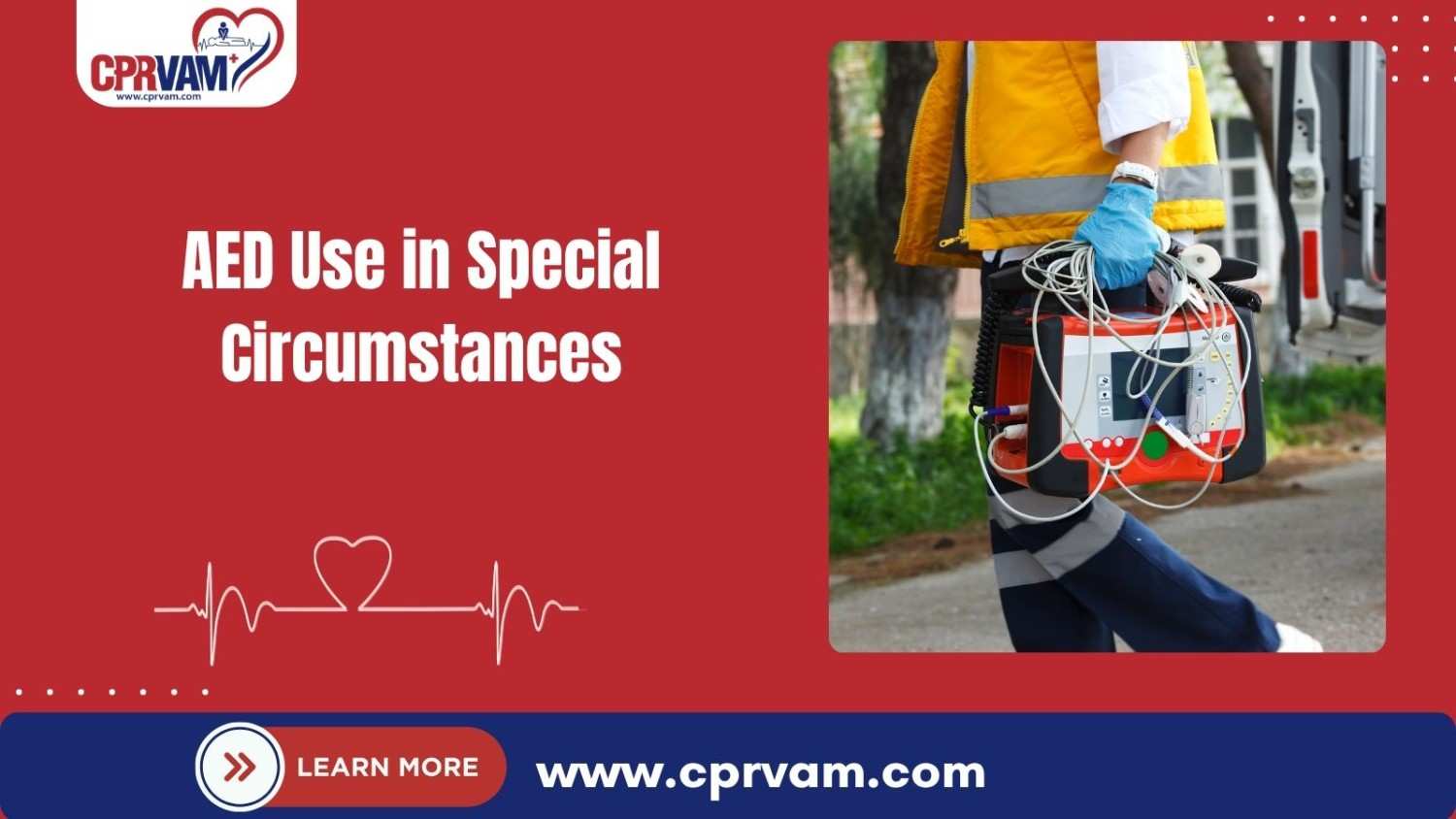
Using an AED (Automated External Defibrillator) during sudden cardiac arrest can be lifesaving, but some situations require extra care. Special considerations when using an AED include children and infants, wet or sweaty skin, excessive chest hair, medication patches, pacemakers or ICDs, clothing, pregnancy, jewelry or piercings, snow or ice, metal surfaces, and flammable materials.
These situations generally do not mean you should stop or delay AED use. Instead, you may need to make a quick adjustment to ensure safe and effective pad placement. If a person is unresponsive and not breathing normally, start CPR, call emergency services, get an AED, and follow its voice and visual prompts. Always follow the AED manufacturer’s instructions and current CPR and emergency response guidance.
This blog explains how to safely respond when AED use involves unusual patient or environmental conditions, covering proper preparation, pad placement, device prompts, and timely emergency response.
Special Considerations When Using an AED: What You Need to Know
1. Infants and Children
When using an AED on an infant or child, use pediatric pads or a pediatric attenuator when available and appropriate. The 2025 AHA and AAP guidelines recommend attaching an AED as soon as possible during pediatric cardiac arrest and using pediatric equipment when available.
AEDs differ in how they provide pediatric therapy, so always follow the specific device’s instructions. If a pediatric attenuator or pediatric pads are unavailable, do not delay lifesaving treatment while searching for another AED. Use the available AED according to its instructions and your current CPR/AED training.
2. Wet or Sweaty Patients
If the person is in or near water, move them to a safe, dry location before using the AED. If the chest is wet or sweaty, quickly dry the area where the AED pads will be placed. The goal is to create a suitable surface for the electrodes.
You do not need to dry the person’s entire body. Once the chest is dry, apply the AED pads directly to bare skin and follow the device’s voice and visual instructions. Continue listening to the AED and keep everyone clear whenever it analyzes the heart rhythm or prepares to deliver a shock.
3. Snow or Ice
An AED can be used when a person is lying on snow or ice, but first consider whether the environment is safe for rescuers. Expose the person’s chest and make sure the AED pads can be applied properly to clean, bare skin.
Cold or snowy conditions should not cause an unnecessary delay in CPR or defibrillation. If practical, move the person to a safer position without interrupting care unnecessarily. Follow the AED’s instructions and ensure everyone remains clear during rhythm analysis and shock delivery.
4. Metal Surfaces
If a person is lying on or near a metal surface, assess the surroundings before using an AED. When practical and safe, move the person to a suitable surface without creating unnecessary interruptions in CPR or delaying defibrillation.
The AED pads should still be placed correctly on clean, bare skin according to the device’s instructions. Focus on safe positioning, proper electrode contact, and following the AED prompts rather than allowing the surrounding metal to delay emergency treatment.
5. Flammable or Combustible Materials
Flammable vapors from gasoline, solvents, or other combustible materials can create an additional safety concern during defibrillation. Before using the AED, quickly assess the area and, when possible, move the person away from hazardous vapors or materials.
Do not put yourself or others at additional risk while responding. Once the environment is reasonably safe, expose the chest, apply the AED pads correctly, and follow the device’s instructions for rhythm analysis and shock delivery without unnecessary delay.
6. Excessive Chest Hair
Excessive chest hair can prevent AED pads from sticking firmly to the skin and may interfere with proper electrode contact. Apply the pads as directed first and check whether they adhere securely before taking additional steps.
If chest hair prevents the pads from sticking, quickly remove only enough hair to create adequate contact. There is no need to shave the entire chest. The priority is proper electrode adhesion and timely defibrillation, as ILCOR emphasizes minimizing delays in shock delivery.
7. Medication Patches
If a medication patch is located where an AED pad needs to be placed, remove the patch before applying the electrode. The AED pad should make direct contact with clean, bare skin rather than being placed over the patch.
If gloves are available, use them when removing the patch and wipe away any visible medication residue. Then apply the AED pad according to the device’s placement instructions and continue following its voice and visual prompts.
8. Pacemakers or ICDs
A pacemaker or implantable cardioverter-defibrillator (ICD) should not prevent AED use during cardiac arrest. If you can see or feel a raised implanted device beneath the skin, take its location into account before positioning the AED electrodes.
Avoid placing an AED pad directly over an implanted device. Instead, follow the AED’s pad-placement diagram and position the electrodes appropriately while maintaining good skin contact. Do not allow the presence of an implanted device to unnecessarily delay emergency treatment.
9. Jewelry and Body Piercings
Jewelry and body piercings should not prevent you from using an AED during cardiac arrest. If metal jewelry can be removed quickly without delaying treatment, remove it before applying the AED pads. Otherwise, focus on getting the electrodes positioned correctly.
When practical, avoid placing an AED electrode directly over metal jewelry or a piercing. The priority is proper pad placement and good skin contact. Do not spend unnecessary time removing jewelry if doing so could delay CPR or defibrillation.
10. Clothing and Bras
AED pads need appropriate contact with the patient’s exposed chest. If clothing or a bra covers the areas where the electrodes need to be placed, remove or cut the material as necessary so the pads can be applied correctly.
Expose only the area needed for AED pad placement and preserve the person’s privacy whenever possible. At the same time, clothing should not create an unnecessary delay in CPR, AED application, rhythm analysis, or shock delivery.
11. Pregnancy
Pregnancy is not a reason to withhold an AED from someone experiencing cardiac arrest. Start CPR, activate emergency medical services, obtain an AED, and apply the pads according to the device’s instructions.
Follow the AED’s voice and visual prompts and ensure everyone is clear during rhythm analysis and shock delivery. Current AHA guidance includes a specific cardiac arrest in pregnancy algorithm, reinforcing the importance of rapid, coordinated resuscitation.
12. Larger Body Size
For a person with a larger body size, AED pads still need firm contact with clean, bare skin. Position the electrodes according to the manufacturer’s diagram and make sure they are fully adhered before allowing the AED to analyze the heart rhythm.
If the AED reports a contact problem or cannot analyze the rhythm, follow the device’s instructions to correct it. For adult pad placement, current ILCOR guidance emphasizes following the manufacturer’s instructions and maintaining proper pad-to-skin contact.
AED Special Considerations: Quick Reference
Situation | Key Action |
Child or Infant | Use pediatric pads or settings when available. |
Wet or Sweaty Chest | Dry the chest before applying AED pads. |
Snow or Ice | Ensure the chest is exposed and suitable for pad placement. |
Metal Surface | Move the person to a safe surface when practical. |
Flammable Vapors | Move away from fire hazards when safe. |
Excessive Chest Hair | Remove enough hair for the pads to stick securely. |
Medication Patch | Remove the patch and clean the area before applying the pad. |
Pacemaker or ICD | Avoid placing the pad directly over the device. |
Jewelry or Piercing | Avoid placing the pad directly over metal when practical. |
Clothing or Bra | Expose clean, bare skin for pad placement. |
Pregnancy | Use the AED without delaying CPR or defibrillation |
Larger Body Size | Ensure firm pad contact with clean, bare skin. |
What Should You Do If the AED Says “Check Pads”?
If the AED says “Check Pads,” check the electrodes and the patient’s chest for anything that may prevent proper contact. Correct the issue promptly so the AED can analyze the heart rhythm and provide treatment when needed.
Check the following:
- Wet or Sweaty Skin: Dry the chest where the pads will be placed.
- Clothing: Make sure no clothing remains under the AED pads.
- Chest Hair: If excessive hair prevents the pads from sticking, remove enough hair to create proper contact.
- Pad Placement: Confirm that you placed the pads according to the AED’s instructions.
- Pad Adhesion: Press the pads firmly against clean, bare skin.
- Pads or cable: Check for visible damage or a disconnected cable.
After correcting the problem, follow the AED’s voice and visual instructions. If the pads are damaged or cannot adhere properly, replace them with compatible pads if available. Continue CPR as directed and minimize delays in AED useC
What to Do While the AED Analyzes the Heart Rhythm
When the AED says it is analyzing the heart rhythm, do not touch the patient. Ask everyone nearby to stand clear and avoid contact with the patient. Movement or physical contact can interfere with the AED’s analysis and may prevent the device from accurately determining whether a shock is needed.
Once the AED finishes analyzing the heart rhythm, follow its voice and visual instructions. If a shock is advised, make sure everyone is clear before the shock is delivered. If no shock is advised, resume CPR when instructed and continue following the AED’s prompts until emergency medical help arrives.
What to Do Immediately After an AED Shock
After an AED delivers a shock, immediately resume CPR and follow the device’s instructions. Continue providing care without unnecessary interruptions while the AED reassesses the person’s heart rhythm. Keep going until emergency medical services arrive, the person shows signs of life, or the AED instructs you to stop.
1. Resume CPR Immediately
Resume CPR as soon as the AED tells you it is safe to do so. Focus on high-quality chest compressions while minimizing interruptions to help maintain blood flow. Continue CPR until the AED prompts you to pause or emergency medical help takes over.
2. Follow the AED Voice Prompts
Listen carefully to the AED’s voice and visual instructions after the shock. The device will tell you when to resume CPR, pause for rhythm analysis, or take another required action. Follow each prompt promptly rather than relying on assumptions about what to do next.
3. Keep the AED Pads in Place
Leave the AED pads attached to the person’s chest after the shock. The AED may need the pads in place to reassess the heart rhythm and determine whether another shock is appropriate. Do not remove or reposition the pads unless instructed by the device or emergency responders.
4. Continue Care Until Help Arrives
Continue CPR and follow the AED’s instructions while waiting for emergency medical services. Avoid unnecessary interruptions and stay focused on the person’s condition. If the person begins breathing normally or shows signs of life, follow the AED and emergency responders’ instructions for next steps.
5. Allow the AED to Reanalyze the Heart Rhythm
After CPR, the AED may prompt everyone to stop touching the person so it can analyze the heart rhythm again. If another shock is advised, follow the device’s instructions and ensure no one is touching the person before the shock is delivered. If no shock is advised, resume CPR when instructed and continue following the AED prompts.
What If the AED Says “No Shock Advised”?
A “no shock advised” message does not mean the emergency is over. It means the AED has analyzed the heart rhythm and determined that a defibrillation shock is not indicated at that time. CPR should be continued according to the AED’s instructions, because the patient may still be in cardiac arrest and require immediate care.
Keep the AED connected and continue following its voice and visual prompts. The device may analyze the heart rhythm again and provide further instructions about CPR or another shock. Emergency medical services should be contacted or activated as soon as possible, and care should continue until trained responders take over or the patient shows signs of recovery.
Be Prepared for Emergencies With CPR and AED Training
Knowing the special considerations for AED use can help you respond quickly and safely during a cardiac emergency. From proper AED pad placement to managing wet skin, medication patches, implanted devices, pregnancy, and other situations, each step matters. CPR and AED training provides hands-on practice with these skills, helping you build confidence and respond effectively when an emergency occurs.
Ready to turn knowledge into action? CPR VAM Training Center offers BLS, ACLS, PALS, Heartsaver CPR AED, and Heartsaver First Aid CPR AED courses with hands-on training to help you strengthen essential emergency response skills and feel prepared to act when every second counts.
FAQs
1. Can You Use an AED in Rain or Near Water?
No. Move the person to a safe, dry location before using the AED. Dry the person’s chest where the pads will be placed to ensure proper contact. Then, follow the AED’s voice and visual prompts throughout the process.
2. Where Should AED Pads Be Placed on a Person With a Pacemaker?
Do not place an AED pad directly over a visible or palpable pacemaker or ICD. Position the pads according to the AED manufacturer’s instructions. Make sure the pads are securely attached to clean, bare skin before analysis begins.
3. Can an AED Be Used on Someone Pregnant?
Yes, pregnancy is not a reason to withhold AED use during cardiac arrest. Begin CPR and use the AED as directed without unnecessary delay. Continue following the device’s prompts throughout the process.
4. What Should You Do if AED Pads Will Not Stick?
Make sure the person’s chest is dry and free of clothing or other material. If excessive chest hair prevents the pads from sticking, remove enough hair to allow proper contact. Then, apply the pads firmly to the bare chest as directed.
5. What Should You Do if an AED Cannot Analyze the Heart Rhythm?
Check that the AED pads are positioned correctly and making good contact with the skin. Check the pad connection, cables, and any issue identified by the device. Correct the problem promptly and continue following the AED’s instructions.